Kirjailija
Vivian Gornick
Kirjat ja teokset yhdessä paikassa: 34 kirjaa, julkaisuja vuosilta 2005–2027, suosituimpiin kuuluu Brute Force and Plunder. Vertaile teosten hintoja ja tarkista saatavuus suomalaisista kirjakaupoista.
34 kirjaa
Kirjojen julkaisuvuodet: 2005–2027.
A finalist for the National Book Critics Circle Award for Criticism, Vivian Gornick's The End of the Novel of Love explores the meaning of love and marriage as literary themes in the twentieth century. In The End of the Novel of Love, an acclaimed and provocative collection of criticism, Gornick applies the same intelligence, honesty, and insight that define her memoirs to an analysis of love and marriage as literary themes in the twentieth century. She examines the work and lives of several authors she admires--including Grace Paley, Willa Cather, Jean Rhys, George Meredith, Jane Smiley, Richard Ford, and Andre Dubus--to ultimately posit that love, sexual fulfillment, and marriage are now exhausted as the metaphorical expressions of success and happiness. Spanning the depths of common experience and the expanse of twentieth century literature, Gornick crafts an argument that is as defined by discourse as it is by the power of her language, which is gracefully poised between objective knowledge and subjective experience. In these eleven essays, she comes to see that, for most writers, like most readers, it is the drama of our angry and frightened selves in the presence of love that is our modern preoccupation. The End of the Novel of Love is a strikingly original and thought-provoking collection from a canonical critic.
Seminal essays on loneliness, living in New York, friendship, feminism, and writing from nonfiction master Vivian Gornick Vivian Gornick's Approaching Eye Level is a brave collection of personal essays that finds a quintessentially contemporary woman (urban, single, feminist) trying to observe herself and the world without sentiment, cynicism, or nostalgia. Whether walking along the streets of New York or teaching writing at a university, Gornick is a woman exploring her need for conversation and connection--with men and women, colleagues and strangers. She recalls her stint as a waitress in the Catskills and a failed friendship with an older woman and mentor, and reconsiders her experiences in the feminist movement, while living alone, and in marriage. Turning her trademark sharp eye on herself, Gornick works to see her part in things--how she has both welcomed and avoided contact, and how these attempts at connections have enlivened and, at times, defeated her. First published in 1996, Approaching Eye Level is an unrelentingly honest collection of essays that finds Gornick at her best, reminding us that we can come to know ourselves only by engaging fully with the world.
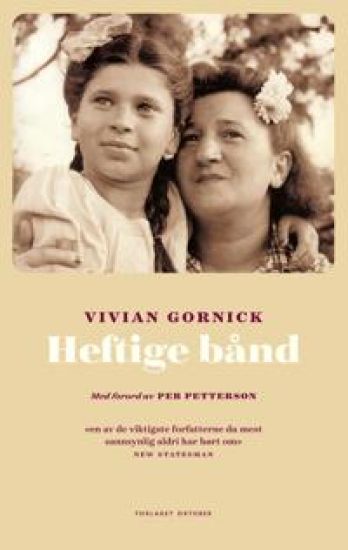
New York, 1980-tallet. En voksen datter og hennes aldrende mor vandrer opp og ned på langs og på tvers i byens gater. De snakker, krangler og minnes datterens oppvekst i en leiegård i arbeiderklassestrøket Bronx: den vakre nygifte damen ovenpå som brukte branntrappa for å komme seg forbi en låst inngangsdør; den elendige husholdersken som aldri holdt opp med å husholde; kvinnen som hver kveld vandret fram og tilbake i lyset fra gatelyktene; og Nettie, den rødhårede ukrainishe som brukte livet på å forsøke å komme seg ut av moderskapet. «Heftige bånd» er en collage av fortellinger om arbeidernes og immigrantenes New York på 1940-tallet - og om kvinnene som formet Vivian Gornick. Forfatteren skriver saftig og presist om kvinnelige erfaringer og begrensninger, om løsrivelse og ulevd liv, og hun skriver varmt og rasende om de bestandige båndene mellom en mor og en datter.
Gornick har skrevet sine isnende og dybt bevægende erindringer “Voldsomme bånd” om forholdet til sin moder. De er skrevet med en nøgternhed og hudløshed, som gør dem ganske enkelt fremragende. En målestok for litteratur om forholdet mellem mødre og døtre. Fra bogens forord af Leonora Christina Skov:For mig og mange andre forfattere af erindringsbøger har “Voldsomme bånd” været en ledestjerne. I et nutidsspor fører Gornick og moren lange samtaler, mens de spadserer rundt i et New York, der lyder som noget fra en cool Woody Allen-film. De bor tæt på hinanden på Manhattan og ses ofte, selv om de dårligt kan holde hinanden ud.“Voldsomme bånd” er memoirerskrivning i verdensklasse. En perfekt økonomiseret erindringsbog, der kombinerer en troværdig fortællerstemme med en stærk coming of age-historie og et modigt portræt af en dominerende, charmerende og uudholdelig mor og en datter under the influence. Om fatteren:Hun er stort set ukendt i Europa (udkom 2015 i England og netop udkommet i Frankrig og på vej i Norge), men lidt af en myte i USA. Ofte beskrevet som den mest ukendte af USA's store forfatter. Hun hedder Vivian Gornick (f. 1935).
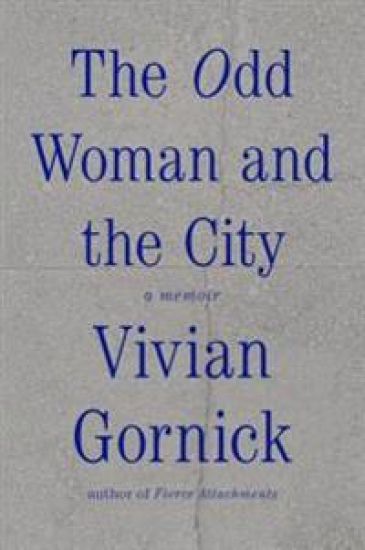
A finalist for the National Book Critics Circle Award, Autobiography A contentious, deeply moving ode to friendship, love, and urban life in the spirit of Fierce Attachments A memoir of self-discovery and the dilemma of connection in our time, The Odd Woman and the City explores the rhythms, chance encounters, and ever-changing friendships of urban life that forge the sensibility of a fiercely independent woman who has lived out her conflicts, not her fantasies, in a city (New York) that has done the same. Running steadily through the book is Vivian Gornick's exchange of more than twenty years with Leonard, a gay man who is sophisticated about his own unhappiness, whose friendship has "shed more light on the mysterious nature of ordinary human relations than has any other intimacy" she has known. The exchange between Gornick and Leonard acts as a Greek chorus to the main action of the narrator's continual engagement on the street with grocers, derelicts, and doormen; people on the bus, cross-dressers on the corner, and acquaintances by the handful. In Leonard she sees herself reflected plain; out on the street she makes sense of what she sees. Written as a narrative collage that includes meditative pieces on the making of a modern feminist, the role of the flaneur in urban literature, and the evolution of friendship over the past two centuries, The Odd Woman and the City beautifully bookends Gornick's acclaimed Fierce Attachments, in which we first encountered her rich relationship with the ultimate metropolis.
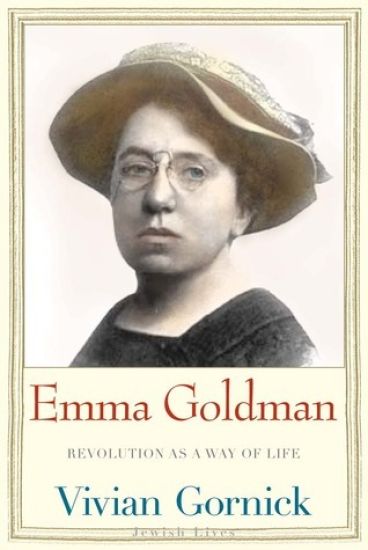
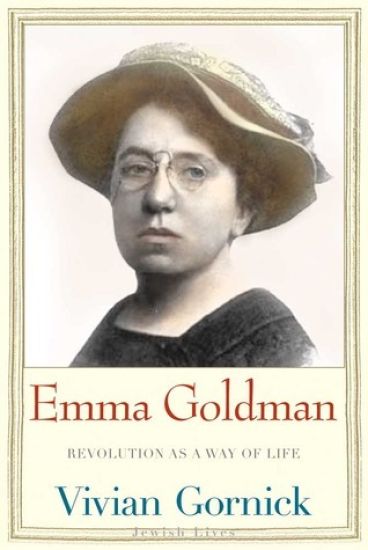
A vibrant, deeply human portrait of a woman dedicated to fierce protest against the tyranny of institutions over individuals, by the celebrated authorEmma Goldman is the story of a modern radical who took seriously the idea that inner liberation is the first business of social revolution. Her politics, from beginning to end, was based on resistance to that which thwarted the free development of the inner self. The right to stay alive in one’s senses, to enjoy freedom of thought and speech, to reject the arbitrary use of power—these were key demands in the many public protest movements she helped mount. Anarchist par excellence, Goldman is one of the memorable political figures of our time, not because of her gift for theory or analysis or even strategy, but because some extraordinary force of life in her burned, without rest or respite, on behalf of human integrity—and she was able to make the thousands of people who, for decades on end, flocked to her lectures, feel intimately connected to the pain inherent in the abuse of that integrity. To hear Emma describe, in language as magnetic as it was illuminating, what the boot felt like on the neck, was to experience the mythic quality of organized oppression. As the women and men in her audience listened to her, the homeliness of their own small lives became invested with a sense of drama that acted as a catalyst for the wild, vagrant hope that things need not always be as they were. All you had to do, she promised, was resist. In time, she herself would become a world-famous symbol for the spirit of resistance to the power of institutional authority over the lone individual. In Emma Goldman, Vivian Gornick draws a surpassingly intimate and insightful portrait of a woman of heroic proportions whose performance on the stage of history did what Tolstoy said a work of art should do: it made people love life more.
From the prizewinning Jewish Lives series, a vibrant, deeply human portrait of a woman dedicated to fierce protest against the tyranny of institutions over individuals, by the celebrated author Emma Goldman is the story of a modern radical who took seriously the idea that inner liberation is the first business of social revolution. Her politics, from beginning to end, was based on resistance to that which thwarted the free development of the inner self. The right to stay alive in one’s senses, to enjoy freedom of thought and speech, to reject the arbitrary use of power—these were key demands in the many public protest movements she helped mount. Anarchist par excellence, Goldman is one of the memorable political figures of our time, not because of her gift for theory or analysis or even strategy, but because some extraordinary force of life in her burned, without rest or respite, on behalf of human integrity—and she was able to make the thousands of people who, for decades on end, flocked to her lectures, feel intimately connected to the pain inherent in the abuse of that integrity. To hear Emma describe, in language as magnetic as it was illuminating, what the boot felt like on the neck, was to experience the mythic quality of organized oppression. As the women and men in her audience listened to her, the homeliness of their own small lives became invested with a sense of drama that acted as a catalyst for the wild, vagrant hope that things need not always be as they were. All you had to do, she promised, was resist. In time, she herself would become a world-famous symbol for the spirit of resistance to the power of institutional authority over the lone individual. In Emma Goldman, Vivian Gornick draws a surpassingly intimate and insightful portrait of a woman of heroic proportions whose performance on the stage of history did what Tolstoy said a work of art should do: it made people love life more. About Jewish Lives: Jewish Lives is a prizewinning series of interpretative biography designed to explore the many facets of Jewish identity. Individual volumes illuminate the imprint of Jewish figures upon literature, religion, philosophy, politics, cultural and economic life, and the arts and sciences. Subjects are paired with authors to elicit lively, deeply informed books that explore the range and depth of the Jewish experience from antiquity to the present. In 2014, the Jewish Book Council named Jewish Lives the winner of its Jewish Book of the Year Award, the first series ever to receive this award. More praise for Jewish Lives: "Excellent" –New York Times "Exemplary" –Wall Street Journal "Distinguished" –New Yorker "Superb" –The Guardian
Gornick on V. S. Naipaul, James Baldwin, George Gissing, Randall Jarrell, H. G. Wells, Loren Eiseley, Allen Ginsberg, Hayden Carruth, Saul Bellow, and Philip Roth and the intimate relationship between emotional damage and great literature. Vivian Gornick, one of our finest critics, tackled the theme of love and marriage in her last collection of essays, The End of the Novel of Love, a National Book Critics Circle Award finalist. In this new collection, she turns her attention to another large theme in literature: the struggle for the semblance of inner freedom. Great literature, she believes, is not the record of the achievement, but of the effort. Gornick, who emerged as a major writer during the second-wave feminist movement, came to realize that "ideology alone could not purge one of the pathological self-doubt that seemed every woman's bitter birthright." Or, as Anton Chekhov put it so memorably: "Others made me a slave, but I must squeeze the slave out of myself, drop by drop." Perhaps surprisingly, Gornick found particular inspiration for this challenge in the work of male writers-talented, but locked in perpetual rage, self-doubt, or social exile. From these men-who had infinitely more permission to do and be than women had ever known-she learned what it really meant to wrestle with demons. In the essays collected here, she explores the work of V. S. Naipaul, James Baldwin, George Gissing, Randall Jarrell, H. G. Wells, Loren Eiseley, Allen Ginsberg, Hayden Carruth, Saul Bellow, and Philip Roth. Throughout the book, Gornick is at her best: interpreting the intimate interrelationship of emotional damage, social history, and great literature.
The Solitude of Self
Vivian Gornick
Farrar, Straus Giroux Inc
2006
pokkari
Halvin toimitettuna 17,60 €
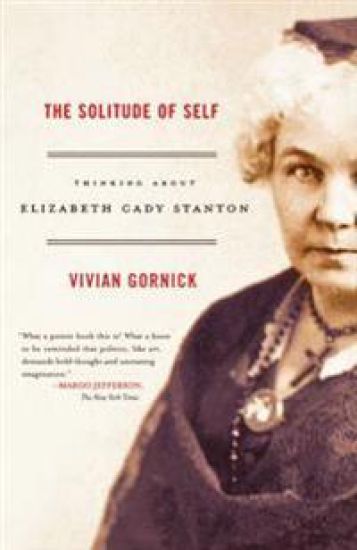
Elizabeth Cady Stanton along with her comrade-in-arms, Susan B. Anthony was one of the most important leaders of the movement to gain American women the vote. But, as Vivian Gornick argues in this passionate, vivid biographical essay, Stanton is also the greatest feminist thinker of the nineteenth century. Endowed with a philosophical cast of mind large enough to grasp the immensity that women's rights addressed, Stanton developed a devotion to equality uniquely American in character. Her writing and life make clear why feminism as a liberation movement has flourished here as nowhere else in the world. Born in 1815 into a conservative family of privilege, Stanton was radicalized by her experience in the abolitionist movement. Attending the first international conference on slavery in London in 1840, she found herself amazed when the conference officials refused to seat her because of her sex. At that moment she realized that "In the eyes of the world I was not as I was in my own eyes, I was only a woman." At the same moment she saw what it meant for the American republic to have failed to deliver on its fundamental promise of equality for all. In her last public address, "The Solitude of Self," (delivered in 1892), she argued for women's political equality on the grounds that loneliness is the human condition, and that each citizen therefore needs the tools to fight alone for his or her interests. Vivian Gornick first encountered "The Solitude of Self" thirty years ago. Of that moment Gornick writes, "I hardly knew who Stanton was, much less what this speech meant in her life, or in our history, but it I can still remember thinking with excitement and gratitude, as I read these words for the first time, eighty years after they were written, We are beginning where she left off.' ""The Solitude of Self" is a profound, distilled meditation on what makes American feminism American from one of the finest critics of our time."
Fierce Attachments: A Memoir
Vivian Gornick
Farrar, Strauss Giroux-3pl
2005
nidottu
Halvin toimitettuna 18,60 €
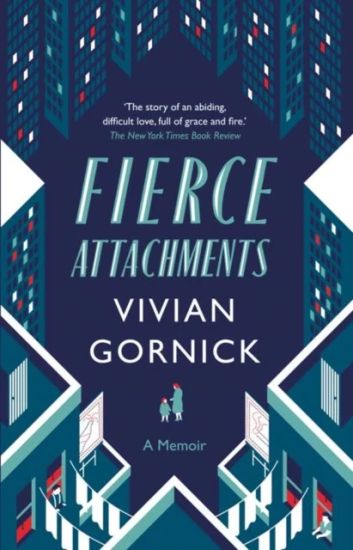
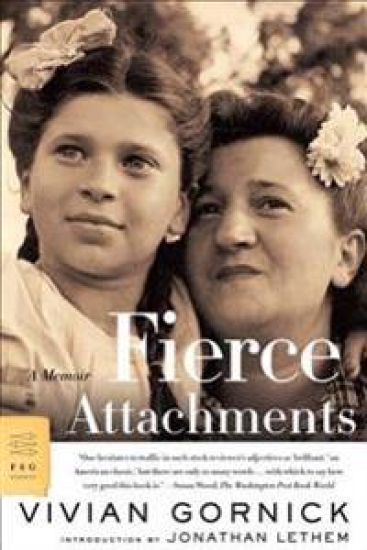
Vivian Gornick's Fierce Attachments--hailed by the New York Times for the renowned feminist author's "mesmerizing, thrilling" truths within its pages--has been selected by the publication's book critics as the #1 Best Memoir of the Past 50 Years. In this deeply etched and haunting memoir, Vivian Gornick tells the story of her lifelong battle with her mother for independence. There have been numerous books about mother and daughter, but none has dealt with this closest of filial relations as directly or as ruthlessly. Gornick's groundbreaking book confronts what Edna O'Brien has called "the principal crux of female despair" the unacknowledged Oedipal nature of the mother-daughter bond. Born and raised in the Bronx, the daughter of "urban peasants," Gornick grows up in a household dominated by her intelligent but uneducated mother's romantic depression over the early death of her husband. Next door lives Nettie, an attractive widow whose calculating sensuality appeals greatly to Vivian. These women with their opposing models of femininity continue, well into adulthood, to affect Gornick's struggle to find herself in love and in work. As Gornick walks with her aged mother through the streets of New York, arguing and remembering the past, each wins the reader's admiration: the caustic and clear-thinking daughter, for her courage and tenacity in really talking to her mother about the most basic issues of their lives, and the still powerful and intuitively-wise old woman, who again and again proves herself her daughter's mother. Unsparing, deeply courageous, Fierce Attachments is one of the most remarkable documents of family feeling that has been written, a classic that helped start the memoir boom and remains one of the most moving examples of the genre. " Gornick] stares unflinchingly at all that is hidden, difficult, strange, unresolvable in herself and others--at loneliness, sexual malice and the devouring, claustral closeness of mothers and daughters... Fierce Attachments is] a portrait of the artist as she finds a language--original, allergic to euphemism and therapeutic banalities--worthy of the women that raised her."--The New York Times