Kirjojen hintavertailu – 12 859 819 kirjaa ja 27 kauppaa
Kirjailija
Voltaire
Kirjat ja teokset yhdessä paikassa: 1 822 kirjaa, julkaisuja vuosilta 1800–2026, suosituimpiin kuuluu OEuvres complètes de Voltaire 79A(II). Vertaile teosten hintoja ja tarkista saatavuus suomalaisista kirjakaupoista.
Nimi esiintyy myös muodoissa: - Voltaire, Voltaire., * Voltaire
Voltaire: Die Prinzessin von Babylon Edition Holzinger. Taschenbuch Berliner Ausgabe, 2015 Vollst ndiger, durchgesehener Neusatz mit einer Biographie des Autors bearbeitet und eingerichtet von Michael Holzinger La Princesse de Babylone, Genf, 1768. Hier in der bersetzung von Wilhelm Christhelf Siegmund Mylius aus der Werkausgabe in 26 B nden, Berlin, Arnold Wever, 1786-1794. Herausgeber der Reihe: Michael Holzinger Reihengestaltung: Viktor Harvion Umschlaggestaltung unter Verwendung des Bildes: Fran ois Marie Arouet oder auch Voltaire (Portr t von Nicolas de Largilli re) Gesetzt aus Minion Pro, 11 pt.
Voltaire: Erz hlungen Edition Holzinger. Taschenbuch Berliner Ausgabe, 2015 Vollst ndiger, durchgesehener Neusatz mit einer Biographie des Autors bearbeitet und eingerichtet von Michael Holzinger bersetzung von Wilhelm Christhelf Siegmund Mylius aus der Werkausgabe in 26 B nden, Berlin, Arnold Wever, 1786-1794 in originalgetreuer Rechtschreibung. Inhaltsverzeichnis Erz hlungen I. Der wakre Bramine II. Die Blinden, die ber die Farben urtheiten III. Wie gef rlich es ist, Recht zu haben IV. Reise nach dem Himmel V. Eine Arabische und Eine Indische Erz lung VI. Der Uhu und die V gel VII. Bababek ober die Fakire VIII. Andre Zeiten, andre Meinungen IX. Der K nig von Baton X. Die beiden Getr steten XI. Timon XII. Von dem, was man nicht thut XIII. Pythagoras in Indien XIV. Pater Fouquet und sein Schirmling XV. Plato's Traum XVI. Die Kontroversisten XVII. Wie apostolisch die Bisch fe leben Biographie Herausgeber der Reihe: Michael Holzinger Reihengestaltung: Viktor Harvion Umschlaggestaltung unter Verwendung des Bildes: Fran ois Marie Arouet oder auch Voltaire (Portr t von Nicolas de Largilli re) Gesetzt aus Minion Pro, 11 pt.
Candide VOLTAIRE (1694 - 1778) Candide is a relentless, brutal assault on government, society, religion, education, and, above all, optimism. Dr. Pangloss teaches his young students Candide and Cunegonde that everything in this world is for the best, a sentiment they cling to as the world steps in to teach them otherwise. The novel is brilliant, hilarious, blasphemous. . . and Voltaire never admitted to writing it.
A launch title in Atlantic's 'The Universal Library' series, each volume of which presents a key work of philosophy accompanied by a new introduction: this is old wisdom for modern times.
V kontekste evropejskoj kultury Volter - figura besspornaja. Ego vse znajut, no pri etom malo chitajut. A zrja. Radost vstrechi s umnym, vladejuschim blestjaschim slogom avtorom ne zamenit nikakimi spravkami o nem v entsiklopedicheskikh slovarjakh. Eta kniga - romanizirovannaja biografija znamenitogo polkovodtsa, "geroja" Poltavy, shvedskogo korolja Karla XII i ego schastlivogo sopernika Petra I. Rasskazannaja Volterom istorija protivostojanija dvukh velichajshikh monarkhov Evropy nachala XVIII veka uvlekaet ne tolko svoim tragizmom, no i otmennymi stilisticheskimi dostoinstvami. Imenno eta kniga prinesla v svoe vremja Volteru vseevropejskuju izvestnost.
Candide, who is living a sheltered life in an Edenic paradise and being indoctrinated with Leibnizian optimism by his mentor, Professor Pangloss. The work describes the abrupt cessation of this lifestyle, followed by Candide's slow, painful disillusionment as he witnesses and experiences great hardships in the world. Voltaire concludes with Candide, if not rejecting optimism outright, advocating a deeply practical precept, "we must cultivate our garden", in lieu of the Leibnizian mantra of Pangloss, "all is for the best" in the "best of all possible worlds". Candide was widely banned because it contained religious blasphemy, political sedition and intellectual hostility hidden under a thin veil of na vet . However, with its sharp wit and insightful portrayal of the human condition, the novel has since inspired many later authors and artists to mimic and adapt it. Today, Candide is recognized as Voltaire's magnum opus and is often listed as part of the Western canon; it is arguably taught more than any other work of French literature. Martin Seymour-Smith has listed Candide as one of The 100 Most Influential Books Ever Written.
Candide is a French satire first published in 1759 by Voltaire, a philosopher of the Age of Enlightenment. The novella has been widely translated, with English versions titled Candide: or, All for the Best (1759); Candide: or, The Optimist (1762); and Candide: or, Optimism (1947). It begins with a young man, Candide, who is living a sheltered life in an Edenic paradise and being indoctrinated with Leibnizian optimism (or simply "optimism") by his mentor, Professor Pangloss. The work describes the abrupt cessation of this lifestyle, followed by Candide's slow, painful disillusionment as he witnesses and experiences great hardships in the world. Voltaire concludes with Candide, if not rejecting optimism outright, advocating a deeply practical precept, "we must cultivate our garden", in lieu of the Leibnizian mantra of Pangloss, "all is for the best" in the "best of all possible worlds". Candide is characterised by its sarcastic tone as well as by its erratic, fantastical and fast-moving plot. A picaresque novel with a story similar to that of a more serious bildungsroman, it parodies many adventure and romance clich s, the struggles of which are caricatured in a tone that is mordantly matter-of-fact. Still, the events discussed are often based on historical happenings, such as the Seven Years' War and the 1755 Lisbon earthquake. As philosophers of Voltaire's day contended with the problem of evil, so too does Candide in this short novel, albeit more directly and humorously. Voltaire ridicules religion, theologians, governments, armies, philosophies, and philosophers through allegory; most conspicuously, he assaults Leibniz and his optimism. As expected by Voltaire, Candide has enjoyed both great success and great scandal. Immediately after its secretive publication, the book was widely banned because it contained religious blasphemy, political sedition and intellectual hostility hidden under a thin veil of na vet . However, with its sharp wit and insightful portrayal of the human condition, the novel has since inspired many later authors and artists to mimic and adapt it. Today, Candide is recognized as Voltaire's magnum opus and is often listed as part of the Western canon; it is arguably taught more than any other work of French literature. Martin Seymour-Smith has listed Candide as one of The 100 Most Influential Books Ever Written.
Zadig ou la Destin e (Zadig, or The Book of Fate; 1747) is a novella and work of philosophical fiction by the Enlightenment writer Voltaire. It tells the story of Zadig, a philosopher in ancient Babylonia. The author does not attempt any historical accuracy, and some of the problems Zadig faces are thinly disguised references to social and political problems of Voltaire's own day. It was originally published as Memnon in Amsterdam (with a false imprint of London given) and first issued under its more familiar title in 1748. The book makes use of the Persian tale The Three Princes of Serendip. It is philosophical in nature, and presents human life as in the hands of a destiny beyond human control. Voltaire challenges religious and metaphysical orthodoxy with his presentation of the moral revolution taking place in Zadig himself. Zadig is one of Voltaire's most celebrated works after Candide. Many literary critics have praised Voltaire's use of contradiction and juxtaposition. Zadig, a good-hearted, handsome young man from Babylonia, is in love with S mire and they are to marry. S mire, however, has another suitor: Orcan, who wants her for himself. Zadig tries to defend his love from Orcan's threat, but his eye is injured in the process. S mire abhors this injury, causing her to depart with his enemy. Shortly after, Zadig makes a full recovery and falls into the arms of another woman, Azora, with whom he is married, but who promptly betrays him. Disillusioned with women, Zadig turns to science but his knowledge lands him in prison, the first of several injustices to befall him. Indeed, the conte derives its pace and rhythm from the protagonist's ever-changing fortunes which see him rise to great heights and fall to great lows. Upon his release from prison, Zadig rises in favour with the king and queen of Babylonia and is eventually appointed prime minister; in this role he proves himself to be a very honest man, looked upon favourably by the king, as he passes fair judgements on his citizens unlike the other ministers who base their judgements on the people's wealth. He is forced to flee the kingdom, though, when his relationship with king Moabdar is compromised: Zadig's reciprocated love for queen Astart is discovered and he worries that the king's desire for revenge might drive him to kill the queen. Having reached Egypt, Zadig kills an Egyptian man while valiantly saving a woman from his attack on her. Under the law of the land, this crime means that he must become a slave. His new master, S toc, is soon impressed by Zadig's wisdom and they become friends. In one incident, Zadig manages to reverse an ancient custom of certain tribes in which women felt obliged to burn themselves alive with their husbands on the death of the latter. After attempting to resolve other religious disputes, Zadig enrages local clerics who attempt to have him killed. Fortunately for him, though, a woman that he saved (Almona) from being burned intervenes so that he avoids death. Almona marries S toc, who in turn gives Zadig his freedom and then he begins his journey back to Babylonia in order to discover what has become of Astart . (In some versions there is a further episode in which he visits Serendib and advises the king on the choice of a treasurer and a wife.) En route, he is taken captive by a group of Arabs, from whom he learns that king Moabdar has been killed, but he does not learn anything of what has become of Astart . Arbogad, the leader of the group of Arabs, sets him free and he heads for Babylonia once more, equipped with the knowledge that a rebellion has taken place to oust the king. On this journey he meets an unhappy fisherman who is about to commit suicide as he has no money, but Zadig gives him some money to ease his woes, telling us that source of his own unhappiness is in his heart, whereas the fisherman's are only financial concerns. Zadig prevents him from committing suicide and he continues on his
Opuscules poetiques, ou Le plus charmant des recueils, contenant plusieurs pieces fugitives de M. de Voltaire qui n'ont pas encore vu le jour. Avec des tablettes de papier nouveau pour ecrire tout ce que l'on desirera avec une pointe quelconque, meme avec une epingleDate de l'edition originale: 1773Ce livre est la reproduction fidele d'une oeuvre publiee avant 1920 et fait partie d'une collection de livres reimprimes a la demande editee par Hachette Livre, dans le cadre d'un partenariat avec la Bibliotheque nationale de France, offrant l'opportunite d'acceder a des ouvrages anciens et souvent rares issus des fonds patrimoniaux de la BnF. Les oeuvres faisant partie de cette collection ont ete numerisees par la BnF et sont presentes sur Gallica, sa bibliotheque numerique. En entreprenant de redonner vie a ces ouvrages au travers d'une collection de livres reimprimes a la demande, nous leur donnons la possibilite de rencontrer un public elargi et participons a la transmission de connaissances et de savoirs parfois difficilement accessibles. Nous avons cherche a concilier la reproduction fidele d'un livre ancien a partir de sa version numerisee avec le souci d'un confort de lecture optimal. Nous esperons que les ouvrages de cette nouvelle collection vous apporteront entiere satisfaction. Pour plus d'informations, rendez-vous sur www.hachettebnf.fr"
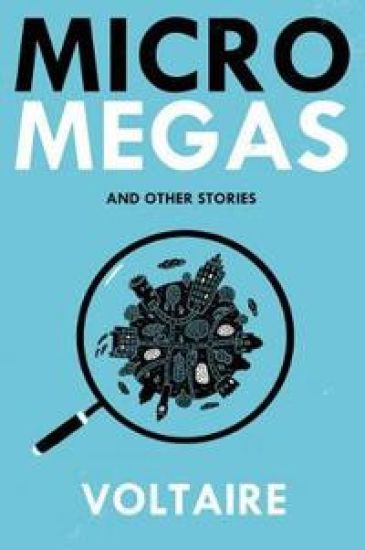
Micromegas is a six-hundred-and-fifty-year-old, thirty-nine-kilometre-high giant from the planet Sirius who can speak a thousand languages and has been expelled from his homeland for writing a heretical tract. On Saturn he befriends the local secretary of the Academy of Sciences – a comparative dwarf, being only two kilometres high – and the two decide to travel to earth together, where they will make startling discoveries about human nature. At once a story-length Bildungsroman and a philosophical tale, ‘Micromegas’ is a classic Enlightenment text, and is accompanied in this volume by thirteen other pieces – including ‘Plato’s Dream’ and ‘Memnon’ – all in a new translation by acclaimed French specialist Douglas Parmée.
Candide, ou l'Optimisme est un conte philosophique de Voltaire paru Gen ve en janvier 1759. Il a t r dit vingt fois du vivant de l'auteur (plus de cinquante aujourd'hui) ce qui en fait un des plus grands succ s litt raires fran ais. Anonyme en 1759, Candide est attribu un certain Monsieur le Docteur Ralph en 1761, la suite du remaniement du texte par Voltaire. Ce titre ronflant donne tout de suite le ton au lecteur qui pourrait h siter sur le genre de l'ouvrage: conte ou essai ? Art mineur ou art noble ? L'auteur prend, d s les premi res lignes, position contre la noblesse aux titres bien plus ronflants que celui-ci. Et que dire du nom du soi-disant docteur Ralph ? Rien de plus qu'une onomatop e qui ne laisse aucun doute sur le ton de cette oeuvre (voir Thunder-Ten-Tronckh, le ch teau de la situation initiale). Cette oeuvre si ironique d s les premi res lignes, ne laisse aucun doute sur l'origine de l'auteur, qui ne pouvait faire partie que des Lumi res. Et de l pense
Voltaire's Candide: Or The Optimist, And Rasselas Prince Of Abyssinia (1884) is a classic work of literature that tells the story of a young man named Candide who is raised in an idyllic paradise but soon finds himself thrust into a world of suffering and hardship. Along the way, he encounters a variety of characters who challenge his beliefs and force him to question the nature of the world and the existence of God. The novel is a satire of the Enlightenment philosophy of optimism, which held that the world was fundamentally good and that progress was inevitable. Through Candide's experiences, Voltaire critiques this view and argues that the world is full of injustice and suffering. The book also includes Rasselas Prince of Abyssinia, another tale of a young man's search for happiness and meaning in a world that often seems cruel and arbitrary. Together, these two works offer a powerful critique of the prevailing ideas of the time and a profound meditation on the human condition. This Is A New Release Of The Original 1884 Edition. This scarce antiquarian book is a facsimile reprint of the old original and may contain some imperfections such as library marks and notations. Because we believe this work is culturally important, we have made it available as part of our commitment for protecting, preserving, and promoting the world's literature in affordable, high quality, modern editions, that are true to their original work.