Kirjailija
Voltaire
Kirjat ja teokset yhdessä paikassa: 1 822 kirjaa, julkaisuja vuosilta 1800–2026, suosituimpiin kuuluu OEuvres complètes de Voltaire 79A(II). Vertaile teosten hintoja ja tarkista saatavuus suomalaisista kirjakaupoista.
Nimi esiintyy myös muodoissa: - Voltaire, Voltaire., * Voltaire
1 822 kirjaa
Kirjojen julkaisuvuodet: 1800–2026.

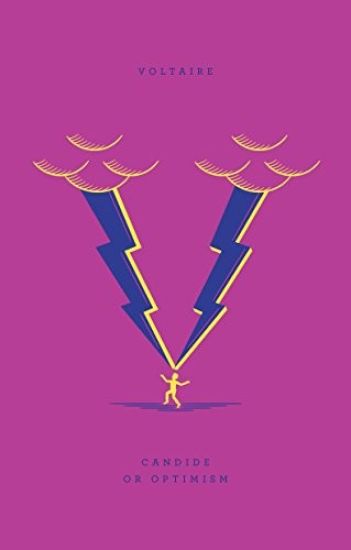
From A to Z, the Penguin Drop Caps series collects 26 unique hardcovers--featuring cover art by Jessica Hische It all begins with a letter. Fall in love with Penguin Drop Caps, a new series of twenty-six collectible and hardcover editions, each with a type cover showcasing a gorgeously illustrated letter of the alphabet. In a design collaboration between Jessica Hische and Penguin Art Director Paul Buckley, the series features unique cover art by Hische, a superstar in the world of type design and illustration, whose work has appeared everywhere from Tiffany & Co. to Wes Anderson's recent film Moonrise Kingdom to Penguin's own bestsellers Committed and Rules of Civility. With exclusive designs that have never before appeared on Hische's hugely popular Daily Drop Cap blog, the Penguin Drop Caps series launches with six perennial favorites to give as elegant gifts, or to showcase on your own shelves. V is for Voltaire. Voltaire's masterpiece belongs in the hands of every reader pondering our assumptions about human behavior and our place in the world. Voltaire tells of the ludicrous adventures and reversals of fortune of the na ve Candide, who doggedly believes that "all is for the best" even when faced with injustice, suffering, and despair. A satirical challenge to the empty optimism prevalent in Voltaire's eighteenth-century society is both controversial and entertaining, but also vitally relevant today in our world pervaded by--as Candide would say--"the mania for insisting that all is well when all is by no means well."
Candide, ou l'Optimisme est un roman philosophique �����crit par Voltaire en 1771. L'histoire suit les aventures du jeune Candide, qui est �����lev����� dans un ch�����teau en Westphalie et qui croit en la philosophie de l'optimisme, selon laquelle tout est pour le mieux dans le meilleur des mondes possibles. Cependant, apr�����s avoir �����t����� chass����� du ch�����teau et avoir travers����� le monde entier, Candide est confront����� ������ de nombreuses trag�����dies et d�����couvre que le monde est loin d'������tre parfait. Il rencontre des personnages tels que Pangloss, le philosophe optimiste, Cun�����gonde, son amour de jeunesse, et Martin, un pessimiste convaincu. Le livre est une satire de la philosophie de l'optimisme, ainsi que de la soci�����t����� et de la politique de l'�����poque. Voltaire utilise l'humour et l'ironie pour critiquer les institutions et les croyances de son temps, et pour d�����noncer les injustices et les violences de la soci�����t�����. Le roman aborde des th�����mes tels que la libert�����, la religion, la guerre, l'esclavage et la condition humaine. Candide, ou l'Optimisme est consid�����r����� comme l'une des �����uvres les plus importantes et les plus influentes de la litt�����rature fran�����aise. Elle a �����t����� traduite dans de nombreuses langues et a inspir����� de nombreux �����crivains et penseurs. Le livre est un classique de la litt�����rature du XVIIIe si�����cle et est toujours �����tudi����� et appr�����ci����� aujourd'hui. This Is A New Release Of The Original 1771 Edition. This scarce antiquarian book is a facsimile reprint of the old original and may contain some imperfections such as library marks and notations. Because we believe this work is culturally important, we have made it available as part of our commitment for protecting, preserving, and promoting the world's literature in affordable, high quality, modern editions, that are true to their original work.
Voltaires Candide: Or the Optimist, and Rasselas Prince of Abyssinia (1884)
Voltaire
Literary Licensing, LLC
2014
nidottu
With an Introduction and Notes by James Fowler, Senior Lecturer in French, University of Kent Candide (1759) is a bright, colourful literary firework display of a novella. With sparkling wit and biting humour, Voltaire hits several targets with fierce and comic satire: organised religion, the overweening pride of aristocrats, merchants' greed, colonial ambition and the hopeless complacency of Leibnizian philosophy that believes 'all is for the best in the best of all possible worlds'. Through this rites of passage story, with his central character, Candide, a naïve and impressionable young man, Voltaire attacks the social ills of his day, which remarkably remain as pertinent now as ever. Zadig is a tale of love and detection. Edgar Allan Poe was inspired by this story when he created C. Auguste Dupin in 'The Murders in the Rue Morgue', a story which established the modern detective fiction genre. The Ingenu recounts how a young man raised by Huron Indians discover the ways of Europe. Nanine is a sharp three act comedy concerned with marital dilemmas. In all these works Voltaire manages to combine humour with trenchant satire in a highly entertaining fashion.

A Philosophical Dictionary Volume X
Voltaire
Createspace Independent Publishing Platform
2014
nidottu
Candide is a French satire first published in 1759 by Voltaire, a philosopher of the Age of Enlightenment. 5] The novella has been widely translated, with English versions titled Candide: or, All for the Best (1759); Candide: or, The Optimist (1762); and Candide: Optimism (1947). 6] It begins with a young man, Candide, who is living a sheltered life in an Edenic paradise and being indoctrinated with Leibnizian optimism (or simply "optimism") by his mentor, Professor Pangloss. 7] The work describes the abrupt cessation of this lifestyle, followed by Candide's slow and painful disillusionment as he witnesses and experiences great hardships in the world. Voltaire concludes with Candide, if not rejecting optimism outright, advocating a deeply practical precept, "we must cultivate our garden", in lieu of the Leibnizian mantra of Pangloss, "all is for the best" in the "best of all possible worlds". Candide is characterized by its sarcastic tone as well as by its erratic, fantastical, and fast-moving plot. A picaresque novel with a story similar to that of a more serious coming-of-age narrative (Bildungsroman), it parodies many adventure and romance clich s, the struggles of which are caricatured in a tone that is bitter and matter-of-fact. Still, the events discussed are often based on historical happenings, such as the Seven Years' War and the 1755 Lisbon earthquake. 8] As philosophers of Voltaire's day contended with the problem of evil, so does Candide in this short novel, albeit more directly and humorously. Voltaire ridicules religion, theologians, governments, armies, philosophies, and philosophers. Through Candide, he assaults Leibniz and his optimism. As predicted by Voltaire, Candide has enjoyed both great success and great scandal. Immediately after its secretive publication, the book was widely banned to the public because it contained religious blasphemy, political sedition, and intellectual hostility hidden under a thin veil of na vet . 9] However, with its sharp wit and insightful portrayal of the human condition, the novel has since inspired many later authors and artists to mimic and adapt it. Today, Candide is recognized as Voltaire's magnum opus 9] and is often listed as part of the Western canon. It is among the most frequently taught works of French literature. 11] The British poet and literary critic Martin Seymour-Smith listed Candide as one of the 100 most influential books ever written.

The History of Peter the Great, Emperor of Russia
Voltaire
Createspace Independent Publishing Platform
2014
nidottu
Originally published in 1931 and reprinted many times after that, this book contains the French text of Voltaire's 23 essays on aspects of life in England in the eighteenth century. Wilson-Green includes a biography of Voltaire and an analysis of the letters, in addition to detailed notes on each essay. This book will be of value to anyone with an interest in Voltaire or in Anglo-French relations.
Chefs-d'Oeuvre Dramatiques: Stéréotype d'Herhan. Tome 3 Mérope
Voltaire
Hachette Livre - BNF
2014
pokkari
Chefs-d'oeuvre dramatiques: Tome Ier -IVe]: stereotype d'Herhan. Tome 3 / de VoltaireDate de l'edition originale: 1816Ce livre est la reproduction fidele d'une oeuvre publiee avant 1920 et fait partie d'une collection de livres reimprimes a la demande editee par Hachette Livre, dans le cadre d'un partenariat avec la Bibliotheque nationale de France, offrant l'opportunite d'acceder a des ouvrages anciens et souvent rares issus des fonds patrimoniaux de la BnF. Les oeuvres faisant partie de cette collection ont ete numerisees par la BnF et sont presentes sur Gallica, sa bibliotheque numerique. En entreprenant de redonner vie a ces ouvrages au travers d'une collection de livres reimprimes a la demande, nous leur donnons la possibilite de rencontrer un public elargi et participons a la transmission de connaissances et de savoirs parfois difficilement accessibles. Nous avons cherche a concilier la reproduction fidele d'un livre ancien a partir de sa version numerisee avec le souci d'un confort de lecture optimal. Nous esperons que les ouvrages de cette nouvelle collection vous apporteront entiere satisfaction. Pour plus d'informations, rendez-vous sur www.hachettebnf.fr
Este poema est dividido en cuatro partes; le precede un exordio, que es una dedicatoria a Federico II, rey de Prusia, y concluye con una corta deprecaci n al Todo Poderoso. En la primera parte hace ver el autor que Dios ha dado a los hombres las ideas de la justicia y de la conciencia, para que sepan conducirse, y que les ha dado igualmente todo lo que necesitan para su existencia. Esta es la ley natural, sobre la cual se halla fundada la religi n, y este es el solo principio que se desenvuelve en este poema. No se habla en l sino de la ley natural, y de ning n modo de la religi n y de sus augustos misterios. En la segunda parte responde el autor a las objeciones contra los principios de una moral universal, y da las pruebas de esta verdad. En la tercera demuestra qu habiendo la mayor parte de los hombres desfigurado, por medio de las opiniones que los dividen, el fundamento de la ley natural que los une, deben sufrirse los unos a los otros. En la cuarta dice el autor que pertenece a los gobiernos el calmar las desgraciadas disputas que turban las sociedades.