Kirjojen hintavertailu – 12 859 818 kirjaa ja 27 kauppaa
Kirjailija
W. G. Sebald
Kirjat ja teokset yhdessä paikassa: 60 kirjaa, julkaisuja vuosilta 1994–2026, suosituimpiin kuuluu The Emigrants. Vertaile teosten hintoja ja tarkista saatavuus suomalaisista kirjakaupoista.
Nimi esiintyy myös muodoissa: W.G. Sebald, W G Sebald
Migranternes historie er den moderne verdens historie, synes Sebald at sige. Menneskeliv, der har været stabile og ensartede i århundreder, rives op med rode og plantes om. I de fire lange fortællinger i De udvandrede fortæller han den historie ved at fortælle de individuelle historier, f.eks. om jøden, der nåede at forlade Tyskland i tide, men altid bar sin fortid med sig. W. G. Sebald (1944-2001) blev verdensberømt med romanen Austerlitz, der udkom kort før hans død. De udvandrede hører til blandt hans tidligere bøger, men fortælleformen og mange temaer går igen.
The Rings of Saturn--with its curious archive of photographs--records a walking tour of the eastern coast of England. A few of the things which cross the path and mind of its narrator (who both is and is not Sebald) are lonely eccentrics, Sir Thomas Browne's skull, a matchstick model of the Temple of Jerusalem, recession-hit seaside towns, wooded hills, Joseph Conrad, Rembrandt's "Anatomy Lesson," the natural history of the herring, the massive bombings of WWII, the dowager Empress Tzu Hsi, and the silk industry in Norwich. W. G. Sebald's The Emigrants (New Directions, 1996) was hailed by Susan Sontag as an "astonishing masterpiece perfect while being unlike any book one has ever read." It was "one of the great books of the last few years," noted Michael Ondaatje, who now acclaims The Rings of Saturn "an even more inventive work than its predecessor, The Emigrants."
Perfectly titled, Vertigo --W. G. Sebald's marvelous first novel -- is a work that teeters on the edge: compelling, puzzling, and deeply unsettling. An unnamed narrator, beset by nervous ailments, journeys accross Europe to Vienna, Venice, Verona, Riva, and finally to his childhood home in a small Bavarian village. He is also journeying into the past. Traveling in the footsteps of Stendhal, Casanova, and Kafka, the narrator draws the reader, line by line, into a dizzying web of history, biography, legends, literature, and -- most perilously -- memories.
Da Sebald påbegyndte det, der skulle blive hans hovedværk, romanen Austerlitz, lagde han et andet projekt til side – den om muligt endnu mere ambitiøse fortælling Campo Santo, som skulle begynde på øen Korsika og derfra forgrene sig ud til hele modernitetens Europa. Han nåede ikke at genoptage projektet før sin død i en bilulykke i 2001, året hvor Austerlitz udkom. De fire fragmenter af værket, der er samlet her, mere end antyder, hvad vi er gået glip af. Sebalds særegne blanding af vitalitet og melankoli, empati og pessimisme, hans sans for såvel historiens store linjer som den sigende detalje, fornægter sig ikke. Bogen indeholder desuden en række tekster fra årene 1975-2001, der på forskellig vis tager livtag med hans yndlingsforfattere: Franz Kafka, Vladimir Nabokov, Peter Handke og Bruce Chatwin, m.fl. Teksterne tillader os samtidig at følge Sebalds udvikling fra traditionel akademisk litteraturkritiker til den store lyrisk-melankolske essayist, han endte med at blive. W. G. Sebald (1944-2001) blev født i en landsby i det sydlige Tyskland. Han studerede både i Tyskland, Schweiz og England, og fra 1970 og frem til sin død underviste han ved University of East Anglia. I 1980’erne begyndte han at udgive litteratur skrevet på tysk, men oversat til engelsk, og med udgivelsen af Austerlitz (2001) vandt han bred international berømmelse. Han døde samme år i en bilulykke. På dansk er udkommet de tre skønlitterære værker De udvandrede (1995), Saturns ringe (2011) og senest Højde. Skræk. (2012), samt essayet Luftkrig og litteratur (2014). Austerlitz, der første gang udkom på dansk i 2003, genudgives 14. september 2016.
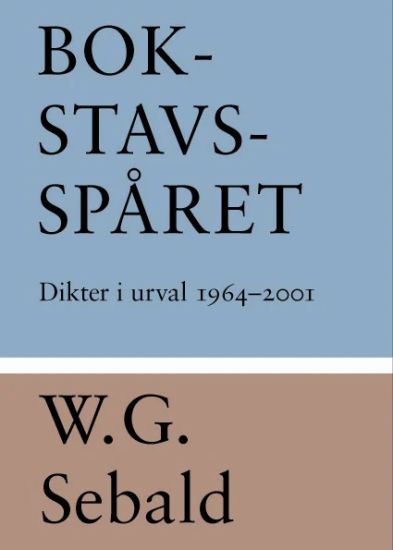
I W. G. Sebalds dikter möter oss ett språkligt landskap vars betydelser är lika oroande som svårfångade. Ofta tar texterna formen av notiser gjorda under vandringar, bilfärder eller tågresor, och de miljöer där jaget rör sig tycks ömsom skrämmande, ömsom lätt humoristiska i sin absurditet. Till hälften dold av dimmor och rök framträder en värld där betraktaren alltid är en främling; där ekon ur Europas traumatiska förflutna blandas med antik mytologi; där Tjechov, Goethe och Kafka trängs med fåglar, elefanter och fabeldjur; och där döden ständigt skymtar på andra sidan vattnet. Sebalds egenartade poesi har länge varit en välbevarad hemlighet i skuggan av hans romaner och berättelser. I Bokstavsspåret samlas ett urval av hans dikter på svenska för första gången. Här kan läsaren följa Sebalds väg från de första publikationerna i tjugoårsåldern till de allra sista texter han lämnade till tryck före sin död.
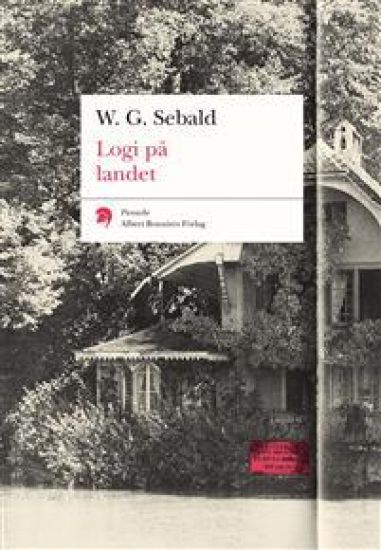
Panache I ett nät av korrespondenser fångar W. G. Sebald fem författare och en konstnär. Ursprungligen hörde författarna till dem som fick följa honom på hans landsflykt till England 1966, nedpackade i ryggsäcken; nu, 1997 – mellan Saturnus ringar och Austerlitz – ägnar han dem varsin studie: Johann Peter Hebel, Jean-Jacques Rousseau, Eduard Mörike, Gottfried Keller och Robert Walser. Sebalds litterära valfrändskaper är gärna solitära flanörer som, påfallande ofta, vantrivs med sin författarverksamhet; det tycks inte finnas någon gräns för de offer den upplyftande litterära texten kräver. Logi på landet avslutas med ett porträtt av trompe l'œil-målaren tillika klasskamraten Jan Peter Tripp. Till den svenska utgåvan av Logi på landet, i översättning av Ulrika Wallenström, har fogats ytterligare två litterära studier av Sebald, en om den tysk-svenske författaren Peter Weiss och en om den rysk-amerikanske författaren Vladimir Nabokov.
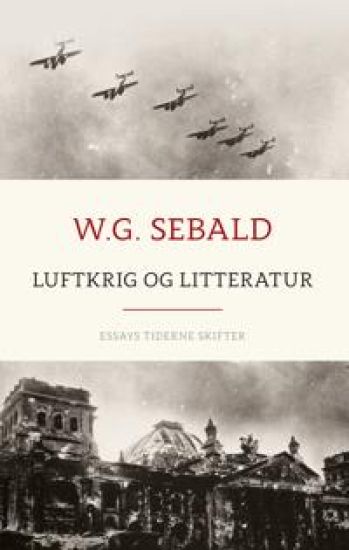
Som i alle W. G. Sebalds bøger romaner som essays er temaet i Luftkrig og litteratur hukommelse og hukommelsestab: Hvad der huskes og hvad der forsøges slettet fra erindringen. Her gælder det helt specifikt de allieredes bombning af Tyskland under Anden Verdenskrig. Over en million tons bomber blev kastet fra ikke mindre end 400.000 RAF-fly og krævede 600.000 civile ofre. Hvad er der blevet af denne katastrofe i den tyske efterkrigslitteratur? Da W. G. Sebald i efteråret 1997 for første gang afholdt en forelæsning om Luftkrig og litteratur på universitetet i Zürich var reaktionen forargelse. Sebald talte om en hel generation af tyske forfattere som ikke formåede at skrive om det de havde set og fastholde det i vores erindring. Det stod klart at han havde berørt et sår i efterkrigslitteraturen der efter et halvt århundrede endnu ikke var helet. Tyske forfattere tysk litteratur har fortiet den gru af hvilken Forbundsrepublikken opstod. W. G. Sebald (1944-2001) blev født i en landsby i det sydlige Tyskland. Han studerede både i Tyskland Schweiz og England og fra 1970 og frem til sin død underviste han ved University of East Anglia. I 1980 erne begyndte han at udgive litteratur skrevet på tysk men oversat til engelsk og med udgivelsen af Austerlitz (2001) vandt han bred international berømmelse. Han døde samme år i et biluheld. På dansk er udover romanen Austerlitz bl.a. udkommet de to store reflekterende rejseskildringer Saturns ringe (2011) og senest Højde. Skræk. (2012).
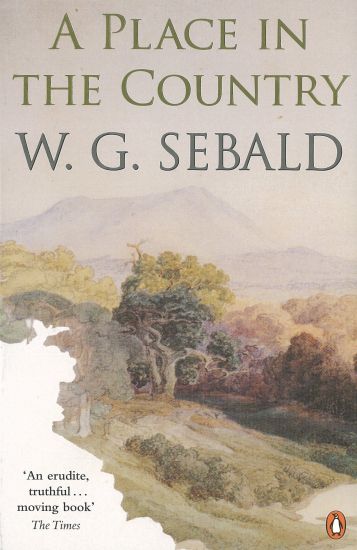
A Place in the Country is a window into the brilliant mind of W. G. Sebald'The greatest writer of our time' Peter CareyWhen W. G. Sebald travelled to Manchester in 1966, he packed in his bags certain literary favourites which would remain central to him throughout the rest of his life and during the years when he was settled in England. In A Place in the Country, he reflects on six of the figures who shaped him as a person and as a writer, from Jean-Jacques Rousseau to Jan Peter Tripp. Fusing biography and essay, and finding, as ever, inspiration in place - as when he journeys to the Ile St. Pierre, the tiny, lonely Swiss island where Jean-Jacques Rousseau found solace and inspiration - Sebald lovingly brings his subjects to life in his distinctive, inimitable voice.'A fascinating volume that confirms Sebald as one of Europe's most mysterious and best-loved literary imaginations' Evening Standard'Sebald was in possession of the uncanny ability to make his own intellectual obsessions, immediately, compulsively his reader's' Observer'Irresistible . . . an intimate anatomy of the pathos, absurdity and perverse splendour of trying to find patterns in the chaos of the world' IndependentW . G. Sebald was born in Wertach im Allgäu, Germany, in 1944 and died in December 2001. He studied German language and literature in Freiburg, Switzerland and Manchester. In 1996 he took up a position as an assistant lecturer at the University of Manchester and settled permanently in England in 1970. He was Professor of European Literature at the University of East Anglia and is the author of The Emigrants, The Rings of Saturn, Vertigo, Austerlitz, After Nature, On the Natural History of Destruction, Campo Santo, Unrecounted and a selection of poetry, Across the Land and the Water. Jo Catling taught German for a number of years alongside W. G. Sebald at the University of East Anglia, where she is currently a senior lecturer in the School of Literature, Drama and Creative Writing.
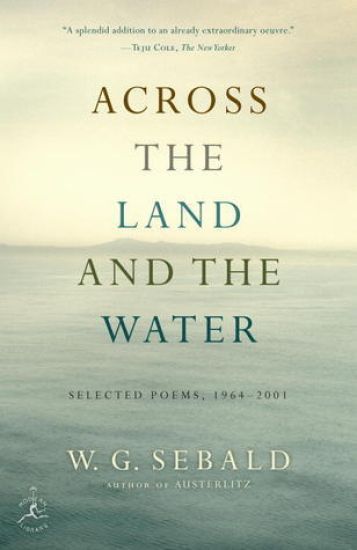
"A splendid addition to an already extraordinary oeuvre."--Teju Cole, The New Yorker German-born W. G. Sebald is best known as the innovative author of Austerlitz, the prose classic of World War II culpability and conscience that put its author in the company of Nabokov, Calvino, and Borges. Now comes the first major collection of this literary master's poems. Skillfully translated by Iain Galbraith, they range from pieces Sebald wrote as a student in the sixties to those completed right before his untimely death in 2001. In nearly one hundred poems--the majority published in English for the first time--Sebald explores his trademark themes, from nature and history, to wandering and wondering, to oblivion and memory. Soaring and searing, the poetry of W. G. Sebald is an indelible addition to his superb body of work, and this collection is bound to become a classic in its own right. "How fortunate we are to have this writer's startling imagination freshly on display once again, expressed in language honed to a perfect simplicity."--Billy Collins "A watershed volume . . . nothing less than transcendent."--BookPage " Sebald was] a defining writer of his era."--The New Republic
Højde. Skræk. den tyske mesterfortæller W. G. Sebalds første store værk - består af fire sammenhængende fortællinger. I en forbløffende blanding af personlig fortælling litterær efterforskning fiktion og fakta historie og rejseberetning følger vi hans hovedpersoner. De er alle rejsende omkringflakkende rastløse ensomme og en anelse på flugt krydser de hinandens spor. Den enes oplevelser ligner den andens. Den første af de fire fortællinger skildrer den unge franske kavaleriofficer Henri Beyles oplevelser under et af Napoleon Bonapartes felttog anno 1800. Beyle blev senere sig selv og udgav under pseudonymet Stendhal de berømte romaner Rødt og sort og Hoffet i Parma. Derefter følger vi W. G. Sebalds egen flugtagtige rejse fra Norwich over Wien til Gardasøen. Til Gardasøen rejser også i den tredje fortælling den tjekkisk-jødiske forfatter og forsikringsadvokat dr. K (Franz Kafka) i efteråret 1913 fra Prag over Wien. Under en international kongres for forsikringsvæsen gribes han af skyldfølelse over en mislykket forlovelse men forelsker sig ikke desto mindre udsigtsløst i en tuberkuloseramt kvinde fra Genua. Endelig foretager Sebald under endnu en rejse en afstikker tilbage til sin fødeby W. i det sydlige Bayern. I gæstgiveriet hvor han indlogerer sig får han ved et tilfælde nøglen til sit gamle børneværelse. I ugevis skriver han siddende ved et bord i krostuen på sine barndomserindringer. W. G. Sebald (1944-2001) var krigsbarn født i Bayern. Efter studier i Schweiz og England valgte Sebald at bosætte sig fast i England. Ved sin død (i en trafikulykke) som 57-årig blev han af mange betragtet som en mulig kandidat til Nobelprisen i litteratur. På dansk er udgivet De udvandrede (1995) Austerlitz (2003) og senest Saturns ringe (2011).
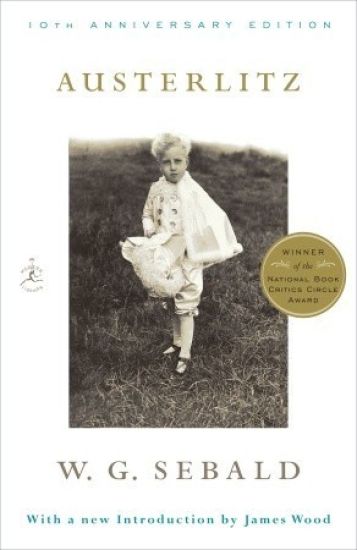
W. G. Sebald's celebrated masterpiece, "one of the supreme works of art of our time" (The Guardian), follows a man's search for the answer to his life's central riddle. "Haunting . . . a powerful and resonant work of the historical imagination . . . Reminiscent at once of Ingmar Bergman's Wild Strawberries, Kafka's troubled fables of guilt and apprehension, and, of course, Proust's Remembrance of Things Past."--Michiko Kakutani, The New York Times One of The New York Times's 10 Best Books of the 21st Century - A Kirkus Reviews Best Fiction Book of the Century - A Los Angeles Times, Entertainment Weekly, and New York Magazine Best Book of the Year Winner of the National Book Critics Circle Award, Koret Jewish Book Award, Independent Foreign Fiction Prize, and Jewish Quarterly Wingate Literary Prize A small child when he comes to England on a Kindertransport in the summer of 1939, Jacques Austerlitz is told nothing of his real family by the Welsh Methodist minister and his wife who raise him. When he is a much older man, fleeting memories return to him, and obeying an instinct he only dimly understands, Austerlitz follows their trail back to the world he left behind a half century before. There, faced with the void at the heart of twentieth-century Europe, he struggles to rescue his heritage from oblivion. Over the course of a thirty-year conversation unfolding in train stations and travelers' stops across England and Europe, W. G. Sebald's unnamed narrator and Jacques Austerlitz discuss Austerlitz's ongoing efforts to understand who he is--a struggle to impose coherence on memory that embodies the universal human search for identity.
A classic novel of post-war Europe, haunting and timelessly beautiful'The greatest writer of our time' Peter CareyIn 1939, five-year-old Jacques Austerlitz is sent to England on a Kindertransport and placed with foster parents. This childless couple promptly erase from the boy all knowledge of his identity and he grows up ignorant of his past. Later in life, after a career as an architectural historian, Austerlitz - having avoided all clues that might point to his origin - finds the past returning to haunt him and he is forced to explore what happened fifty years before. Austerlitz is W. G. Sebald's melancholic masterpiece.'Mesmeric, haunting and heartbreakingly tragic. Simply no other writer is writing or thinking on the same level as Sebald' Eileen Battersby, Irish Times'Greatness in literature is still possible' John Banville, Irish Times, Books of the Year'A work of obvious genius' Literary Review'A fusion of the mystical and the solid ... His art is a form of justice - there can be, I think, no higher aim' Evening Standard'Spellbindingly accomplished; a work of art' The Times Literary Supplement 'I have never read a book that provides such a powerful account of the devastation wrought by the dispersal of the Jews from Prague and their treatment by the Nazis' Observer'A great book by a great writer' Boyd Tonkin, IndependentW . G. Sebald was born in Wertach im Allgäu, Germany, in 1944 and died in December 2001. He studied German language and literature in Freiburg, Switzerland and Manchester. In 1996 he took up a position as an assistant lecturer at the University of Manchester and settled permanently in England in 1970. He was Professor of European Literature at the University of East Anglia and is the author of The Emigrants, The Rings of Saturn, Vertigo, Austerlitz, After Nature, On the Natural History of Destruction, Campo Santo, Unrecounted, A Place in the Country. His selected poetry is published in a volume called Across the Land and the Water.
En rejseskildring af en helt særlig slags. En uophørlig blanding af fiktion selvbiografi og historie. En rejse til fods gennem det engelske grevskab Suffolk et tyndt befolket stribe land langs den engelske østkyst men samtidig en opdagelsesrejse gennem Englands imperiale fortid. I august en måned der siden tidernes morgen skal have været under indflydelse af Saturn vandrer Sebald gennem det violette hedelandskab. Han besøger forfaldne landslotte taler med gamle godsejere og kommer på sin vej igen og igen på sporet af højst underfundige og sælsomme historier. Saturns ringe transporterer læseren vidt omkring og gennem mange tider. Forfatteren fortæller om de victorianske slottes storhedstid beretter om rovdriften på Congo bevidnet af Joseph Conrad sporer den europæiske silkehandel tilbage til Kina. Sebald følger også i fodsporene på den ødelæggelse som mennesket har bragt over sig selv. Klart og præcist fører han protokol over de stille katastrofer som menneskets voldsomme indgriben har forrettet i disse afsidesliggende egne. I sidste instans forvandler fodrejsen sig til en rejse gennem kulturens og naturens forfaldshistorie. W. G. Sebald (1944-2001) var krigsbarn født i Bayern. Efter studier i Schweiz og England valgte Sebald at bosætte sig fast i England hvor han underviste i sprog og litteratur ved universitetet i Norwich. Fra 1990 begyndte hans bøger at udkomme på såvel tysk som engelsk. Ved sin død (i en trafikulykke) som 57-årig blev han af mange betragtet som en mulig kandidat til nobelprisen i litteratur. På dansk er hidtil udgivet De udvandrede (1995) og Austerlitz (2003). Saturns ringe efterfølges i foråret 2012 af endnu et mesterværk af W. G. Sebald på dansk: HøjdeSkræk (Schwindel Gefühle).
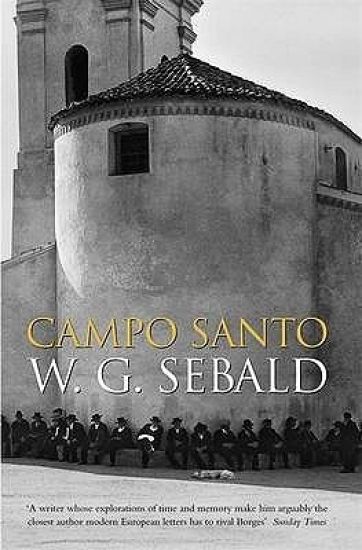
Campo Santo is a collection of essays by W. G. SebaldWhen W. G. Sebald died tragically in 2001 a unique voice was silenced. Campo Santo is a collection of the pieces he left behind - none of them previously published in book form - which provide a powerful insight into the themes that came to dominate his life. Four pieces pay tribute to Corsica, weaving elegiacally between past and present. Sebald also examines the works of writers such as Kafka, Nabokov, and Günter Grass, showing both how literature can provide restitution for the injustices of the world and how such literature came to have so great an influence on him. Campo Santo is a fitting memorial to W. G. Sebald, who himself studied the shifting nature of memory and time with such sensitivity.'A precious addition to the canon' Independent'Will come to be seen as indispensable to an understanding of his work' Sunday Times'Full of a sense of liberation and lightness ... these [pieces] abound in energy and work the authentic Sebaldian magic' Literary Review'We have become suspicious, rightly, of claims for literary greatness, but in Sebald's case the claim was triumphantly justified. He was, he is, the real thing' John Banville, Guardian'Sebald was probably the greatest intellect and voice of the late twentieth century' Anthony Beevor, The Times'A writer whose explorations of time and memory make him arguably the closest author modern European letters has to rival Borges' Sunday TimesW . G. Sebald was born in Wertach im Allgäu, Germany, in 1944 and died in December 2001. He studied German language and literature in Freiburg, Switzerland and Manchester. In 1996 he took up a position as an assistant lecturer at the University of Manchester and settled permanently in England in 1970. He was Professor of European Literature at the University of East Anglia and is the author of The Emigrants, The Rings of Saturn, Vertigo, Austerlitz, After Nature, On the Natural History of Destruction, Campo Santo, Unrecounted, For Years Now and A Place in the Country. His selected poetry is published in a volume called Across the Land and the Water.