Kirjailija
W. G. Sebald
Kirjat ja teokset yhdessä paikassa: 60 kirjaa, julkaisuja vuosilta 1994–2026, suosituimpiin kuuluu The Emigrants. Vertaile teosten hintoja ja tarkista saatavuus suomalaisista kirjakaupoista.
Nimi esiintyy myös muodoissa: W.G. Sebald, W G Sebald
60 kirjaa
Kirjojen julkaisuvuodet: 1994–2026.
Es gibt mehr als 10 gute Gründe dieses Buch zu kaufen! Denn: Wer in unserer unübersichtlichen Welt Erfolg haben will, muss sich schlauer Listen bedienen!
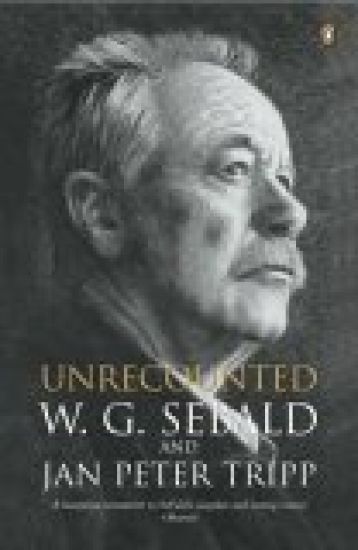
Unrecounted is a book of poems and images from one of the most admired European writers, W. G. Sebald, and his friend and collaborator, the German artist Jan Peter Tripp. For a number of years until Sebald's death in 2001, the two exchanged poems and lithographs. Unrecounted is the startlingly original result of this long artistic friendship - a creative dialogue inspired by shared concerns. Tripp's lithographs, which portray pairs of eyes - among them those of Beckett, Borges, Proust - combine with W. G. Sebald's words in Unrecounted to speak of moments salvaged from time passing, of our eyes bearing witness, and of memory and remembrance.'Condenses Sebald's complex visual imagination to its poetic core' Scotland on Sunday'Elegiac, enhancing ... Sebald will not be forgotten' Time Out'A haunting testament to Sebald's singular and lasting vision' Observer'The magic of W. G. Sebald's incandescent body of work continues to unfold, with this unexpected collaboration' Susan Sontag'Anyone with a serious interest in fiction should read Sebald' Daily TelegraphW. G. Sebald was born in Germany in 1944 and settled permanently in England in 1970, where he was Professor of European Literature at the University of East Anglia until his death in 2001. He is the author of four works of fiction: The Emigrants, which won the Berlin Literature Prize, the Heinrich Heine Prize, and the Joseph Breitbach Prize; The Rings of Saturn; Vertigo; and Austerlitz, which was awarded the Independent Foreign Fiction Prize and the National Book Critics Circle Award. Alongside this stand books of poetry For Years Now, After Nature, Unrecounted, and Across the Land and the Water, and the non-fiction books On the Natural History of Destruction and Campo Santo. Jan Peter Tripp was born in 1945 and lives and works in Alsace.
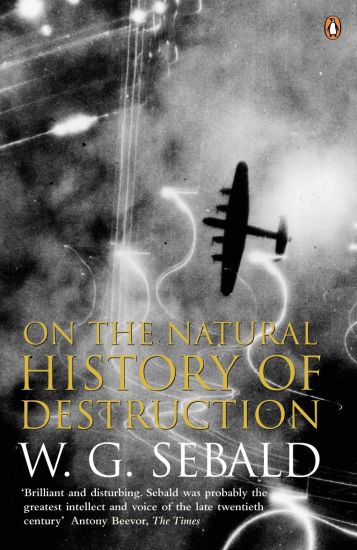
On The Natural History Of Destruction
W. G. Sebald
Penguin Books Ltd
2004
pokkari
Halvin toimitettuna 18,70 €
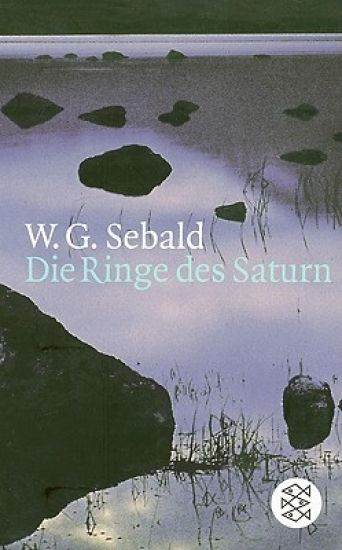
Sebald's On the Natural History of Destruction explores German writers' silence about a moment of mass destructionIn the last years of World War II, a million tons of bombs were dropped by the Allies on one hundred and thirty-one German towns and cities. Six hundred thousand civilians died, and three and a half million homes were destroyed. When it has cast such a very dark shadow over his life and work, Sebald asks, how have so many writers allowed themselves to write it out of their experience and avoid articulating the horror? W. G. Sebald's On the Natural History of Destruction sparked a wide-ranging debate in the German press.'Sebald makes exquisite art out of vile history' Boyd Tonkin, Independent'One of the most important writers of our time' A. S. Byatt, New Statesman 'Demands to be read for its grand emotional power ... it absorbs and horrifies and illuminates' Scotsman'Brilliant and disturbing' Antony Beevor, The TimesW . G. Sebald was born in Wertach im Allgäu, Germany, in 1944 and died in December 2001. He studied German language and literature in Freiburg, Switzerland and Manchester. In 1996 he took up a position as an assistant lecturer at the University of Manchester and settled permanently in England in 1970. He was Professor of European Literature at the University of East Anglia and is the author of The Emigrants, The Rings of Saturn, Vertigo, Austerlitz, After Nature, On the Natural History of Destruction, Campo Santo, Unrecounted, For Years Now and A Place in the Country. His selected poetry is published in a volume called Across the Land and the Water.
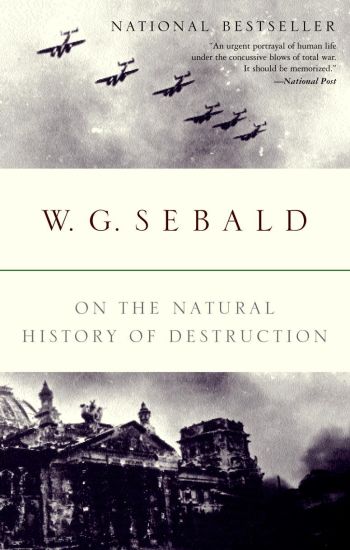
During World War Two, 131 German cities and towns were targeted by Allied bombs, a good number almost entirely flattened. Six hundred thousand German civilians died--a figure twice that of all American war casualties. Seven and a half million Germans were left homeless. Given the astonishing scope of the devastation, W. G. Sebald asks, why does the subject occupy so little space in Germany's cultural memory? On the Natural History of Destruction probes deeply into this ominous silence.
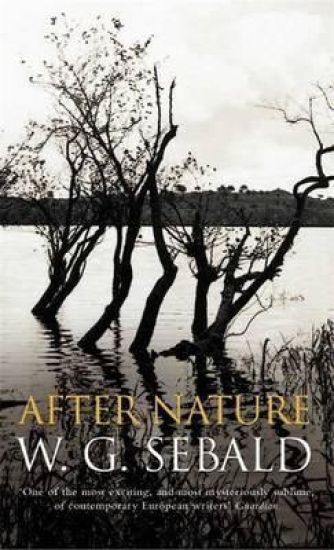
A biographical poetic triptych explores the lives of medieval German painter Matthias Grunewald, eighteenth-century explorer and naturalist Georg Stellar, and Sebald himself, as his describes his own haunting odyssey through twentieth-century Germany. Reprint. 10,000 first printing.
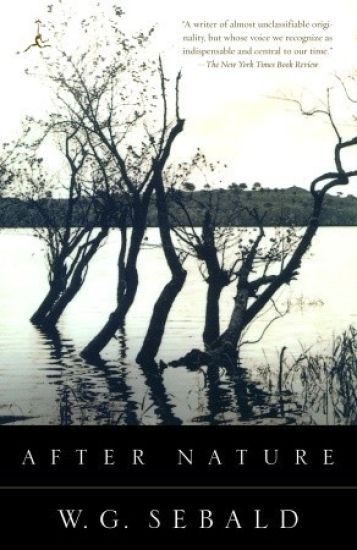
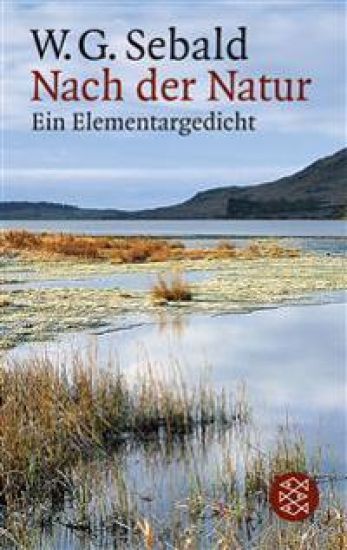
After Nature is the very first literary work by W. G. Sebald, author of Austerlitz'The greatest writer of our time' Peter CareyAfter Nature by W. G. Sebald, author of Austerlitz, is his first literary work and the start of his highly personal and brilliant writing journey. In this long prose poem, Sebald introduces many of the themes that he explores in his subsequent books. Focusing on the conflict between man and nature, each of the three distinct parts of After Nature give centre stage to a different character from a different century - the last being W. G. Sebald himself.'A deeply intelligent book, but also a marvellously warm, exciting and compassionate one' Andrew Motion'A début of rare poetic grandeur' Irish Times'Astonishing writing. A true poet at work' Evening Standard'Graceful, allusive, serious, but also immensely readable' Sunday Telegraph'When you read Sebald you are transported to another realm' Literary ReviewW . G. Sebald was born in Wertach im Allgäu, Germany, in 1944 and died in December 2001. He studied German language and literature in Freiburg, Switzerland and Manchester. In 1996 he took up a position as an assistant lecturer at the University of Manchester and settled permanently in England in 1970. He was Professor of European Literature at the University of East Anglia and is the author of The Emigrants, The Rings of Saturn, Vertigo, Austerlitz, After Nature, On the Natural History of Destruction, Campo Santo, Unrecounted, For Years Now and A Place in the Country. His selected poetry is published in a volume called Across the Land and the Water.
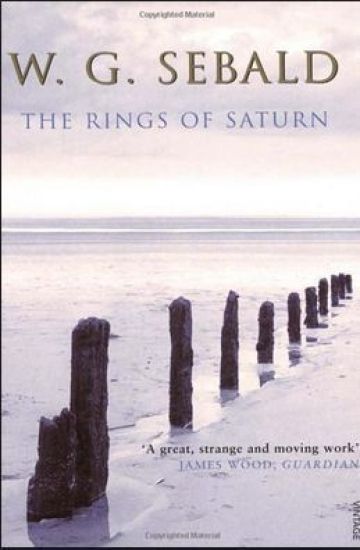
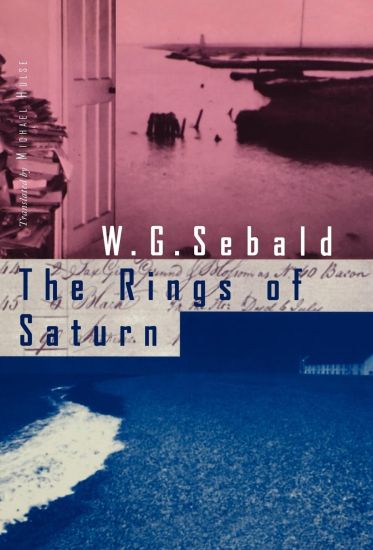
A work of imaginative literature, this fictional record of a journey on foot through coastal East Anglia, Sebald's home for the last 20 years, is also an exploration of England's pastoral and imperial past, evoking people and cultures of the region, past and present
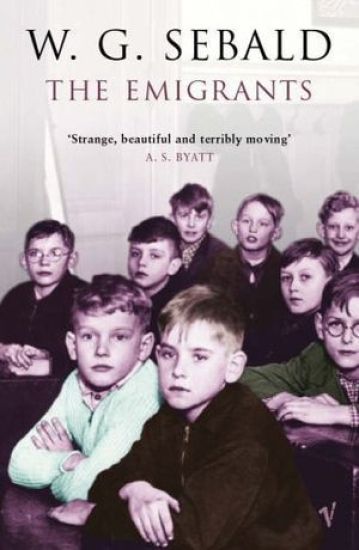
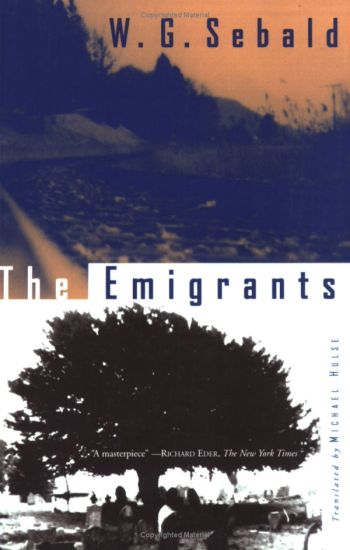
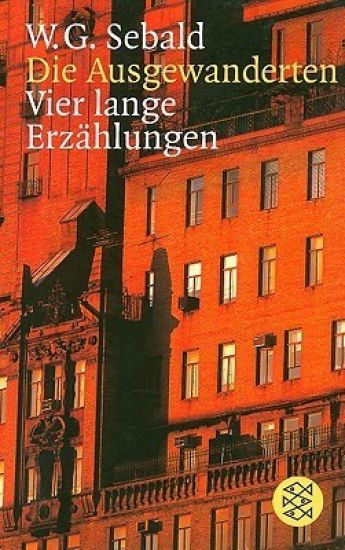
What initially appears to be a plain account of the lives of Jewish emigrants in Norfolk, Austria, America and Manchester, merges into an evocation of the experience of exile and the loss of homeland.
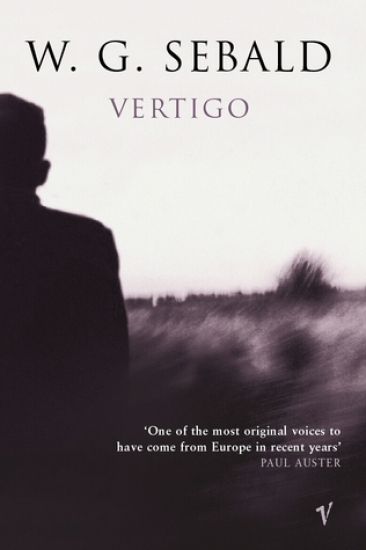
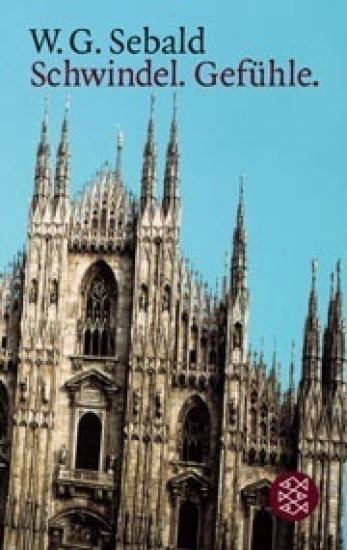
At moments when reality shows itself to be unstable or uncanny, we experience a form of vertigo. This experience is further complicated when we try to transform experience into writing, and fact clashes with memory. Sebald's novel, part fiction, part travelogue explores this theme.
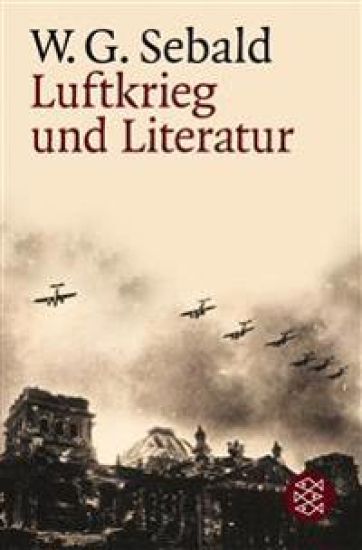
Eine provozierende These: Die deutsche Literatur hat vor dem Grauen des Luftkriegs versagt. Mit analytischer Schärfe und großem Materialreichtum markiert Sebald eine Wunde in der Nachkriegsliteratur, die bis heute nicht verheilt ist. Seine herausfordernde Untersuchung wird ergänzt durch einen Essay, mit dem Sebald auf die erregten Diskussionen antwortet.
A fictional account of a walking tour along England's coast provides the narrator with a rich source for reflection on the country's history
Ein Reisebericht besonderer Art. Zu Fuß ist Sebald in der englischen Grafschaft Suffolk unterwegs, einem nur dünn besiedelten Landstrich an der englischen Ostküste. Im August, ein Monat, der seit altersher unter dem Einfluß des Saturn stehen soll, wandert Sebald durch die violette Heidelandschaft, besichtigt verfallene Landschlösser, spricht mit alten Gutsbesitzern und stößt auf seinem Weg immer wieder auf die Spuren oft wundersamer Geschichten. So erzählt er von den Glanzzeiten viktorianischer Schlösser, berichtet aus dem Leben Joseph Conrads, erinnert an die unglaubliche Liebe des Vicomte de Chateaubriand oder spürt dem europäischen Seidenhandel bis China nach. Mit klarer und präziser Sprache protokolliert er jedoch auch die stillen Katastrophen, die sich mit dem gewaltsamen Eingriff der Menschen in diesen abgelegenen Landstrich vollzogen. So verwandelt sich der Fußmarsch letztlich in einen Gang durch eine Verfallsgeschichte von Kultur und Natur, die Sebald mit einer faszinierenden Wahrnehmungsfähigkeit nachzeichnet. Und ganz nebenbei entsteht eine liebevolle Hommage an den Typus des englischen Exzentrikers.
Four narratives weave history and fiction together as refugees from the Holocaust remember their experiences
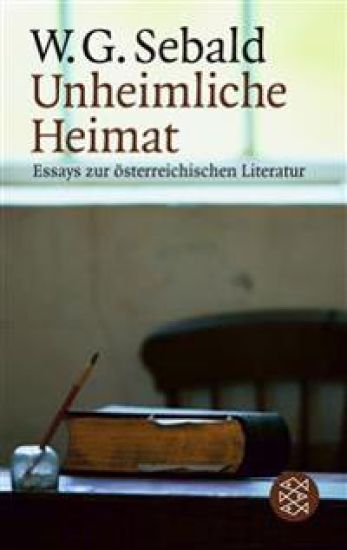
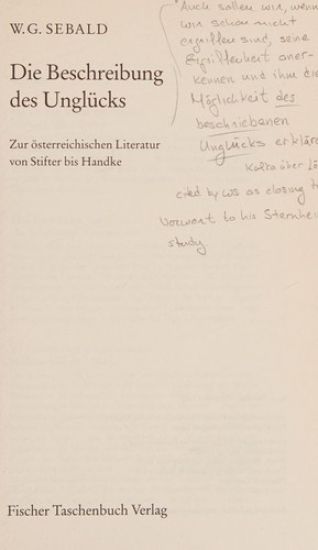
In neun Studien untersucht Sebald den Themenkomplex Heimat und Exil, der für die österreichische Literatur des 19. und 20. Jahrhunderts so charakteristisch ist. Seine Arbeiten setzen im frühen 19. Jahrhundert ein, bei dem nur wenig bekannten Charles Sealsfield und schlagen den Bogen über die gleichfalls vernachlässigten Schtetlgeschichten Leopold Komperts, über den Wiener Fin-de-si?cle-Literaten Peter Altenberg, über Franz Kafka, Joseph Roth bis hinein in die Gegenwart, die durch Jean Am?ry, Gerhard Roth und Peter Handke vertreten ist. All diesen Autoren ist gemeinsam, daß sie an der 'Unheimlichkeit der Heimat' gelitten haben bzw. noch immer leiden. Behutsam macht Sebald deutlich, wie oft dieses Leiden an der Heimat sowie die vage Sehnsucht nach ihr für österreichische Autoren zum Thema, wenn nicht sogar Anlaß des Schreibens geworden sind.
Schwindelartige Gefühle der Irritation - in den vier durch wiederkehrende Motive und literarische Anspielungen kunstvoll miteinander verwobenen, geheimnisvollen Geschichten überkommen sie den Erzähler immer dann, wenn sich zwischen Erinnerung und Wirklichkeit eine bedrohliche Kluft auftut. Neben dem französischen Romancier Henri Beyle alias Stendhal ist es vor allem Franz Kafka, dem sich der Autor über die literarische Bewunderung hinaus verbunden fühlt und dessen ruheloser, lebendigtoter Jäger Gracchus durch alle vier Geschichten geistert. Es ist die Melancholie, die Sebald an diesen beiden Autoren interessiert und seinen eigenen Erfahrungen gegenüberstellt, denn wie der Erzähler selbst wurden auch Stendhal und Kafka von Eingebungen getrieben, von Träumen, Ahnungen und - ? Schwindelgefühlen? geplagt.
Die Beschreibung des Unglücks
W. G. Sebald
S. Fischer Verlag
1994
pokkari
Halvin toimitettuna 24,90 €
In diesen aufschlußreichen sowie brillant formulierten Essays zu Werken von Stifter, Schnitzler, Hofmannsthal und Kafka, von Canetti, Bernhard, Handke, Ernst Herbeck und Gerhard Roth gelingt es dem Schriftsteller und Literaturwissenschaftler Sebald, einige bislang oft wenig beachtete Merkmale österreichischer Literatur ins Blickfeld zu rücken. Im Mittelpunkt seiner Analysen stehen die psychischen Voraussetzungen des Schreibens, insbesondere ?das Unglück des schreibenden Subjekts?, mit dem Sebald die eigentümliche Schwermut in der österreichischen Literatur zu erklären versucht. Einfühlsam geht er der Frage nach, inwiefern persönliche Existenznöte, aber auch historische und politische Kalamitäten das Schreiben dieser österreichischen Autoren jeweils beeinflußt haben, und folgert: ? Die Beschreibung des Unglücks schließt in sich die Möglichkeit zu seiner Überwindung ein?.