Kirjojen hintavertailu – 12 859 818 kirjaa ja 27 kauppaa
Kirjailija
Walt Whitman
Kirjat ja teokset yhdessä paikassa: 515 kirjaa, julkaisuja vuosilta 1855–2026, suosituimpiin kuuluu Ny Jord 3-4. Vertaile teosten hintoja ja tarkista saatavuus suomalaisista kirjakaupoista.
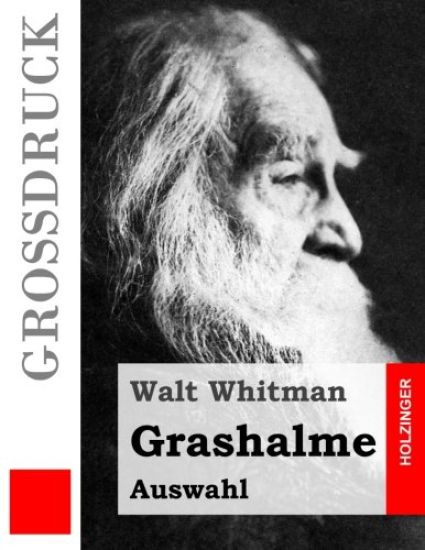
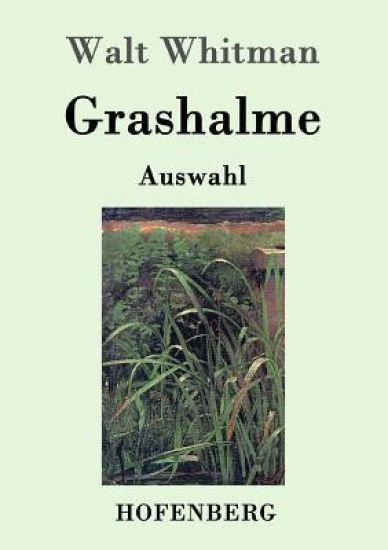
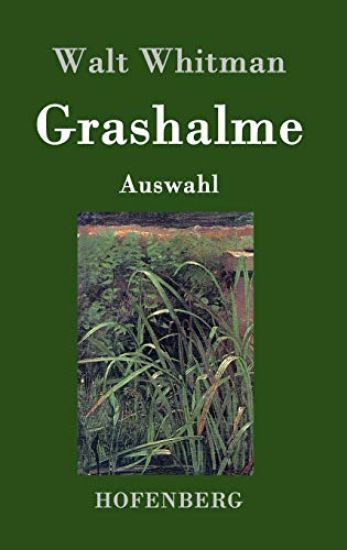
Walt Whitman: Grashalme. (Auswahl) Lesefreundlicher Gro druck in 16-pt-Schrift Edition Holzinger. Gro format, 216 x 279 mm Berliner Ausgabe, 2015 Vollst ndiger, durchgesehener Neusatz mit einer Biographie des Autors bearbeitet und eingerichtet von Michael Holzinger Erstdruck der ersten Version (anonym im Selbstverlag): Brooklyn, New York 1855. Die Ausgabe wurde in den folgenden 8 Auflagen immer wieder erweitert. Die endg ltige Version der Sammlung erschien als Ausgabe letzter Hand: Philadelphia (David McKay) 1891/92. Der Text der hier vorliegenden Auswahl folgt der bers. v. Wilhelm Sch lermann. Textgrundlage ist die Ausgabe: Whitman, Walt: Grashalme. bers. v. Wilhelm Sch lermann, Leipzig: Eugen Diederichs, 1904 Herausgeber der Reihe: Michael Holzinger Reihengestaltung: Viktor Harvion Umschlaggestaltung unter Verwendung des Bildes: Walt Whitman Gesetzt aus Minion Pro, 16 pt.
The Uncollected Poetry and Prose of Walt Whitman Volume 2 is a collection of various early manuscripts of the renowned American poet, Walt Whitman. The book includes a wide range of unpublished poems, essays, and other writings that were not included in his previous works. The manuscripts were discovered and compiled by the editor, Emory Holloway, who provides an introduction to the book. The collection offers a unique insight into the creative process of one of America's most celebrated poets and sheds light on the evolution of his writing style. The book is a must-read for fans of Whitman's work, as well as anyone interested in the history of American literature. This Is A New Release Of The Original 1921 Edition. This scarce antiquarian book is a facsimile reprint of the old original and may contain some imperfections such as library marks and notations. Because we believe this work is culturally important, we have made it available as part of our commitment for protecting, preserving, and promoting the world's literature in affordable, high quality, modern editions, that are true to their original work.
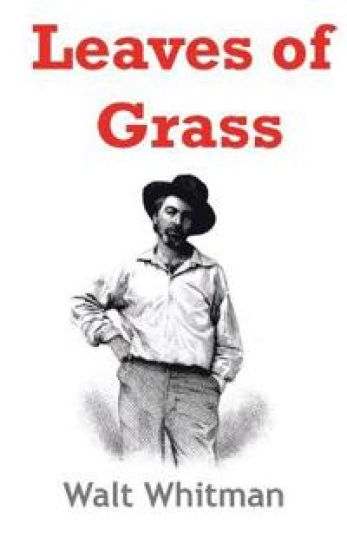
Leaves of Grass is a poetry collection by the American poet Walt Whitman (1819-1892). Though the first edition was published in 1855, Whitman spent his entire life writing and re-writing Leaves of Grass, revising it in several editions until his death. This resulted in vastly different editions over four decades-the first a small book of twelve poems and the last a compilation of over 400 poems. The poems of Leaves of Grass are loosely connected and each represents Whitman's celebration of his philosophy of life and humanity. This book is notable for its discussion of delight in sensual pleasures during a time when such candid displays were considered immoral. Where much previous poetry, especially English, relied on symbolism, allegory, and meditation on the religious and spiritual, Leaves of Grass (particularly the first edition) exalted the body and the material world. Influenced by Ralph Waldo Emerson and the Transcendentalist movement, itself an offshoot of Romanticism, Whitman's poetry praises nature and the individual human's role in it. However, much like Emerson, Whitman does not diminish the role of the mind or the spirit; rather, he elevates the human form and the human mind, deeming both worthy of poetic praise. With one exception, the poems do not rhyme or follow standard rules for meter and line length. Among the poems in the collection are "Song of Myself", "I Sing the Body Electric", "Out of the Cradle Endlessly Rocking". Later editions included Whitman's elegy to the assassinated President Abraham Lincoln, "When Lilacs Last in the Dooryard Bloom'd". In popular culture Leaves of Grass plays a prominent role in the AMC TV series Breaking Bad. For example, episode 5.8 - titled "Gliding Over All" after poem 271 in the book - pulls together many of the series' references to Leaves of Grass, including the fact, noted in episode 4.4, "Bullet Points" and made more salient in "Gliding Over All", that the main character, Walter White, shares Walt Whitman's initials. Numerous reviewers have analyzed and discussed the various connections among Walt Whitman/Leaves of Grass/"Gliding Over All", the character Walter White, and the show Breaking Bad. Leaves of Grass plays a major role in the John Green novel Paper Towns. The 1989 film Dead Poets Society makes repeated references to the poem O Captain My Captain from Leaves of Grass, along with other references to Whitman himself.
Ralph Waldo Emerson issued a call for a great poet to capture and immortalize the unique American experience. In 1855, an answer came with Walt Whitman's Leaves of Grass. Today, this masterful collection remains not only a seminal event in American literature but also the incomparable achievement of one of America's greatest poets--an exuberant, passionate man who loved his country and wrote of it as no other has ever done. Walt Whitman was a singer, thinker, visionary, and citizen extraordinaire. Thoreau called Whitman "probably the greatest democrat that ever lived," and Emerson judged Leaves of Grass as "the most extraordinary piece of wit and wisdom America has yet contributed." The text presented here is that of the "Deathbed" or ninth edition of Leaves of Grass, published in 1892. The content and grouping of poems is the version authorized by Whitman himself for the final and complete edition of his masterpiece.