Kirjojen hintavertailu – 12 859 818 kirjaa ja 27 kauppaa

Kirjailija

Walt Whitman

Kirjat ja teokset yhdessä paikassa: 515 kirjaa, julkaisuja vuosilta 1855–2026, suosituimpiin kuuluu Ny Jord 3-4. Vertaile teosten hintoja ja tarkista saatavuus suomalaisista kirjakaupoista.

515 kirjaa

Kirjojen julkaisuvuodet: 1855–2026.

Songs of Democracy

Songs of Democracy

Walt Whitman

Windham Press
2013
nidottu
SONGS of DEMOCRACY By WALT WHITMAN THICK-SPRINKLED BUNTING Thick-sprinkled bunting Flag of stars Long yet your road, fateful flag --long yet your road, and lined with bloody death For the prize I see at issue, at last is the world All its ships and shores I see, interwoven with your threads, greedy banner Dream'd again the flags of kings, highest born, to flaunt unrival'd? O hasten, flag of man O with sure and steady step, passing highest flags of kings, Walk supreme to the heavens, mighty symbol--run up above them all, Flag of stars thick-sprinkled bunting INTRODUCTION THOSE who know their Whitman will no doubt find somewhat ridiculous an enterprise which purposes to isolate a limited number of his poems under the title of the present volume, so completely is his work given up to the celebration of democracy. They will be fortified in their views, moreover, by the consciousness that the author himself would have shared them. Whitman saw in Leaves of Grass an organism, something which must be taken entire or not at all. Of the considerable number of "Selections" offered to the fearful, only two or three were published with his consent, and that a very reluctant consent, yielded at the promptings of a kindly desire not to wound with a rebuff the good intentions of his friends. He seems to have felt they were, after all, Edmund Clarence Stedman's or Elizabeth Porter Gould's selections, and as such were important only for the light they threw on the judgment of those excellent persons and the taste of their friends. He himself stood squarely by all that he had written, and refused to delete a line even at the urging of his much-admired Emerson. In his old age, face to face with his unpopularity, with the disapproval, even with the "anger and contempt," of his own time, he notes as "the best comfort of the whole business (after a band of the dearest friends and upholders ever vouchsafed to man or cause--doubtless all the more faithful and uncompromising--this little phalanx --for being so few)" that "un-stopp'd and unwarp'd by any influence outside the soul within me, I have had my say entirely my own way and put it unerringly on record--the value thereof to be decided by time." Clearly it behooves one who performs yet another mutilation to prove it justified by different motives and conditions from those upon which the poet passed when he registered his veto. Let it be understood, then, at the outset, that I heartily sympathize with Whitman's attitude. I have made no attempt to propitiate the self-appointed arbiters of "the best that is known and thought in the world" by selecting those poems which seem least scornful of the time-honored... ------------------------------------------------------------------------------------------------------------------------------------------ Windham Press is committed to bringing the lost cultural heritage of ages past into the 21st century through high-quality reproductions of original, classic printed works at affordable prices. This book has been carefully crafted to utilize the original images of antique books rather than error-prone OCR text. This also preserves the work of the original typesetters of these classics, unknown craftsmen who laid out the text, often by hand, of each and every page you will read. Their subtle art involving judgment and interaction with the text is in many ways superior and more human than the mechanical methods utilized today, and gave each book a unique, hand-crafted feel in its text that connected the reader organically to the art of bindery and book-making. We think these benefits are worth the occasional imperfection resulting from the age of these books at the time of scanning, and their vintage feel provides a connection to the past that goes beyond the mere words of th
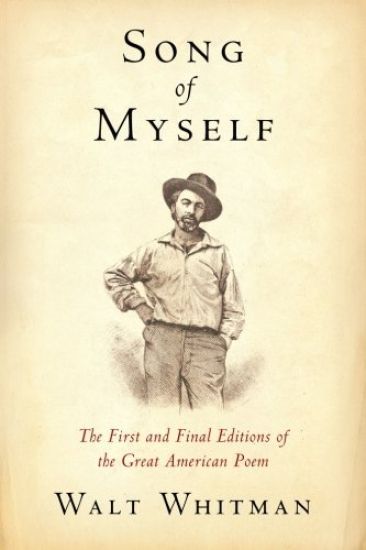
Song of Myself

Song of Myself

Walt Whitman

Createspace Independent Publishing Platform
2013
pokkari

Halvin toimitettuna 19,80 €

This book compiles both the first (1855) and final revised (1892) versions of Walt Whitman's masterpiece, "Song of Myself" in one volume, making it unique and valuable for students of American literature.
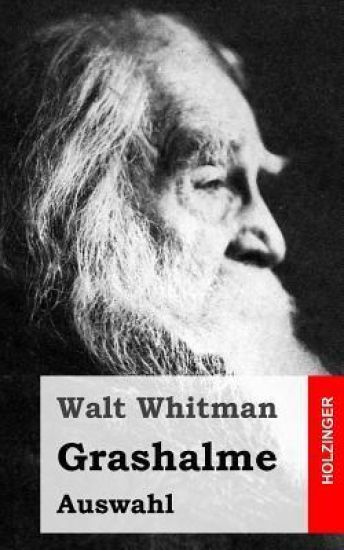
Grashalme: (Auswahl)

Grashalme: (Auswahl)

Walt Whitman

Createspace Independent Publishing Platform
2013
nidottu
Walt Whitman: Grashalme. (Auswahl) Edition Holzinger. Taschenbuch Berliner Ausgabe, 2015, 4. Auflage Vollst ndiger, durchgesehener Neusatz mit einer Biographie des Autors bearbeitet und eingerichtet von Michael Holzinger Erstdruck der ersten Version (anonym im Selbstverlag): Brooklyn, New York 1855. Die Ausgabe wurde in den folgenden 8 Auflagen immer wieder erweitert. Die endg ltige Version der Sammlung erschien als Ausgabe letzter Hand: Philadelphia (David McKay) 1891/92. Der Text der hier vorliegenden Auswahl folgt der bers. v. Wilhelm Sch lermann. Textgrundlage ist die Ausgabe: Whitman, Walt: Grashalme. bers. v. Wilhelm Sch lermann, Leipzig: Eugen Diederichs, 1904 Herausgeber der Reihe: Michael Holzinger Reihengestaltung: Viktor Harvion Umschlaggestaltung unter Verwendung des Bildes: Walt Whitman Gesetzt aus Minion Pro, 10 pt.
Franklin Evans or the Inebriate: A Tale of the Times

Franklin Evans or the Inebriate: A Tale of the Times

Walt Whitman; Emory Holloway

Literary Licensing, LLC
2012
nidottu
Not many people know that Walt Whitman--arguably the preeminent American poet of the nineteenth century--began his literary career as a novelist. "Franklin Evans, or The Inebriate: A Tale of the Times" was his first and only novel. Published in 1842, during a period of widespread temperance activity, it became Whitman's most popular work during his lifetime, selling some twenty thousand copies. The novel tells the rags-to-riches story of Franklin Evans, an innocent young man from the Long Island countryside who seeks his fortune in New York City. Corrupted by music halls, theaters, and above all taverns, he gradually becomes a drunkard. Until the very end of the tale, Evans's efforts to abstain fail, and each time he resumes drinking, another series of misadventures ensues. Along the way, Evans encounters a world of mores and conventions rapidly changing in response to the vicissitudes of slavery, investment capital, urban mass culture, and fervent reform. Although Evans finally signs a temperance pledge, his sobriety remains haunted by the often contradictory and unsettling changes in antebellum American culture. The editors' substantial introduction situates "Franklin Evans" in relation to Whitman's life and career, mid-nineteenth-century American print culture, and many of the developments and institutions the novel depicts, including urbanization, immigration, slavery, the temperance movement, and new understandings of class, race, gender, and sexuality. This edition includes a short temperance story Whitman published at about the same time as he did "Franklin Evans," the surviving fragment of what appears to be another unfinished temperance novel by Whitman, and a temperance speech Abraham Lincoln gave the same year that "Franklin Evans" was published.
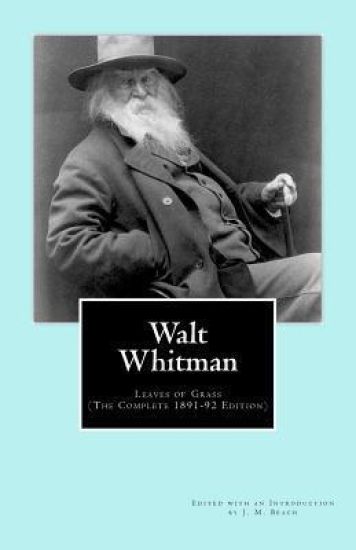
Walt Whitman: Leaves of Grass (The Complete 1891-92 Edition)

Walt Whitman: Leaves of Grass (The Complete 1891-92 Edition)

Walt Whitman

Createspace Independent Publishing Platform
2012
nidottu
The poetry of Walt Whitman is the cornerstone of modern American verse. He was America's first truly great poet and his influence is still evident today. The first edition of Whitman's "Leaves of Grass," published in 1855, was a revolutionary manifesto declaring America's independence from European cultural domination. His rhapsodic free verse broke radically with poetic, tradition: it was poetry about America, its democracy, its people, and its hopes. It was uniquely American without apology--brash, proud, optimistic, and filled with the bustling energy of the new and growing nation. This collection brings together Whitman's greatest and most famous poems spanning the whole of his career. From the groundbreaking first edition of "Leaves of Grass" are seven poems, including "Song of Myself" and "I Sing the Body Electric." From later editions there are such masterpieces as "Crossing Brooklyn Ferry," "Out of the Cradle Endlessly Rocking," and "I Hear America Singing." Also included is Whitman's great cycle of Civil War Poems, "Drum-Taps," which he wrote in the months when he was ministering to the wounded in battlefield hospitals. Concluding this collection is one of his last poems, "Good-bye My Fancy "--his touching farewell to his muse, his life, and his readers. More than one hundred years after his death, Walt Whitman's poetry has become part of the American heritage. It is a visionary which speaks as aptly to readers today as it will to future generations. As he says in "Crossing Brooklyn Ferry," "others...look back on me because I look'd forward to them." Whitman's poetry is a link that connects all Americans--past, present, and future. This book features a deluxe cover, ribbon marker, top stain, and decorative endpaper with a nameplate.
Franklin Evans or the Inebriate: A Tale of the Times

Franklin Evans or the Inebriate: A Tale of the Times

Walt Whitman; Emory Holloway

Literary Licensing, LLC
2012
sidottu
""Franklin Evans Or The Inebriate: A Tale Of The Times"" is a novel written by the renowned American poet, Walt Whitman. The book follows the story of Franklin Evans, a young man who falls into a life of alcoholism and debauchery after moving from the countryside to the city. The novel explores the social and moral issues of the time, including the dangers of alcoholism and the impact it has on individuals and society as a whole. Through the character of Franklin Evans, Whitman highlights the struggles of those who are caught in the vicious cycle of addiction and the challenges they face in overcoming it. The novel is a powerful commentary on the societal issues of the mid-19th century and remains relevant even today. With its vivid descriptions and powerful storytelling, ""Franklin Evans Or The Inebriate: A Tale Of The Times"" is a must-read for anyone interested in American literature and social history. This scarce antiquarian book is a facsimile reprint of the old original and may contain some imperfections such as library marks and notations. Because we believe this work is culturally important, we have made it available as part of our commitment for protecting, preserving, and promoting the world's literature in affordable, high quality, modern editions, that are true to their original work.
Leaves of Grass

Leaves of Grass

Walt Whitman

Simon Brown
2012
nidottu
Excerpt from Leaves of Grass: Including Sands at Seventy, Good Bye My Fancy, Old Age Echoes, and a Backward Glance O'er Travel'd Roads Run: 10 90113 0110119 or 1am mt cum 1111311111100, (1111.1.v lulu-l1'a so11.. Nus, mos. 1111101311003 mums.) ever mm nus'o 1 11m On. About the Publisher Forgotten Books publishes hundreds of thousands of rare and classic books. Find more at www.forgottenbooks.com This book is a reproduction of an important historical work. Forgotten Books uses state-of-the-art technology to digitally reconstruct the work, preserving the original format whilst repairing imperfections present in the aged copy. In rare cases, an imperfection in the original, such as a blemish or missing page, may be replicated in our edition. We do, however, repair the vast majority of imperfections successfully; any imperfections that remain are intentionally left to preserve the state of such historical works.
The Eighteenth Presidency: A Critical Text

The Eighteenth Presidency: A Critical Text

Walt Whitman; Edward F. Grier

Literary Licensing, LLC
2012
sidottu
The Eighteenth Presidency: A Critical Text is a book written by the renowned American poet, Walt Whitman. The book is a political satire and commentary on the American presidency, specifically the eighteenth president. The text is divided into several sections, each of which explores different aspects of the presidency, including its history, its power, and its limitations. Throughout the book, Whitman uses his signature style of free verse poetry to criticize and question the presidency, its role in American society, and the actions of the eighteenth president. He also incorporates elements of humor and irony to highlight the absurdity of certain political practices and beliefs. The Eighteenth Presidency: A Critical Text is a thought-provoking and insightful examination of American politics and the presidency. It offers a unique perspective on the role of the president and the impact of political power on society. The book is a must-read for anyone interested in politics, history, or literature. This scarce antiquarian book is a facsimile reprint of the old original and may contain some imperfections such as library marks and notations. Because we believe this work is culturally important, we have made it available as part of our commitment for protecting, preserving, and promoting the world's literature in affordable, high quality, modern editions, that are true to their original work.