

Kirjailija
Walt Whitman
Kirjat ja teokset yhdessä paikassa: 515 kirjaa, julkaisuja vuosilta 1855–2026, suosituimpiin kuuluu Ny Jord 3-4. Vertaile teosten hintoja ja tarkista saatavuus suomalaisista kirjakaupoista.
515 kirjaa
Kirjojen julkaisuvuodet: 1855–2026.

Not many people know that Walt Whitman-arguably the preeminent American poet of the nineteenth century-began his literary career as a novelist. Franklin Evans, or The Inebriate: A Tale of the Times was his first and only novel. Published in 1842, during a period of widespread temperance activity, it became Whitman’s most popular work during his lifetime, selling some twenty thousand copies. The novel tells the rags-to-riches story of Franklin Evans, an innocent young man from the Long Island countryside who seeks his fortune in New York City. Corrupted by music halls, theaters, and above all taverns, he gradually becomes a drunkard. Until the very end of the tale, Evans’s efforts to abstain fail, and each time he resumes drinking, another series of misadventures ensues. Along the way, Evans encounters a world of mores and conventions rapidly changing in response to the vicissitudes of slavery, investment capital, urban mass culture, and fervent reform. Although Evans finally signs a temperance pledge, his sobriety remains haunted by the often contradictory and unsettling changes in antebellum American culture. The editors’ substantial introduction situates Franklin Evans in relation to Whitman’s life and career, mid-nineteenth-century American print culture, and many of the developments and institutions the novel depicts, including urbanization, immigration, slavery, the temperance movement, and new understandings of class, race, gender, and sexuality. This edition includes a short temperance story Whitman published at about the same time as he did Franklin Evans, the surviving fragment of what appears to be another unfinished temperance novel by Whitman, and a temperance speech Abraham Lincoln gave the same year that Franklin Evans was published.
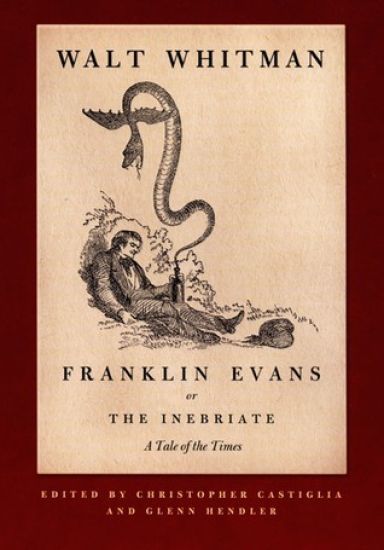
Not many people know that Walt Whitman-arguably the preeminent American poet of the nineteenth century-began his literary career as a novelist. Franklin Evans, or The Inebriate: A Tale of the Times was his first and only novel. Published in 1842, during a period of widespread temperance activity, it became Whitman’s most popular work during his lifetime, selling some twenty thousand copies. The novel tells the rags-to-riches story of Franklin Evans, an innocent young man from the Long Island countryside who seeks his fortune in New York City. Corrupted by music halls, theaters, and above all taverns, he gradually becomes a drunkard. Until the very end of the tale, Evans’s efforts to abstain fail, and each time he resumes drinking, another series of misadventures ensues. Along the way, Evans encounters a world of mores and conventions rapidly changing in response to the vicissitudes of slavery, investment capital, urban mass culture, and fervent reform. Although Evans finally signs a temperance pledge, his sobriety remains haunted by the often contradictory and unsettling changes in antebellum American culture. The editors’ substantial introduction situates Franklin Evans in relation to Whitman’s life and career, mid-nineteenth-century American print culture, and many of the developments and institutions the novel depicts, including urbanization, immigration, slavery, the temperance movement, and new understandings of class, race, gender, and sexuality. This edition includes a short temperance story Whitman published at about the same time as he did Franklin Evans, the surviving fragment of what appears to be another unfinished temperance novel by Whitman, and a temperance speech Abraham Lincoln gave the same year that Franklin Evans was published.
Notebooks and Unpublished Prose Manuscripts: Volumes I-VI
Walt Whitman
New York University Press
2007
pokkari
General Series Editors: Gay Wilson Allen and Sculley Bradley Originally published between 1961 and 1984, and now available in paperback for the first time, the critically acclaimed Collected Writings of Walt Whitman captures every facet of one of America's most important poets. Notebooks and Unpublished Prose Manuscripts gathers Whitman's autobiographical notes, his views on contemporary politics, and the writings he made as he educated himself in ancient history, religion and mythology, health (including phrenology), and word-study. Included is material on his Civil War experiences, his love of Abraham Lincoln, his descriptions of various trips to the West and South and of the cities in which he resided, his generally pessimistic view of America's prospects in the Reconstruction and the Gilded Age, and his reminiscences during his final years and his preoccupation with the increasing ailments that came with old age. Many of these notes served as sources for his poetry—first drafts of some of the poems are included as they appear in the notes—and as the basis for his lectures.
General Series Editors: Gay Wilson Allen and Sculley Bradley Originally published between 1961 and 1984, and now available in paperback for the first time, the critically acclaimed Collected Writings of Walt Whitman captures every facet of one of America's most important poets. This two-volume set proves that Whitman's prose has a quality no less original and distinctive than his poetry. Volume I: Specimen Days, originally written and published as newspaper dispatches, is a collection of Whitman's on-the-spot notes of his experiences as a volunteer nurse in the hospitals in and around Washington during the Civil War. It contains, too, his nature studies, jotted down at the Stafford Farm near Camden during the years of convalescence after his paralysis in 1873. Volume II contains three of Whitman's prose collections, Collect, November Boughs, and Good-Bye My Fancy, plus seven pieces not included in the original 1892 edition of the Complete Prose Works.
General Series Editors: Gay Wilson Allen and Sculley Bradley Originally published between 1961 and 1984, and now available in paperback for the first time, the critically acclaimed Collected Writings of Walt Whitman captures every facet of one of America's most important poets. The two-volume set of Prose Works 1892 proves that Whitman’s prose has a quality no less original and distinctive than his poetry. Volume II of Prose Works 1892 contains three of Whitman’s prose collections, Collect, November Boughs, and Good-Bye My Fancy. Whitman’s thoughts on a wide variety of topics are laid out in such essays as “Death of Abraham Lincoln,” “Some War Memoranda,” and “American National Literature.” Seven pieces not included in the original 1892 edition of the Complete Prose Works are also presented here, including “A Backward Glance O’er Travel’d Roads.“ In his preface, Stovall describes why the pieces were not part of Whitman’s printing and lays out his reasons for including them in this volume.
General Series Editors: Gay Wilson Allen and Sculley Bradley Originally published between 1961 and 1984, and now available in paperback for the first time, the critically acclaimed Collected Writings of Walt Whitman captures every facet of one of America's most important poets. The two-volume set of Prose Works 1892 proves that Whitman's prose has a quality no less original and distinctive than his poetry. Originally written and published as newspaper dispatches, Specimen Days is a collection of Whitman’s on-the-spot notes of his experiences as a volunteer nurse in the hospitals in and around Washington during the Civil War. It contains, too, his nature studies, jotted down at the Stafford Farm near Camden during the years of convalescence after his paralysis in 1873. In these records of his observations, Whitman’s love and devoted care of the individual soldiers overshadow his concern for the course of the war itself and his interest in its major personalities. He sees, above all else, the wounded men in front of him, and these he describes in the simple, direct language that unmistakably marks his poetry as well.
General Series Editors: Gay Wilson Allen and Sculley Bradley Originally published between 1961 and 1984, and now available in paperback for the first time, the critically acclaimed Collected Writings of Walt Whitman captures every facet of one of America's most important poets. In discussing letter-writing, Whitman made his own views clear. Simplicity and naturalness were his guidelines. "I like my letters to be personal—very personal—and then stop." This collection of nearly 3,000 letters written over a half century reveals Whitman the man as no other documents can. Volume I includes the poet's correspondence from Washington, DC, during the Civil War, where he nursed wounded and dying soldiers. Volume II presents the poet during the years he was developing an international reputation. As they came to understand one of the most important American voices of the century, European writers such as Edward Dowden and John Addington Symonds began to correspond with Whitman. Volume III covers the years in which Whitman radiated a personal and artistic magnetism, despite the paralysis that struck him in 1873. This period was full of important events, including the attempted censoring of Leaves of Grass, Whitman's renewed friendship with William D. O'Connor, and the arrival in America of Whitman's unrequited lover, Anne Gilchrist. Volumes IV and V cover the last seven years of Whitman's life, giving an almost day-by-day account of his long struggle with various ailments, his stoical acceptance of constant pain, but also his continuing energy. Volume VI offers updates, corrections, and an index to the preceding volumes in the set.
General Series Editors: Gay Wilson Allen and Sculley Bradley Originally published between 1961 and 1984, and now available in paperback for the first time, the critically acclaimed Collected Writings of Walt Whitman captures every facet of one of America's most important poets. In discussing letter-writing, Whitman made his own views clear. Simplicity and naturalness were his guidelines. “I like my letters to be personal—very personal—and then stop.“ The six volumes in The Correspondence comprise nearly 3,000 letters written over a half century, revealing Whitman the person as no other documents can. This volume, together with Volume IV, covers the last seven years of Whitman's life, giving an almost day-by-day account of his long struggle with various ailments, his stoical acceptance of constant pain, but also his continuing energy. This period saw his supervision and publication of two complete editions of Leaves of Grass, as well as November Boughs and Good-bye My Fancy. Although Whitman himself admitted that many of his later poems were “pot boilers,” designed primarily to make money, his recognition and popularity continued to grow as his health declined. His poems were printed seemingly everywhere and the volume of critical commentary increased. Unlike many of his contemporaries, Whitman did not suffer from neglect of indifference.
General Series Editors: Gay Wilson Allen and Sculley Bradley Originally published between 1961 and 1984, and now available in paperback for the first time, the critically acclaimed Collected Writings of Walt Whitman captures every facet of one of America's most important poets. In discussing letter-writing, Whitman made his own views clear. Simplicity and naturalness were his guidelines. “I like my letters to be personal—very personal—and then stop.” The six volumes in The Correspondence comprise nearly 3,000 letters written over a half century, revealing Whitman the person as no other documents can. Volume III covers the years in which Whitman radiated a personal and artistic magnetism, despite the paralysis that struck him in 1873. This period was full of important events, including the attempted censoring of Leaves of Grass, Whitman's renewed friendship with William D. O'Connor, and the arrival in America of Whitman's unrequited lover, Anne Gilchrist. During this period, Whitman also met Harry Stafford, the eighteen-year-old son of a New Jersey farming family. Despite his international fame, Whitman preferred to spend much of his time with the Staffords, particularly Harry, with whom he had a close but uncertain bond.
General Series Editors: Gay Wilson Allen and Sculley Bradley Originally published between 1961 and 1984, and now available in paperback for the first time, the critically acclaimed Collected Writings of Walt Whitman captures every facet of one of America’s most important poets. In discussing letter-writing, Whitman made his own views clear. Simplicity and naturalness were his guidelines. “I like my letters to be personal—very personal—and then stop.” The six volumes in The Correspondence comprise nearly 3,000 letters written over a half century, revealing Whitman the person as no other documents can. Volume I includes the poet’s correspondence from Washington, DC, during the Civil War, where he nursed wounded and dying soldiers. In letters to his mother, Whitman describes the suffering and sorrow he encountered in unsanitary hospitals. He wrote to the parents of soldiers and offered hope—or consolation at the loss of an unsung hero. Soldiers who recovered and left the hospitals often wrote to Whitman, and he replied with friendly advice and paternal solicitude. As Whitman himself admitted, rarely was his heart so engaged as in these hospital scenes and war letters, which, like his greatest poems, reflect his characteristic themes—love and death.
General Series Editors: Gay Wilson Allen and Sculley Bradley Originally published between 1961 and 1984, and now available in paperback for the first time, the critically acclaimed Collected Writings of Walt Whitman captures every facet of one of America's most important poets. In discussing letter-writing, Whitman made his own views clear. Simplicity and naturalness were his guidelines. "I like my letters to be personal—very personal—and then stop." The six volumes in The Correspondence comprise nearly 3,000 letters written over a half century, revealing Whitman the person as no other documents can. This volume, together with Volume V, covers the last seven years of Whitman's life, giving an almost day-by-day account of his long struggle with various ailments, his stoical acceptance of constant pain, but also his continuing energy. This period saw his supervision and publication of two complete editions of Leaves of Grass, as well as November Boughs and Good-bye My Fancy. Although Whitman himself admitted that many of his later poems were "pot boilers," designed primarily to make money, his recognition and popularity continued to grow as his health declined. His poems were printed seemingly everywhere and the volume of critical commentary increased. Unlike many of his contemporaries, Whitman did not suffer from neglect of indifference.
General Series Editors Gay Wilson Allen and Sculley Bradley Originally published between 1961 and 1984, and now available in paperback for the first time, the critically acclaimed Collected Writings of Walt Whitman captures every facet of one of America's most important poets. In discussing letter-writing, Whitman made his own views clear. Simplicity and naturalness were his guidelines. “I like my letters to be personal—very personal—and then stop.“ The six volumes in The Correspondence comprise nearly 3,000 letters written over a half century, revealing Whitman the person as no other documents can. Volume II presents the poet during the years he was developing an international reputation. As they came to understand one of the most important American voices of the century, European writers such as Edward Dowden and John Addington Symonds began to correspond with Whitman. English author Anne Gilchrist wrote her first impassioned love letter to the American poet in 1871. Whitman characteristically waited six weeks before he replied, and his subsequent handling of the unwanted ardor proves a fascinating study of a lover who feared to be loved.
General Series Editors: Gay Wilson Allen and Sculley Bradley Originally published between 1961 and 1984, and now available in paperback for the first time, the critically acclaimed Collected Writings of Walt Whitman captures every facet of one of America's most important poets. Daybooks and Notebooks is an invaluable source for reference on Whitman’s daily activities. This sixteen-year record supplements the biographical information provided in the six volumes of Whitman's Correspondence, functioning as an account book, diary, journal, commonplace book, and notebook all in one. When Whitman began to keep them, the Daybooks were a personal record of predominantly business matters. As William White wrote in the introduction, “He was not only the author but the publisher of his works: he was likewise his own business manager, ship, and promoter. Whatever records he kept, of his sales and distribution, of printing and binding figures, of poetry and prose he sent to newspapers and magazines . . . he entered on the right-hand pages.” Volume II thus offers a rare look at Whitman as a businessman, tending as much to practical matters as to art.
General Series Editors: Gay Wilson Allen and Sculley Bradley Originally published between 1961 and 1984, and now available in paperback for the first time, the critically acclaimed Collected Writings of Walt Whitman captures every facet of one of America's most important poets. Daybooks and Notebooks is an invaluable source for reference on Whitman's daily activities. This sixteen-year record supplements the biographical information provided in the six volumes of Whitman’s Correspondence, functioning as an account book, diary, journal, commonplace book, and notebook all in one. When Whitman began to keep them, the Daybooks were a personal record of predominantly business matters. As William White wrote in the introduction, “He was not only the author but the publisher of his works: he was likewise his own business manager, ship, and promoter. Whatever records he kept, of his sales and distribution, of printing and binding figures, of poetry and prose he sent to newspapers and magazines . . . he entered on the right-hand pages.” Volume I thus offers a rare look at Whitman as a businessman, tending as much to practical matters as to art.
General Series Editors: Gay Wilson Allen and Sculley Bradley Originally published between 1961 and 1984, and now available in paperback for the first time, the critically acclaimed Collected Writings of Walt Whitman captures every facet of one of America's most important poets. Daybooks and Notebooks is an invaluable source for reference on Whitman's daily activities. This sixteen-year record supplements the biographical information provided in the six volumes of Whitman's Correspondence, functioning as an account book, diary, journal, commonplace book, and notebook all in one. When Whitman began to keep them, the Daybooks were a personal record of predominantly business matters. As William White wrote in the introduction, "He was not only the author but the publisher of his works: he was likewise his own business manager, ship, and promoter. Whatever records he kept, of his sales and distribution, of printing and binding figures, of poetry and prose he sent to newspapers and magazines . . . he entered on the right-hand pages." Volume I thus offers a rare look at Whitman as a businessman, tending as much to practical matters as to art.
General Series Editors: Gay Wilson Allen and Sculley Bradley Originally published between 1961 and 1984, and now available in paperback for the first time, the critically acclaimed Collected Writings of Walt Whitman captures every facet of one of America's most important poets. In discussing letter-writing, Whitman made his own views clear. Simplicity and naturalness were his guidelines. “I like my letters to be personal—very personal—and then stop.” The six volumes in The Correspondence comprise nearly 3,000 letters written over a half century, revealing Whitman the person as no other documents can. This supplement updates the Correspondence with nearly 100 letters that appeared after the publication of the first five volumes. Featured in this volume is the earliest known extant letter from the poet, written in 1841, as well as many others documenting Whitman's personal relationships and publishing ventures, both in America and abroad. Volume VI also includes a detailed analysis of Whitman's income and finances over the last twenty-six years of his life. With a list of corrections and additions to Volumes I–V and a Composite Index of all Whitman's letters, this volume completes the definitive edition of the correspondence of America's greatest poet.
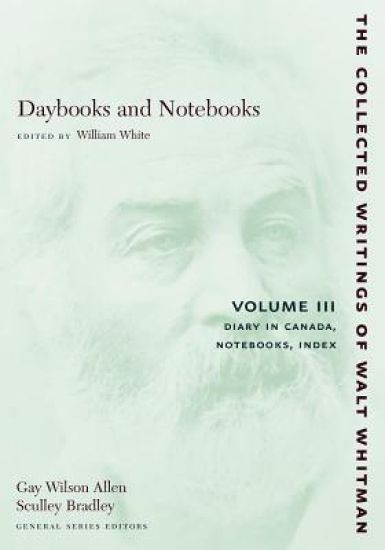
General Series Editors: Gay Wilson Allen and Sculley Bradley Originally published between 1961 and 1984, and now available in paperback for the first time, the critically acclaimed Collected Writings of Walt Whitman captures every facet of one of America's most important poets. Daybooks and Notebooks is an invaluable source for reference on Whitman's daily activities. This sixteen-year record supplements the biographical information provided in the six volumes of Whitman's Correspondence, functioning as an account book, diary, journal, commonplace book, and notebook all in one. When Whitman began to keep them, the Daybooks were a personal record of predominantly business matters. As William White wrote in the introduction, “He was not only the author but the publisher of his works: he was likewise his own business manager, ship, and promoter. Whatever records he kept, of his sales and distribution, of printing and binding figures, of poetry and prose he sent to newspapers and magazines . . . he entered on the right-hand pages.” Volume III thus offers a rare look at Whitman as a businessman, tending as much to practical matters as to art.
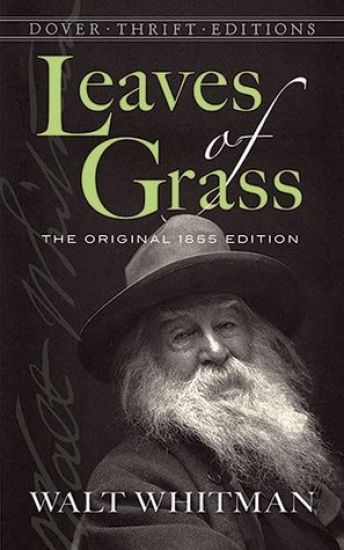
"The most extraordinary piece of wit and wisdom that America has yet contributed." — Ralph Waldo Emerson. Inspired by transcendentalism, Whitman's immortal collection includes some of the greatest poems of modern times, including his masterpiece "Song of Myself." Shattering standard conventions of symbolism and allegory, it stands as an unabashed celebration of body and nature.