Kirjailija
Walter Benjamin
Kirjat ja teokset yhdessä paikassa: 262 kirjaa, julkaisuja vuosilta 1971–2027, suosituimpiin kuuluu Charles Baudelaire. Vertaile teosten hintoja ja tarkista saatavuus suomalaisista kirjakaupoista.
262 kirjaa
Kirjojen julkaisuvuodet: 1971–2027.
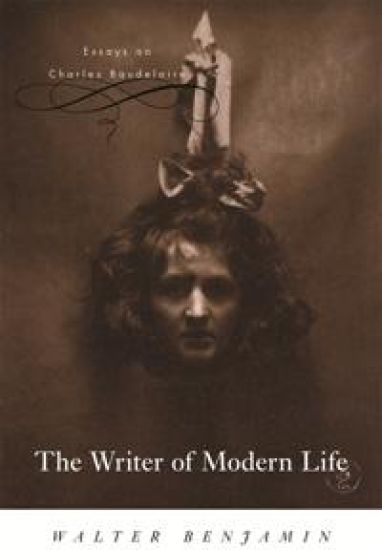
Walter Benjamin's essays on the great French lyric poet Charles Baudelaire revolutionized not just the way we think about Baudelaire, but our understanding of modernity and modernism as well. In these essays, Benjamin challenges the image of Baudelaire as late-Romantic dreamer, and evokes instead the modern poet caught in a life-or-death struggle with the forces of the urban commodity capitalism that had emerged in Paris around 1850. The Baudelaire who steps forth from these pages is the flâneur who affixes images as he strolls through mercantile Paris, the ragpicker who collects urban detritus only to turn it into poetry, the modern hero willing to be marked by modern life in its contradictions and paradoxes. He is in every instance the modern artist forced to commodify his literary production: "Baudelaire knew how it stood with the poet: as a flâneur he went to the market; to look it over, as he thought, but in reality to find a buyer." Benjamin reveals Baudelaire as a social poet of the very first rank. The introduction to this volume presents each of Benjamin's essays on Baudelaire in chronological order. The introduction, intended for an undergraduate audience, aims to articulate and analyze the major motifs and problems in these essays, and to reveal the relationship between the essays and Benjamin's other central statements on literature, its criticism, and its relation to the society that produces it.
Walter Benjamin: Selected Writings
Walter Benjamin
The Belknap Press
2006
nidottu
Halvin toimitettuna 40,20 €
Radical critic of a European civilization plunging into darkness, yet commemorator of the humane traditions of the old bourgeoisie--such was Walter Benjamin in the later 1930s. This volume, the third in a four-volume set, offers twenty-seven brilliant pieces, nineteen of which have never before been translated. The centerpiece, A Berlin Childhood around 1900, marks the first appearance in English of one of the greatest German works of the twentieth century: a profound and beautiful account of the vanished world of Benjamin's privileged boyhood, recollected in exile. No less remarkable are the previously untranslated second version of Benjamin's most famous essay, "The Work of Art in the Age of Its Technological Reproducibility," with its striking insights into the relations between technology and aesthetics, and German Men and Women, a book in which Benjamin collects twenty-six letters by distinguished Germans from 1783 to 1883 in an effort to preserve what he called the true humanity of German tradition from the debasement of fascism. Volume 3 also offers extensively annotated translations of essays that are key to Benjamin's rewriting of the story of modernism and modernity--such as "The Storyteller" and "Paris, the Capital of the Nineteenth Century"--as well as a fascinating diary from 1938 and penetrating studies of Bertolt Brecht, Franz Kafka, and Eduard Fuchs. A narrative chronology details Benjamin's life during these four harrowing years of his exile in France and Denmark. This is an essential collection for anyone interested in his work.
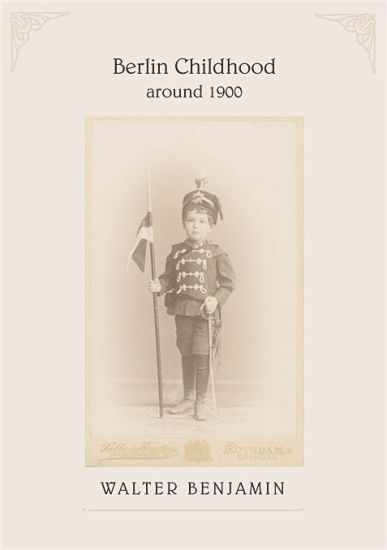
Begun in Poveromo, Italy, in 1932, and extensively revised in 1938, Berlin Childhood around 1900 remained unpublished during Walter Benjamin’s lifetime, one of his “large-scale defeats.” Now translated into English for the first time in book form, on the basis of the recently discovered “final version” that contains the author’s own arrangement of a suite of luminous vignettes, it can be more widely appreciated as one of the masterpieces of twentieth-century prose writing. Not an autobiography in the customary sense, Benjamin’s recollection of his childhood in an upper-middle-class Jewish home in Berlin’s West End at the turn of the century becomes an occasion for unified “expeditions into the depths of memory.” In this diagram of his life, Benjamin focuses not on persons or events but on places and things, all seen from the perspective of a child—a collector, flâneur, and allegorist in one. This book is also one of Benjamin’s great city texts, bringing to life the cocoon of his childhood—the parks, streets, schoolrooms, and interiors of an emerging metropolis. It reads the city as palimpsest and labyrinth, revealing unexpected lyricism in the heart of the familiar. As an added gem, a preface by Howard Eiland discusses the genesis and structure of the work, which marks the culmination of Benjamin’s attempt to do philosophy concretely.
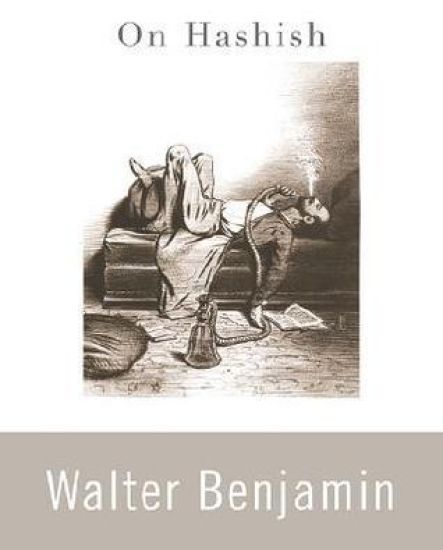
Walter Benjamin's posthumously published collection of writings on hashish is a detailed blueprint for a book that was never written--a "truly exceptional book about hashish," as Benjamin describes it in a letter to his friend Gershom Scholem. A series of "protocols of drug experiments," written by himself and his co-participants between 1927 and 1934, together with short prose pieces that he published during his lifetime, On Hashish provides a peculiarly intimate portrait of Benjamin, venturesome as ever at the end of the Weimar Republic, and of his unique form of thought. Consciously placing himself in a tradition of literary drug-connoisseurs from Baudelaire to Hermann Hesse, Benjamin looked to hashish and other drugs for an initiation into what he called "profane illumination." At issue here, as everywhere in Benjamin's work, is a new way of seeing, a new connection to the ordinary world. Under the influence of hashish, as time and space become inseparable, experiences become subtly stratified and resonant: we inhabit more than one plane in time. What Benjamin, in his contemporaneous study of Surrealism, calls "image space" comes vividly to life in this philosophical immersion in the sensuous. This English-language edition of On Hashish features a section of supplementary materials--drawn from Benjamin's essays, letters, and sketches--relating to hashish use, as well as a reminiscence by his friend Jean Selz, which concerns a night of opium-smoking in Ibiza. A preface by Howard Eiland discusses the leading motifs of Benjamin's reflections on intoxication.
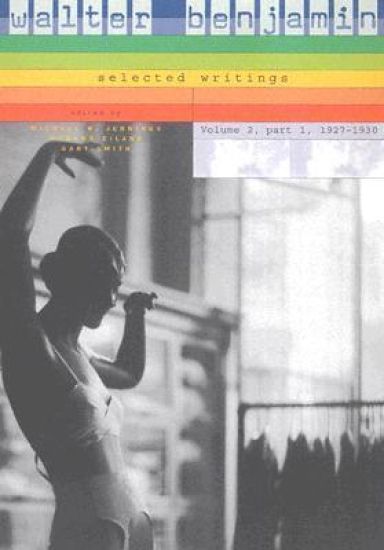
In the frenzied final years of the Weimar Republic, amid economic collapse and mounting political catastrophe, Walter Benjamin emerged as the most original practicing literary critic and public intellectual in the German-speaking world. Volume 2 of the Selected Writings is now available in paperback in two parts. In Part 1, Benjamin is represented by two of his greatest literary essays, "Surrealism" and "On the Image of Proust," as well as by a long article on Goethe and a generous selection of his wide-ranging commentary for Weimar Germany's newspapers. Part 2 contains, in addition to the important longer essays, "Franz Kafka," "Karl Kraus," and "The Author as Producer," the extended autobiographical meditation "A Berlin Chronicle," and extended discussions of the history of photography and the social situation of the French writer, previously untranslated shorter pieces on such subjects as language and memory, theological criticism and literary history, astrology and the newspaper, and on such influential figures as Paul Valery, Stefan George, Hitler, and Mickey Mouse.
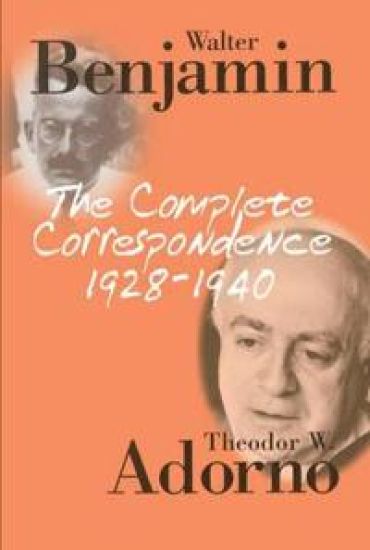
The Complete Correspondence 1928 - 1940
Theodor W. Adorno; Walter Benjamin
Polity Press
2003
nidottu
The surviving correspondence between Walter Benjamin and Theodor W. Adorno. This is the first time all of the surviving correspondence between Adorno and Benjamin has appeared in English. Provides a key to the personalities and projects of these two major intellectual figures. Offers a compelling insight into the cultural politics of the period, at a time of social and political upheaval. An invaluable resource for all students of the work of Adorno and especially of Benjamin, extensively annotated and cross-referenced.
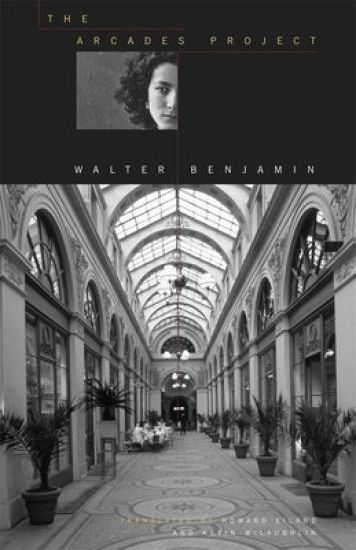
"To great writers," Walter Benjamin once wrote, "finished works weigh lighter than those fragments on which they labor their entire lives." Conceived in Paris in 1927 and still in progress when Benjamin fled the Occupation in 1940, The Arcades Project (in German, Das Passagen-Werk) is a monumental ruin, meticulously constructed over the course of thirteen years--"the theater," as Benjamin called it, "of all my struggles and all my ideas." Focusing on the arcades of nineteenth-century Paris-glass-roofed rows of shops that were early centers of consumerism--Benjamin presents a montage of quotations from, and reflections on, hundreds of published sources, arranging them in thirty-six categories with descriptive rubrics such as "Fashion," "Boredom," "Dream City," "Photography," "Catacombs," "Advertising," "Prostitution," "Baudelaire," and "Theory of Progress." His central preoccupation is what he calls the commodification of things--a process in which he locates the decisive shift to the modern age. The Arcades Project is Benjamin's effort to represent and to critique the bourgeois experience of nineteenth-century history, and, in so doing, to liberate the suppressed "true history" that underlay the ideological mask. In the bustling, cluttered arcades, street and interior merge and historical time is broken up into kaleidoscopic distractions and displays of ephemera. Here, at a distance from what is normally meant by "progress," Benjamin finds the lost time(s) embedded in the spaces of things.
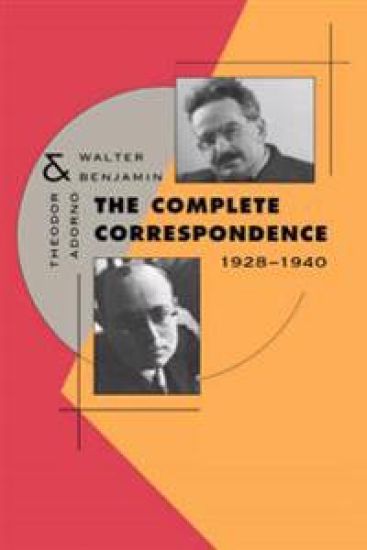
The Complete Correspondence, 1928-1940
Theodor W. Adorno; Walter Benjamin
Harvard University Press
2001
pokkari
The correspondence between Walter Benjamin and Theodor Adorno, which appears here for the first time in its entirety in English translation, must rank among the most significant to have come down to us from that notable age of barbarism, the twentieth century. Benjamin, riddle-like in his personality and given to tactical evasion, and Adorno, full of his own importance, alternately support and compete with each other throughout the correspondence, until its imminent tragic end becomes apparent to both writers. Each had met his match, and happily, in the other.

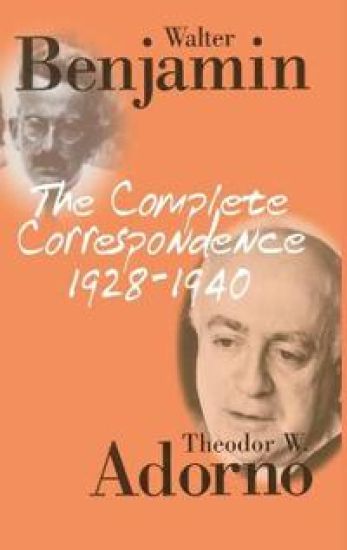
The Complete Correspondence 1928 - 1940
Theodor W. Adorno; Walter Benjamin
Polity Press
1999
sidottu
The surviving correspondence between Walter Benjamin and Theodor W. Adorno. This is the first time all of the surviving correspondence between Adorno and Benjamin has appeared in English. Provides a key to the personalities and projects of these two major intellectual figures. Offers a compelling insight into the cultural politics of the period, at a time of social and political upheaval. An invaluable resource for all students of the work of Adorno and especially of Benjamin, extensively annotated and cross-referenced.
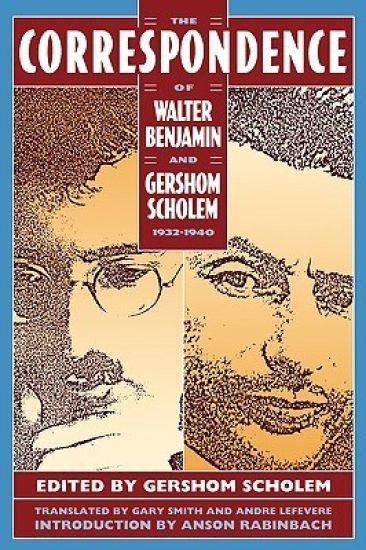
The Correspondence of Walter Benjamin and Gershom Scholem 1932-1940
Walter Benjamin; Gershom Scholem; Gary (TRN) Smith
Harvard University Press
1992
pokkari
Halvin toimitettuna 43,50 €
The legendary correspondence between the critic Walter Benjamin and the historian Gershom Scholem bears witness to the inner lives of two remarkable and enigmatic personalities. Benjamin, acknowledged as one of the leading literary and social critics of his day, was known during his lifetime by only a small circle of friends and intellectual confreres. Scholem recognized the genius of his friend and mentor during their student days in Berlin, and the two began to correspond after Scholem's emigration to Palestine. Their impassioned exchange draws the reader into the very heart of their complex relationship during the anguished years from 1932 until Benjamin's death in 1940.
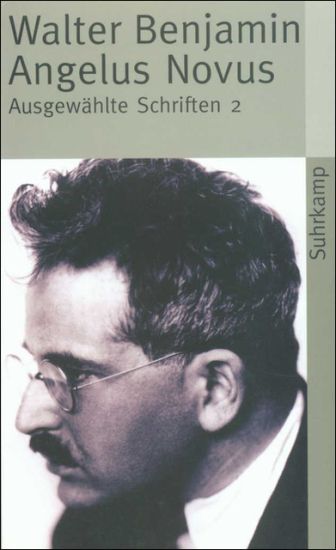
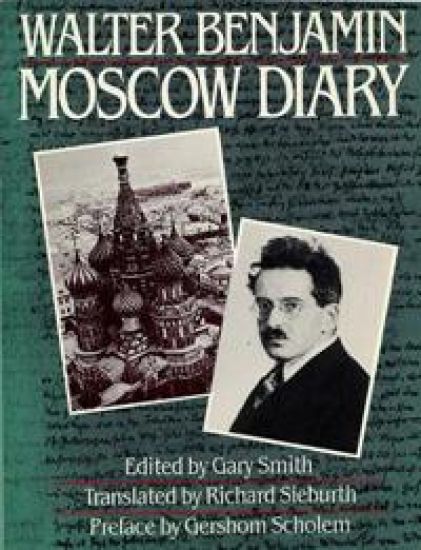
The life of the German-Jewish literary critic and philosopher Walter Benjamin (1892–1940) is a veritable allegory of the life of letters in the twentieth century. Benjamin’s intellectual odyssey culminated in his death by suicide on the Franco–Spanish border, pursued by the Nazis, but long before he had traveled to the Soviet Union. His stunning account of that journey is unique among Benjamin’s writings for the frank, merciless way he struggles with his motives and conscience. Perhaps the primary reason for his trip was his affection for Asja Lacis, a Latvian Bolshevik whom he had first met in Capri in 1924 and who would remain an important intellectual and erotic influence on him throughout the twenties and thirties. Asja Lacis resided in Moscow, eking out a living as a journalist, and Benjamin’s diary is, on one level, the account of his masochistic love affair with this elusive—and rather unsympathetic—object of desire. On another level, it is the story of a failed romance with the Russian Revolution; for Benjamin had journeyed to Russia not only to inform himself firsthand about Soviet society, but also to arrive at an eventual decision about joining the Communist Party. Benjamin’s diary paints the dilemma of a writer seduced by the promises of the Revolution yet unwilling to blinker himself to its human and institutional failings. Moscow Diary is more than a record of ideological ambivalence; its literary value is considerable. Benjamin is one of the great twentieth-century physiognomists of the city, and his portrait of hibernal Moscow stands beside his brilliant evocations of Berlin, Naples, Marseilles, and Paris. Students of this particularly interesting period will find Benjamin’s eyewitness account of Moscow extraordinarily illuminating.