Kirjojen hintavertailu – 12 859 818 kirjaa ja 27 kauppaa

Kirjailija

Walter Scott

Kirjat ja teokset yhdessä paikassa: 2 841 kirjaa, julkaisuja vuosilta 1922–2026, suosituimpiin kuuluu Harold l'Indomptable. Vertaile teosten hintoja ja tarkista saatavuus suomalaisista kirjakaupoista.

2 841 kirjaa

Kirjojen julkaisuvuodet: 1922–2026.

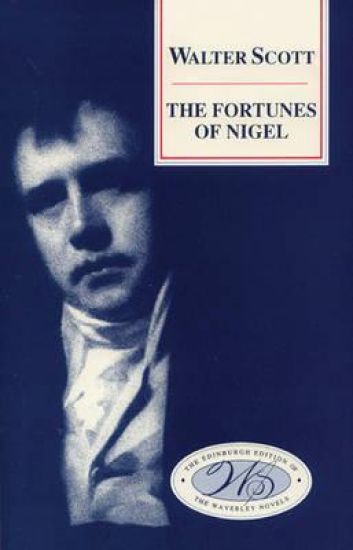
The Fortunes Of Nigel

The Fortunes Of Nigel

Walter Scott

Edinburgh University Press
2004
sidottu
Set at the end of the reign of James VI and I, The Fortunes of Nigel sits among Walter Scott's richest creations in political insight, range of characterisation and linguistic virtuosity. Well versed in the political literature of the period, Scott drew a detailed picture of London in the early 17th century while charting the effects of Scottish influx into the English capital: the ambitions and fears of the incomers and the suspicion they aroused. The complex web of political (and sexual) intrigue, and especially of all-important financial dealings and double-dealings, is traced with a master's hand. No Scott novel has a more memorable cast of characters. King James heads them, with his childish irresponsibility and elusive character: a would-be Solomon and father of his country, theological disputant, prurient bisexual. But not far behind are jeweller George Heriot, clockmaker Davie Ramsay, courtier Sir Mungo Malagrowther, servant Richie Moniplies and many vivid minor characters. Steeped in Jacobean drama, this tale shows Scott revelling in the linguistic riches of the age. Previous editions have obscured his virtuosity (as seen in a dazzlingly proto-Joycean monologue by a Greenwich barber), but painstaking examination of the manuscript and proofs for this new edition allows the full vigour of Scott's achievement to be savoured for the first time.
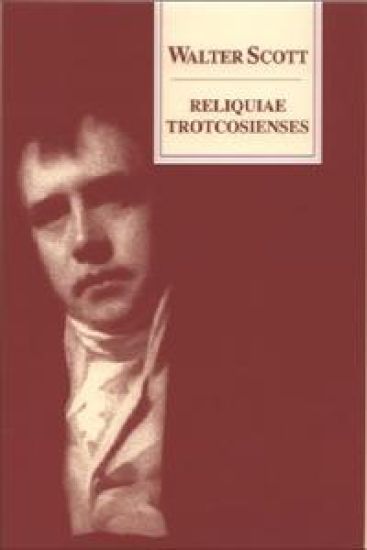
Reliquiae Trotcosienses

Reliquiae Trotcosienses

Walter Scott

Edinburgh University Press
2004
sidottu
Reliquiae Trotcosienses was one of Scott's last works, and, after his death, was suppressed by his literary executor and his publisher. Although extracts were published in 1889 and 1905, this is the first complete edition, and has been edited from the manuscript recently relocated in the library at Abbotsford, the house near Melrose in the Scottish Borders which Scott built for his library and museum. Reliquiae Trotcosienses (the relics of Trotcosey) is a guide to Abbotsford and to its collections, and illustrates in miniature all the different ways in which Scott tried to recover the past: in building, in collecting, and in the multiple acts of narration which invest objects with significance. But it is simultaneously a work of fiction, which satirises the impulses of antiquarian collection. Scott would not take himself seriously, and through the learned buffoonery of this extraordinary work he mocks the kind of activity in which he was engaged as writer and collector. Yet this is also a personal, elegiac creation, for the narrator as he approaches death recognises that the house, its artefacts, and above all the writings will live on to mourn their begetter: they are fragments shored against his ruin.
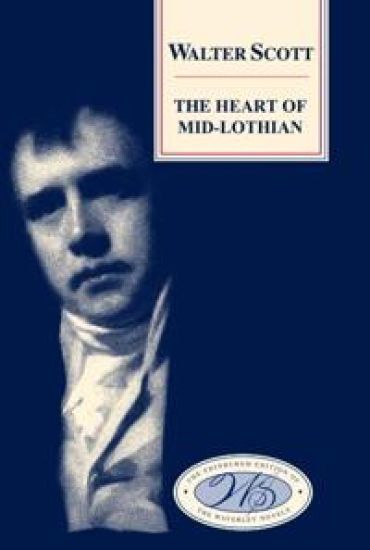
The Heart of Mid-Lothian

The Heart of Mid-Lothian

Walter Scott

Edinburgh University Press
2004
sidottu
The Heart of Mid-Lothian is precisely focused on the trials for murder of John Porteous and of Effie Deans in 1736 and 1737. Yet it is a chronicle--Scott's only chronicle--which spans the eighty years of the life of David Deans, whose death takes place in 1751. It is the most complex of all Scott's narratives. It is also the most challenging in that it raises in an acute fashion the problem of a judicial system that does not produce justice. Scott places this fundamental issue in its immediate political context, in history as represented by the life of Deans, and alongside the justice of Providence as perceived by his daughter Jeanie, the greatest of Scott's heroines. This edition of The Heart of Mid-Lothian provides a new text established in accordance with the tried policies and practices of the Edinburgh Edition of the Waverley Novels, and in its annotation treats comprehensively the novel's historical, legal, religious and cultural sources.