
Kirjailija
Walter Scott
Kirjat ja teokset yhdessä paikassa: 2 841 kirjaa, julkaisuja vuosilta 1922–2026, suosituimpiin kuuluu Harold l'Indomptable. Vertaile teosten hintoja ja tarkista saatavuus suomalaisista kirjakaupoista.
2 841 kirjaa
Kirjojen julkaisuvuodet: 1922–2026.
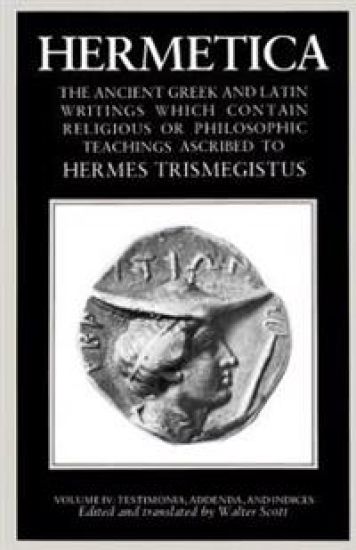
First published in 1924, this classic four-volume work contains various Greek and Latin writings of religious or philosophic teachings ascribed to Hermes Trismegistus, with Walter Scott's extensive notes, commentary, and addenda. It is said that these teachings are records of private, intimate talks between a teacher and one or two of his disciples. The setting was in Egypt under the Roman Empire, among men who had received some instruction in Greek philosophy, and especially the Platonism of the period, but were not content with merely accepting and repeating the dogmas of the orthodox philosophic religion that would better satisfy their needs. Included here are alchemical writings in Greek and Latin about the "Hermetica," as well as addenda and indices compiled after Scott's death. Volumes I, II, and III of "Hermetica," which contain Scott's translation, his notes on the "Corpus Hermeticum, " and his commentary on "Asclepius" and the Hermetic excerpts of Stobaeus, are also published by Shambhala.
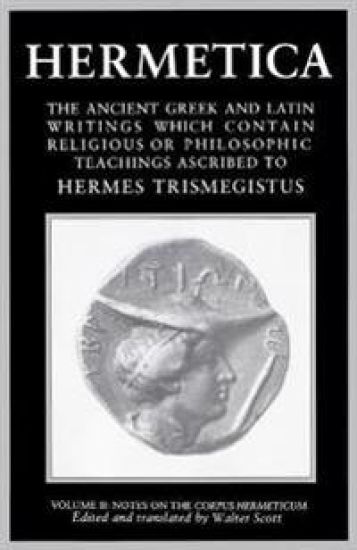
Hermetica: Volume Two
Walter Scott
Shambhala Publications Inc
2001
pokkari
Halvin toimitettuna 43,30 €
First published in 1924, this classic four-volume work contains various Greek and Latin writings of religious or philosophic teachings ascribed to Hermes Trismegistus, with Walter Scott's extensive notes, commentary, and addenda. It is said that these teachings are records of private, intimate talks between a teacher and one or two of his disciples. The setting was in Egypt under the Roman Empire, among men who had received some instruction in Greek philosophy, and especially the Platonism of the period, but were not content with merely accepting and repeating the dogmas of the orthodox philosophic religion that would better satisfy their needs. Included here are the translator's notes on the twenty-eight "libelli" of the "Corpus Hermeticum. " Volumes I, III, and IV of "Hermetica," which contain Scott's translation, his notes on the Latin "Asclepius" and the Hermetic excerpts of Stobaeus, ""and "testimonia," addenda, and indices, are also published by Shambhala.
From Gileskirk to Greyfriars
Walter Scott; George (INT) Grant
Cumberland House Publishing,US
2001
pokkari
Set on the eve of the Protestant Reformation in Scotland, The Monastery is full of supernatural events, theological conflict, and humour. Located in the lawless Scottish Borders, the novel depicts the monastery of Kennaquhair (a thinly disguised Melrose Abbey, whose ruins are still to be seen near Scott's own home at Abbotsford) on the verge of dissolution, and the fortunes of two brothers as they respond to a new social and religious order. Highlights of the narrative include a moving encounter between two representatives of opposing sides in the Reformation controversy who had been students together in less troubled times, and the final formal procession of the Kennaquhair monks as the Reformed forces arrive. A talking-point when the work was first published, the mysterious spectral White Lady, guardian of the magical Black Book, still intrigues readers. A strong comic element is provided by Sir Piercie Shafton with his absurd linguistic mannerisms fashionable at the English court. The narrative is preceded by one of Scott's most charming and playful introductory exchanges between the fictional local antiquary Cuthbert Clutterbuck and the Author of Waverley.
Chronicles of the Canongate is unique among Scott's works as it is his only collection of shorter fiction. It contains his best-known tales, 'The Highland Widow' and 'The Two Drovers', and a third, less well known but of startling originality, 'The Surgeon's Daughter'. The three are set within the framing narrative of Chrystal Croftangry, an old bankrupt with pretensions to literature, who must inevitably be seen as a portrait of the artist facing up to his own insolvency in 1826. Tales in a framework have a long ancestry in European and Oriental literature, and in Chronicles of the Canongate Scott adapts the genre with consummate skill. Each of the stories and Croftangry's narrative may be read independently, but together they constitute a themed work in which the narrator treats of the cultural conflicts in the new Britain and its growing empire in the thirty years from 1756. This edition of Chronicles of the Canongate recovers a truly inventive work which is here republished in its original form for only the second time since Scott's death in 1832.
The Abbotconcludes the fiction begun in The Monastery. Scott follows the fortunes of young Roland Graeme as he emerges from rural obscurity to become an attendant of Mary Queen of Scots during her captivity in Lochleven Castle. Roland's part in Mary's escape from the Castle is excitingly narrated, and Mary herself is vividly characterised in captivity, in her brief period of freedom, and in her final defeat. Based on the first edition, this new text restores, from Scott's manuscript and from the evidence of early American editions set from proof sheets at different stages, nearly 2000 authorial readings hitherto omitted. It has also been possible for the first time, on the evidence of history, to make coherent the family relationships in the novel. Key Features *Authoritative text *Detailed explanatory notes and glossary *Essay giving a detailed account of background to the novel, its composition and its subsequent textual development *Textual apparatus
Anne of Geierstein (1829) is set in Central Europe in the fifteenth century, but it is a remarkably modern novel, for the central issues are the political instability and violence that arise from the mix of peoples and the fluidity of European boundaries. With Anne of Geierstein Scott concludes the unfinished historical business of Quentin Durward, working on a larger canvas with broader brush-strokes and generally with more sombre colours. The novel illustrates the darkening of Scott's historical vision in the final part of his career. It is also a remarkable manifestation of the way in which the scope of his imaginative vision continued to expand even as his physical powers declined. This new edition is based upon the first edition but is corrected by recovering from the manuscript about 2000 readings lost in some cases by misreadings of what Scott had written, but in many others from the assumption that those who processed Scott's text knew better than he did. This is the first modern critical edition of what was in its day a remarkably successful novel.
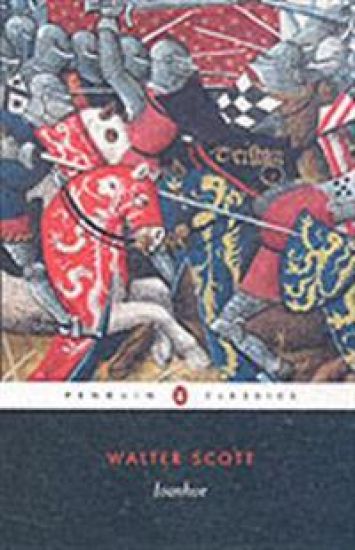
One of the BBC's '100 Novels That Shaped Our World''Fight on, brave knights! Man dies, but glory lives!'Banished from England for seeking to marry against his father's wishes, Ivanhoe joins Richard the Lion Heart on a crusade in the Holy Land. On his return, his passionate desire is to be reunited with the beautiful but forbidden lady Rowena, but he soon finds himself playing a more dangerous game as he is drawn into a bitter power struggle between the noble King Richard and his evil and scheming brother John. The first of Scott's novels to address a purely English subject, Ivanhoe is set in a highly romanticized medieval world of tournaments and sieges, chivalry and adventure where dispossessed Saxons are pitted against their Norman overlords, and where the historical and fictional seamlessly merge.'One of the most exciting stories in the language' A. N. WilsonEdited with an introduction and notes by Graham Tulloch

The Fair Maid of Perth centres on the merchant classes of Perth in the fourteenth century, and their commitment to the pacific values of trade, in a bloody and brutal era in which no right to life is recognised, and in which the Scottish nobles fight for control of the weak Scottish monarchy, and clans are prepared to extinguish each other to gain supremacy in the central Highlands. It is a remarkable novel, in part because late in his career Scott has a new subject, and in part because he employs a spare narrative style that is without parallel in the rest of his oeuvre. Far too many critics, from his son-in-law J. G. Lockhart to the present day, have written off late Scott, and seen his last works as evidence of failing powers. The readers of this edition of The Fair Maid of Perth will see that these critics are mistaken, for in it we witness a luminous creative intelligence working at high pressure to produce a tightly organised and deeply moving novel.

Guy Mannering, or The Astrologer, first published in 1815, was Walter Scott's second novel. Guy Mannering only half-believes in his art, but does believe in the ability of his patriarchal power, wealth and social position to sort out social confusion. However he has to learn the limits of a nabob's authority in a society that (in the 1780s) is no longer a single hierarchy but has many subsets, each with its own laws - gypsies, smugglers, Edinburgh lawyers, the Border store farmer, the traditional landowner. Guy Mannering is set at the time of the American Revolution, and represents a Scotland at once backward and advanced, patriarchal and commercial, traditional and modern, a country in very varied stages of progression. This is the first modern edition of one of Scott's finest works. It is based on the first edition, but is corrected from the manuscript, and restores around two thousand readings lost through error or misunderstanding. For the first time it includes Scott's extended portraits of the Edinburgh literati which were unaccountably omitted from the printed version.
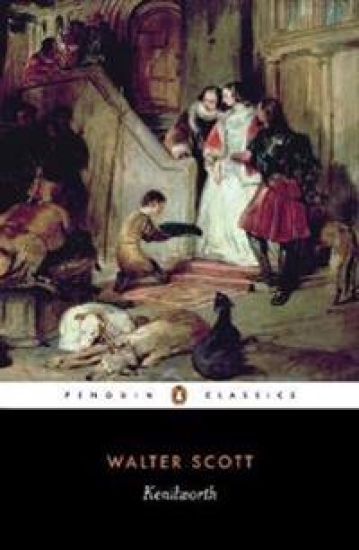
In the court of Elizabeth I, Robert Dudley, Earl of Leicester, is favoured above all the noblemen of England. It is rumoured that the Queen may chose him for her husband, but Leicester has secretly married the beautiful Amy Robsart. Fearing ruin if this were known, he keeps his lovely young wife a virtual prisoner in an old country house. Meanwhile Leicester's manservant Varney has sinister designs on Amy, and enlists an alchemist to help him further his evil ambitions. Brilliantly recreating the splendour and pageantry of Elizabethan England, with Shakespeare, Walter Ralegh and Elizabeth herself among its characters, Kenilworth (1821) is a compelling depiction of intrigue, power struggles and superstition in a bygone age.
The first of Scott's Waverley novels burst upon an astonished world in 1814. Its publication marked the emergence of the modern novel in the western world, influencing all the great nineteenth-century writers. This handsome new edition of Sir Walter Scott's novels captures the original power and freshness of his best-loved novels.
In the summer of 1765 Darsie Latimer sets out to discover the secret of his parentage in a journey to the wilds of Dumfriesshire. But very soon he discovers that he must confront not geographical but ideological wilds, for he is kidnapped by Edward Hugh Redgauntlet and involved in a last, fictional, attempt to restore the Stuarts to the British throne. The violent past is repeatedly recalled: the oral diablerie of the inset 'Wandering Willie's Tale', probably the greatest short story ever written in Scots, provides a grotesque vision of the structures of an older Scotland. It is this older Scotland which Redgauntlet wishes to restore.
Hermetica - The Ancient Greek and Latin Writings Which Contain Religious or Philosophic Teachings Ascribed to Hermes Trismegistus
Walter Scott
Kessinger Pub
1997
pokkari