Kirjojen hintavertailu – 12 859 826 kirjaa ja 27 kauppaa

Kirjailija

Walter Scott

Kirjat ja teokset yhdessä paikassa: 2 841 kirjaa, julkaisuja vuosilta 1922–2026, suosituimpiin kuuluu Harold l'Indomptable. Vertaile teosten hintoja ja tarkista saatavuus suomalaisista kirjakaupoista.

2 841 kirjaa

Kirjojen julkaisuvuodet: 1922–2026.

The Antiquary

The Antiquary

Walter Scott

Bibliotech Press
2022
sidottu
The Antiquary (1816), the third of the Waverley novels by Walter Scott, centres on the character of an antiquary: an amateur historian, archaeologist and collector of items of dubious antiquity. He is the eponymous character and for all practical purposes the hero, though the characters of Lovel and Isabella Wardour provide the conventional love interest. The Antiquary was Scott's own favourite of his novels, and is one of his most critically well-regarded works; H. J. C. Grierson, for example, wrote that "Not many, apart from Shakespeare, could write scenes in which truth and poetry, realism and romance, are more wonderfully presented." Scott wrote in an advertisement to the novel that his purpose in writing it, similar to that of his novels Waverley and Guy Mannering, was to document Scottish life of a certain period, in this case the last decade of the 18th century. The action can be located in July and August 1794. It is, in short, a novel of manners, and its theme is the influence of the past on the present. In tone it is predominantly comic, though the humour is offset with episodes of melodrama and pathos. (wikipedia.org
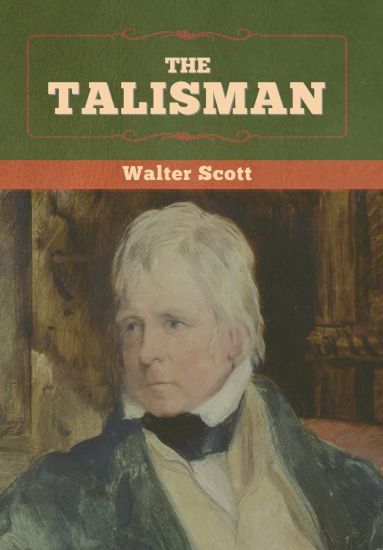
The Talisman

The Talisman

Walter Scott

Bibliotech Press
2022
sidottu
The Talisman is one of the Waverley novels by Sir Walter Scott. Published in 1825 as the second of his Tales of the Crusaders, the first being The Betrothed, it is set during the Third Crusade and centres on the relationship between Richard I of England and Saladin. (At the beginning of April 1824, two months before he completed Redgauntlet, Scott envisaged that it would be followed by a four-volume publication containing two tales, at least one of which would be based on the Crusades. He began composition of the first story, The Betrothed, in June, but it made slow progress and came to a halt in the second volume at some point in the autumn after criticisms by James Ballantyne. Scott then changed course and began work on the companion novel The Talisman, and the first two chapters and part of the third were set in type by the end of the year. January 1825 was full of distractions, but a decision to resume The Betrothed was made in mid-February 1825 and it was essentially complete by mid-March. The way was then clear for the main composition of The Talisman which proceeded briskly. Its first volume was completed in April and its second at the very end of May or beginning of June. Five clearly identifiable sources have been located for leading elements in The Talisman. The disguised Saladin's account of the origin of the Kurds is taken from the Bibliotheque orientale by Barth lemy d'Herbelot (1777‒79). The character of Leopold of Austria and his tearing down of Richard's standard was prompted by the Anglo-Norman romance Richard Coer de Lyon. The attempted assassination of Richard is recounted in The History of the Crusades by Charles Mills (1820). Saladin's beheading of Amaury comes from The History of the Knights of Malta by the Abb de Vertot (1728). And the talisman itself is the Lee Penny used to cure people and animals up to Scott's time and preserved at the Lee near Lanark in the Scottish Borders. Scott's sceptical attitude to the Crusades, and his presentation of Richard and Saladin, follow three historians: David Hume, Edward Gibbon, and Mills. (wikipedia.org)
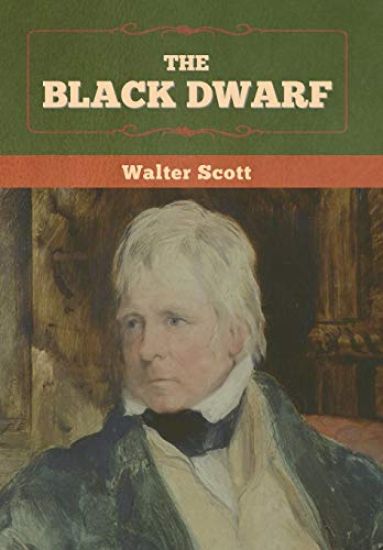
The Black Dwarf

The Black Dwarf

Walter Scott

Bibliotech Press
2022
sidottu
One of the Waverley Novels by Walter Scott, The Black Dwarf was part of his Tales of My Landlord, 1st series (1816). It is set in 1708, in the Scottish Borders, against the background of the first uprising to be attempted by the Jacobites after the Act of Union. On 30 April 1816 Scott signed a contract with William Blackwood for a four-volume work of fiction, and on 22 August James Ballantyne, Scott's printer and partner, indicated to Blackwood that it was to be entitled Tales of My Landlord which was planned to consist of four tales relating to four regions of Scotland. In the event the second tale, Old Mortality, expanded to take up the final three volumes, leaving The Black Dwarf as the only story to appear exactly as intended. It is not clear precisely when Scott began composition, but the tale was complete before the end of August. For the historical background Scott was particularly indebted to two books: Memoirs Concerning the Affairs of Scotland by George Lockhart of Carnwath (1714), and The History of the Late Rebellion by Robert Patten (1717). He also drew extensively on the ballads he had edited in Minstrelsy of the Scottish Border (1802-03). The story is set just after the Union of Scotland and England (1707), in the Liddesdale hills of the Scottish Borders, familiar to Scott from his work collecting ballads for Minstrelsy of the Scottish Border. The main character is based on David Ritchie, whom Scott met in the autumn of 1797. In the tale, the dwarf is Sir Edward Mauley, a hermit regarded by the locals as being in league with the Devil, who becomes embroiled in a complex tale of love, revenge, betrayal, Jacobite schemes and a threatened forced marriage. Scott began the novel well, "but tired of the ground I had trode so often before... I quarrelled with my story, & bungled up a conclusion." The introduction to The Black Dwarf attributes the work to Jedediah Cleishbotham, whom Scott had invented as a fictional editor of the Landlord series. It is here that we have the most complete view of this character. (wikipedia.org)
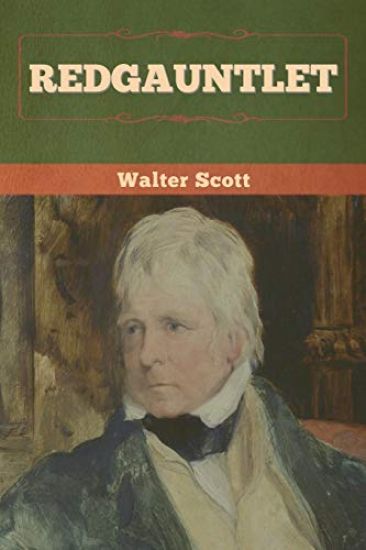
Redgauntlet

Redgauntlet

Walter Scott

Bibliotech Press
2022
pokkari
Redgauntlet (1824) is a historical novel by Sir Walter Scott, one of the Waverley novels, set primarily in Dumfriesshire, southwest Scotland, in 1765, and described by Magnus Magnusson (a point first made by Andrew Lang) as "in a sense, the most autobiographical of Scott's novels." It describes the beginnings of a fictional third Jacobite Rebellion, and includes "Wandering Willie's Tale", a famous short story which frequently appears in anthologies. The novel's hero is a young man named Darsie Latimer. Early in the novel he is kidnapped by Hugh Redgauntlet, and taken to a village in Dumfriesshire. Darsie's friend Alan Fairford sets out to rescue him. After much intrigue Darsie discovers that Redgauntlet is his uncle, and he is also reunited with his sister. He also discovers that a number of prominent Jacobites, and Prince Charles Edward Stuart (Bonnie Prince Charlie or the Young Pretender) himself are staying in the village. Redgauntlet has summoned them all to start a new Jacobite rebellion, and he wants Darsie to join them. However, the Prince is still reeling from the French naval defeats at Quiberon Bay and Lagos, which represented Charles's last realistic chance to recover the British throne for the Stuart dynasty. Furthermore, Redgauntlet discovers that his fellow Jacobites are not as committed as he, and their stated objection is that they suspect the Prince's mistress, Clementina Walkinshaw, of being a spy. During these discussions, General Campbell arrives amongst them to announce that he and the government know what the conspirators are up to. The Prince is allowed to go into exile, and his followers peacefully disperse. Redgauntlet, seeing that the Jacobite cause is now lost, joins the Prince in exile. Darsie is set free having always remained loyal to the current king, and Alan marries Darsie's sister. (wikipedia.org)
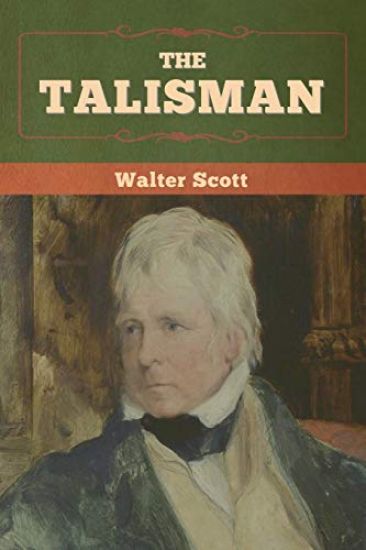
The Talisman

The Talisman

Walter Scott

Bibliotech Press
2022
pokkari
The Talisman is one of the Waverley novels by Sir Walter Scott. Published in 1825 as the second of his Tales of the Crusaders, the first being The Betrothed, it is set during the Third Crusade and centres on the relationship between Richard I of England and Saladin. (At the beginning of April 1824, two months before he completed Redgauntlet, Scott envisaged that it would be followed by a four-volume publication containing two tales, at least one of which would be based on the Crusades. He began composition of the first story, The Betrothed, in June, but it made slow progress and came to a halt in the second volume at some point in the autumn after criticisms by James Ballantyne. Scott then changed course and began work on the companion novel The Talisman, and the first two chapters and part of the third were set in type by the end of the year. January 1825 was full of distractions, but a decision to resume The Betrothed was made in mid-February 1825 and it was essentially complete by mid-March. The way was then clear for the main composition of The Talisman which proceeded briskly. Its first volume was completed in April and its second at the very end of May or beginning of June. Five clearly identifiable sources have been located for leading elements in The Talisman. The disguised Saladin's account of the origin of the Kurds is taken from the Bibliotheque orientale by Barth lemy d'Herbelot (1777‒79). The character of Leopold of Austria and his tearing down of Richard's standard was prompted by the Anglo-Norman romance Richard Coer de Lyon. The attempted assassination of Richard is recounted in The History of the Crusades by Charles Mills (1820). Saladin's beheading of Amaury comes from The History of the Knights of Malta by the Abb de Vertot (1728). And the talisman itself is the Lee Penny used to cure people and animals up to Scott's time and preserved at the Lee near Lanark in the Scottish Borders. Scott's sceptical attitude to the Crusades, and his presentation of Richard and Saladin, follow three historians: David Hume, Edward Gibbon, and Mills. (wikipedia.org)
Letters on Demonology and Witchcraft

Letters on Demonology and Witchcraft

Walter Scott

Bibliotech Press
2022
sidottu
Letters on Demonology and Witchcraft Addressed to J. G. Lockhart, Esq. (1830) was a study of witchcraft and the supernatural by Sir Walter Scott. A lifelong student of folklore, Scott was able to draw on a wide-ranging collection of primary and secondary sources. His book found many readers throughout the 19th century, and exercised a significant influence in promoting the Victorian vogue for Gothic and ghostly fiction. Though on first publication it met with mixed reviews, it is now recognised as a pioneering work of scientific anthropology, treating of its subject in an acute and analytical way which prefigures later scholarship on the subject, as well as presenting a highly readable collection of supernatural anecdotes. The book is divided into ten parts, each taking the form of a letter from the author to his son-in-law, J. G. Lockhart. This format allows Scott to write in an informal, discursive manner, enhancing the book's readability. He presents a wide survey of attitudes to demonology and witchcraft from Biblical times up to the 19th century, illustrating it with a large number of anecdotes of individual cases. He considers also the topics of ghosts, fairies, brownies, elves, second sight, and the mythologies of the various Germanic peoples. Belief in these phenomena is presented as the result of ignorance and prejudice, which was eventually dispersed by the rise of rationalist philosophy in the 18th century. Witchcraft prosecutions were, he points out, often directed against heretics and political undesirables. Throughout he treats his subjects in the analytical, rationalist manner to be expected of an heir of the Scottish Enlightenment. (wikipedia.org)
The Bride of Lammermoor

The Bride of Lammermoor

Walter Scott

Bibliotech Press
2022
sidottu
The Bride of Lammermoor is a historical novel by Sir Walter Scott, published in 1819, one of the Waverley novels. The novel is set in the Lammermuir Hills of south-east Scotland, shortly before the Act of Union of 1707 (in the first edition), or shortly after the Act (in the 'Magnum' edition of 1830). It tells of a tragic love affair between young Lucy Ashton and her family's enemy Edgar Ravenswood. Scott indicated the plot was based on an actual incident. The Bride of Lammermoor and A Legend of Montrose were published together anonymously as the third of Scott's Tales of My Landlord series. The story is the basis for Donizetti's 1835 opera Lucia di Lammermoor. The story recounts the tragic love of Lucy Ashton and Edgar, Master of Ravenswood. Edgar's father was stripped of his title for supporting the deposed King James VII. Lucy's ambitious father, Sir William Ashton, then bought the Ravenswood estate. Edgar hates Sir William for this usurpation of his family's heritage, but on meeting Lucy, falls in love with her, and renounces his plans for vengeance. Sir William's haughty and manipulative wife, Lady Ashton, is the villainess of the story. She is determined to end the initial happy engagement of Edgar and Lucy, and force Lucy into a politically advantageous arranged marriage. Lady Ashton intercepts Edgar's letters to Lucy and persuades Lucy that Edgar has forgotten her. Edgar leaves Scotland for France, to continue his political activities. While he is away, Lady Ashton continues her campaign. She gets Captain Westenho, a wandering soldier of fortune, to tell everyone that Edgar is about to get married in France. She even recruits "wise woman" Ailsie Gourlay (a witch in all but name) to show Lucy omens and tokens of Edgar's unfaithfulness. Lucy still clings to her troth, asking for word from Edgar that he has broken off with her; she writes to him. Lady Ashton suppresses Lucy's letter, and brings the Reverend Bide-the-bent to apply religious persuasion to Lucy. However, Bide-the-bent instead helps Lucy send a new letter, but there is no answer. Lady Ashton finally bullies Lucy into marrying Francis, Laird of Bucklaw. But on the day before the wedding, Edgar returns. Seeing that Lucy has signed the betrothal papers with Bucklaw, he repudiates Lucy, who can barely speak. The wedding takes place the next day, followed by a celebration at Ravenswood. While the guests are dancing, Lucy stabs Bucklaw in the bridal chamber, severely wounding him. She descends quickly into insanity and dies. Bucklaw recovers, but refuses to say what had happened. Edgar reappears at Lucy's funeral. Lucy's older brother, blaming him for her death, insists that they meet in a duel. Edgar, in despair, reluctantly agrees. But on the way to the meeting, Edgar falls into quicksand and dies.(wikipedia.org)

Woodstock; or, the Cavalier

Woodstock; or, the Cavalier

Walter Scott

Bibliotech Press
2022
pokkari
Woodstock, or The Cavalier. A Tale of the Year Sixteen Hundred and Fifty-one (1826) is a historical novel by Sir Walter Scott, one of the Waverley novels. Set just after the English Civil War, it was inspired by the legend of the Good Devil of Woodstock, which in 1649 supposedly tormented parliamentary commissioners who had taken possession of a royal residence at Woodstock, Oxfordshire. The story deals with the escape of Charles II in 1652, during the Commonwealth, and his final triumphant entry into London on 29 May 1660. Scott began composing Woodstock at the very end of October 1825. He appears to have made rapid progress at first, but there were many interruptions during December and the second volume was not finished until 11 February 1826. He completed the final volume on 26 March. The History of England by David Hume (1754‒62), which Scott admired above all others, gave him most of what he needed for the historical background, though for many details he was able to draw on his profound acquaintance with the literature of the seventeenth century. For the goings-on at Woodstock Manor he was familiar with two accounts accepting a supernatural explanation in Satan's Invisible world Discovered by George Sinclair (1685) and Saducismus Triumphatus by Joseph Glanvil (1700). He also knew, though not necessarily at first hand, the version of the story in The Natural History of Oxford-shire by Robert Plot (1677), adopting its more sceptical approach to the business. (wikipedia.org)
Rob Roy

Rob Roy

Walter Scott

Bibliotech Press
2022
pokkari
Rob Roy (1817) is a historical novel by Walter Scott, one of the Waverley novels. It is probably set in 1715, the year of the first Jacobite uprising, and the social and economic background to that event are an important element in the novel, though it is not treated directly. The depiction of Rob Roy bears little relation to the historical figure: 'there are two Rob Roys. One lived and breathed. The other is a good story, a lively tale set in the past. Both may be accepted as "valid", but they serve different needs and interests.'Frank Osbaldistone narrates the story. He is the son of an English merchant who parted from his family home in the north of England near the border with Scotland when he was a young man, being of different religion and temperament than his own father or his younger brother. Frank is sent by his father to live at the long unseen family home with his uncle and his male cousins, when he refuses to join his father's successful business. In exchange, his father accepts Frank's cousin Rashleigh to work in his business. Rashleigh is an intelligent young man, but he is unscrupulous, and he causes problems for the business of Osbaldistone and Tresham. To resolve the problems, Frank travels into Scotland and meets the larger-than-life title character, Rob Roy MacGregor. (wikipedia.org)
The Antiquary

The Antiquary

Walter Scott

Bibliotech Press
2022
pokkari
The Antiquary (1816), the third of the Waverley novels by Walter Scott, centres on the character of an antiquary: an amateur historian, archaeologist and collector of items of dubious antiquity. He is the eponymous character and for all practical purposes the hero, though the characters of Lovel and Isabella Wardour provide the conventional love interest. The Antiquary was Scott's own favourite of his novels, and is one of his most critically well-regarded works; H. J. C. Grierson, for example, wrote that "Not many, apart from Shakespeare, could write scenes in which truth and poetry, realism and romance, are more wonderfully presented." Scott wrote in an advertisement to the novel that his purpose in writing it, similar to that of his novels Waverley and Guy Mannering, was to document Scottish life of a certain period, in this case the last decade of the 18th century. The action can be located in July and August 1794. It is, in short, a novel of manners, and its theme is the influence of the past on the present. In tone it is predominantly comic, though the humour is offset with episodes of melodrama and pathos. (wikipedia.org)
The Betrothed

The Betrothed

Walter Scott

Bibliotech Press
2022
sidottu
The Betrothed (1825) is one of the Waverley novels by Sir Walter Scott. Set in the Welsh Marches in the 12th century it is the first of two Tales of the Crusaders, the second being The Talisman. Parts of the novel were incorporated into Francesco Maria Piave's libretto for Giuseppe Verdi's 1857 opera, Aroldo, itself a re-working of an earlier Verdi opera, Stiffelio. At the beginning of April 1824, two months before he completed Redgauntlet, Scott envisaged that it would be followed by a four-volume publication containing two tales, at least one of which would be based on the Crusades. He began composition of the first story, The Betrothed, in June, but progress was to be excruciatingly slow. Initially the problem was numerous interruptions with visitors to Abbotsford. By mid-August proofs had only passed the middle of the first volume and in September Scott was able to write only sporadically, so that the first volume was not complete until early October. Then there were objections to the novel from James Ballantyne, and it is likely that at some point in the autumn Scott changed course and began the companion novel The Talisman. On 17 December it was actually decided that The Betrothed should be formally laid aside, though the second volume was well advanced, and the sheets already printed were sealed up. In mid-February 1825 the December decision was rescinded and composition was complete by mid-March, though Scott returned to the work to adjust the conclusion at the beginning of June. Like all of Scott's novels The Betrothed is full of literary echoes, particularly from medieval romances. For the prominent Welsh element he made considerable use of two sources, one dating from the twelfth century, the other a product of his own time: the translation by Sir Richard Colt Hoare from the original Latin of The Itinerary of Archbishop Baldwin through Wales by Giraldus Cambrensis (1806), and The Cambrian Biography by William Owen (1803). (wikipedia.org)
The Betrothed

The Betrothed

Walter Scott

Bibliotech Press
2022
pokkari
The Betrothed (1825) is one of the Waverley novels by Sir Walter Scott. Set in the Welsh Marches in the 12th century it is the first of two Tales of the Crusaders, the second being The Talisman. Parts of the novel were incorporated into Francesco Maria Piave's libretto for Giuseppe Verdi's 1857 opera, Aroldo, itself a re-working of an earlier Verdi opera, Stiffelio. At the beginning of April 1824, two months before he completed Redgauntlet, Scott envisaged that it would be followed by a four-volume publication containing two tales, at least one of which would be based on the Crusades. He began composition of the first story, The Betrothed, in June, but progress was to be excruciatingly slow. Initially the problem was numerous interruptions with visitors to Abbotsford. By mid-August proofs had only passed the middle of the first volume and in September Scott was able to write only sporadically, so that the first volume was not complete until early October. Then there were objections to the novel from James Ballantyne, and it is likely that at some point in the autumn Scott changed course and began the companion novel The Talisman. On 17 December it was actually decided that The Betrothed should be formally laid aside, though the second volume was well advanced, and the sheets already printed were sealed up. In mid-February 1825 the December decision was rescinded and composition was complete by mid-March, though Scott returned to the work to adjust the conclusion at the beginning of June. Like all of Scott's novels The Betrothed is full of literary echoes, particularly from medieval romances. For the prominent Welsh element he made considerable use of two sources, one dating from the twelfth century, the other a product of his own time: the translation by Sir Richard Colt Hoare from the original Latin of The Itinerary of Archbishop Baldwin through Wales by Giraldus Cambrensis (1806), and The Cambrian Biography by William Owen (1803). (wikipedia.org)
The Black Dwarf

The Black Dwarf

Walter Scott

Bibliotech Press
2022
pokkari
One of the Waverley Novels by Walter Scott, The Black Dwarf was part of his Tales of My Landlord, 1st series (1816). It is set in 1708, in the Scottish Borders, against the background of the first uprising to be attempted by the Jacobites after the Act of Union. On 30 April 1816 Scott signed a contract with William Blackwood for a four-volume work of fiction, and on 22 August James Ballantyne, Scott's printer and partner, indicated to Blackwood that it was to be entitled Tales of My Landlord which was planned to consist of four tales relating to four regions of Scotland. In the event the second tale, Old Mortality, expanded to take up the final three volumes, leaving The Black Dwarf as the only story to appear exactly as intended. It is not clear precisely when Scott began composition, but the tale was complete before the end of August. For the historical background Scott was particularly indebted to two books: Memoirs Concerning the Affairs of Scotland by George Lockhart of Carnwath (1714), and The History of the Late Rebellion by Robert Patten (1717). He also drew extensively on the ballads he had edited in Minstrelsy of the Scottish Border (1802-03). The story is set just after the Union of Scotland and England (1707), in the Liddesdale hills of the Scottish Borders, familiar to Scott from his work collecting ballads for Minstrelsy of the Scottish Border. The main character is based on David Ritchie, whom Scott met in the autumn of 1797. In the tale, the dwarf is Sir Edward Mauley, a hermit regarded by the locals as being in league with the Devil, who becomes embroiled in a complex tale of love, revenge, betrayal, Jacobite schemes and a threatened forced marriage. Scott began the novel well, "but tired of the ground I had trode so often before... I quarrelled with my story, & bungled up a conclusion." The introduction to The Black Dwarf attributes the work to Jedediah Cleishbotham, whom Scott had invented as a fictional editor of the Landlord series. It is here that we have the most complete view of this character. (wikipedia.org)
The Bride of Lammermoor

The Bride of Lammermoor

Walter Scott

Bibliotech Press
2022
pokkari
The Bride of Lammermoor is a historical novel by Sir Walter Scott, published in 1819, one of the Waverley novels. The novel is set in the Lammermuir Hills of south-east Scotland, shortly before the Act of Union of 1707 (in the first edition), or shortly after the Act (in the 'Magnum' edition of 1830). It tells of a tragic love affair between young Lucy Ashton and her family's enemy Edgar Ravenswood. Scott indicated the plot was based on an actual incident. The Bride of Lammermoor and A Legend of Montrose were published together anonymously as the third of Scott's Tales of My Landlord series. The story is the basis for Donizetti's 1835 opera Lucia di Lammermoor. The story recounts the tragic love of Lucy Ashton and Edgar, Master of Ravenswood. Edgar's father was stripped of his title for supporting the deposed King James VII. Lucy's ambitious father, Sir William Ashton, then bought the Ravenswood estate. Edgar hates Sir William for this usurpation of his family's heritage, but on meeting Lucy, falls in love with her, and renounces his plans for vengeance. Sir William's haughty and manipulative wife, Lady Ashton, is the villainess of the story. She is determined to end the initial happy engagement of Edgar and Lucy, and force Lucy into a politically advantageous arranged marriage. Lady Ashton intercepts Edgar's letters to Lucy and persuades Lucy that Edgar has forgotten her. Edgar leaves Scotland for France, to continue his political activities. While he is away, Lady Ashton continues her campaign. She gets Captain Westenho, a wandering soldier of fortune, to tell everyone that Edgar is about to get married in France. She even recruits "wise woman" Ailsie Gourlay (a witch in all but name) to show Lucy omens and tokens of Edgar's unfaithfulness. Lucy still clings to her troth, asking for word from Edgar that he has broken off with her; she writes to him. Lady Ashton suppresses Lucy's letter, and brings the Reverend Bide-the-bent to apply religious persuasion to Lucy. However, Bide-the-bent instead helps Lucy send a new letter, but there is no answer. Lady Ashton finally bullies Lucy into marrying Francis, Laird of Bucklaw. But on the day before the wedding, Edgar returns. Seeing that Lucy has signed the betrothal papers with Bucklaw, he repudiates Lucy, who can barely speak. The wedding takes place the next day, followed by a celebration at Ravenswood. While the guests are dancing, Lucy stabs Bucklaw in the bridal chamber, severely wounding him. She descends quickly into insanity and dies. Bucklaw recovers, but refuses to say what had happened. Edgar reappears at Lucy's funeral. Lucy's older brother, blaming him for her death, insists that they meet in a duel. Edgar, in despair, reluctantly agrees. But on the way to the meeting, Edgar falls into quicksand and dies.(wikipedia.org)
The Monastery

The Monastery

Walter Scott

Bibliotech Press
2022
pokkari
The Monastery: a Romance (1820) is a historical novel by Walter Scott, one of the Waverley novels. Set in the Scottish Borders in the 1550s on the eve of the Reformation, it is centred on Melrose Abbey. Scott had been contemplating The Monastery before August 1819, and it seems likely that he started writing it in that month while the production of Ivanhoe was at a standstill because of shortage of paper. He had determined on the title by the middle of the month. It also seems likely that he took up composition again shortly after finishing Ivanhoe in early November. He made good progress, and the third and final volume was at the press by the end of February 1820. Originally the story was intended to include Mary Queen of Scots, but a decision to reserve the later material for a second novel (The Abbot) was probably made before composition resumed in November. Scott was intimately familiar with the history and topography of the Border region, and there is no evidence that he was following any formal written histories in detail. But two publications were useful to him for particular aspects of the novel. For sixteenth-century monastic life he was indebted to British Monachism; or, Manners and Customs of the Monks and Nuns of England by Thomas Dudley Fosbrooke, of which he owned an enlarged edition published in 1817. Shafton's euphuistic speech owes something to Euphues: The Anatomy of Wit (1578) and Euphues and his England (1580) by John Lyly, though affected speeches in the plays of Jonson and Shakespeare were more consistently mined. (wikipedia.org)
The Surgeon's Daughter

The Surgeon's Daughter

Walter Scott

Bibliotech Press
2022
sidottu
The Surgeon's Daughter is part of Chronicles of the Canongate which is a collection of stories by Sir Walter Scott, published in 1827 and 1828 in the Waverley novels series. They are named after the Canongate, in Edinburgh. After his financial ruin at the beginning of 1826, Scott committed himself to writing works that would produce funds for the Trustees of James Ballantyne & Co., including the massive Life of Napoleon. However, he retained the right to produce less substantial works for his own benefit, and the first result was the collection of shorter fiction known as Chronicles of the Canongate. This was in two volumes, rather than the three occupied by most of the Waverley Novels, and its disparate nature meant that it would not interfere with his official writing project. The first mention of the two-volume publication actually envisages it being totally occupied by the tale which was to be entitled The Surgeon's Daughter: in his diary for 12 May 1826 Robert Cadell records a proposal from Scott to write 'a small Eastern Tale', which he agreed to publish as part of his strategy to set up as an independent publisher after the crash which had ruined Archibald Constable, Ballantyne, Scott, and himself. In the event The Surgeon's Daughter was to share the two volumes of the first series of Chronicles of the Canongate with 'Chrystal Croftangry's Narrative' and two short stories, 'The Highland Widow' and 'The Two Drovers'. The 'Narrative' and more than half of 'The Highland Widow' were composed between May and July 1826, but for almost a year Scott then devoted his full energies to the Life of Napoleon which he finished on 7 June 1827. He apparently resumed 'The Highland Widow' on the 20th and finished it before the end of the month, as well as writing an Introduction in his own name (he had officially acknowledged his authorship of the Waverley novels on 23 February). 'The Two Drovers' was probably composed in the first half of July, completing the first volume, but while he was waiting at the end of June to find out how long that story needed to be, he had already begun The Surgeon's Daughter, the sole occupant of the second volume, resuming it on 27 July and completing it on 16 September. (wikipedia.org)
The Monastery

The Monastery

Walter Scott

Bibliotech Press
2022
sidottu
The Monastery: a Romance (1820) is a historical novel by Walter Scott, one of the Waverley novels. Set in the Scottish Borders in the 1550s on the eve of the Reformation, it is centred on Melrose Abbey. Scott had been contemplating The Monastery before August 1819, and it seems likely that he started writing it in that month while the production of Ivanhoe was at a standstill because of shortage of paper. He had determined on the title by the middle of the month. It also seems likely that he took up composition again shortly after finishing Ivanhoe in early November. He made good progress, and the third and final volume was at the press by the end of February 1820. Originally the story was intended to include Mary Queen of Scots, but a decision to reserve the later material for a second novel (The Abbot) was probably made before composition resumed in November. Scott was intimately familiar with the history and topography of the Border region, and there is no evidence that he was following any formal written histories in detail. But two publications were useful to him for particular aspects of the novel. For sixteenth-century monastic life he was indebted to British Monachism; or, Manners and Customs of the Monks and Nuns of England by Thomas Dudley Fosbrooke, of which he owned an enlarged edition published in 1817. Shafton's euphuistic speech owes something to Euphues: The Anatomy of Wit (1578) and Euphues and his England (1580) by John Lyly, though affected speeches in the plays of Jonson and Shakespeare were more consistently mined. (wikipedia.org)
Letters on Demonology and Witchcraft

Letters on Demonology and Witchcraft

Walter Scott

Bibliotech Press
2022
pokkari
Letters on Demonology and Witchcraft Addressed to J. G. Lockhart, Esq. (1830) was a study of witchcraft and the supernatural by Sir Walter Scott. A lifelong student of folklore, Scott was able to draw on a wide-ranging collection of primary and secondary sources. His book found many readers throughout the 19th century, and exercised a significant influence in promoting the Victorian vogue for Gothic and ghostly fiction. Though on first publication it met with mixed reviews, it is now recognised as a pioneering work of scientific anthropology, treating of its subject in an acute and analytical way which prefigures later scholarship on the subject, as well as presenting a highly readable collection of supernatural anecdotes. The book is divided into ten parts, each taking the form of a letter from the author to his son-in-law, J. G. Lockhart. This format allows Scott to write in an informal, discursive manner, enhancing the book's readability. He presents a wide survey of attitudes to demonology and witchcraft from Biblical times up to the 19th century, illustrating it with a large number of anecdotes of individual cases. He considers also the topics of ghosts, fairies, brownies, elves, second sight, and the mythologies of the various Germanic peoples. Belief in these phenomena is presented as the result of ignorance and prejudice, which was eventually dispersed by the rise of rationalist philosophy in the 18th century. Witchcraft prosecutions were, he points out, often directed against heretics and political undesirables. Throughout he treats his subjects in the analytical, rationalist manner to be expected of an heir of the Scottish Enlightenment. (wikipedia.org)
Redgauntlet

Redgauntlet

Walter Scott

Bibliotech Press
2022
sidottu
Redgauntlet (1824) is a historical novel by Sir Walter Scott, one of the Waverley novels, set primarily in Dumfriesshire, southwest Scotland, in 1765, and described by Magnus Magnusson (a point first made by Andrew Lang) as "in a sense, the most autobiographical of Scott's novels." It describes the beginnings of a fictional third Jacobite Rebellion, and includes "Wandering Willie's Tale", a famous short story which frequently appears in anthologies. The novel's hero is a young man named Darsie Latimer. Early in the novel he is kidnapped by Hugh Redgauntlet, and taken to a village in Dumfriesshire. Darsie's friend Alan Fairford sets out to rescue him. After much intrigue Darsie discovers that Redgauntlet is his uncle, and he is also reunited with his sister. He also discovers that a number of prominent Jacobites, and Prince Charles Edward Stuart (Bonnie Prince Charlie or the Young Pretender) himself are staying in the village. Redgauntlet has summoned them all to start a new Jacobite rebellion, and he wants Darsie to join them. However, the Prince is still reeling from the French naval defeats at Quiberon Bay and Lagos, which represented Charles's last realistic chance to recover the British throne for the Stuart dynasty. Furthermore, Redgauntlet discovers that his fellow Jacobites are not as committed as he, and their stated objection is that they suspect the Prince's mistress, Clementina Walkinshaw, of being a spy. During these discussions, General Campbell arrives amongst them to announce that he and the government know what the conspirators are up to. The Prince is allowed to go into exile, and his followers peacefully disperse. Redgauntlet, seeing that the Jacobite cause is now lost, joins the Prince in exile. Darsie is set free having always remained loyal to the current king, and Alan marries Darsie's sister. (wikipedia.org)