Kirjojen hintavertailu – 12 859 818 kirjaa ja 27 kauppaa

Kirjailija

Wilkie Collins

Kirjat ja teokset yhdessä paikassa: 2 039 kirjaa, julkaisuja vuosilta 1985–2026, suosituimpiin kuuluu Basil. Vertaile teosten hintoja ja tarkista saatavuus suomalaisista kirjakaupoista.

2 039 kirjaa

Kirjojen julkaisuvuodet: 1985–2026.

The Woman in White

The Woman in White

Wilkie Collins

Penguin Classics
2003
pokkari

Halvin toimitettuna 16,20 €

'The most popular novel of the nineteenth century, and still one of the best plots in English literature' Sarah WatersThe original 'sensation novel', The Woman in White opens with Walter Hartright's eerie encounter with a strange, solitary woman on a moonlit London road. Engaged as a drawing master to the beautiful Laura Fairlie, Walter becomes embroiled in the sinister intrigues of Sir Percival Glyde and his 'charming' friend Count Fosco, who has a taste for white mice, vanilla bonbons and poison. Pursuing questions of identity and insanity along the corridors of English country mansions and the madhouse, this is the first and most influential of the Victorian genre that combined Gothic horror with psychological realism. Edited with an Introduction and Notes by Matthew Sweet
The Law and the Lady by Wilkie Collins, Fiction, Classics, Mystery & Detective, Women Sleuths
Three years ago, her husband stood accused of murder -- and the verdict that came in from the jury was the Scottish Verdict, Not Proven. The jury had not evidence enough to convict him -- nor enough to comfortably exonerate him. ustace could not bear the weight of her discovery; he fled to the continent, to live in anonymity. But Valeria knew her husband, and she loved him. She knew he was innocent, too, with the sort of intuition that guides the lucky flawlessly. And she set out to prove it to the world. * Valeria Woodville is one of English literature's earliest women detectives -- that makes the novel historically remarkable. But it's also a great fun mystery, full of plot and circumsance, and a rogue's gallery of odd Dickensian characters. The Law and the Lady is as remarkable a novel today as it was when it was first published in 1875.
Valkopukuinen nainen (SaPo 152)

Valkopukuinen nainen (SaPo 152)

Wilkie Collins

WSOY/Sapo
2003
Pokkari
Vuonna 1860 ilmestynyt Valkopukuinen nainen julkaistiin suomeksi ensimmäisen kerran jo 1908, toisen kerran 1955. Teos on useiden kertojien osuuksista koostuva, jännitystä tihkuva perhetarina, jonka päähenkilöinä ovat nuori piirustuksenopettaja ja hänen oppilaansa, rikkaan maalaiskartanon kaunis perijätär. Jo romaanin alkusivuilla esittäytyvä valkopukuinen nainen, salaperäisen surullinen hahmo, vaikuttaa pitävän hallussaan ongelmien ratkaisun avaimia. Charles Dickensin (1812–1870) läheinen ystävä ja työtoveri Wilkie Collins (1824–1889) oli Englannin ensimmäinen salapoliisikirjailija ja modernin rikosromaanin edelläkävijä. Tämä erityisen taidokkaiden juonirakennelmien mestari sekä salaperäisten, usein mystisten tunnelmien luoja yhdisti rikosaiheisiinsa vanhan hyvän ajan viihderomaanin charmin.
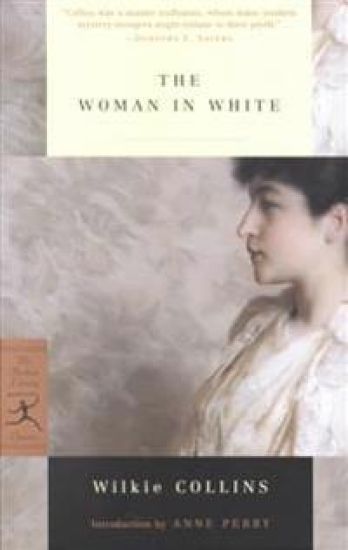
The Woman in White

The Woman in White

Wilkie Collins

Modern Library Inc
2002
pokkari
Generally considered the first English sensation novel, The Woman in White features the remarkable heroine Marian Halcome and her sleuthing partner, drawing master Walter Hartright, pitted against the diabolical team of Count Fosco and Sir Percival Glyde. A gripping tale of murder, intrigue, madness, and mistaken identity, Collins’s psychological thriller has never been out of print in the 140 years since its publication. Anne Perry writes in her Introduction to this Modern Library Paperback Classic (set from the “New Edition” of 1861), “[The Woman in White] has lasted, to our great pleasure, because it is superb storytelling about people who engage our minds and our imaginations.”
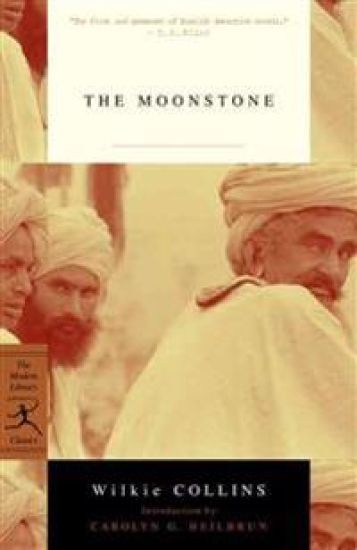
The Moonstone

The Moonstone

Wilkie Collins

Modern Library Inc
2001
pokkari
"The Moonstone is a page-turner," writes Carolyn Heilbrun. "It catches one up and unfolds its amazing story through the recountings of its several narrators, all of them enticing and singular." Wilkie Collins’s spellbinding tale of romance, theft, and murder inspired a hugely popular genre–the detective mystery. Hinging on the theft of an enormous diamond originally stolen from an Indian shrine, this riveting novel features the innovative Sergeant Cuff, the hilarious house steward Gabriel Betteridge, a lovesick housemaid, and a mysterious band of Indian jugglers. This Modern Library Paperback Classic is set from the definitive 1871 edition.
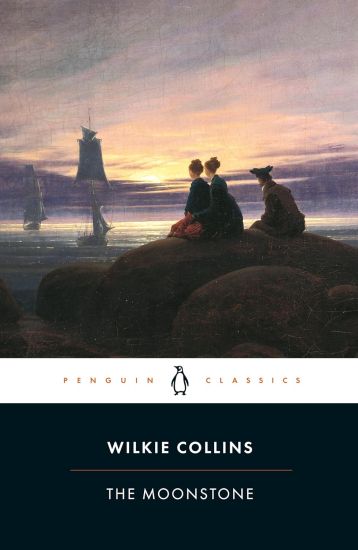
The Moonstone

The Moonstone

Wilkie Collins

Penguin Classics
1998
pokkari

Halvin toimitettuna 15,40 €

The Moonstone is one of the first true works of detective fiction, in which Wilkie Collins established the groundwork for the genre itself. This Penguin Classics edition is edited with an introduction by Sandra Kemp. The Moonstone, a priceless yellow diamond, is looted from an Indian temple and maliciously bequeathed to Rachel Verinder. On her eighteenth birthday, her friend and suitor Franklin Blake brings the gift to her. That very night, it is stolen again. No one is above suspicion, as the idiosyncratic Sergeant Cuff and the Franklin piece together a puzzling series of events as mystifying as an opium dream and as deceptive as the nearby Shivering Sand. The intricate plot and modern technique of multiple narrators made Wilkie Collins's 1868 work a huge success in the Victorian sensation genre. With a reconstruction of the crime, red herrings and a 'locked-room' puzzle, The Moonstone was also a major precursor of the modern mystery novel. In her introduction Sandra Kemp explores The Moonstone's the detective elements of Collins's writing, and reveals how Collins's sensibilities were untypical of his era. Wilkie Collins (1824-1889) was born in London in 1824, the eldest son of the landscape painter William Collins. In 1846 he was entered to read for the bar at Lincoln's Inn, where he gained the knowledge that was to give him much of the material for his writing. From the early 1850s he was a friend of Charles Dickens, who produced and acted in two melodramas written by Collins, The Lighthouse and The Frozen Deep. Of his novels, Collins is best remembered for The Woman in White (1859), No Name (1862), Armadale (1866) and The Moonstone (1868). If you enjoyed The Moonstone you might like Collins's The Woman in White, also available in Penguin Classics.'Probably the very finest detective story ever written'Dorothy L. Sayers'The first, the longest and the best of modern modern English detective novels'T. S. Eliot
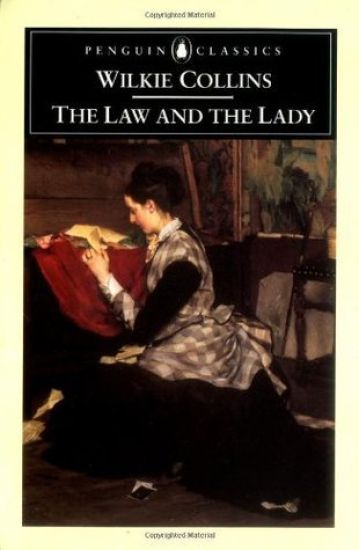
The Law and the Lady

The Law and the Lady

Wilkie Collins

Penguin Classics
1998
pokkari

Halvin toimitettuna 31,00 €

Despite the grave misgivings of both their families, Valeria Brinton and Eustace Woodville are married. But before long the new bride begins to suspect a dark secret in her husband's past and when she discovers that he has been living under a false name, she determines to find out why he is concealing his true identity from her. Soon she must endure an even greater shock: the revelation that her husband has been on trial for poisoning his first wife. Convinced of his innocence, Valeria is prepared to do anything to clear her husband's name, and in so doing upturns the conventions of polite nineteenth century society.
Heart and Science

Heart and Science

Wilkie Collins

Broadview Press Ltd
1997
pokkari
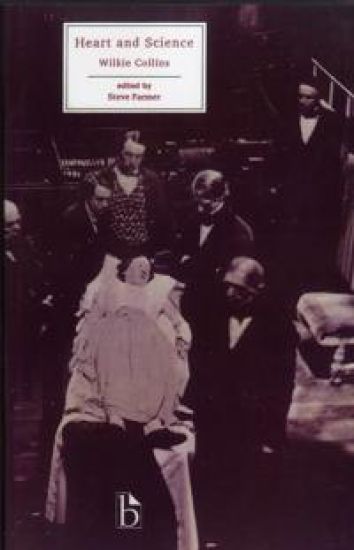
Wilkie Collins's later novels are often as concerned with social issues as they are with simple storytelling-but as more and more critics are suggesting, the best of them are as readable and thought-provoking today as they were when they first appeared. Of none is this more true than of his 1883 novel Heart and Science, which Collins himself placed alongside his masterpiece The Woman in White. Heart and Science turns on the fate of the orphaned Carmina Graywell, who is left in the charge of her aunt and guardian Mrs. Gallilee when her fiance is forced to take an extended trip to Canada's drier climes in order to recover his health. Over the issue of her inheritance Mrs. Gallilee schemes to manipulate, control and ultimately destroy the naive but strong-willed Carmina. The story is complicated by the machinations of Dr. Benjulia, a dark genius whose passionate devotion to the study of diseases of the brain leads him to encourage the progress of Carmina's life-threatening brain illness for the sake of scientific observation; the narrative builds to a pair of spectacularly lurid climactic scenes. Collin's novel tackles the debate over what he termed 'the hideous secrets of Vivisection' with a passionate intensity aroused in large part by the sensational 1880s case of a doctor who was acquitted on charges laid under the new Cruelty to Animals Act of having practiced live experimentation on animals without a license. Excerpts from a contemporary account of this trial, together with other documents relating to the vivisectionist controversy and a variety of contemporary reviews of the book, are included among the appendices of this volume. The edition also includes a full introduction, chronology, explanatory notes and a note on the text. Heart and Science's story of the struggle between strong-willed women will strike chords of sympathetic understanding with modern readers-as will its vivisectionist theme, with it's clear parallels to the animal welfare/ animal rights debates of today.
Der rote Schal

Der rote Schal

Wilkie Collins

S. Fischer Verlag
1995
pokkari
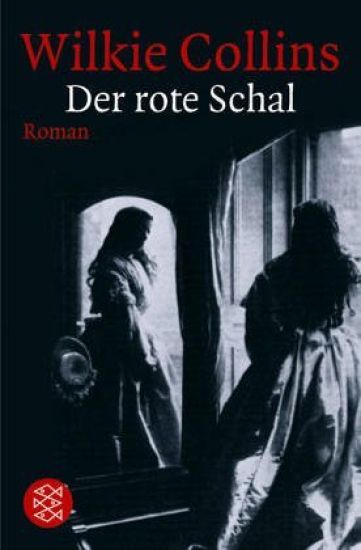
Zwei Freunde, die beide den verhängnisvollen Namen Allan Armadale tragen, stehen unter dem Fluch ihrer Väter, Rivalen bis zum Mord. Die Szene ist Wildbad, das Jahr 1832, und die Stadthonoratioren warten in festlichem Aufzug auf die ersten Kurgäste der Saison. Unter ihnen befindet sich der reiche, sterbenskranke Plantagenbesitzer Allan Armadale, dessen einziger Wunsch es ist, noch vor seinem Tod einen Brief für seinen Sohn zu beenden, in dem er die verhängnisvolle Geschichte seiner Familie erzählt und vor dem Namensvetter warnt: "Lege Gebirge und Meere zwischen Dich und jenen anderen Armadale. Nie dürfen sich die beiden auf dieser Welt begegnen - nie, nie, nie!" Doch ehe der Inhalt des Briefes dem Sohn enthüllt wird, kreuzen sich die Wege der beiden Armadales, und die schöne Unbekannte mit dem roten Schal löst eine Kette mysteriöser Verwicklungen aus, in die die Namensvettern bald verstrickt sind. Wilkie Collins hat nicht nur eine spannende, glänzend konstruierte Handlung erfunden, der Roman fasziniert auch durch seine gekonnte Milieuschilderung und die meisterhafte Personendarstellung: der grüblerische, sensible Midwinter, der fröhliche, optimistische Allan, die Intrigantin Lydia, die hübsche, verliebte Majorstochter, die es auf unschuldig-raffinierte Art versteht, Allan den Kopf zu verdrehen. Aber auch die Nebenfiguren - der schrullige Major, die alte Gaunerin Mutter Oldershaw, die Jammerfigur des alten Bashwood, die gewitzten Anwälte Pedgift und Sohn, die Witwe Pentecost und ihr geistlicher Sohn Sammy - sind mit sicherer Hand ausgeführt. Viele Spannungs- und Gruseleffekte, Liebe und Verstrickungen durchziehen die Handlung bis zur Lösung des Rätsels. Der rote Schal erschien 1866, lange erwartet, sechs Jahre nach Die Frau in Weiß und wurde, ebenso wie jener, ein Erfolgsroman.

Armadale

Armadale

Wilkie Collins

Penguin Classics
1995
pokkari

Halvin toimitettuna 18,70 €

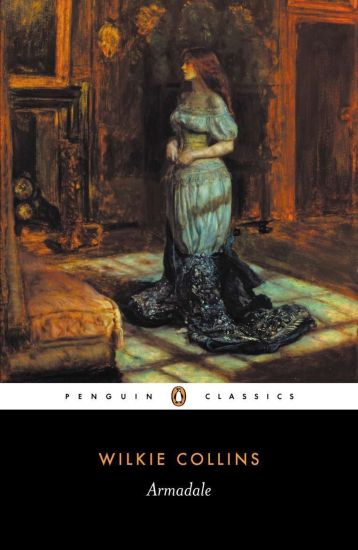
An innovative novel featuring an astonishingly wicked female villain, Wilkie Collins's Armadale was regarded by T. S. Eliot as 'the best of [his] romances'. This Penguin Classics edition is edited with an introduction and notes by John Sutherland. When the elderly Allan Armadale makes a terrible confession on his death-bed, he has little idea of the repercussions to come, for the secret he reveals involves the mysterious Lydia Gwilt: flame-haired temptress, bigamist, laudanum addict and husband-poisoner. Her malicious intrigues fuel the plot of this gripping melodrama: a tale of confused identities, inherited curses, romantic rivalries, espionage, money - and murder. The character of Lydia Gwilt horrified contemporary critics, with one reviewer describing her as 'One of the most hardened female villains whose devices and desires have ever blackened fiction'. She remains among the most enigmatic and fascinating women in nineteenth-century literature and the dark heart of this most sensational of Victorian 'sensation novels'. John Sutherland's introduction illustrated how Wilkie Collins drew on scandalous newspaper headlines and on new technology particularly the penny post and the telegraph - to lend extra pace and veracity to his tale. This edition also contains notes, further reading and an appendix on stage dramatisations of Armadale. Wilkie Collins (1824-1889) was born in London in 1824, the eldest son of the landscape painter William Collins. In 1846 he was entered to read for the bar at Lincoln's Inn, where he gained the knowledge that was to give him much of the material for his writing. From the early 1850s he was a friend of Charles Dickens, who produced and acted in two melodramas written by Collins, The Lighthouse and The Frozen Deep. Of his novels, Collins is best remembered for The Woman in White (1859), No Name (1862), Armadale (1866) and The Moonstone (1868). If you enjoyed Armadale, you might like Collins's No Name, also available in Penguin Classics.
No Name

No Name

Wilkie Collins

Penguin Classics
1994
pokkari

Halvin toimitettuna 16,20 €

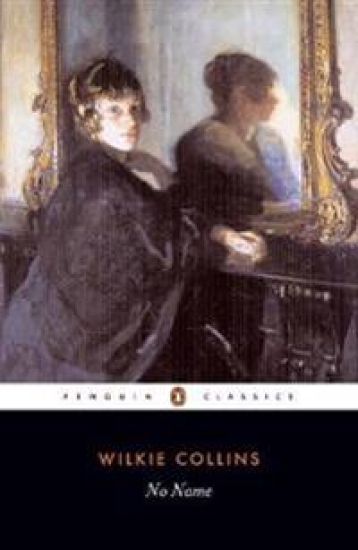
A witty, intricately-plotted exploration of a sudden fall from grace, the Penguin Classics edition of Wilkie Collins's No Name is edited with an introduction and notes by Mark Ford. Magdalen and her sister Norah, beloved daughters of Mr and Mrs Vanstone, find themselves the victims of a catastrophic oversight. Their father has neglected to change his will, and when the girls are suddenly orphaned, their inheritance goes to their uncle. Now penniless, the conventional Norah takes up a position as a governess, but the defiant and tempestuous Magdalen cannot accept the loss of what is rightfully hers and decides to do whatever she can to win it back. With the help of cunning Captain Wragge, she concocts a scheme that involves disguise, deceit and astonishing self-transformation. In this compelling, labyrinthine story Wilkie Collins brilliantly demonstrates the gap between justice and the law, and in the subversive Magdalen he portrays one of the most exhilarating heroines of Victorian fiction. In his introduction Mark Ford examines themes of identity and illegitimacy within Victorian society and compares No Name to Collins's more 'sensational' fiction. This edition also includes notes and a bibliography. Wilkie Collins (1824-1889) was born in London in 1824, the eldest son of the landscape painter William Collins. In 1846 he was entered to read for the bar at Lincoln's Inn, where he gained the knowledge that was to give him much of the material for his writing. From the early 1850s he was a friend of Charles Dickens, who produced and acted in two melodramas written by Collins, The Lighthouse and The Frozen Deep. Of his novels, Collins is best remembered for The Woman in White (1859), No Name (1862), Armadale (1866) and The Moonstone (1868). If you enjoyed No Name, you might like Anthony Trollope's Can You Forgive Her?, also available in Penguin Classics.
The Moonstone

The Moonstone

Wilkie Collins

Everyman's Library USA
1992
sidottu
The Moonstone is a stunning yellow diamond the size of a bird's egg that glows like the harvest moon and harbors a flaw in its brilliant depths. Inherited by the beautiful young Englishwoman Rachel Verinder, it is also a sacred talisman to the Hindu priests who hope to bring it back to their holy city in India, from which it was looted long ago. The diamond's disappearance sets in motion an intricately plotted mystery. Wilkie Collins gives the reader all the necessary pieces to the puzzle, but they are so cleverly disguised that his surprise ending takes the breath away. The elements that make up The Moonstone--a purloined jewel that carries a mysterious curse, an indefatigable British police sergeant, a drama of theft and murder in a spacious country house--have been repeated, in varying guises, throughout much of the avalanche of detective fiction that followed Collins's immensely popular 1868 novel. But none of those books has surpassed the richness and suspense of the storytelling of The Moonstone, the first detective novel and the continuing standard of its genre. Introduction by Catherine Peters
Moonstone

Moonstone

Wilkie Collins

Everyman
1992
sidottu

Halvin toimitettuna 18,70 €

The moonstone is a yellow diamond of unearthly beauty brought from India and given to Rachel Verrinder as an eighteenth birthday present, but the fabled diamond carries with it a terrible curse.
The Moonstone

The Moonstone

Wilkie Collins

Wordsworth Editions Ltd
1992
nidottu

Halvin toimitettuna 9,90 €

Introduction and Notes by David Blair, Rutherford College, University of Kent. The Moonstone, a priceless Indian diamond which had been brought to England as spoils of war, is given to Rachel Verrinder on her eighteenth birthday. That very night, the stone is stolen. Suspicion then falls on a hunchbacked housemaid, on Rachel's cousin Franklin Blake, on a troupe of mysterious Indian jugglers, and on Rachel herself. The phlegmatic Sergeant Cuff is called in, and with the help of Betteredge, the Robinson Crusoe-reading loquacious steward, the mystery of the missing stone is ingeniously solved.
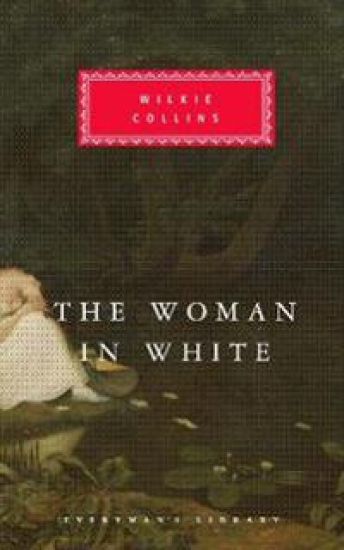
The Woman in White

The Woman in White

Wilkie Collins

Everyman's Library USA
1991
sidottu
Wilkie Collins's classic thriller took the world by storm on its first appearance in 1859, with everything from dances to perfumes to dresses named in honor of the woman in white. The novel's continuing fascination stems in part from a distinctive blend of melodrama, comedy, and realism; and in part from the power of its story. The catalyst for the mystery is Walter Hartright's encounter on a moonlit road with a mysterious woman dressed head to toe in white. She is in a state of confusion and distress, and when Hartright helps her find her way back to London she warns him against an unnamed man of rank and title. Hartright soon learns that she may have escaped from an asylum and finds to his amazement that her story may be connected to that of the woman he secretly loves. Collins brilliantly uses the device of multiple narrators to weave a story in which no one can be trusted, and he also famously creates, in the figure of Count Fosco, the prototype of the suave, sophisticated evil genius. The Woman in White is still passed as a masterpiece of narrative drive and excruciating suspense. Introduction by Nicholas Rance
Woman In White

Woman In White

Wilkie Collins

Everymans Library
1991
sidottu

Halvin toimitettuna 21,20 €

Wilkie Collins' sixth novel took the fashionable world by storm on its appearance in 1860, when everything from dances to dresses was named after the "woman in white". Nicholas Rance is the author of "Historical Novel and Popular Politics in Nineteenth-Century England".
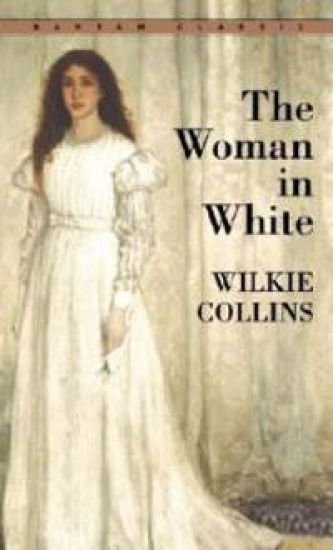
The Woman in White

The Woman in White

Wilkie Collins

Bantam Doubleday Dell
1985
pokkari
"Amy . . . I'll be back." For eight years Amy Deverall clung to the words Rain Tallman had whispered as he kissed her and rode away. Smart as a whip and as eager for life as a young colt, Amy grew up along the mighty Wabash River, waiting for the handsome Shawnee-raised boy who had gone off to explore the wilderness beyond the horizon. Now, the broad-shouldered, gun-toting trapper galloping toward her was a new Rain Tallman. His slow, sweet kisses taught her passion and she longed to ride beside him down the dangerous trails he traveled. But where was the boy she had known? Had he really grown to be a steel-hard, silent loner who would take her heart--and never say "I love you"?