Kirjojen hintavertailu – 12 859 824 kirjaa ja 27 kauppaa

Kirjailija

Wilkie Collins

Kirjat ja teokset yhdessä paikassa: 2 039 kirjaa, julkaisuja vuosilta 1985–2026, suosituimpiin kuuluu Basil. Vertaile teosten hintoja ja tarkista saatavuus suomalaisista kirjakaupoista.

2 039 kirjaa

Kirjojen julkaisuvuodet: 1985–2026.

The Woman in White

The Woman in White

Wilkie Collins

Createspace Independent Publishing Platform
2017
nidottu
A mystery classic and renowned example of sensation fiction, The Woman in White is the fifth published novel by Wilkie Collins. Published in 1859, we are immediately intrigued by the narrative - a young and genial tutor of arts, Walter Hartright, encounters a woman dressed head to toe in white who is lost in the streets of London. After reporting her to the authorities Walter is informed that the lady was an escapee from a mental asylum. However, when Walter takes a new position in teaching art he encounters a girl named Laura, whose looks are stunningly similar to those of the woman in white. As the pair fall for one another, the sense of mystery deepens - is there more to their meeting than first meets the eye? Lauded for its innovative and compelling plot and use of multiple characters in narration, The Woman in White is one of the earliest examples of detective fiction. Throughout his quest for the truth, Walter hires a number of private detectives and eventually mimics their methodology, with Collins' legal know-how lending realism to the plot line. Wilkie Collins was strongly motivated to author her novel by the unequal situation men and women found themselves: at the time, the law overtly deferred to men in matters of inheritance and estate. The book's legacy is towering and significant: in the modern day The Woman in White continues to be voted and rated among the greatest novels ever published by surveys such as the BBC's Big Read and by newspapers such as The Observer. This edition holds the complete text, without abridgement.

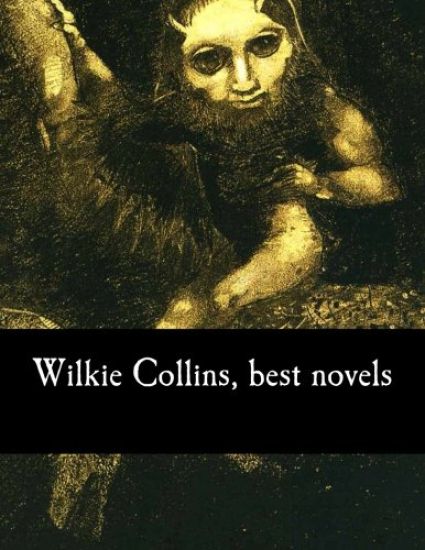
Wilkie Collins, best novels

Wilkie Collins, best novels

Wilkie Collins

Createspace Independent Publishing Platform
2017
nidottu
William Wilkie Collins (1824 - 1889) was an English novelist, playwright, and author of short stories. His best-known works are The Woman in White, The Moonstone, Armadale, and No Name. Collins was born into the family of painter William Collins in London. He received his early education at home from his mother. He then attended an academy and a private boarding school. He also traveled with his family to Italy and France, and learned the French and Italian languages. He served as a clerk in the firm of the tea merchants Antrobus & Co. His first novel Iolani, or Tahiti as It Was; a Romance, was rejected by publishers in 1845. His next novel, Antonina, was published in 1850. In 1851 he met Charles Dickens, and the two became close friends. A number of Collins's works were first published in Dickens's journals In this book: The Moonstone The woman in white After dark
The Queen of Hearts

The Queen of Hearts

Wilkie Collins

Createspace Independent Publishing Platform
2017
nidottu
Wilkie Collins lived in London from 1824 to 1889, a period in which 'the inevitable self-assertion of wealth, so amiably deplored by the prosperous and the rich; was] so bitterly familiar to the unfortunate and the poor.'
The Woman in White

The Woman in White

Wilkie Collins

Createspace Independent Publishing Platform
2017
nidottu
This is the story of what a Woman's patience can endure, and what a Man's resolution can achieve. If the machinery of the Law could be depended on to fathom every case of suspicion, and to conduct every process of inquiry, with moderate assistance only from the lubricating influences of oil of gold, the events which fill these pages might have claimed their share of the public attention in a Court of Justice. But the Law is still, in certain inevitable cases, the pre-engaged servant of the long purse; and the story is left to be told, for the first time, in this place. As the Judge might once have heard it, so the Reader shall hear it now. No circumstance of importance, from the beginning to the end of the disclosure, shall be related on hearsay evidence. When the writer of these introductory lines (Walter Hartright by name) happens to be more closely connected than others with the incidents to be recorded, he will describe them in his own person. When his experience fails, he will retire from the position of narrator; and his task will be continued, from the point at which he has left it off, by other persons who can speak to the circumstances under notice from their own knowledge, just as clearly and positively as he has spoken before them. Thus, the story here presented will be told by more than one pen, as the story of an offence against the laws is told in Court by more than one witness-with the same object, in both cases, to present the truth always in its most direct and most intelligible aspect; and to trace the course of one complete series of events, by making the persons who have been most closely connected with them, at each successive stage, relate their own experience, word for word. Let Walter Hartright, teacher of drawing, aged twenty-eight years, be heard first.
The Lazy Tour of Two Idle Apprentices

The Lazy Tour of Two Idle Apprentices

Wilkie Collins; Charles Dickens

Createspace Independent Publishing Platform
2017
nidottu
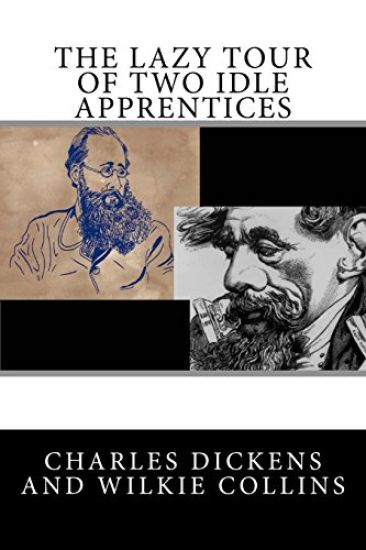
Humorous narrative of Collins's and Dickens's walking tour of Cumberland during September 1857. Written in collaboration, it was originally published in Household Words, 3-31 October 1857; and Harper's Weekly, 31 October--28 November 1857. Collected in book form in 1890. Collins assumed the identity of Thomas Idle (a born-and-bred idler) and Dickens that of Francis Goodchild (laboriously idle). Collins wrote three main parts. In the first, he describes his sprained ankle after a reluctant ascent of Carrock Fell in the mist. The second, the story of Dr Lorn, was later republished as 'The Dead Hand'. The remaining section, in which Thomas Idle, stretched out injured on a sofa in Allonby, reflects that all the great disasters of his life have been caused by being deluded into activity, consists of reminiscences, and is loosely based on Collins's own life. At school, after foolishly winning a prize, he was rejected by the other idle boys as a traitor and by the industrious boys as a a dangerous interloper. The only time he played cricket he caught a fever from the unaccustomed perspiration. Mistakenly studying for the Bar, where he was expected to know nothing whatever about the law, he became the target of a persistent legal bore.