Kirjojen hintavertailu – 12 859 818 kirjaa ja 27 kauppaa
Kirjailija
Willa Cather
Kirjat ja teokset yhdessä paikassa: 629 kirjaa, julkaisuja vuosilta 1927–2026, suosituimpiin kuuluu Christmas Classics. Vertaile teosten hintoja ja tarkista saatavuus suomalaisista kirjakaupoista.
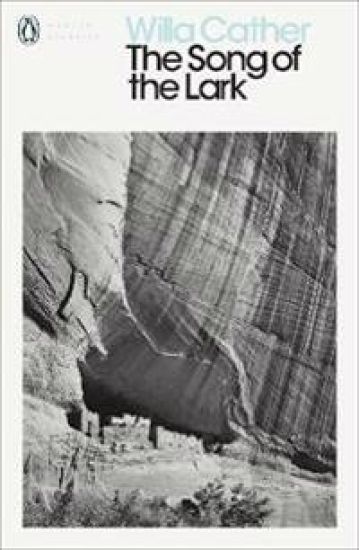
The second novel in the Great Plains trilogy, this is a passionate portrait of the artist as a young womanThea Kronberg, a young girl from a small town in Colorado has a great gift - her beautiful singing voice. Her talent takes her to the great opera houses of Europe, and through ambition and hard work, she forges a life as an artist. But if she can never go home again, nor can she leave behind her past. At last, in a desert canyon in Arizona, Thea has a revelation that will allow her to attain a new state of spirituality and become a truly great artist.'Willa Cather makes a world which is burningly alive, sometimes lovely, often tragic' Helen Dunmore'The Song of the Lark illuminates all her work' A. S. Byatt'Lingers long in the memory' Joyce Carol Oates
Near Rattlesnake Creek, on the side of a little draw stood Canute's shanty. North, east, south, stretched the level Nebraska plain of long rust-red grass that undulated constantly in the wind. To the west the ground was broken and rough, and a narrow strip of timber wound along the turbid, muddy little stream that had scarcely ambition enough to crawl over its black bottom. If it had not been for the few stunted cottonwoods and elms that grew along its banks, Canute would have shot himself years ago. The Norwegians are a timber-loving people, and if there is even a turtle pond with a few plum bushes around it they seem irresistibly drawn toward it.
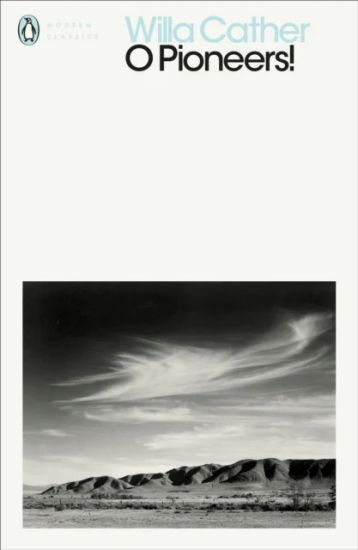
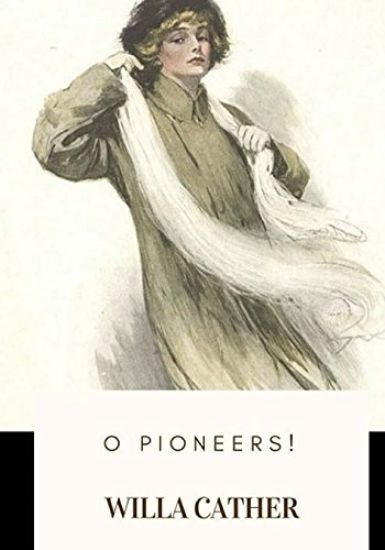
The first novel in the Great Plains trilogy, this is an ode to the American Midwest and the immigrants who transformed itTo the anger of her brothers, it is Alexandra who is entrusted to manage their family farm in the tough, hostile prairie of Hanover, Nebraska following the death of their father. As the years pass, Alexandra rises heroically to the challenge, finding strength in the savage beauty of the land even as loneliness and personal tragedies crowd in. A rapturous work of understated lyricism, Willa Cather's 1913 tale of a pioneer woman who tames the wild, hostile lands of the Nebraskan prairie is also the story of what it means to be American.
Death Comes for the Archbishop is a 1927 novel by Willa Cather. It concerns the attempts of a Catholic bishop and a priest to establish a diocese in New Mexico Territory. The novel portrays two well-meaning and devout French priests who will encounter a well-entrenched Spanish-Mexican clergy that they are sent to supplant after the United States acquired New Mexico in the Mexican-American War. As a result of the U. S. victory, the dioceses of the new state were remapped by the Vatican to reflect the new national borders. Several of these entrenched priests are depicted as examples of greed, avarice, and gluttony, while others live simple, abstemious lives among the Native Americans. Cather portrays the Hopi and Navajo sympathetically, and her characters express the near futility of overlaying their religion on a millennia-old native culture. The novel was included on Time's 100 Best English-language Novels from 1923 to 2005, and Modern Library's list of the 100 best English-language novels of the 20th century and was chosen by the Western Writers of America to be the 7th-best "Western Novel" of the 20th century.
O Pioneers by Willa Cather. O Pioneers is a 1913 novel by American author Willa Cather, written while she was living in New York. It is the first novel of her Great Plains trilogy, followed by The Song of the Lark (1915) and My Antonia (1918). O Pioneers tells the story of the Bergsons, a family of Swedish-American immigrants in the farm country near the fictional town of Hanover, Nebraska, at the turn of the 20th century. The main character, Alexandra Bergson, inherits the family farmland when her father dies, and she devotes her life to making the farm a viable enterprise at a time when many other immigrant families are giving up and leaving the prairie. The novel is also concerned with two romantic relationships, one between Alexandra and family friend Carl Linstrum and the other between Alexandra's brother Emil and the married Marie Shabata.
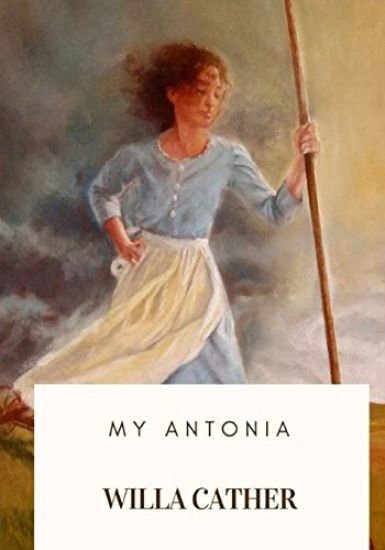
My Antonia by Willa Cather. My Antonia is a novel published in 1918 by American writer Willa Cather, considered one of her best works. It is the final book of her "prairie trilogy" of novels, preceded by O Pioneers and The Song of the Lark. Orphaned Jim Burden rides the trains from Virginia to Black Hawk, Nebraska, where he will live with his paternal grandparents. Jake, a farmhand from Virginia, rides with the 10-year-old boy. On the same train, headed to the same destination, is the Shimerda family from Bohemia. Jim lives with his grandparents in the home they have built, helping as he can with chores to ease the burden on the others. The home has the dining room and kitchen downstairs, like a basement, with small windows at the top of the walls, an arrangement quite different from Jim's home in Virginia. The sleeping quarters and parlor are at ground level.
Obscure Destinies is a collection of three short stories by Willa Cather, published in 1932. Each story deals with the death of a central character and asks how the ordinary lives of these characters can be valued and how "beauty was found or created in seemingly ordinary circumstances."
Obscure Destinies is a collection of three short stories by Willa Cather, published in 1932. Each story deals with the death of a central character and asks how the ordinary lives of these characters can be valued and how "beauty was found or created in seemingly ordinary circumstances."
'Quite simply a masterpiece ... I am completely bowled over by it; by the power of its writing, by the vividness of its scene painting and by the stories it tells' A. N. Wilson'Where there is great love there are always miracles'Two French priests have been sent to New Mexico to reawaken the faith. There, they must contend with unforgiving landscapes, danger, rebellion and loneliness. But through their many years together they are sustained by faith, friendship and the awe-inspiring majesty that surrounds them. A work of great simplicity and sublime beauty, Willa Cather's acclaimed novel asks, what is a life well lived? Death Comes for the Archbishop is a masterpiece by the author of O Pioneers! and the great novelist of American frontier life.'Its whole effect works slowly and mysteriously ... a major, and rare, artistic achievement' A. S. Byatt
Through Jim Burden's endearing, smitten voice, we revisit the remarkable vicissitudes of immigrant life in the Nebraska heartland, with all its insistent bonds. Guiding the way are some of literature's most beguiling characters: the Russian brothers plagued by memories of a fateful sleigh ride, Antonia's desperately homesick father and self-indulgent mother, and the coy Lena Lingard. Holding the pastoral society's heart, of course, is the bewitching, free-spirited Antonia.
Named by the Modern Library as one of the twentieth century's 100 best novels in the English language, and by the Western Writers of America as the 7th-best Western ever written, Death Comes for the Archbishop is a passionate tale of adventure and self-sacrificing faith. When Jean Marie Latour, a French Catholic priest, is placed in charge of a massive diocese in New Mexico, he must travel thousands of miles into an unknown and untamed country. There he encounters hardship and triumph, from encounters with corrupt churchmen and murderous outlaws to his dealings with the kind but complicated Mexican and Native American people that he serves. Inspired by true events, Cather's stories of Father Latour are an observant and beautiful account of the meeting of cultures, the dedications of the individual soul, and the ever-present truth that all of life is an approach toward death.
The Troll Garden is a collection of short stories by Willa Cather, published in 1905. ContentsThis collection contains the following seven stories: "Flavia and Her Artists" "The Sculptor's Funeral" "A Death in the Desert" "The Garden Lodge" "The Marriage of Phaedra" "A Wagner Matinee" "Paul's Case"Four of these stories--"The Sculptor's Funeral," "A Death in the Desert," "A Wagner Matinee," and "Paul's Case"-were revised and included in Cather's next collection of short fiction Youth and the Bright Medusa, published in 1920. Willa Sibert Cather ( December 7, 1873 - April 24, 1947) was an American writer who achieved recognition for her novels of frontier life on the Great Plains, including O Pioneers (1913), The Song of the Lark (1915), and My ntonia (1918). In 1923 she was awarded the Pulitzer Prize for One of Ours (1922), a novel set during World War I. Cather grew up in Virginia and Nebraska, and graduated from the University of Nebraska-Lincoln. She lived and worked in Pittsburgh for ten years, supporting herself as a magazine editor and high school English teacher. At the age of 33 she moved to New York City, her primary home for the rest of her life, though she also traveled widely and spent considerable time at her summer residence on Grand Manan Island, New Brunswick. Early life and education: Cather was born Wilella Sibert Cather in 1873 on her maternal grandmother's farm in the Back Creek Valley near Winchester, Virginia. Her father was Charles Fectigue Cather (d. 1928), whose family had lived on land in the valley for six generations. Cather's family originated in Wales, the family name deriving from Cadair Idris, a mountain in Gwynedd. Her mother was Mary Virginia Boak (died 1931), a former school teacher. Within a year of Cather's birth, the family moved to Willow Shade, a Greek Revival-style home on 130 acres given to them by her paternal grandparents. At the urging of Charles Cathers' parents, the family moved to Nebraska in 1883 when Willa was nine years old. The rich, flat farmland appealed to Charles' father, and the family wished to escape the tuberculosis outbreaks that were rampant in Virginia. Willa's father tried his hand at farming for eighteen months; then he moved the family into the town of Red Cloud, where he opened a real estate and insurance business, and the children attended school for the first time. Some of the earliest work produced by Cather was first published in the Red Cloud Chief, the city's local paper. Cather's time in the western state, still on the frontier, was a deeply formative experience for her. She was intensely moved by the dramatic environment and weather, the vastness of the Nebraska prairie, and the various cultures of the European-American, immigrant and Native American families in the area. Like Jim Burden in My Antonia, the young Willa Cather saw the Nebraska frontier as a "place where there was nothing but land: not a country at all, but the materials out of which countries were made... Between that earth and that sky I felt erased, blotted out". Mary Cather had six more children after Willa: Roscoe, Douglass, Jessica, James, John, and Elsie. Cather was closer to her brothers than to her sisters whom, according to biographer Hermione Lee, she "seems not to have liked very much." Cather read widely, having made friends with a Jewish couple, the Weiners, who offered her free access to their extensive library. She made house calls with the local physician, Dr. Robert Damerell, and decided to become a doctor. After Cather's essay on Thomas Carlyle was published in the Nebraska State Journal during her freshman year at the University of Nebraska, she became a regular contributor to the Journal. In addition to her work with the local paper, Cather also served as the managing editor of The Hesperian, the University of Nebraska's student newspaper, and associated at the Lincoln Courier....................
The eldest daughter of Bohemian emigrants, fourteen-year-old ntonia Shimerda arrives in Black Hawk, Nebraska, blissfully unaware of the poverty and heartbreak that lie in store for her family. But as one calamity after another befalls the Shimerdas, ntonia finds the strength not merely to survive, but to thrive. Under the watchful eye of Jim Burden, her neighbor and childhood friend, ntonia blossoms into a woman as beautiful, captivating, and resilient as the Great Plains. Told in lush and evocative prose, My ntonia is a masterpiece of twentieth-century literature and a stirring tribute to the homesteaders whose pioneer spirit tamed the American West.
A narrative that recounts a life lived simply in the silence of the southwestern desert. We are delighted to publish this classic book as part of our extensive Classic Library collection. Many of the books in our collection have been out of print for decades, and therefore have not been accessible to the general public. The aim of our publishing program is to facilitate rapid access to this vast reservoir of literature, and our view is that this is a significant literary work, which deserves to be brought back into print after many decades. The contents of the vast majority of titles in the Classic Library have been scanned from the original works. To ensure a high quality product, each title has been meticulously hand curated by our staff. Our philosophy has been guided by a desire to provide the reader with a book that is as close as possible to ownership of the original work. We hope that you will enjoy this wonderful classic work, and that for you it becomes an enriching experience.
The first novel in Willa Cather's Prairie Trilogy tells the story of the Bergsons, a family of immigrants eking out a hardscrabble life as farmers in Nebraska at the turn of the nineteenth century. Alexandra, the eldest child of Bergson patriarch John, inherits the family farm when her father dies. Left to raise her father's three sons and somehow turn a struggling farm around, Alexandra is tasked with pulling her family up by its bootstraps.
Set in the 1890s in Moonstone, a fictional town located in Colorado, The Song of the Lark is the self-portrait of an artist in the making. The story revolves around an ambitious young heroine, Thea Kronborg, who leaves her hometown to go to the big city to fulfill her dream of becoming a well-trained pianist, a better piano teacher. When her piano instructor hears her voice, he realizes that this is her true artistic gift. He encourages her to pursue her vocal training instead of piano saying ... "your voice is worth all that you can put into it. I have not come to this decision rashly." The novel captures Thea's independent-mindedness, her strong work ethic, and her ascent to her highest achievement. At each step along the way, her realization of the mediocrity of her peers propels her to greater levels of accomplishment, but in the course of her ascent she must discard those relationships which no longer serve her. (source: Wikipedia)
After the death of his parents, Jim is sent to live with his grandparents on the Nebraska plains. By chance on that same train is a bright-eyed girl, Antonia, who will become his neighbor and lifelong friend. Her family has emigrated from Bohemia to start a new life farming but soon lose their money and must work hard just to survive. Through it all, Antonia retains her natural pride and free spirit. Jim's grandparents have a large and tidy farm. They are kind to him, but conventional. Later Jim becomes a scholar and Antonia becomes a 'hired girl' in town. She blossoms in the new freedom that town life offers. Jim can only taste this life vicariously through her recounting of town gossip and of the 'dance tent'. Antonia's strong will, spirit, and honesty allow her to thrive in the midst of hardship. Cather paints a rich picture of life on the prairie at the beginning of the twentieth century and depicts some of the many cultures that came to comprise the United States.