Kirjojen hintavertailu – 12 859 818 kirjaa ja 27 kauppaa
Kirjailija
Willa Cather
Kirjat ja teokset yhdessä paikassa: 629 kirjaa, julkaisuja vuosilta 1927–2026, suosituimpiin kuuluu Christmas Classics. Vertaile teosten hintoja ja tarkista saatavuus suomalaisista kirjakaupoista.
This 100th Anniversary Edition of Willa Cather's masterpiece a new introduction by Pulitzer Prize-winning novelist Jane Smiley. In this symphonically powerful and magnificently observed novel, Cather created one of the most winning heroines in American fiction, a woman whose calm, undemonstrative strength and robust high spirits make her emblematic of the virtues Cather most admired in her country. ntonia Shimerda is the daughter of Bohemian immigrant parents struggling with the oceanic loneliness of life on the Nebraska prairie. Through the eyes of Jim Burden, her tutor and disappointed admirer, we follow ntonia from farm to town as she survives hardships both natural and human, from poverty to a failed romance--and not only survives, but triumphs.
Dr. Howard Archie had just come up from a game of pool with the Jewish clothier and two traveling men who happened to be staying overnight in Moonstone. His offices were in the Duke Block, over the drug store. Larry, the doctor's man, had lit the overhead light in the waiting-room and the double student's lamp on the desk in the study. The isinglass sides of the hard-coal burner were aglow, and the air in the study was so hot that as he came in the doctor opened the door into his little operating-room, where there was no stove. The waitingroom was carpeted and stiffly furnished, something like a country parlor. The study had worn, unpainted floors, but there was a look of winter comfort about it. The doctor's flat-top desk was large and well made; the papers were in orderly piles, under glass weights. Behind the stove a wide bookcase, with double glass doors, reached from the floor to the ceiling. It was filled with medical books of every thickness and color. On the top shelf stood a long row of thirty or forty volumes, bound all alike in dark mottled board covers, with imitation leather backs.
Claude Wheeler opened his eyes before the sun was up and vigorously shook his younger brother, who lay in the other half of the same bed. "Ralph, Ralph, get awake Come down and help me wash the car." "What for?" "Why, aren't we going to the circus today?" "Car's all right. Let me alone." The boy turned over and pulled the sheet up to his face, to shut out the light which was beginning to come through the curtainless windows. Claude rose and dressed, -a simple operation which took very little time. He crept down two flights of stairs, feeling his way in the dusk, his red hair standing up in peaks, like a cock's comb. He went through the kitchen into the adjoining washroom, which held two porcelain stands with running water. Everybody had washed before going to bed, apparently, and the bowls were ringed with a dark sediment which the hard, alkaline water had not dissolved.
Alexander's Bridge is the first novel by American author Willa Cather. First published in 1912, it was re-released with an author's preface in 1922. It also ran as a serial in McClure's, giving Cather some free time from her work for that magazine. Plot summary edit] Professor Wilson arrives at the Alexanders' house in Boston, Bartley Alexander having persuaded him to attend a Congress of Psychologists in the city. He is greeted by Winifred Alexander. When her husband comes home the men talk; Winifred plays the piano for them. The next day, she tells Wilson how she met her husband through her aunt. On Christmas Eve, the Alexanders prepare for Christmas dinner. Bartley tells Wilson he is having trouble with a bridge in Canada. Later he gives his wife pearl earrings. On New Year's Day, Alexander makes ready to leave for London. On the ship, he endures sharp gales and goes into a bar, where he gambles at bridge, the card game. In London, Bartley visits Hilda and tells her he cannot go on having two relationships; she must forget about him and leave him alone. She is distressed. The day before he is due to return to America however, he takes her out to dinner. Later, Hugh MacConnell walks Hilda back to her house on a foggy day. She says she isn't attracted to him; they are just close friends. In her house, she receives a letter from Bartley, saying he is going mad away from her. This prompts her to visit him in America to tell him she will marry another man; Bartley doesn't like the idea. They spend one last evening together. Soon afterward, Philip Horton calls Bartley to Canada to inspect the bridge. Bartley discovers that one of the lower chords is failing, compromising the structural integrity of the entire bridge. Horton, concerned not to halt construction, had attempted to contact Bartley earlier - the very day Bartley was with Hilda. As Bartley is on the bridge stopping the work crews, the bridge collapses, killing many of the workers. Bartley's body is recovered the next day and taken to Horton's house. Winifred comes back to make arrangements for her husband's corpse. Finally, Wilson visits Hilda. The latter expresses her envy of Winifred. Wilson reminds her that Winifred is now bereft and will be haunted by Bartley's death. Hilda concludes that she will be too................ Willa Sibert Cather ( December 7, 1873 - April 24, 1947) was an American writer who achieved recognition for her novels of frontier life on the Great Plains, including O Pioneers (1913), The Song of the Lark (1915), and My ntonia (1918). In 1923 she was awarded the Pulitzer Prize for One of Ours (1922), a novel set during World War I. Cather grew up in Virginia and Nebraska, and graduated from the University of Nebraska-Lincoln. She lived and worked in Pittsburgh for ten years, supporting herself as a magazine editor and high school English teacher. At the age of 33 she moved to New York City, her primary home for the rest of her life, though she also traveled widely and spent considerable time at her summer residence on Grand Manan Island, New Brunswick............................
O Pioneers is a 1913 novel by American author Willa Cather, written while she was living in New York. It is the first novel of her Great Plains trilogy, followed by The Song of the Lark (1915) and My ntonia (1918). Part I - The Wild Land On a windy January day in Hanover, Nebraska, Alexandra Bergson is with her five-year-old brother Emil, whose little kitten has climbed a telegraph pole and is afraid to come down. Alexandra asks her neighbor and friend Carl Linstrum to retrieve the kitten. Later, Alexandra finds Emil in the general store with Marie Tovesky. They are playing with the kitten. Marie lives in Omaha and is visiting her uncle Joe Tovesky. Alexandra's father is dying, and it is his wish that she run the farm after he is gone. Alexandra and her brothers Oscar and Lou later visit Ivar, known as Crazy Ivar because of his unorthodox views. For instance, he sleeps in a hammock, believes in killing no living thing and goes barefoot summer and winter. But he is known for healing sick animals. Alexandra is concerned about their hogs as the hogs of many of their neighbors are dying. Crazy Ivar advises her to keep their hogs clean rather than letting them live in filth and to give them fresh, clean water and good food. This simply confirms Oscar's and Lou's opinion that Ivar deserves the name Crazy Ivar. Alexandra, however, starts making plans for where she will relocate the hogs. After years of crop failure, many of the Bergson's neighbors are selling out, even if it means taking a loss. Then they learn the Linstrums have also decided to leave. Oscar and Lou want to leave too, but neither their mother nor Alexandra will. After visiting villages downwards to see how they are getting on, Alexandra talks her brothers into mortgaging the farm to buy more land, in hopes of ending up as rich landowners................. Willa Sibert Cather ( December 7, 1873 - April 24, 1947) was an American writer who achieved recognition for her novels of frontier life on the Great Plains, including O Pioneers (1913), The Song of the Lark (1915), and My ntonia (1918). In 1923 she was awarded the Pulitzer Prize for One of Ours (1922), a novel set during World War I. Cather grew up in Virginia and Nebraska, and graduated from the University of Nebraska-Lincoln. She lived and worked in Pittsburgh for ten years, supporting herself as a magazine editor and high school English teacher. At the age of 33 she moved to New York City, her primary home for the rest of her life, though she also traveled widely and spent considerable time at her summer residence on Grand Manan Island, New Brunswick. Early life and education: Cather was born Wilella Sibert Cather in 1873 on her maternal grandmother's farm in the Back Creek Valley near Winchester, Virginia. Her father was Charles Fectigue Cather (d. 1928), whose family had lived on land in the valley for six generations. Cather's family originated in Wales, the family name deriving from Cadair Idris, a mountain in Gwynedd. Her mother was Mary Virginia Boak (died 1931), a former school teacher. Within a year of Cather's birth, the family moved to Willow Shade, a Greek Revival-style home on 130 acres given to them by her paternal grandparents. At the urging of Charles Cathers' parents, the family moved to Nebraska in 1883 when Willa was nine years old. The rich, flat farmland appealed to Charles' father, and the family wished to escape the tuberculosis outbreaks that were rampant in Virginia. Willa's father tried his hand at farming for eighteen months; then he moved the family into the town of Red Cloud, where he opened a real estate and insurance business, and the children attended school for the first time. Some of the earliest work produced by Cather was first published in the Red Cloud Chief, the city's local paper. Cather's time in the western state, still on the frontier, was a deeply formative experience for her........
O Pioneers is a 1913 novel by American author Willa Cather, written while she was living in New York. It is the first novel of her Great Plains trilogy, followed by The Song of the Lark (1915) and My ntonia (1918). Part I - The Wild Land edit]On a windy January day in Hanover, Nebraska, Alexandra Bergson is with her five-year-old brother Emil, whose little kitten has climbed a telegraph pole and is afraid to come down. Alexandra asks her neighbor and friend Carl Linstrum to retrieve the kitten. Later, Alexandra finds Emil in the general store with Marie Tovesky. They are playing with the kitten. Marie lives in Omaha and is visiting her uncle Joe Tovesky. Alexandra's father is dying, and it is his wish that she run the farm after he is gone. Alexandra and her brothers Oscar and Lou later visit Ivar, known as Crazy Ivar because of his unorthodox views. For instance, he sleeps in a hammock, believes in killing no living thing and goes barefoot summer and winter. But he is known for healing sick animals. Alexandra is concerned about their hogs as the hogs of many of their neighbors are dying. Crazy Ivar advises her to keep their hogs clean rather than letting them live in filth and to give them fresh, clean water and good food. This simply confirms Oscar's and Lou's opinion that Ivar deserves the name Crazy Ivar. Alexandra, however, starts making plans for where she will relocate the hogs. After years of crop failure, many of the Bergson's neighbors are selling out, even if it means taking a loss. Then they learn the Linstrums have also decided to leave. Oscar and Lou want to leave too, but neither their mother nor Alexandra will. After visiting villages downwards to see how they are getting on, Alexandra talks her brothers into mortgaging the farm to buy more land, in hopes of ending up as rich landowners. Part II - Neighboring Fields edit]Sixteen years later, the farms are now prosperous. Alexandra and her brothers have divided up their inheritance, and Emil has just returned from college. The Linstrum farm has failed, and Marie, now married to Frank Shabata, has bought it. That same day, the Bergsons are surprised by a visit from Carl Linstrum, whom they have not seen for thirteen years. 2] Note: Carl says it has been sixteen years, but this is a textual error. John Bergson died sixteen years earlier, and Carl's family left during the drought that occurred three years later. citation needed]] Having failed at a job in Chicago, he is on his way to Alaska, but decides to stay with Alexandra for a while. Carl notices the growing flirtatious relationship between Emil and Marie. Lou and Oscar suspect that Carl wants to marry Alexandra, and are resentful at the idea that Carl might try to marry into a farm, while they had to work hard for theirs. This causes problems between Alexandra and her brothers, and they stop speaking to each other. Carl, recognizing a problem, decides to leave for Alaska. At the same time, Emil announces he is leaving to travel through Mexico. Alexandra is left alone............. Willa Sibert Cather ( December 7, 1873 - April 24, 1947) was an American writer who achieved recognition for her novels of frontier life on the Great Plains, including O Pioneers (1913), The Song of the Lark (1915), and My ntonia (1918). In 1923 she was awarded the Pulitzer Prize for One of Ours (1922), a novel set during World War I. Cather grew up in Virginia and Nebraska, and graduated from the University of Nebraska-Lincoln. She lived and worked in Pittsburgh for ten years, supporting herself as a magazine editor and high school English teacher. At the age of 33 she moved to New York City, her primary home for the rest of her life, though she also traveled widely and spent considerable time at her summer residence on Grand Manan Island, New Brunswick...............
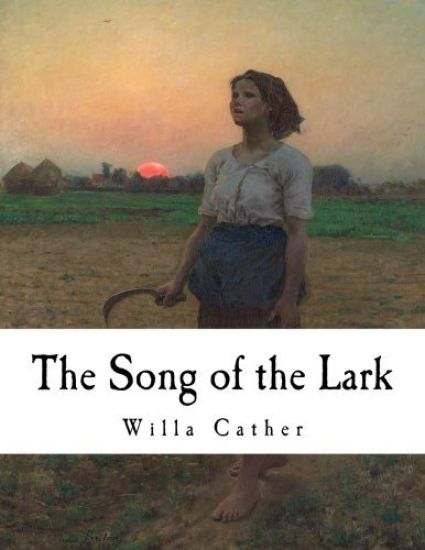
The Song of the Lark is the third novel by American author Willa Cather, written in 1915. It is generally considered to be the second novel in Cather's Prairie Trilogy, following O Pioneers (1913) and preceding My ntonia (1918). The book tells the story of a talented artist born in a small town in Colorado who discovers and develops her singing voice. Her story is told against the backdrop of the burgeoning American West in which she was born in a town along the rail line, of fast-growing Chicago near the turn of the twentieth century, and of the audience for singers of her skills in the US compared to Europe. Thea Kronborg grows up, learning herself, her strengths and her talent, until she reaches success. The title comes from a painting of the same name by Jules Breton in 1884 and part of the collection of the Art Institute of Chicago. PLOT: Set in the 1890s in Moonstone, a fictional town in Colorado, The Song of the Lark is the self-portrait of an artist in the making. The ambitious young heroine, Thea Kronborg leaves her hometown to go to Chicago to fulfill her dream of becoming a well-trained pianist, a better piano teacher. When her instructor hears her voice, he realizes that this is her true artistic gift. He encourages her to pursue her vocal training instead of piano saying ... "your voice is worth all that you can put into it. I have not come to this decision rashly." Part II; Chapter 7] In that pursuit she travels to Dresden, then to New York City, singing operas. Her reference for life is always her home town and the people she encountered there. The novel captures Thea's independent-mindedness, her strong work ethic, and her ascent to her highest achievement. At each step along the way, her realization of the mediocrity of her peers propels her to greater levels of accomplishment, but in the course of her ascent she must discard those relationships which no longer serve her. Part I: Friends of Childhood edit] In Moonstone, Colorado, Doctor Archie helps Mrs. Kronborg give birth to her son, Thor. He takes care of their daughter, Thea, who is sick with pneumonia. The next year, she goes to the Kohlers for piano lessons with Wunsch, and practices daily for two hours or four hours, depending if school is in session or not. The doctor goes to Spanish Johnny who is sick. Later, Ray Kennedy goes out to the countryside with Johnny, his wife, Thea, Axel, and Gunner. Although she is only twelve and he is thirty, he dreams of marrying her when she is old enough. They tell stories of striking it rich in silver mines in the west. Before Christmas, Thea plays the piano at a concert, but the town paper praises her rival Lily which upsets Thea, as she wanted to sing rather than perform an instrumental piece. Tillie turns down the local drama club's notion to have Thea play a part in The Drummer Boy of Shiloh, knowing that acting is not her niece's talent. After Christmas, Wunsch tells Thea about a Spanish opera singer who could sing an alto part of Christoph Willibald Gluck. She sings for him. He says she needs to learn German for many of the good songs. Wunsch gets so drunk that he behaves badly and hurts himself. Ten days later, all of his students discontinue their lessons with him, and he leaves the town. Shortly after, Thea drops out of school and takes up his students; at fifteen she begins to work full-time..... Willa Sibert Cather ( December 7, 1873 - April 24, 1947) was an American writer who achieved recognition for her novels of frontier life on the Great Plains, including O Pioneers (1913), The Song of the Lark (1915), and My ntonia (1918). In 1923 she was awarded the Pulitzer Prize for One of Ours (1922), a novel set during World War I......................
The Troll Garden is a collection of short stories by Willa Cather, published in 1905. This collection contains the following seven stories: "Flavia and Her Artists" "The Sculptor's Funeral" "A Death in the Desert" "The Garden Lodge" "The Marriage of Phaedra" "A Wagner Matinee" "Paul's Case" Four of these stories--"The Sculptor's Funeral," "A Death in the Desert," "A Wagner Matinee," and "Paul's Case"-were revised and included in Cather's next collection of short fiction Youth and the Bright Medusa, published in 1920.......... Willa Sibert Cather ( December 7, 1873 - April 24, 1947) was an American writer who achieved recognition for her novels of frontier life on the Great Plains, including O Pioneers (1913), The Song of the Lark (1915), and My ntonia (1918). In 1923 she was awarded the Pulitzer Prize for One of Ours (1922), a novel set during World War I. Cather grew up in Virginia and Nebraska, and graduated from the University of Nebraska-Lincoln. She lived and worked in Pittsburgh for ten years, supporting herself as a magazine editor and high school English teacher. At the age of 33 she moved to New York City, her primary home for the rest of her life, though she also traveled widely and spent considerable time at her summer residence on Grand Manan Island, New Brunswick. Early life and education: Cather was born Wilella Sibert Cather in 1873 on her maternal grandmother's farm in the Back Creek Valley near Winchester, Virginia. Her father was Charles Fectigue Cather (d. 1928), whose family had lived on land in the valley for six generations. Cather's family originated in Wales, the family name deriving from Cadair Idris, a mountain in Gwynedd. Her mother was Mary Virginia Boak (died 1931), a former school teacher. Within a year of Cather's birth, the family moved to Willow Shade, a Greek Revival-style home on 130 acres given to them by her paternal grandparents. At the urging of Charles Cathers' parents, the family moved to Nebraska in 1883 when Willa was nine years old. The rich, flat farmland appealed to Charles' father, and the family wished to escape the tuberculosis outbreaks that were rampant in Virginia. Willa's father tried his hand at farming for eighteen months; then he moved the family into the town of Red Cloud, where he opened a real estate and insurance business, and the children attended school for the first time. Some of the earliest work produced by Cather was first published in the Red Cloud Chief, the city's local paper. Cather's time in the western state, still on the frontier, was a deeply formative experience for her. She was intensely moved by the dramatic environment and weather, the vastness of the Nebraska prairie, and the various cultures of the European-American, immigrant and Native American families in the area. Like Jim Burden in My Antonia, the young Willa Cather saw the Nebraska frontier as a "place where there was nothing but land: not a country at all, but the materials out of which countries were made... Between that earth and that sky I felt erased, blotted out". Mary Cather had six more children after Willa: Roscoe, Douglass, Jessica, James, John, and Elsie. Cather was closer to her brothers than to her sisters whom, according to biographer Hermione Lee, she "seems not to have liked very much." Cather read widely, having made friends with a Jewish couple, the Weiners, who offered her free access to their extensive library. She made house calls with the local physician, Dr. Robert Damerell, and decided to become a doctor. After Cather's essay on Thomas Carlyle was published in the Nebraska State Journal during her freshman year at the University of Nebraska, she became a regular contributor to the Journal. In addition to her work with the local paper, Cather also served as the managing editor of The Hesperian, the University of Nebraska's student newspaper, and associated at the Lincoln Courier....................
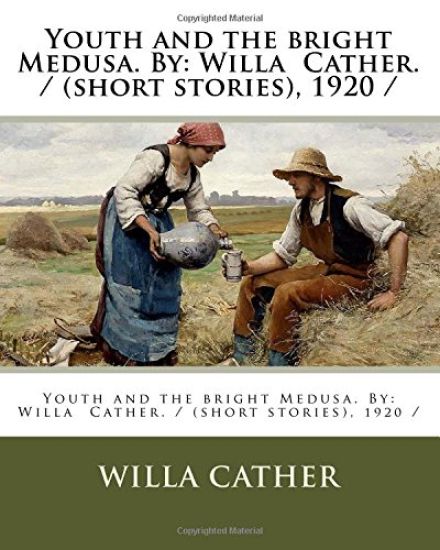
Youth and the Bright Medusa is a collection of short stories by Willa Cather, published in 1920. Several were published in an earlier collection, The Troll Garden. Contents: This collection contains the following stories: "Coming, Aphrodite " a.k.a. "Coming, Eden Bower " "The Diamond Mine" "A Gold Slipper" "Scandal" "Paul's Case" "A Wagner Matinee" "The Sculptor's Funeral" "A Death in the Desert" Willa Sibert Cather ( December 7, 1873 - April 24, 1947) was an American writer who achieved recognition for her novels of frontier life on the Great Plains, including O Pioneers (1913), The Song of the Lark (1915), and My ntonia (1918). In 1923 she was awarded the Pulitzer Prize for One of Ours (1922), a novel set during World War I. Cather grew up in Virginia and Nebraska, and graduated from the University of Nebraska-Lincoln. She lived and worked in Pittsburgh for ten years, supporting herself as a magazine editor and high school English teacher. At the age of 33 she moved to New York City, her primary home for the rest of her life, though she also traveled widely and spent considerable time at her summer residence on Grand Manan Island, New Brunswick. Early life and education: Cather was born Wilella Sibert Cather in 1873 on her maternal grandmother's farm in the Back Creek Valley near Winchester, Virginia. Her father was Charles Fectigue Cather (d. 1928), whose family had lived on land in the valley for six generations. Cather's family originated in Wales, the family name deriving from Cadair Idris, a mountain in Gwynedd. Her mother was Mary Virginia Boak (died 1931), a former school teacher. Within a year of Cather's birth, the family moved to Willow Shade, a Greek Revival-style home on 130 acres given to them by her paternal grandparents. At the urging of Charles Cathers' parents, the family moved to Nebraska in 1883 when Willa was nine years old. The rich, flat farmland appealed to Charles' father, and the family wished to escape the tuberculosis outbreaks that were rampant in Virginia. Willa's father tried his hand at farming for eighteen months; then he moved the family into the town of Red Cloud, where he opened a real estate and insurance business, and the children attended school for the first time. Some of the earliest work produced by Cather was first published in the Red Cloud Chief, the city's local paper. Cather's time in the western state, still on the frontier, was a deeply formative experience for her. She was intensely moved by the dramatic environment and weather, the vastness of the Nebraska prairie, and the various cultures of the European-American, immigrant and Native American families in the area. Like Jim Burden in My Antonia, the young Willa Cather saw the Nebraska frontier as a "place where there was nothing but land: not a country at all, but the materials out of which countries were made... Between that earth and that sky I felt erased, blotted out". Mary Cather had six more children after Willa: Roscoe, Douglass, Jessica, James, John, and Elsie. Cather was closer to her brothers than to her sisters whom, according to biographer Hermione Lee, she "seems not to have liked very much." Cather read widely, having made friends with a Jewish couple, the Weiners, who offered her free access to their extensive library. She made house calls with the local physician, Dr. Robert Damerell, and decided to become a doctor. After Cather's essay on Thomas Carlyle was published in the Nebraska State Journal during her freshman year at the University of Nebraska, she became a regular contributor to the Journal. In addition to her work with the local paper, Cather also served as the managing editor of The Hesperian, the University of Nebraska's student newspaper, and associated at the Lincoln Courier. She changed her plans to major in science and become a physician, instead graduating with a B. A. in English in 1894..............
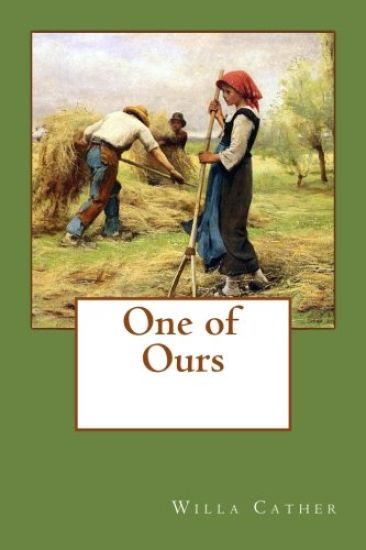
One of Ours is a novel by Willa Cather that won the 1923 Pulitzer Prize for the Novel. It tells the story of the life of Claude Wheeler, a Nebraska native around the turn of the 20th century. The son of a successful farmer and an intensely pious mother, he is guaranteed a comfortable livelihood. Nevertheless, Wheeler views himself as a victim of his father's success and his own inexplicable malaise. Plot edit] While attending Temple College, Claude tried to convince his parents that attending the State University would give him a better education. His parents ignore his pleas and Claude continues at the Christian college. After a football game, Claude meets and befriends the Erlich family, quickly adapting his own world perception to the Erlichs' love of music, free-thinking, and debate. His career at university and his friendship with the Erlichs are dramatically interrupted, however, when his father expands the family farm and Claude is obligated to leave university and operate part of the family farm. Once pinned to the farm, Claude marries Enid Royce, a childhood friend. His notions of love and marriage are quickly devastated when it becomes apparent that Enid is more interested in political activism and Christian missionary work than she is in loving and caring for Claude. When Enid departs for China to care for her missionary sister, who has suddenly fallen ill, Claude moves back to his family's farm. As World War I begins in Europe, the family is fixated on every development from overseas. When the United States decides to enter the war, Claude enlists in the US Army. Finally believing he has found a purpose in life - beyond the drudgery of farming and marriage - Claude revels in his freedom and new responsibilities. Despite an influenza epidemic and the continuing hardships of the battlefield, Claude Wheeler nonetheless has never felt as though he has mattered more. His pursuit of vague notions of purpose and principle culminates in a ferocious front-line encounter with an overwhelming German onslaught........................ Willa Sibert Cather ( December 7, 1873 - April 24, 1947) was an American writer who achieved recognition for her novels of frontier life on the Great Plains, including O Pioneers (1913), The Song of the Lark (1915), and My ntonia (1918). In 1923 she was awarded the Pulitzer Prize for One of Ours (1922), a novel set during World War I. Cather grew up in Virginia and Nebraska, and graduated from the University of Nebraska-Lincoln. She lived and worked in Pittsburgh for ten years, supporting herself as a magazine editor and high school English teacher. At the age of 33 she moved to New York City, her primary home for the rest of her life, though she also traveled widely and spent considerable time at her summer residence on Grand Manan Island, New Brunswick. Early life and education: Cather was born Wilella Sibert Cather in 1873 on her maternal grandmother's farm in the Back Creek Valley near Winchester, Virginia. Her father was Charles Fectigue Cather (d. 1928), whose family had lived on land in the valley for six generations. Cather's family originated in Wales, the family name deriving from Cadair Idris, a mountain in Gwynedd. Her mother was Mary Virginia Boak (died 1931), a former school teacher. Within a year of Cather's birth, the family moved to Willow Shade, a Greek Revival-style home on 130 acres given to them by her paternal grandparents.............
Willa Sibert Cather December 7, 1873 - April 24, 1947 3]) was an American writer who achieved recognition for her novels of frontier life on the Great Plains, including O Pioneers (1913), The Song of the Lark (1915), and My ntonia (1918). In 1923 she was awarded the Pulitzer Prize for One of Ours (1922), a novel set during World War I. Cather grew up in Virginia and Nebraska, and graduated from the University of Nebraska-Lincoln. She lived and worked in Pittsburgh for ten years, 4] supporting herself as a magazine editor and high school English teacher. At the age of 33 she moved to New York City, her primary home for the rest of her life, though she also traveled widely and spent considerable time at her summer residence on Grand Manan Island, New Brunswick.
Youth and the Bright Medusa (short stories), 1920 include: Coming, Aphrodite (a.k.a. Coming, Eden Bower ) The Diamond Mine A Gold Slipper Scandal Paul's Case A Wagner Matinee The Sculptor's Funeral A Death in the Desert
One of Ours is a novel by Willa Cather that won the 1923 Pulitzer Prize for the Novel. It tells the story of the life of Claude Wheeler, a Nebraska native around the turn of the 20th century. The son of a successful farmer and an intensely pious mother, he is guaranteed a comfortable livelihood. Nevertheless, Wheeler views himself as a victim of his father's success and his own inexplicable malaise. Cather's cousin Grosvenor (G. P. Cather) was born and raised on the farm that adjoined her own family's, and she combined parts of her own personality with Grosvenor's in the character of Claude. Cather explained in a letter to Dorothy Canfield Fisher: We were very much alike, and very different. He could never escape from the misery of being himself, except in action, and whatever he put his hand to turned out either ugly or ridiculous.... I was staying on his father's farm when the war broke out. We spent the first week hauling wheat to town. On those long rides on the wheat, we talked for the first time in years, and I saw some of the things that were really in the back of his mind.... I had no more thought of writing a story about him than of writing about my own nose. It was all too painfully familiar. It was just to escape from him and his kind that I wrote at all. Grosvenor was killed in 1918 in Cantigny, France. Cather learned of his death while reading the newspaper in a hair salon.
O Pioneers is a 1913 novel by American author Willa Cather, written while she was living in New York. It is the first novel of her Great Plains trilogy, followed by The Song of the Lark (1915) and My ntonia (1918). O Pioneers tells the story of the Bergsons, a family of Swedish-American immigrants in the farm country near the fictional town of Hanover, Nebraska, at the turn of the 20th century. The main character, Alexandra Bergson, inherits the family farmland when her father dies, and she devotes her life to making the farm a viable enterprise at a time when many other immigrant families are giving up and leaving the prairie. The novel is also concerned with two romantic relationships, one between Alexandra and family friend Carl Linstrum and the other between Alexandra's brother Emil and the married Marie Shabata.
O Pioneers Willa CatherPioneers is a 1913 novel by American author Willa Cather, written while she was living in New York. It is the first novel of her Great Plains trilogy, followed by The Song of the Lark (1915) and My ntonia (1918). O Pioneers tells the story of the Bergsons, a family of Swedish-American immigrants in the farm country near the fictional town of Hanover, Nebraska, at the turn of the 20th century. The main character, Alexandra Bergson, inherits the family farmland when her father dies, and she devotes her life to making the farm a viable enterprise at a time when many other immigrant families are giving up and leaving the prairie. The novel is also concerned with two romantic relationships, one between Alexandra and family friend Carl Linstrum and the other between Alexandra's brother Emil and the married Marie Shabata.
The Song of the LarkWilla CatherThe Song of the Lark is the third novel by American author Willa Cather, written in 1915. It is generally considered to be the second novel in Cather's Prairie Trilogy, following O Pioneers (1913) and preceding My Antonia (1918). Set in the 1890s in Moonstone, a fictional town in Colorado, The Song of the Lark is the self-portrait of an artist in the making. The ambitious young heroine, Thea Kronborg leaves her hometown to go to Chicago to fulfill her dream of becoming a well-trained pianist, a better piano teacher. When her instructor hears her voice, he realizes that this is her true artistic gift. He encourages her to pursue her vocal training instead of piano saying ... "your voice is worth all that you can put into it. I have not come to this decision rashly." In that pursuit she travels to Dresden, then to New York City, singing operas. Her reference for life is always her home town and the people she encountered there.
Alexander's Bridge is the first novel by American author Willa Cather. First published in 1912, it was re-released with an author's preface in 1922. It also ran as a serial in McClure's, giving Cather some free time from her work for that magazine. Professor Wilson arrives at the Alexanders' house in Boston, Bartley Alexander having persuaded him to attend a Congress of Psychologists in the city. He is greeted by Winifred Alexander. When her husband comes home the men talk; Winifred plays the piano for them. The next day, she tells Wilson how she met her husband through her aunt. On Christmas Eve, the Alexanders prepare for Christmas dinner. Bartley tells Wilson he is having trouble with a bridge in Canada. Later he gives his wife pearl earrings. On New Year's Day, Alexander makes ready to leave for London. On the ship, he endures sharp gales and goes into a bar, where he gambles at bridge, the card game. In London, Bartley visits Hilda and tells her he cannot go on having two relationships; she must forget about him and leave him alone. She is distressed. The day before he is due to return to America however, he takes her out to dinner. CLASSIC AMERICAN NOVELS
As the American West opened up to settlers after the Civil War, people were eager for tales of great adventures, endless possibilities, and the pioneering spirit. Classic Westerns is a collection of six novels that captured this sense of exploration and brought the rugged landscape into the homes of readers everywhere. These novels--The Virginian by Owen Wister, O Pioneers by Willa Cather, The Lone Star Ranger and The Mysterious Rider by Zane Grey, and Gunman's Reckoning and The Untamed by Max Brand--tell of life on the open plains, in dusty outposts, and alongside majestic mountain ranges that rose to greet travelers who ventured forth into the unexplored country to find their destinies.