Kirjailija
William De Lange
Kirjat ja teokset yhdessä paikassa: 35 kirjaa, julkaisuja vuosilta 1980–2026, suosituimpiin kuuluu Tokyo. Vertaile teosten hintoja ja tarkista saatavuus suomalaisista kirjakaupoista.
35 kirjaa
Kirjojen julkaisuvuodet: 1980–2026.

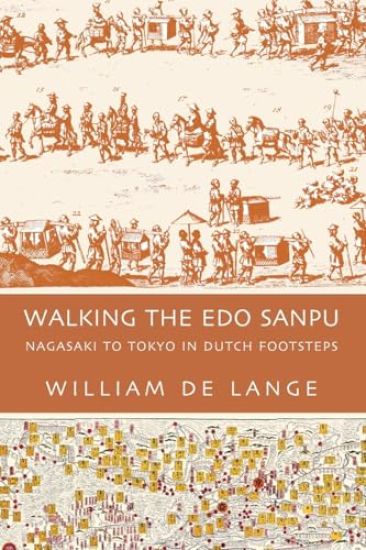
For more than two and a half centuries Dutch merchants in Japan were confined to the fan-shaped island of Dejima in the Bay of Nagasaki. Only once a year were they allowed to leave their golden cage to embar-k on the Edo Sanpu, a 1000-mile journey to present-day Tokyo in order to pay their respects to the shōgun, Japan's absolute ruler. Four of them-Engelbert Kaempfer, Philipp Franz von Siebold, Dirk de Graeff van Polsbroek, and Frederik van Overmeer Fischer-recorded their experience. They describe a country where rivers still run their natural course, and beeches glimmer with gold dust. It is a country filled with beauty everywhere: towering pagodas, exquisite shrines, magnificent temples, opulent palaces, and imposing castles. Populating this captivating landscape is a modest yet idiosyncratic people, a people that never cease to fascinate. Now, almost two centuries after the Edo Sanpu's last chroniclers set out on their long and arduous journey, author and Dutchman William de Lange treads in their footsteps to compare notes.
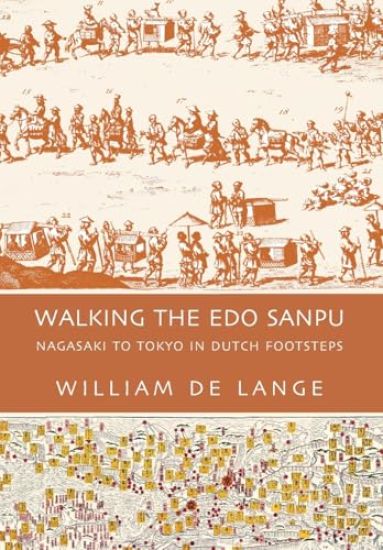
For more than two and a half centuries Dutch merchants in Japan were confined to the fan-shaped island of Dejima in the Bay of Nagasaki. Only once a year were they allowed to leave their golden cage to embark on the Edo Sanpu, a 1000-mile journey to present-day Tokyo in order to pay their respects to the shōgun, Japan's absolute ruler. Now, almost two centuries after the Edo Sanpu's last chroniclers set out on their long and arduous journey, author and Dutchman William de Lange treads in their footsteps to compare notes.
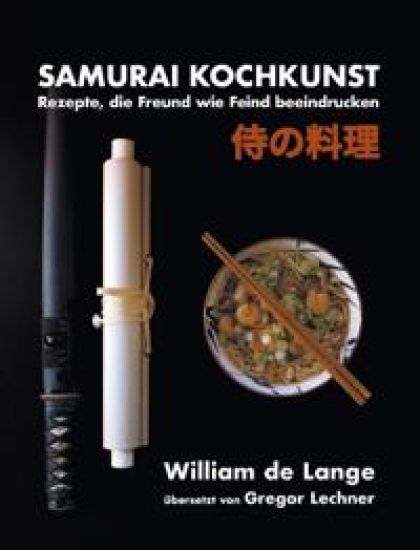
Seit die ersten Europ er in der Mitte des 16. Jahrhunderts Fu auf japanischen Boden setzten, haben die Samurai mit ihren heldenhaften Taten unsere Fantasie befeuert. Aber was trieb diese M nner an? Was hatten sie im Bauch bevor sie in den Kampf zogen? Genauer gefragt: Welche Zutaten und Gerichte a en und mochten die japanischen Krieger im Mittelalter? Welchen Geschmack sch tzten sie und was waren ihre kulinarischen Traditionen? Diese Fragen f hren uns zum Ursprung der japanischen K che, die allgemeinhin als eine der ausgefeiltesten in der Welt gilt. Um diese Fragen zu beantworten, taucht "Samurai Kochkunst" ein in die lange Geschichte japanischer Nahrungszubereitung. Es sucht nach dem Ursprung der Zutaten und deren typische Verwendung. Es zeigt die Wichtigkeit von Nahrung (oder deren Abwesenheit) in Zeiten gro er M hsal auf, als auch die zeremonielle Verwendung in Kampfgeschehen, sowohl im Aufbruch zum Sieg, so wie in den Stunden der Niederlage. Das Buch m chte au erdem auf die tiefe Bedeutung des Essens f r einen Krieger als Quelle der Nahrung, des Krafterhalts und der Wiederbelebung hinweisen, und daraus resultierend die bedeutende Rolle von Nahrung in einer Gesellschaft, die besessen ist von Prestige und Ehre. In der fortschreitenden Entwicklung der japanischen Rezepturen zeigt sich die angeborene Achtsamkeit des Japaners f r Qualit t, sowohl in der Frische und der jahreszeitlichen Verf gbarkeit der Zutaten, als auch bei den Ger ten, um diese zuzubereiten. Die vielf ltigen Traditionen des Servierens runden dieses Bild ab. Dies alles wird mit 30 einfach zu kochenden und schmackhaften historischen Rezepten gekr nt, die mit Fotografien und Schritt-f r-Schritt-Erkl rungen zum Erfolg f hren. Samurai Kochkunst erl utert Japans faszinierende, traditionelle Kriegerk che und pr sentiert Ihnen leckere und schmackhafte Rezepte, f r die ein Samurai seinerzeit kurzerhand get tet h tte.

Samurai have fired our imagination with their fighting spirit and heroic deeds ever since Europeans set foot on Japanese shores during the middle of the 16th century. But what was the fuel on which these men ran? What was in their stomachs as they rode into battle? More widely, what kind of ingredients and dishes did the medieval Japanese eat and cherish? What were their tastes and culinary traditions? These questions point to the wellsprings of Japanese cuisine, widely considered one of the most sophisticated in the world. To answer these questions, Samurai Dishes delves into the long history of Japanese cooking. It traces the origins and use of typically Japanese ingredients. It shows the importance of food (or lack of it) in times of trouble and its ceremonial role in battle, both on the eve of victory and in the wake of defeat. And it reveals the deep symbolism of food to the warrior as a source of nourishment and revival. What emerges is the important role of food in a society obsessed with prestige and pride. Moving toward the present, Samurai Dishes highlights the innate Japanese attention to quality, freshness, and seasonality of ingredients, the tools with which to prepare them, and the various traditions according to which they are served. To top it all, it presents thirty easy-to-make and mouthwatering historical Japanese dishes, each with photographs and step-by-step explanations. Samurai Dishes is a fascinating window into Japan's martial culinary tradition and a source of some really tasty recipes for which a samurai would have killed in an instant.
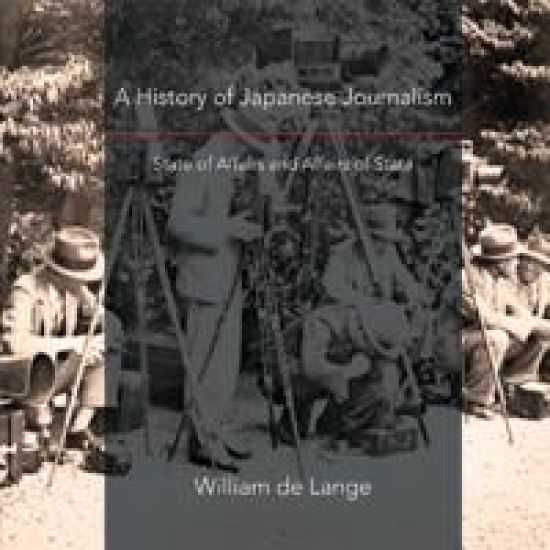
The history of Japanese Journalism, though relatively short, is marked by periods of great upheaval and radical change. It began during the two centuries of seclusion, when Dutch traders confined to the port of Nagasaki, through a small army of Japanese hereditary interpreters, conveyed information to the bakufu authorities about the outside world. All that changed during the bakufu's final years, when foreign entrepreneurs in Japan's treaty ports laid the building blocks for an indigenous press. Then came the Meiji era, when the press grew on a wave of rapid modernization, followed by the Taishō era, when it matured amid the volatile stand-off between a budding civil rights movement and an increasingly reactionary government. The darkest days came during the pre-war decade, when the military authorities curtailed the free press and turned it into a propaganda machine. The great revival came during the post-war Occupation, when the Allied authorities liberalized the press and enshrined its rights in the Peace Constitution. Throughout all these years, one aspect of Japanese journalism has remained virtually unchanged, the kisha kurabu, the 'press clubs, ' an institution through which the Japanese authorities exert a measure of control over the flow of news that is unparalleled in any other democratic society.
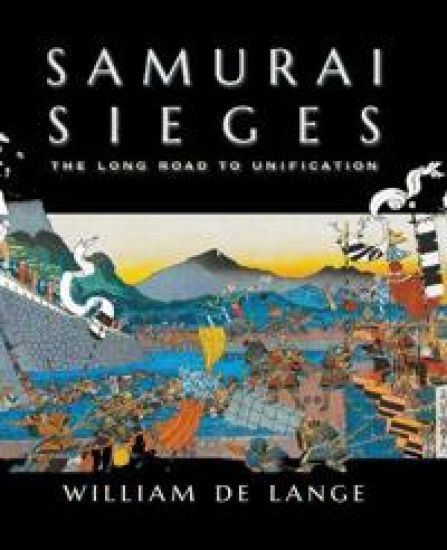
Known from his collaboration on the Netflix documentary Age of Samurai, historian William de Lange returns to what he does best: highly anecdotal stories from one of the most exciting episodes in Japanese history: the Warring States period. De Lange takes the reader right back to the 16th century's closing decades. In the course of the ensuing journey, we witness the major sieges fought by the country's three great unifiers: Oda Nobunaga, Toyotomi Hideyoshi, and Tokugawa Ieyasu. Quoting directly and at length from a wide range of contemporary sources, De Lange paints events and figures like no other, 'so richly rendered, ' according to one critic, 'that you'd swear he was present at the time, taking notes.'Samurai Sieges is an epic account of a dramatic period in Japanese history-a period in which the whole country was consumed by the fire of civil strife that raged hardest on the field of battle.
The siege of Ōsaka Castle is the stuff of legends. In the winter of 1614 two hundred thousand warriors loyal to the House of Tokugawa gathered south of Ōsaka to lay siege to its imposing castle. Inside the castle, seventy thousand warriors loyal to the House of Toyotomi braced themselves for a siege that would evolve into two hard-fought conflicts: the Winter and Summer campaigns. Known in Japan as the Ōsaka no Jin or the Ōsaka Battle Array, it was more than just the largest battle for Japan's biggest stronghold; it was the culmination of a nationwide movement toward the country's unification. That movement had been set in motion by Oda Nobunaga. It was continued by his general Toyotomi Hideyoshi. And it was almost completed by his ally Tokugawa Ieyasu when, in 1600, he emerged victorious from the Battle of Sekigahara. Ieyasu's victory was not complete. Large and powerful forces still opposed the Tokugawa ascendancy. It was Toyotomi Hideyori-the young and only son of the man who had campaigned hardest to unite the realm-who threatened to undo all that hard work when, in the summer of 1614, he mobilized those forces at Ōsaka Castle. Victory in the subsequent siege not only decided which House was to rule Japan; it also meant an end to the most destructive one-and-a-half century in Japanese history, a period now known as the Warring States period. This work explores the events that led up to the eventual standoff between the two Houses: the lingering resent-ments, the attempts at emasculation, the last-ditch efforts at reconciliation, and the inexorable- move toward confrontation. It goes on to describe in meticulous detail the many battles of the Winter and Summer campaigns, the strategies of the commanders, their troop strengths, and it identifies most of them by name and rank. Richly illustrated and presented in a wide, 11-by-8.5-inch landscape format, this work presents modern recon-structions as well as contemporary maps of early 17th century Ōsaka and its environs. Further detailed maps reveal the troop positions and movements during the Tokugawa raids against the Toyotomi forts during the Winter Campaign and the battles during the Summer Campaign: at Kashii, at Dōmyōji, at Wakae, at Yao, at Tennōji, and finally during the storming of the castle. Explanatory sections provide extensive information on a variety of topics: bullion, battle-ships, historic sites and buildings, interesting details in old maps, as well as the biographies of the major heroes. Together with a glossary and an index, a rich resources section on the castle's history and layout, on army formations, and on heraldry makes this work a treasure trove of information on one of the most fascinating sieges in Japan's long history of warfare.
The Illustrated History of the Yagyu Clan
William De Lange
TOYO Press
2022
pokkari
Halvin toimitettuna 34,00 €
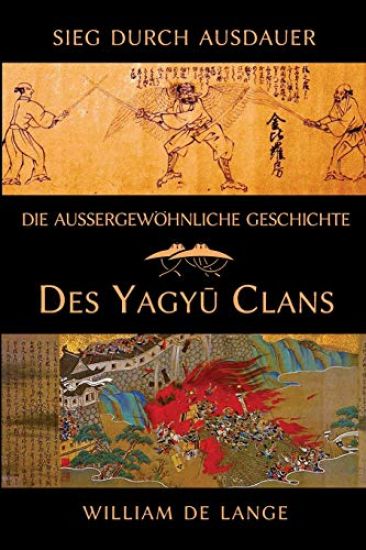
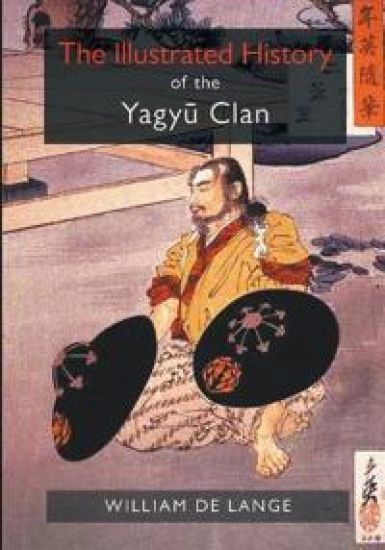
The Yagyū clan stands out among Japan's countless medieval warrior clans as a clan renowned for its mastery of the art of swordsmanship. This first, fuly illustratedl Yagyū history in the English language recounts how, through a string of misfortunes beyond their control, the Yagyū clan first lost its independence, then its castle and domains, until finally its members were thrown upon the mercy of a local temple. Yet it was in the very depth of those bleak and desperate years, that its leader, Yagyū Muneyoshi, discovered his true strength and began his clan's remarkable reco-very-a recovery crowned with the ascendancy of his son, Munenori, to the exalted rank of daimyō. It is perhaps no coincidence that the two Chinese characters that make up the name of Yagyū stand for the willow tree and life, or the giving of birth, for both seem to sum up perfectly the particular characteristics that helped propel this ancient clan to such unprecedented heights. Like the pliable willow tree, it was their resilience in the face of irresistible forces that enabled the Yagyū to outweather the raging storms of fortune and remain standing, alive and well, their spirit intact. In doing so, the Yagyū gave birth to an art of fencing that has survived for more than five centuries. Among the countless schools of swordsmanship brought forth by Japan's feudal era, the Yagyū Shinkage-ryū still stands out for its sheer continuity.
The Yagyū clan stands out among Japan's countless medieval warrior clans as a clan renowned for its mastery of the art of swordsmanship. This first full Yagyū history in the English language recounts how, through a string of misfortunes beyond their control, the Yagyū clan first lost its independence, then its castle and domains, until finally its members were thrown upon the mercy of a local temple. Yet it was in the very depth of those bleak and desperate years, that its leader, Yagyū Muneyoshi, discovered his true strength and began his clan's remarkable reco-very-a recovery crowned with the ascendancy of his son, Munenori, to the exalted rank of daimyō. It is perhaps no coincidence that the two Chinese characters that make up the name of Yagyū stand for the willow tree and life, or the giving of birth, for both seem to sum up perfectly the particular characteristics that helped propel this ancient clan to such unprecedented heights. Like the pliable willow tree, it was their resilience in the face of irresistible forces that enabled the Yagyū to outweather the raging storms of fortune and remain standing, alive and well, their spirit intact. In doing so, the Yagyū gave birth to an art of fencing that has survived for more than five centuries. Among the countless schools of swordsmanship brought forth by Japan's feudal era, the Yagyū Shinkage-ryū still stands out for its sheer continuity.
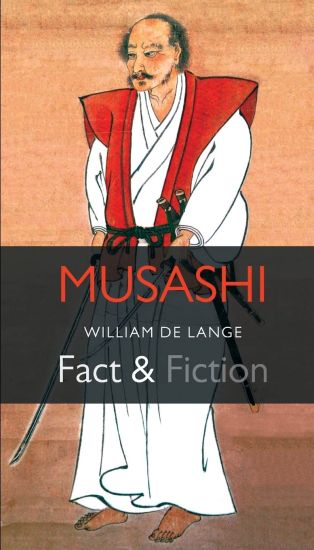
Miyamoto Musashi, the Japanese swordsman of unparalleled skill, is known around the world today. Yet his life still poses a large number of important questions that remain elusive: Where was he born? Who was his father? Who was his mother? Who were his children? Who were his benefactors? In which battles did he fight? With whom did he duel? Where did he live? Who were his friends? Where did he travel? And where is his grave? Up until recently, there were only few original sources to which the English reader could turn to answer these questions. Indeed, even in his Book of Five Rings Musashi hardly touches on any of these questions. With William de Lange's translations of all the extant Japanese sources on this enigmatic Japanese swordsman in his groundbreaking three-part The Real Musashi series, the English reader now has at his disposal a completely new range of sources. Yet they still present a highly complex, at times even bewildering array of alternative perspectives and narratives. This compact and fully illustrated guide brings order in that chaos by carefully reconstructing the narrative of Musashi's life. Through a number of clearly defined themes it addresses the hitherto unanswered questions based on the original Japanese sources.
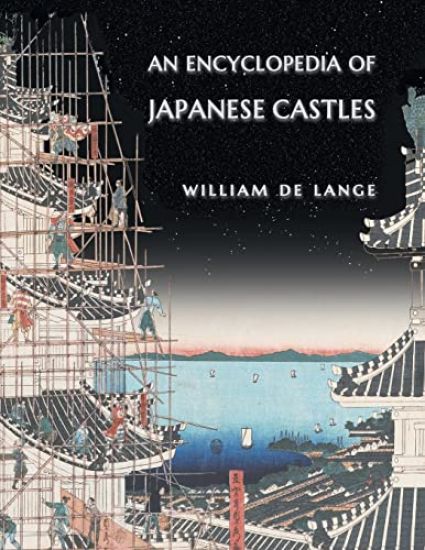
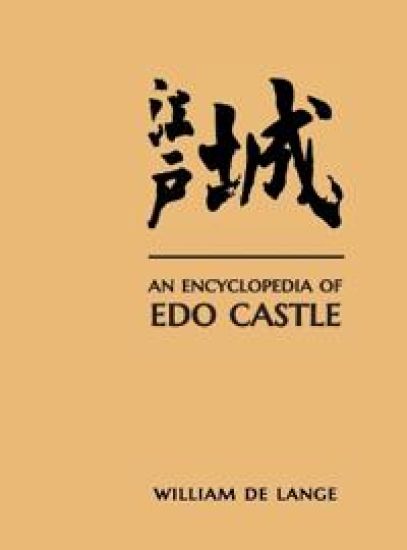
Japanese castles cast a spell on all those who set their eyes on them. They are the product of a people whose history might be steeped in blood and drama, yet whose hands produced works of breathtaking refinement. This groundbreaking encyclopedia is the first work in the English language to offer a comprehensive overview of the history, architecture, and all the attending aspects of Japanese castles. It references a total of 370 castles, giving unprecedented in-depth information on all of Japan's remaining original castles, 101 of its reconstructions, and 68 of its major ruins. Comprised of five parts, it covers all aspects of Japan's rich castle culture. It covers their long and fascinating history: from the earliest fortifications during the late sixth century, the rise of mountain strongholds during the Kamakura period, the veritable explosion of castles during the Warring States period, the vast Tokugawa citadels of the early Edo period, the incredibly destructive years of the early Meiji period, the dramatic years of World War II, and the post-war decades of revival and reconstruction. It covers their various functional aspects: the epic construction projects involving thousands of laborers and specialists, the emerging castle towns, the laws that regulated a castle's garrison, and its town's populace. It deals with the various methods of siege warfare and the many other dangers facing a medieval castle. And it revisits what it was like to enter a magnificent stronghold such as Edo Castle at the height of its glory. It covers the countless design features: the selection of their location, the layouts of their walls and moats. It describes in detail the types of keeps, turrets, gates, bridges, and many other castle structures. And it goes into the complicated terminology of their architectural details. Its most impressive feature, however, is the 400-page long, one-by-one in-depth biography of each castle and ruin of note: their origin, their often dramatic history, the layout of their grounds, the architectural features of their buildings, their sad demise, and, in many cases, their remarkable recovery. Further context and background information is given in an appendix with detailed maps, comprehensive lists of Japan's castles at various time periods, those abolished during the Meiji period, and those in the top 100-all rounded off with an extensive 350-term glossary and an 1800-entry index. For anyone with a serious interest in Japanese castles, this 600-page, full-color tome with over 700 images and maps is the ultimate go-to reference.
An Encyclopedia of Japanese Castles
William De Lange
TOYO Press
2021
sidottu
Halvin toimitettuna 107,50 €
Japanese castles cast a spell on all those who set their eyes on them. They are the product of a people whose history might be steeped in blood and drama, yet whose hands produced works of breathtaking refinement. This groundbreaking encyclopedia is the first work in the English language to offer a comprehensive overview of the history, architecture, and all the attending aspects of Japanese castles. It references a total of 370 castles, giving unprecedented in-depth information on all of Japan's remaining original castles, 101 of its reconstructions, and 68 of its major ruins. Comprised of five parts, it covers all aspects of Japan's rich castle culture. It covers their long and fascinating history: from the earliest fortifications during the late sixth century, the rise of mountain strongholds during the Kamakura period, the veritable explosion of castles during the Warring States period, the vast Tokugawa citadels of the early Edo period, the incredibly destructive years of the early Meiji period, the dramatic years of World War II, and the post-war decades of revival and reconstruction. It covers their various functional aspects: the epic construction projects involving thousands of laborers and specialists, the emerging castle towns, the laws that regulated a castle's garrison and its town's populace. It deals with the various methods of siege warfare and the many other dangers facing a medieval castle. And it revisits what it was like to enter a magnificent stronghold such as Edo Castle at the height of its glory. It covers the countless design features: the selection of their location, the layouts of their walls and moats. It describes in detail the types of keeps, turrets, gates, bridges, and many other castle structures. And it goes into the complicated terminology of their architectural details. Its most impressive feature, however, is the 400-page long, one-by-one in-depth biography of each castle and ruin of note: their origin, their often dramatic history, the layout of their grounds, the architectural features of their buildings, their sad demise, and, in many cases, their remarkable recovery. Further context and background information is given in an appendix with detailed maps, comprehensive lists of Japan's castles at various time periods, those abolished during the Meiji period, and those in the top 100-all rounded off with an extensive 350-term glossary and an 1800-entry index. For anyone with a serious interest in Japanese castles, this 600-page, full-color tome with over 700 images and maps is the ultimate go-to reference.
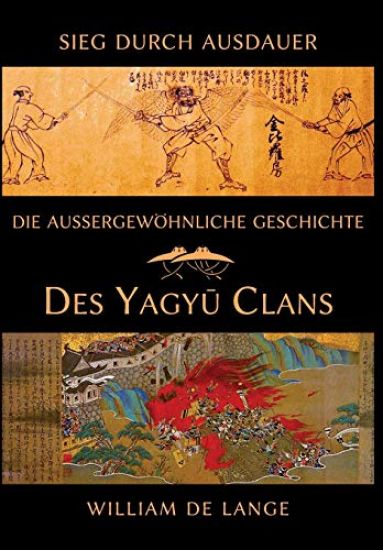
Dieses Buch erz hlt die vollst ndige Geschich-te der Yagyū, die durch eine Reihe von unverschuldeten Ungl cken zuerst ihre Unabh ngigkeit, dann ihre Burg und ihr Lehen verloren und schlie lich der Gnade eines rtlichen Tempels unterworfen waren. Doch es war in diesen trostlosen und hoffnungslosen Jahren, das ihr Anf hrer, Yagyū Muneyoshi, seine wahre St rke entdeckte und mit der au er-gew hn-lichen Wieder-herstellung seines Clans begann- eine Wiederherstellung, die durch den Aufstieg seines Sohnes in den erhabenen Rang eines Daimyō gekr nt wurde. Diese Leistung gebar eine Schwertkunst, die mehr als f nfhundert Jahre berdauert hat. Unter den zahllosen Schulen der Schwertkunst, die die Periode der japanischen Feudal-herrschaft hervorgebracht hat, sticht die Yagyū-Shinkage-Ryū schon alleine durch ihren blo en Fortbestand hervor.