
Kirjailija
William Gilmore Simms
Kirjat ja teokset yhdessä paikassa: 241 kirjaa, julkaisuja vuosilta 1860–2026, suosituimpiin kuuluu The Army Correspondence of Colonel John Laurens. Vertaile teosten hintoja ja tarkista saatavuus suomalaisista kirjakaupoista.
241 kirjaa
Kirjojen julkaisuvuodet: 1860–2026.



The Tri-Color; Or The Three Days Of Blood In Paris: With Some Other Pieces
William Gilmore Simms
KESSINGER PUBLISHING, LLC
2007
sidottu
The Tri-Color; Or The Three Days Of Blood In Paris: With Some Other Pieces
William Gilmore Simms
KESSINGER PUBLISHING, LLC
2007
nidottu


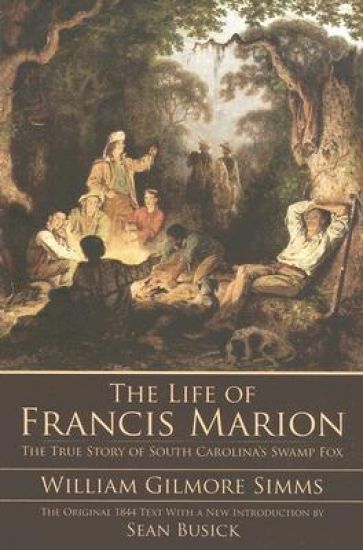
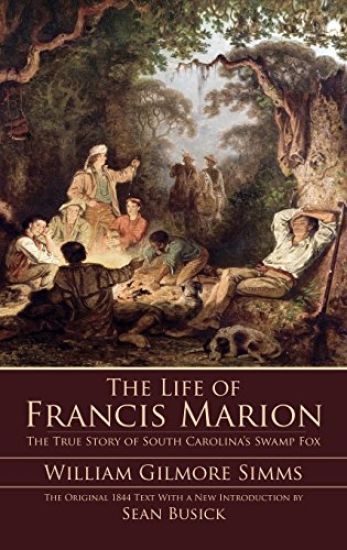
The Life of Francis Marion: The True Story of South Carolina's Swamp Fox
William Gilmore Simms
History Press
2007
nidottu
Join William Gilmore Simms in this unparalleled look at the life of Francis Marion aka The Swamp Fox. South Carolina's Swamp Fox, Francis Marion, is one of the most celebrated figures of the American Revolution. Marion's cunning exploits in the Southern theater of the Revolution earned him national renown and a place in history as an American hero and master of modern guerilla warfare. Although dozens of works have been written about Marion's life over the years, this biography -- written by William Gilmore Simms, South Carolina's greatest author -- remains the best. First published in 1844, The Life of Francis Marion was Simms's most commercially successful work of nonfiction. It offers a treatment of Marion's life that is unparalleled in its scope and accuracy, all in Simms's inimitable style.
This work has been selected by scholars as being culturally important, and is part of the knowledge base of civilization as we know it. This work was reproduced from the original artifact, and remains as true to the original work as possible. Therefore, you will see the original copyright references, library stamps (as most of these works have been housed in our most important libraries around the world), and other notations in the work. This work is in the public domain in the United States of America, and possibly other nations. Within the United States, you may freely copy and distribute this work, as no entity (individual or corporate) has a copyright on the body of the work. As a reproduction of a historical artifact, this work may contain missing or blurred pages, poor pictures, errant marks, etc. Scholars believe, and we concur, that this work is important enough to be preserved, reproduced, and made generally available to the public. We appreciate your support of the preservation process, and thank you for being an important part of keeping this knowledge alive and relevant.

The Pro-slavery Argument
William Harper; James H. Hammond; William Gilmore Simms
Kessinger Pub
2007
sidottu
The Pro-slavery Argument
William Harper; James H. Hammond; William Gilmore Simms
Kessinger Pub
2007
pokkari
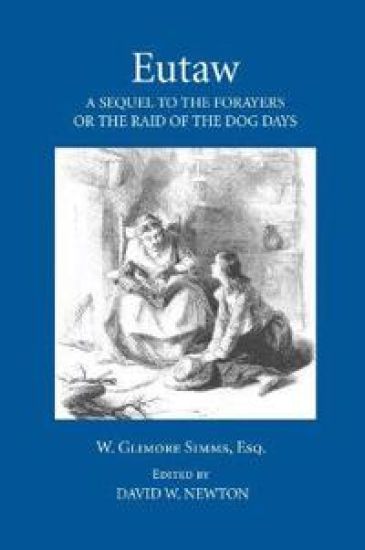
William Gilmore Simms' (1806-1870) body of work, which provides a sweeping fictional portrait of the colonial and antebellum South in all its regional diversity, complete with its literary and intellectual issues, is probably more comprehensive than that of any other nineteenth-century southern author. By the mid-1840s, his novels were so famous that Edgar Allan Poe wrote that Simms was ""the best novelist which this country has, on the whole, produced."" Simms wrote eight novels that were set in his home state of South Carolina during the Revolutionary War, and ""Eutaw"", the sixth, was published in 1856, the same year Simms had a disastrous lecture tour in the North, in which he voiced strong pro-South Carolina and pro-Southern views. ""Eutaw"" was a sequel to his very successful 1855 novel, ""The Forayers"", and thus completed the most comprehensive saga of the war in our literary history. It focuses on the battle of Eutaw Springs in 1781, which ended British domination of South Carolina. Prominent in this significant battle were Nathanael Greene, Light-Horse Harry Lee, and Francis Marion, about whom Simms would later write a biography. As with other volumes in the Arkansas Edition of Simms' work, this volume includes a critical introduction by the editor and a Simms chronology, as well as appendices dealing with textual matters.
The Life of Captain John Smith. the Founder of Virginia. by W. Gilmore Simms.
William Gilmore Simms
University of Michigan Library
2006
pokkari
The Life of Nathanael Greene, Major-General in the Army of the Revolution. Ed. by W. Gilmore Simms.
William Gilmore Simms
University of Michigan Library
2006
pokkari
War Poetry of the South. Edited by William Gilmore Simms.
William Gilmore Simms
University of Michigan Library
2006
pokkari
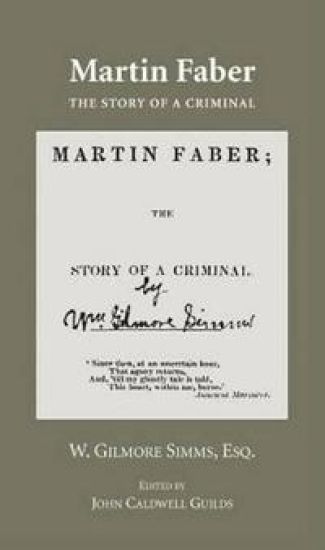
William Gilmore Simms's (1806–1870) body of work, a sweeping fictional portrait of the colonial and antebellum South in all its regional diversity, with its literary and intellectual issues, is probably more comprehensive than any other nineteenth-century southern author. Simms's career began with a short novel, Martin Faber, published in 1833. This Gothic tale is reminiscent of James Hogg's Confessions of a Sinner and was written four years before Edgar Allan Poe's "William Wilson." Narrated in the first person, it is considered a pioneering examination of criminal psychology. Martin seduces then murders Emily so that he might marry another woman, Constance. Martin confesses to his friend and is killed after attempting to stab Constance when she visits him in jail. The book was immediately successful and was well received by the northern media, thus starting Simms's successful career as a writer, one that would rank him as the only major southern literary figure besides Poe before the Civil War. As with other volumes in the Arkansas Edition of Simms's work, this volume includes a critical introduction by the editor and a Simms chronology, as well as appendices dealing with textual matters. This edition also includes Simms's 1829 story, Confessions of a Murderer, which was the germ for his first book of fiction.
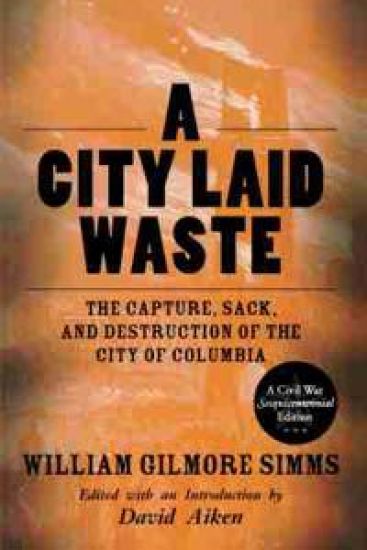
A dramatic eyewitness account of a city under siege during the Civil War. In the first reissue of these documents since 1865, ""A City Laid Waste"" captures in riveting detail the destruction of South Carolina's capital city as Gen. William T. Sherman brought his scorched-earth campaign to a hotbed of secession. William Gilmore Simms, a native South Carolinian and one of the nation's foremost men of letters, was in Columbia and witnessed firsthand the city's capture and destruction. A renowned novelist and poet who was also an experienced journalist and historian, Simms deftly recorded the events of February 1865 in a series of eyewitness accounts published in the first ten issues of the Columbia Phoenix. Later that year, he edited the Phoenix text, curbing some of his immediate outrage, and published the material as a pamphlet, ""Sack and Destruction of the City of Columbia, S. C."" Reprinted here in its entirety and illustrated with a collection of drawings and photographs, the newspaper version of Simms's account offers an unparalleled view into the horrors of invasion on American soil. Simms walked the fire-ravaged streets, interviewing Columbia residents and Union troops. His record of burned buildings constitutes the most authoritative information available on the extent of the damage. In addition he cataloged widespread looting, atrocities committed against women, the brutal treatment of former slaves by Union soldiers, and the destruction of historically significant documents, works of art, artifacts, and relics. Describing the account as a Southern masterpiece, Simms historian David Aiken provides both a historical and literary context for Simms's reportage. In his introduction Aiken clarifies the significance of Simms's articles and draws attention to important factors for understanding the occupation's impact - the cultural prosperity enjoyed in Columbia prior to Sherman's arrival, the enormity of the invasion itself, the sufferings of the city's residents, and the efforts to cover up crimes and discredit witnesses such as Simms who dared to report atrocities.
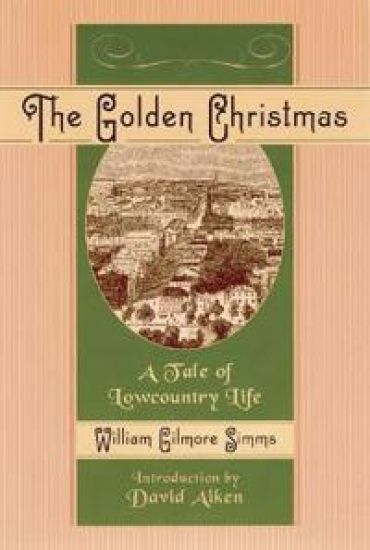
A holiday romance, rich in historical particulars, from South Carolina's foremost writer. Rife with historical details and peppered with comic characters, ""The Golden Christmas"" remains a timeless tale of South Carolina's rich holiday heritage. Originally published in 1852, William Gilmore Simms's classic low country romance chronicles the social customs and Christmas traditions of an antebellum plantation near Charleston. Drawing influence from ""Romeo and Juliet"" and ""A Christmas Carol"", Simms centers his plot on the pride of a Huguenot family, the prejudice of an English family, and the plight of star-crossed lovers, Ned Bulmer and Paula Bonneau, to win the blessings of both feuding houses amid a festive and frantic holiday season. Simms populates his novel with a lively cast - a learned Northern professor, a young English nobleman, opinionated widows, a blustery plantation owner, a condescending servant, a pig-thieving coachman, and a good-hearted barrister. Interwoven into the text are engrossing details about the lavish decorations and festivities that were the hallmark of Christmas celebrations in the antebellum South. Vibrant fireworks, candles nestled in holly, games of whist and backgammon, Yule logs, eggnog, and a visit from Father Chrystmasse all play their parts as the narrative unfolds. Here, too, are accurate descriptions of dress, dialogue, recreation, cultural mores, social hierarchy, and a vivid tableau of a shopping trip to Charleston's King, Queen, and Meeting streets in the 1850s. In equal parts a novel of manners and comic romance, ""The Golden Christmas"" is now, as it has always been, a holiday gift to lovers of Southern lore from South Carolina's most famous author. This edition includes an introduction by Simms historian David Aiken.