Kirjojen hintavertailu – 12 903 725 kirjaa ja 27 kauppaa
Kirjailija
William Gilmore Simms
Kirjat ja teokset yhdessä paikassa: 241 kirjaa, julkaisuja vuosilta 1860–2026, suosituimpiin kuuluu The Army Correspondence of Colonel John Laurens. Vertaile teosten hintoja ja tarkista saatavuus suomalaisista kirjakaupoista.
Reprint of the original, first published in 1859. The publishing house Anatiposi publishes historical books as reprints. Due to their age, these books may have missing pages or inferior quality. Our aim is to preserve these books and make them available to the public so that they do not get lost.
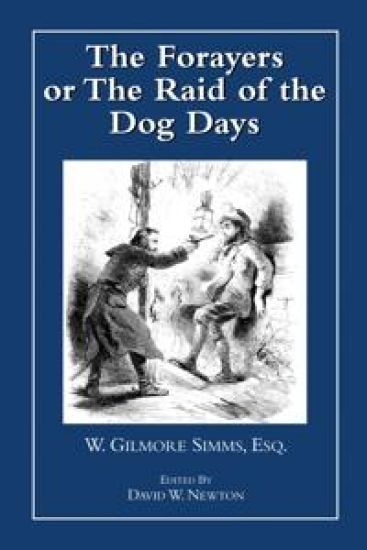
Historical novelist William Gilmore Simms first published The Forayers in 1855 at the peak of his reputation and ability. Simms had set out to create a prose epic through a series of linked novels detailing American history and struggles from early colonization to the mid-nineteenth century. The Forayers, which was the sixth book in his series of eight Revolutionary War novels set in the South, describes events around Orangeburg, South Carolina, before the Battle of Eutaw Springs (itself covered in this novel’s sequel, Eutaw). It features such characters as Hell-fire Dick, a hardhearted, foul-mouthed looter under Tory protection. Simms hoped his readers would find this book “a bold, brave, masculine story; frank, ardent, vigorous; faithful to humanity.” He described it to a friend as “fresh and original” and wrote that “the characterization [is] as truthful as forcible. It is at once a novel of society & a romance.”
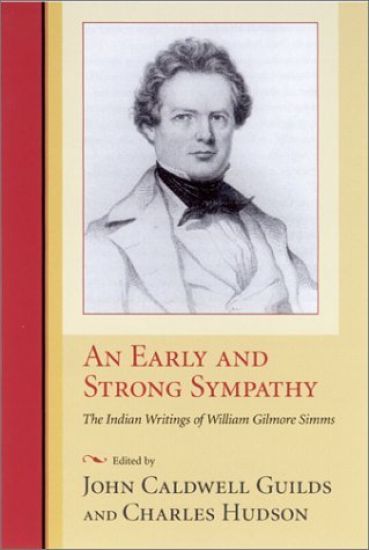
Literary writings that reveal nineteenth-century perceptions of Native Americans; Novelist William Gilmore Simms (1806-1870) and the Indians who lived in the southeast United States during the nineteenth century have shared a similar and unfortunate fate - both have been largely neglected in mainstream scholarship of literature and ethnohistory. In a volume that remedies this oversight, John Caldwell Guilds, an authority on Simms, and Charles Hudson, an authority on Southeastern Indians, collaborate to reveal fresh perspectives on both. They offer an anthology of Simms's writings that establishes him as a knowledgeable, prolific, and sympathetic portrayer of Native Americans in fiction and poetry. This groundbreaking anthology identifies more than one hundred works by Simms on Indians, including his best and most representative writings, some of which have never before been published. The passages range from romantic, poetic fantasies to attentive descriptions that are valuable primary resources for historians and anthropologists. Written from Simms's youth in the 1820s until his death in 1870, the selections document the transformation of the South from a frontier where Indians, African Americans, and white southerners confronted each other as strangers, to a prosperous agricultural society built on the exploitation of subservient peoples, and finally, to an impoverished tri-racial community that labored to meet a post-Civil War world. In their commentary Guilds and Hudson make the case for the literary, if not always the ethnological, value of Simms's life-long efforts to dramatize the character, culture, and artistry of the American Indian. The editors emphasize the significance of Simms's depictions of Native Americans not only as an integral part of American history but also as an added dimension to the literature of the south and the nation.
Long considered a leading literary figure of the Old South, William Gilmore Simms (1806-1870) wrote letters, novels, short fiction, drama, essays, and poetry in his prolific career. Born in Charleston to an old South Carolina family of modest means and raised by a grandmother with whom his father left him after his mother's death, Simms felt a simultaneous sense of loyalty to and alienation from his native region. He was a major intellectual figure on the East Coast before the Civil War but saw his New York publishers abandon him after secession, of which he was a vocal supporter. Simms's novels and poetry have been published in modern editions, and he has been the subject of numerous biographies and critical studies, but until now there has been no collection covering the broad spectrum of his writings. The Simms Reader presents a selection of his nonnovelistic work - letters, short fiction, essays, historical writings, poetry, and epigrams - chosen and introduced by the preeminent Simms scholar John Caldwell Guilds.
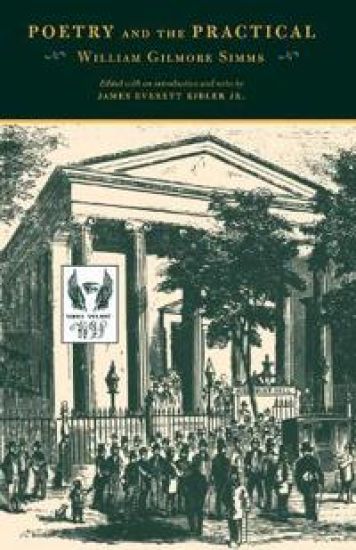
Delivered as a three-part lecture series in 1854 at the famous Hibernian Society Hall in Charleston, South Carolina, Simms’s spirited defense of poetry stands in the nobel line of poetic credos from poets such as Sir Philip Sidney and Percy Bysshe Shelley. It is the only full-length work of its kind in American literature, and it has never before been published. Seventh in the University of Arkansas Press’s Simms Series, Poetry and the Practical is a clear, forceful rebuttal of arguments that would relegate poetry to the margins of life. It proclaims the high calling of poets as spokesmen and romantic visionaries, underscoring their mission to reveal truth and passion, mind and heart and to transcend the limiting bounds of the empirical. In proving poetry’s utility and worth, Simms uses all the tools of persuasion open to him: his wide reading, his considerable knowledge of the history of culture and civilizations, his understanding of the values of place and tradition, and, above all, an oratorical eloquence, which allows his words to leave the page in a rush of inspiration. These lectures, which still retain their identity as scripts prepared and punctuated for performance, provide profound insight into Simms the poet and into the effects of industrialization, the southern sensibility, and the influence of European thought on southern literature at a critical point in that literature’s development.
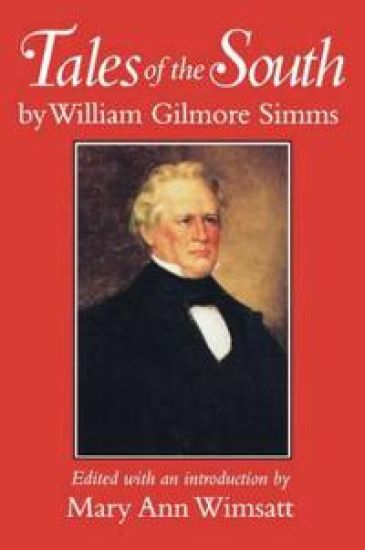
The 14 short stories in this volume demonstrate Simms' combining of homey realism with fabulous flights of fancy. Each offers an intimate view of 19th-century work and domesticity, and forays into legend and superstition. The introduction places the work in a biographical and historical context.
The idea of "the great American novel" continues to thrive almost as vigorously as in its nineteenth-century heyday, defying 150 years of attempts to dismiss it as amateurish or obsolete. In this landmark book, the first in many years to take in the whole sweep of national fiction, Lawrence""Buell""reanimates this supposedly antiquated idea, demonstrating that its history is a key to the dynamics of national literature and national identity itself. The dream of the G. A. N., as Henry James nicknamed it, crystallized soon after the Civil War. In fresh, in-depth readings of selected contenders from the 1850s""onward in conversation with hundreds of other novels, Buell delineates four "scripts" for G. A. N. candidates. One, illustrated by "The Scarlet Letter," is the adaptation of the novel's story-line by later writers, often in ways that are contrary to the original author's own design. Other aspirants, including "The Great Gatsby" and "Invisible Man, " engage the American Dream of remarkable transformation from humble origins. A third script, seen in "Uncle Tom's Cabin" and "Beloved," is the family saga that grapples with racial and other social divisions. Finally, mega-novels from "Moby-Dick" to "Gravity's Rainbow" feature assemblages of characters who dramatize in microcosm the promise and pitfalls of democracy. The canvas of the great American novel is in constant motion, reflecting revolutions in fictional fashion, the changing face of authorship, and the inseparability of high culture from popular. As Buell reveals, the elusive G. A. N. showcases the myth of the United States as a nation perpetually under construction.