Kirjojen hintavertailu – 12 859 829 kirjaa ja 27 kauppaa
Kirjailija
William James
Kirjat ja teokset yhdessä paikassa: 603 kirjaa, julkaisuja vuosilta 1896–2026, suosituimpiin kuuluu Pragmatism a New Name for Some Old Ways of Thinking. Vertaile teosten hintoja ja tarkista saatavuus suomalaisista kirjakaupoista.
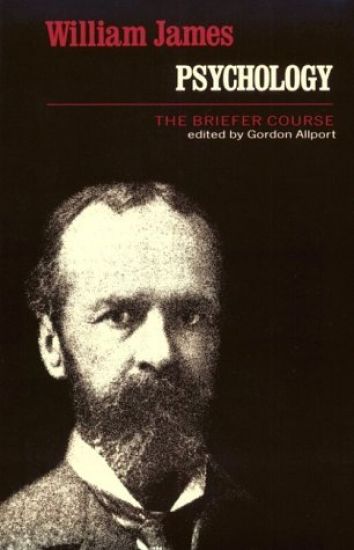
A durable classic in the field, Psychology: The Briefer Course is developed on the structure of seventeen definitive chapters treating cryptic themes such as Habit, Stream of Consciousness, The Self, Attention, Conception, Discrimination, Association, Memory, Imagination, Perception, Reasoning, Emotion, Instinct, Will.
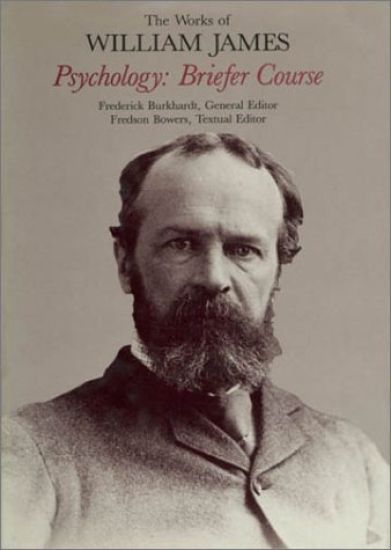
Today's scholars know James's psychology primarily through his great Principles of Psychology (1890), but those who studied the subject at the turn of the century were more apt to learn his view through his Psychology: Briefer Course (1892). Indeed, professors at colleges and universities throughout the United States use this book--which their students labeled "Jimmy" to distinguish it from the larger "James"--in their classes, and more than six times as many copies of the Briefer Course were sold by 1902 as were sets of Principles. Despite its title, the Briefer Course is more than a simple condensation of the larger work. For example, to the material from Principles James added several chapters on the physiology of the senses that helped mesh his psychology with the other sciences of the period. The earlier chapter title "The Stream of Thought" is replaced here with "The Stream of Consciousness." Psychology: Briefer Course remains a useful and highly readable introduction to James's views on psychology and is an essential source for anyone interested in studying all of his psychological writings.
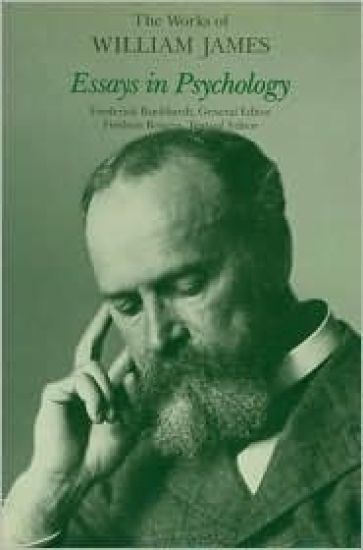
The twenty-nine articles, essays, and reviews in this volume, collected here for the first time, were published by William James over a long span of years, from 1878 (twelve years prior to The Principles of Psychology) to 1906. Some are theoretical; others examine specific psychological phenomena or report the results of experiments James had conducted. Written for the most part for a scholarly rather than a popular audience, they exhibit James's characteristic lucidity and persuasiveness, and they reveal the roots and development of his view on a wide range of psychological issues. As William R. Woodward notes in his Introduction, these essays "bring the reader closer to James's sources, thereby illuminating his indebtedness to tradition as well as his creative departure from it."
Despite the modesty of its title, the publication of this book in 1899 was a significant event. It marked the first application of the relatively new discipline of psychology, and specifically of James's theses in The Principles of Psychology, to educational theory and classroom practice. The book went through twelve printings in as many years and has never been out of print. Among its innovative features were James's maxims "No reception without reaction" and "No impression without expression"; a new emphasis on the biology of behavior and on the role of instincts; and discussions of the relevance to elementary school education of what is known about will, attention, memory, apperception, and the association of ideas. Appended to the fifteen talks to schoolteachers were three talks to college students, as pertinent today as when they were written: "The Gospel of Relaxation," "On a Certain Blindness in Human Beings," and "What Makes a Life Significant?"
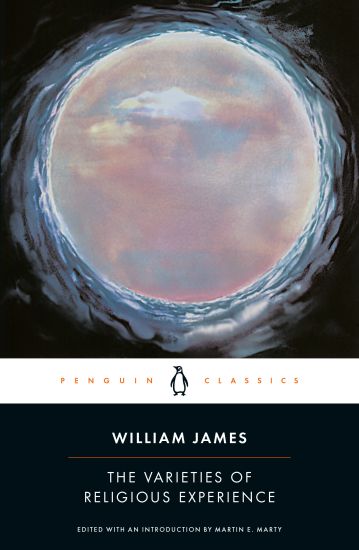
Standing at the crossroads of psychology and religion, this catalyzing work applied the scientific method to a field abounding in abstract theory. William James believed that individual religious experiences, rather than the precepts of organized religions, were the backbone of the world's religious life. His discussions of conversion, repentance, mysticism and saintliness, and his observations on actual, personal religious experiences - all support this thesis. In his introduction, Martin E. Marty discusses how James's pluralistic view of religion led to his remarkable tolerance of extreme forms of religious behaviour, his challenging, highly original theories, and his welcome lack of pretension in all of his observations on the individual and the divine.
Essays in Religion and Morality brings together a dozen papers of varying length to these two themes so crucial to the life and thought of William James. Reflections on the two subjects permeate, first, James's presentation of his father's Literary Remains; second, his writings on human immortality and the relation between reason and faith; third, his two memorial pieces, one on Robert Gould Shaw and the other on Emerson; fourth, his consideration of the energies and powers of human life; and last, his writings on the possibilities of peace, especially as found in his famous essay "The Moral Equivalent of War." These speeches and essays were written over a period of twenty-four years. The fact that James did not collect and publish them himself in a single volume does not reflect on their intrinsic worth or on their importance in James's philosophical work, since they include some of the best known and most influential of his writings. All the essays, throughout their varied subject matter, are consistently and characteristically Jamesian in the freshness of their attack on the problems and failings of humankind and in their steady faith in human powers.
The publication in 1890 of William James’s acknowledged masterpiece marked a turning point in the development of psychology as a science in America. The Principles of Psychology also became a source of inspiration in philosophy, literature, and the arts. When John Dewey reviewed it, he predicted that it would rank “as a permanent classic, like Locke’s Essay and Hume’s Treatise.” Its stature undiminished after 91 years, The Principles of Psychology appears now in a new, handsome edition with an authoritative text that corrects the hundreds of errors, some very serious, that have been perpetuated over the years. Prepared according to the modern standards of textual scholarship, this edition incorporates all of the changes James made in the eight printings he supervised, as well as the revisions and new material he added to his own annotated copy. In addition, all footnotes, references, quotations, and translations have been thoroughly checked. The complete text of the Principles, with footnotes, drawings, and James’s own index, appears in Volumes I and II. Volume III includes extensive notes, appendixes, textual apparatus, and a general index.
The publication in 1890 of William James’s acknowledged masterpiece marked a turning point in the development of psychology as a science in America. The Principles of Psychology also became a source of inspiration in philosophy, literature, and the arts. When John Dewey reviewed it, he predicted that it would rank “as a permanent classic, like Locke’s Essay and Hume’s Treatise.” Its stature undiminished after 91 years, The Principles of Psychology appears now in a new, handsome edition with an authoritative text that corrects the hundreds of errors, some very serious, that have been perpetuated over the years. Prepared according to the modern standards of textual scholarship, this edition incorporates all of the changes James made in the eight printings he supervised, as well as the revisions and new material he added to his own annotated copy. In addition, all footnotes, references, quotations, and translations have been thoroughly checked. The complete text of the Principles, with footnotes, drawings, and James’s own index, appears in Volumes I and II. Volume III includes extensive notes, appendixes, textual apparatus, and a general index.
Contents: Introduction, Bibliography and Textual Note Lecture I: The Present Dilemma in Philosophy Lecture II: What Pragmatism Means Lecture III: Some Metaphysical Problems Pragmatically Considered Lecture IV: The One and the Many Lecture V: Pragmatism and Common Sense Lecture VI: Pragmatism's Conception of Truth Lecture VII: Pragmatism and Humanism Lecture VIII: Pragmatism and Religion
Contents: Introduction, Bibliography and Textual Note Lecture I: The Present Dilemma in Philosophy Lecture II: What Pragmatism Means Lecture III: Some Metaphysical Problems Pragmatically Considered Lecture IV: The One and the Many Lecture V: Pragmatism and Common Sense Lecture VI: Pragmatism's Conception of Truth Lecture VII: Pragmatism and Humanism Lecture VIII: Pragmatism and Religion
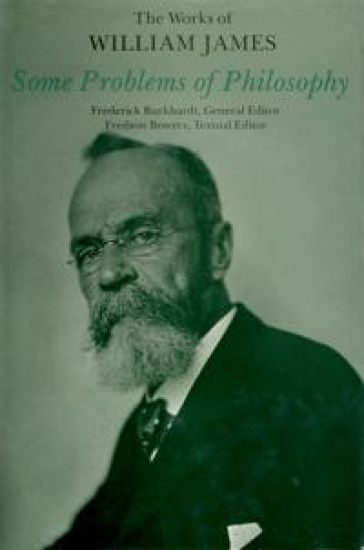
Some Problems of Philosophy, William James's last book, was published after his death in 1910. For years he had talked of rounding out his philosophical work with a treatise on metaphysics. Characteristically, he chose to do so in the form of an introduction to the problems of philosophy, because writing for beginners would force him to be nontechnical and readable. The result is that, although this is James's most systematic and abstract work, it has all the lucidity of his other, more popular writings. Step by step the reader is introduced, through analysis of the fundamental problems of Being, the relation of thoughts to things, novelty, causation, and the Infinite, to the original philosophical synthesis that James called radical empiricism. This is the seventh volume to be published in The Works of William James, an authoritative edition sponsored by the American Council of Learned Societies.
The Will to Believe addresses several of the most important and perplexing problems of philosophy. In ten lucid essays James deals with such subjects as causality and free will, the definition of the good life and the Good itself, the importance of the individual in society, and the intellectual claims of scientific method. Linking all these essays, most of which were delivered as lectures to popular audiences, is James's deep belief that philosophy does not operate in a vacuum but is influenced by our passional and volitional natures. As Edward H. Madden points out in his substantial introduction, these essays, written over a span of seventeen years, represent not so much a fixed system of ideas as a patient searching, an organic development of James's thought in response to his own criticism and that of others. This is the sixth volume to be published in The Works of William James, an authoritative edition sponsored by the American Council of Learned Societies.
Essays in Philosophy brings together twenty-one essays, reviews, and occasional pieces published by James between 1876 and 1910. They range in subject from a concern with the teaching of philosophy and appraisals of philosophers to analyses of important problems. Several of the essays, like "The Sentiment of Rationality" and "The Knowing of Things Together," are of particular significance in the development of the views of James's later works. All of them, as John McDermott says in his Introduction, are in a style that is "engaging and personal...witty, acerbic, compassionate, and polemical." Whether he is writing an article for the Nation of a definition of "Experience" for Baldwin's Dictionary or "The Mad Absolute" for the Journal of Philosophy, James is always unmistakably himself, and always readable.
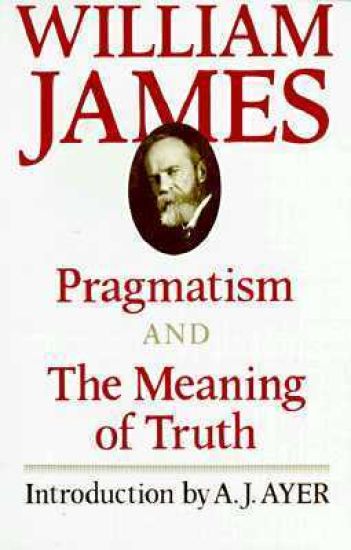
Pragmatism is the most famous single work of American philosophy. Its sequel, The Meaning of Truth, is its imperative and inevitable companion. The definitive texts of both works are here available for the first time in one volume, with an introduction by the distinguished contemporary philosopher A. J. Ayer. In Pragmatism, William James attacked the transcendental, rationalist tradition in philosophy and tried to clear the ground for the doctrine he called radical empiricism. When first published, the book caused an uproar. It was greeted with praise, hostility, ridicule. Determined to clarify his views, James collected nine essays he had written on this subject before he wrote Pragmatism and six written later in response to criticisms by Bertrand Russell and others. He published The Meaning of Truth in 1909, the year before his death. These two works show James at his best full of verve and good humor. Intent upon making difficult ideas clear, he is characteristically vigorous in his effort to make them prevail.
Autobiographical, philosophical, and scientific writings of the nineteenth-century scholar demonstrate his relevance to the intellectual trends of modern thought
In May 1908 William James, a gifted and popular lecturer, delivered a series of eight Hibbert Lectures at Manchester College, Oxford, on “The Present Situation in Philosophy.” These were published a year later as A Pluralistic Universe. During the preceding decade James, as he struggled with deep conflicts within his own philosophic development, had become increasingly preoccupied with epistemological and metaphysical issues. He saw serious inadequacies in the forms of absolute and monistic idealism dominant in England and the United States, and he used the lectures to attack the specific form that “vicious intellectualism” had taken. In A Pluralistic Universe James captures a new philosophic vision, at once intimate and realistic. He shares with his readers a view of the universe that is fresh, active, and novel. The message conveyed is as relevant today as it was in his time. This is the fourth volume of The Works of William James in an authoritative edition sponsored by the American Council of Learned Societies. Prepared according to modern standards of textual scholarship, this series utilizes all available published and unpublished materials; its texts have been awarded the seal of approval of the Center for Editions of American Authors. Frederick Burkhardt is General Editor; Fredson Bowers, Textual Editor; Ignas K. Skrupskelis, Associate Editor.
A pioneer in early studies of the human mind and founder of that peculiarly American philosophy called Pragmatism, William James remains America's most widely read philosopher. Generations of students have been drawn to his lucid presentations of philosophical problems. His works, now being made available for the first time in a definitive edition, have a permanent place in American letters and a continuing influence in philosophy and psychology. The essays gathered in the posthumously published Essays in Radical Empiricism formulate ideas that had brewed in James's mind for thirty years as he sought a way out of the philosophical dilemmas generated by the new psychology of the late nineteenth century. They constitute the explanatory core of his doctrine of radical empiricism, a doctrine that charts his course between the absolute idealism he could not accept and, at the other extreme, the law of associationism, which reduces knowledge to sheer contiguity of ideas. In his introduction John J. McDermott describes the historical background and the genesis of James's theory and considers the objections raised by its opponents.
"It is absolutely the only philosophy with no humbug in it," an exhilarated William James wrote to a friend early in 1907. And later that year, after finishing the proofs of his "little book," he wrote to his brother Henry: "I shouldn't be surprised if ten years hence it should be rated as 'epoch-making,' for of the definitive triumph of that general way of thinking I can entertain no doubt whatever—I believe it to be something quite like the protestant reformation." Both the acclaim and outcry that greeted Pragmatism: A New Name for Some Old Ways of Thinking helped to affirm James's conviction. For it was in Pragmatism that he confronted older philosophic methods with the "pragmatic" method, demanding that ideas be tested by their relation to life and their effects in experience. James's reasoning and conclusions in Pragmatism have exerted a profound influence on philosophy in this century, and the book remains a landmark.
In Pragmatism, William James attacked the transcendental, rationalist tradition in philosophy and tried to clear the ground for the doctrine he called radical empiricism. The book caused an uproar; it was greeted with praise, hostility, and ridicule. Determined to clarify the pragmatic conception of truth, James collected nine essays he had written on this subject before he wrote Pragmatism and six written later in response to criticisms of that volume by Bertrand Russell and others. He published the collection under the title “The Meaning of Truth” in 1909, the year before his death. The Meaning of Truth shows James at his best—clear and readable as always, and full of verve and good humor. Intent upon making difficult ideas clear, he is also forceful in his effort to make them prevail.
From the Hafner Library of Classics comes a collection of essays from William James, including introductory essays from some of the top scholars in America. The Hafner Library of Classics offers a refreshing approach to the study of major Western philosophers through introductory essays by noted scholars that work to enliven the discussion of the human side of great thinkers. In this addition to the series, readers will be immersed into the works and writings, including discussion of the sentiment of rationality, the moral philosopher and the moral life, Pragmatism’s conception of truth. Essays in Pragmatism is a highly recommended classroom title that is sure to lead to stimulating discussion on historical backgrounds, evolution, and the importance of philosophical ideas.