Kirjojen hintavertailu – 12 903 725 kirjaa ja 27 kauppaa

Kirjailija

William Johnson

Kirjat ja teokset yhdessä paikassa: 52 kirjaa, julkaisuja vuosilta 1997–2026, suosituimpiin kuuluu The Campaign of 1781 in the Carolinas; with remarks historical and critical on Johnson's Life of Greene. To which is added, an Appendix of original documents. Vertaile teosten hintoja ja tarkista saatavuus suomalaisista kirjakaupoista.

52 kirjaa

Kirjojen julkaisuvuodet: 1997–2026.

A River Without Banks

A River Without Banks

William Johnson

Oregon State University
2010
nidottu
A River Without Banks chronicles one family’s journey to Idaho, with all of its uncertainties, promises, and hopes. The book explores their encounters with a place still partly wild, whose communities and landscapes teach them how to respect the earth and each other. William Johnson’s essays move from a family vacation spent observing moose, to a comparison of the creation myths from Genesis and the Nez Perce, to watching a raptor seeking prey. Johnson meditates on how places, animals, and people teach us “how to see, and how we do, and don’t, belong.” In prose that reveals a poet’s eye, Johnson examines how family relationships affect how we see the natural world. He explores the power of words to divide and to heal. He illuminates the challenges of sustaining a vital relationship with a home place. A River Without Banks will appeal to readers interested in the literature of place, ecology, natural history, indigenous culture, and conservation.
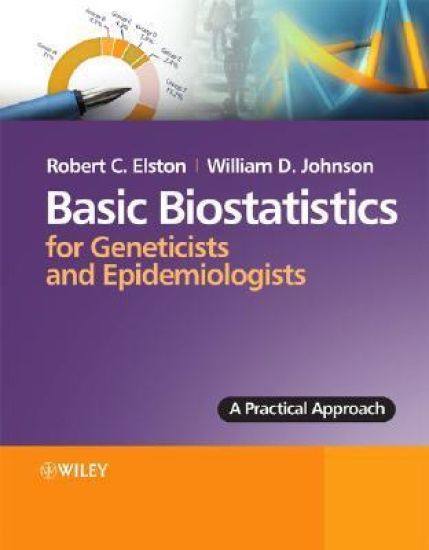
Basic Biostatistics for Geneticists and Epidemiologists

Basic Biostatistics for Geneticists and Epidemiologists

Robert C. Elston; William Johnson

John Wiley Sons Inc
2008
sidottu
Anyone who attempts to read genetics or epidemiology research literature needs to understand the essentials of biostatistics. This book, a revised new edition of the successful Essentials of Biostatistics has been written to provide such an understanding to those who have little or no statistical background and who need to keep abreast of new findings in this fast moving field. Unlike many other elementary books on biostatistics, the main focus of this book is to explain basic concepts needed to understand statistical procedures. This Book: Surveys basic statistical methods used in the genetics and epidemiology literature, including maximum likelihood and least squares. Introduces methods, such as permutation testing and bootstrapping, that are becoming more widely used in both genetic and epidemiological research. Is illustrated throughout with simple examples to clarify the statistical methodology. Explains Bayes’ theorem pictorially. Features exercises, with answers to alternate questions, enabling use as a course text. Written at an elementary mathematical level so that readers with high school mathematics will find the content accessible. Graduate students studying genetic epidemiology, researchers and practitioners from genetics, epidemiology, biology, medical research and statistics will find this an invaluable introduction to statistics.
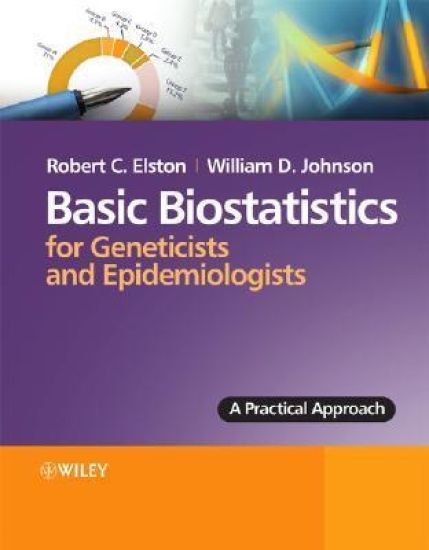
Basic Biostatistics for Geneticists and Epidemiologists

Basic Biostatistics for Geneticists and Epidemiologists

Robert C. Elston; William Johnson

John Wiley Sons Inc
2008
nidottu
Anyone who attempts to read genetics or epidemiology research literature needs to understand the essentials of biostatistics. This book, a revised new edition of the successful Essentials of Biostatistics has been written to provide such an understanding to those who have little or no statistical background and who need to keep abreast of new findings in this fast moving field. Unlike many other elementary books on biostatistics, the main focus of this book is to explain basic concepts needed to understand statistical procedures. This Book: Surveys basic statistical methods used in the genetics and epidemiology literature, including maximum likelihood and least squares. Introduces methods, such as permutation testing and bootstrapping, that are becoming more widely used in both genetic and epidemiological research. Is illustrated throughout with simple examples to clarify the statistical methodology. Explains Bayes’ theorem pictorially. Features exercises, with answers to alternate questions, enabling use as a course text. Written at an elementary mathematical level so that readers with high school mathematics will find the content accessible. Graduate students studying genetic epidemiology, researchers and practitioners from genetics, epidemiology, biology, medical research and statistics will find this an invaluable introduction to statistics.
Urban Planning and Politics

Urban Planning and Politics

William Johnson

American Planning Association
1997
nidottu
In this decade of widespread public distrust of both government and big business, planning is often viewed as a process abused by the elite to pursue their own selfish ends at the expense of ordinary citizens. This book shows citizens, professionals, and students how planning can and does serve the public interest. Politics, planning, and justice: Johnson investigates these three basic concepts and shows how each interacts with the others. This book introduces the players - private citizens, public officials, business people, and nonprofit institutions - that are involved in urban planning today. By demonstrating the role of each group, Johnson reveals how they influence, and are influenced by, the planning machine. He explains common tools and procedures planners use, and explores several areas of special interest to the profession, such as housing, economic development, transportation, and the urban environment. Johnson uses four detailed case studies that elucidate basic concepts for beginning students as well as specfic policies for experienced professionals. Educators will find this a valuable guide for teaching the basics of planning. Johnson includes questions for review and discussion, an annotated list of 25 supplementary case studies, a comprehensive glossary of planning terms, and a brief essay on how to research and write case histories of planning.