Kirjojen hintavertailu – 12 859 827 kirjaa ja 27 kauppaa
Kirjailija
William Lane Craig
Kirjat ja teokset yhdessä paikassa: 46 kirjaa, julkaisuja vuosilta 1979–2026, suosituimpiin kuuluu Gud och hans kritiker : en antologi om nyateismen. Vertaile teosten hintoja ja tarkista saatavuus suomalaisista kirjakaupoista.
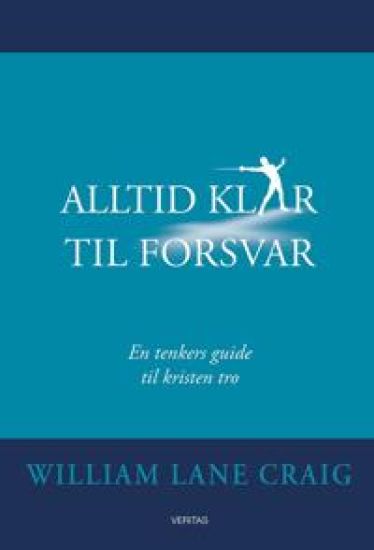
Se for deg at det har skjedd et brutalt ran. Etterforskeren jobber iherdig med å granske åstedet, intervjue vitner og spore bevegelsene til mulige mistenkte. Alt dette for å samle mest mulig informasjon om hva som har skjedd. Deretter må etterforskeren stille spørsmålet: Hva gjør jeg med bevismaterialet? Filosofen og teologen William Lane Craig går fram på samme måte for å finne svar på om Gud finnes og om kristen tro er sann. Bevismaterialet er omfattende - nemlig hele virkeligheten! I denne boken samler Craig informasjon om virkeligheten gjennom naturvitenskap, filosofi og historie og spør så: Hvordan forklarer vi best denne informasjonen? Resultatet er et kraftfullt og overbevisende forsvar for at Gud eksisterer og har vist seg i den historiske personen Jesus fra Nasaret.
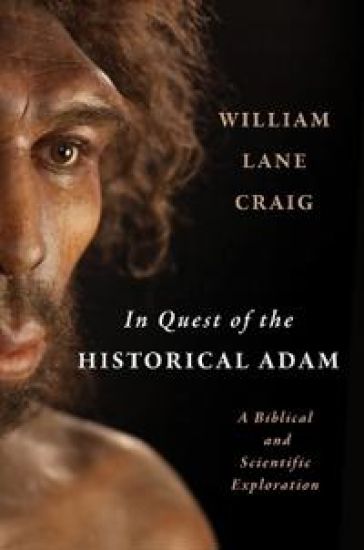
Was Adam a real historical person? And if so, who was he and when did he live? William Lane Craig sets out to answer these questions through a biblical and scientific investigation. He begins with an inquiry into the genre of Genesis 1-11, determining that it can most plausibly be classified as mytho-history--a narrative with both literary and historical value. He then moves into the New Testament, where he examines references to Adam in the words of Jesus and the writings of Paul, ultimately concluding that the entire Bible considers Adam the historical progenitor of the human race--a position that must therefore be accepted as a premise for Christians who take seriously the inspired truth of Scripture. Working from that foundation of biblical truth, Craig embarks upon an interdisciplinary survey of scientific evidence to determine where Adam could be most plausibly located in the evolutionary history of humankind, ultimately determining that Adam lived between 750,000 and 1,000,000 years ago as a member of the archaic human species Homo heidelbergensis. He concludes by reflecting theologically on his findings and asking what all this might mean for us as human beings created in the image of God, literally descended from a common ancestor--albeit one who lived in the remote past.
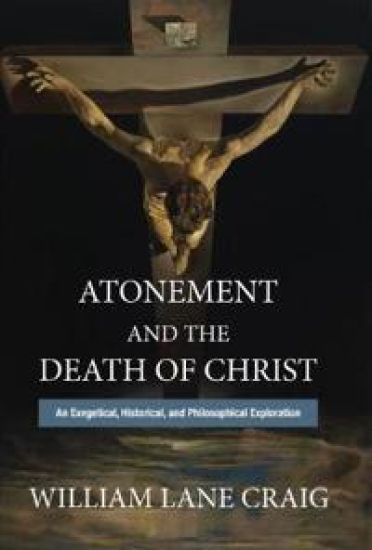
Through his death on the cross, Christ atoned for sin and so reconciled people to God. New Testament authors drew upon a range of metaphors and motifs to describe this salvific act, and down through history Christian thinkers have tried to articulate various theories to explain the atonement. While Christ's sacrifice serves as a central tenet of the Christian faith, the mechanism of atonement - exactly how Christ effects our salvation - remains controversial and ambiguous to many Christians. In Atonement and the Death of Christ, William Lane Craig conducts an interdisciplinary investigation of this crucial Christian doctrine, drawing upon Old and New Testament studies, historical theology, and analytic philosophy. The study unfolds in three discrete parts: Craig first explores the biblical basis of atonement and unfolds the wide variety of motifs used to characterize this doctrine. Craig then highlights some of the principal alternative theories of the atonement offered by great Christian thinkers of the premodern era. Lastly, Craig's exploration delves into a constructive and innovative engagement with philosophy of law, which allows an understanding of atonement that moves beyond mystery and into the coherent mechanism of penal substitution. Along the way, Craig enters into conversation with contemporary systematic theories of atonement as he seeks to establish a position that is scripturally faithful and philosophically sound. The result is a multifaceted perspective that upholds the suffering of Christ as a substitutionary, representational, and redemptive act that satisfies divine justice. In addition, this carefully reasoned approach addresses the rich tapestry of Old Testament imagery upon which the first Christians drew to explain how the sinless Christ saved his people from the guilt of their sins.
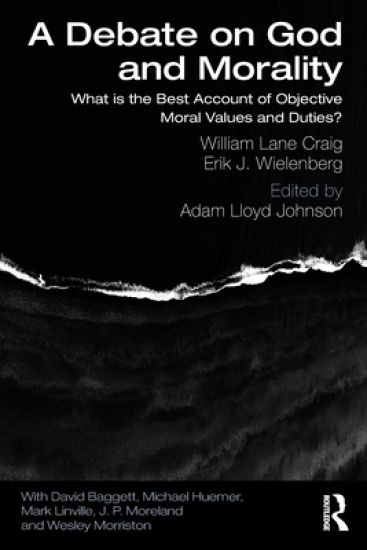
In 2018, William Lane Craig and Erik J. Wielenberg participated in a debate at North Carolina State University, addressing the question: "God and Morality: What is the best account of objective moral values and duties?" Craig argued that theism provides a sound foundation for objective morality whereas atheism does not. Wielenberg countered that morality can be objective even if there is no God. This book includes the full debate, as well as endnotes with extended discussions that were not included in the debate. It also includes five chapters by other philosophers who have written substantive responses to the debate - J. P. Moreland, David Baggett, Mark Linville, Wes Morriston, and Michael Huemer. The book provides crucial resources for better understanding moral realism and its dependence on, or independence from, theistic foundations. Key Features A valuable debate about whether or not God is the best explanation for objective morality, bringing together theists and atheists working on the same subject who normally are not in conversation with each other. Includes clear coverage of ontological and epistemological issues in metaethical theories, focusing on Divine Command Theory and Non-natural Robust Moral Realism. Engaging and accessible throughout, making the book well suited for undergraduate and seminary classrooms.
In 2018, William Lane Craig and Erik J. Wielenberg participated in a debate at North Carolina State University, addressing the question: "God and Morality: What is the best account of objective moral values and duties?" Craig argued that theism provides a sound foundation for objective morality whereas atheism does not. Wielenberg countered that morality can be objective even if there is no God. This book includes the full debate, as well as endnotes with extended discussions that were not included in the debate. It also includes five chapters by other philosophers who have written substantive responses to the debate - J. P. Moreland, David Baggett, Mark Linville, Wes Morriston, and Michael Huemer. The book provides crucial resources for better understanding moral realism and its dependence on, or independence from, theistic foundations. Key Features A valuable debate about whether or not God is the best explanation for objective morality, bringing together theists and atheists working on the same subject who normally are not in conversation with each other. Includes clear coverage of ontological and epistemological issues in metaethical theories, focusing on Divine Command Theory and Non-natural Robust Moral Realism. Engaging and accessible throughout, making the book well suited for undergraduate and seminary classrooms.
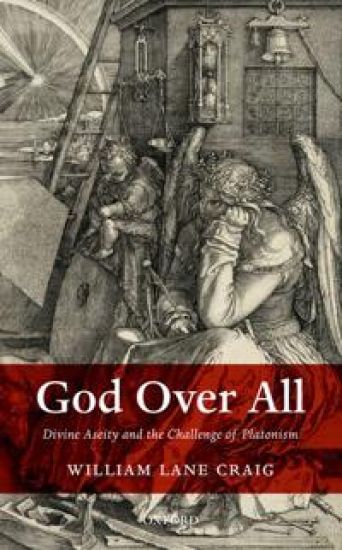
God Over All: Divine Aseity and the Challenge of Platonism is a defense of God's aseity and unique status as the Creator of all things apart from Himself in the face of the challenge posed by mathematical Platonism. After providing the biblical, theological, and philosophical basis for the traditional doctrine of divine aseity, William Lane Craig explains the challenge presented to that doctrine by the Indispensability Argument for Platonism, which postulates the existence of uncreated abstract objects. Craig provides detailed examination of a wide range of responses to that argument, both realist and anti-realist, with a view toward assessing the most promising options for the theist. A synoptic work in analytic philosophy of religion, this groundbreaking volume engages discussions in philosophy of mathematics, philosophy of language, metaphysics, and metaontology.
This book is an exploration and defense of the coherence of classical theism’s doctrine of divine aseity in the face of the challenge posed by Platonism with respect to abstract objects. A synoptic work in analytic philosophy of religion, the book engages discussions in philosophy of mathematics, philosophy of language, metaphysics, and metaontology. It addresses absolute creationism, non-Platonic realism, fictionalism, neutralism, and alternative logics and semantics, among other topics. The book offers a helpful taxonomy of the wide range of options available to the classical theist for dealing with the challenge of Platonism. It probes in detail the diverse views on the reality of abstract objects and their compatibility with classical theism. It contains a most thorough discussion, rooted in careful exegesis, of the biblical and patristic basis of the doctrine of divine aseity. Finally, it challenges the influential Quinean metaontological theses concerning the way in which we makeontological commitments.
How did Christ's death overcome the estrangement and condemnation of sinners before a holy God, so as to reconcile them to Him? A great variety of theories of the atonement have been offered over the centuries to make sense of the fact that Christ by his death has provided the means of reconciliation with God: ransom theories, satisfaction theories, moral influence theories, penal substitution theories, and so on. Competing theories need to be assessed by (i) their accord with biblical data and (ii) their philosophical coherence.
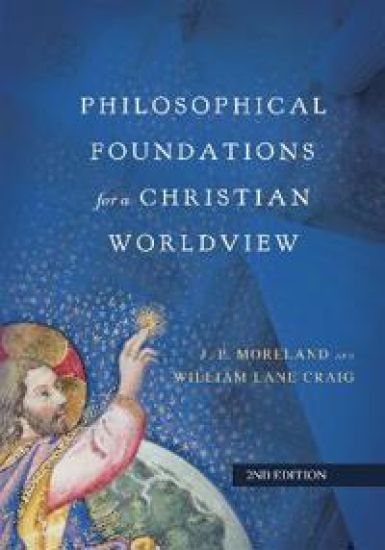
Winner of a 2004 ECPA Gold Medallion AwardWinner of an Award of Excellence in the 2003 Chicago Book Clinic What is real? What is truth? What can we know? What should we believe? What should we do and why? Is there a God? Can we know him? Do Christian doctrines make sense? Can we believe in God in the face of evil? These are fundamental questions that any thinking person wants answers to. These are questions that philosophy addresses. And the answers we give to these kinds of questions serve as the foundation stones for constructing any kind of worldview. Now updated and expanded in this second edition, Philosophical Foundations for a Christian Worldview by J. P. Moreland and William Lane Craig offers a comprehensive introduction to philosophy from a Christian perspective. In their broad sweep they seek to introduce readers to the principal subdisciplines of philosophy, including epistemology, metaphysics, philosophy of science, ethics, and philosophy of religion. They do so with characteristic clarity and incisiveness. Arguments are clearly outlined, and rival theories are presented with fairness and accuracy. Philosophy, they contend, aids Christians in the tasks of apologetics, polemics, and systematic theology. It reflects our having been made in the image of God, helps us to extend biblical teaching into areas not expressly addressed in Scripture, facilitates the spiritual discipline of study, enhances the boldness and self-image of the Christian community, and is requisite to the essential task of integrating faith and learning. Here is a lively and thorough introduction to philosophy for all who want to know reality. This second edition now includes including enhanced arguments, updated bibliographies, and new chapters on atonement and the mind-body problem.
This book is an exploration and defense of the coherence of classical theism’s doctrine of divine aseity in the face of the challenge posed by Platonism with respect to abstract objects. A synoptic work in analytic philosophy of religion, the book engages discussions in philosophy of mathematics, philosophy of language, metaphysics, and metaontology. It addresses absolute creationism, non-Platonic realism, fictionalism, neutralism, and alternative logics and semantics, among other topics. The book offers a helpful taxonomy of the wide range of options available to the classical theist for dealing with the challenge of Platonism. It probes in detail the diverse views on the reality of abstract objects and their compatibility with classical theism. It contains a most thorough discussion, rooted in careful exegesis, of the biblical and patristic basis of the doctrine of divine aseity. Finally, it challenges the influential Quinean metaontological theses concerning the way in which we makeontological commitments.
God Over All: Divine Aseity and the Challenge of Platonism is a defense of God's aseity and unique status as the Creator of all things apart from Himself in the face of the challenge posed by mathematical Platonism. After providing the biblical, theological, and philosophical basis for the traditional doctrine of divine aseity, William Lane Craig explains the challenge presented to that doctrine by the Indispensability Argument for Platonism, which postulates the existence of uncreated abstract objects. Craig provides detailed examination of a wide range of responses to that argument, both realist and anti-realist, with a view toward assessing the most promising options for the theist. A synoptic work in analytic philosophy of religion, this groundbreaking volume engages discussions in philosophy of mathematics, philosophy of language, metaphysics, and metaontology.
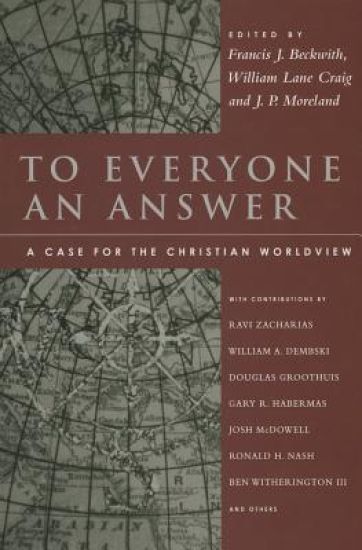
In a society fascinated by spirituality but committed to religious pluralism, the Christian worldview faces sophisticated and aggressive opposition. A prior commitment to diversity, with its requisite openness and relativistic outlook, has meant for skeptics, critics and even many Christians that whatever Christianity is, it cannot be exclusively true or salvific. What is needed in this syncretistic era is an authoritative, comprehensive Christian response. Point by point, argument by argument, the Christian faith must be effectively presented and defended. To Everyone an Answer: A Case for the Christian Worldview offers such a response. Editors Francis J. Beckwith, William Lane Craig and J. P. Moreland have gathered together in this book essays covering all major aspects of apologetics, including: faith and reasonarguments for God?s existencethe case for Jesus the problem of evilpostmodernismreligious pluralism and Christian exclusivism Preeminent in their respective fields, the contributors to this volume offer a solid case for the Christian worldview and a coherent defense of the Christian faith.
"Foi raisonnable est un ouvrage dont notre Zpoque a grandement besoin. Il regorge d arguments pertinents et trs persuasifs prZsentZs dans un langage accessible et irZnique. Les Ztudiants l universitZ et en facultZs de thZologie trouveront ce livre particulirement utile, du fait qu il expose les faux raisonnements, les erreurs et les absences de preuves dans les nombreuses et diverses objections qui ont ZtZ soulevZes contre les affirmations de la foi chrZtienne historique, et qui sont autant de dZfis relever. Craig prZsente des arguments et des preuves solides et convaincants de la fiabilitZ et de la vZracitZ des Zvangiles du Nouveau Testament et du tZmoignage ancien et crZdible de la rZsurrection de JZsus d entre les morts." - Craig A. Evans, professeur distinguZ de Nouveau Testament la chaire de Payzant, Acadia Divinity College, Canada; auteur de Fabricating Jesus: How Modern Scholars Distort the Gospels.
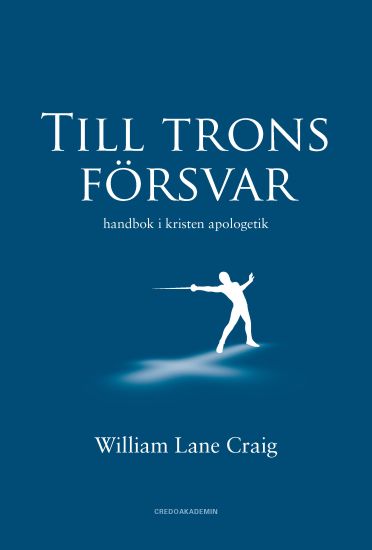
Vill du veta hur du kan svara när folk ställer frågor om din tro? Eller vågar du sällan prata med människor om tro, därför att du är osäker på hur du ska hantera invändningar och kritik? Kanske du själv ibland tvivlar på att det du tror på verkligen är sant? I denna handbok i kristen apologetik får du hjälp att förklara och försvara kristen tro med filosofiska, vetenskapliga och historiska argument. Författaren William Lane Craig anses av många vara vår tids främste försvarare av kristen tro. Han tar upp fyra klassiska argument för Guds existens, lägger fram historiska bevis för Jesu anspråk och för hans uppståndelse, tar itu med lidandets problem och visar varför den religiösa relativismen inte håller. Längs vägen ger han dessutom inblickar i sin egen livsberättelse. Till trons försvar vänder sig till icke-specialister och är pedagogiskt uppbyggd med faktarutor, samtalsfrågor, diagram och illustrationer. En guldgruva för alla som vill fördjupa sin tro! ”[Boken] är en lättillgänglig, engagerande och samtidigt djuplodande presentation av argumenten för kristen tro. Läs och låt dig berikas. Pröva argumenten och låt dig utmanas.” Ur Stefan Gustavssons förord Om författaren: William Lane Craig är professor i filosofi vid Talbot School of Theology i Los Angeles, USA. Han är en internationellt erkänd föreläsare och debattör och har författat eller redigerat ett trettiotal böcker och över hundra akademiska artiklar. Till trons försvar är hans andra bok på svenska.
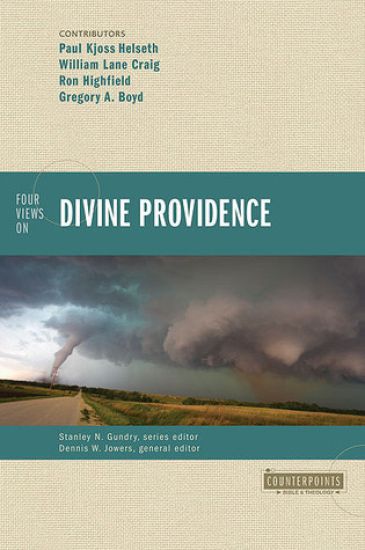
Questions about divine providence have preoccupied Christians for generations: to what degree does God concern himself with and intervene in the affairs of everyday life? This book introduces readers to four prevailing views on divine providence, with particular attention to the questions of human free will, the problem of evil, and God's perception of time. Volume contributors and their basic viewpoints are: Paul Helseth - God causes every creaturely event that occurs. William Lane Craig - through his "middle knowledge," God controls the course of worldly affairs without predetermining any creatures' free decisions. Ron Highfield - God controls creatures by liberating their decision-making. Gregory Boyd - human decisions can be free only if God neither determines nor knows what they will be. Introductory and closing essays by Dennis Jowers give relevant background and guide readers toward their own informed beliefs about divine providence. Four Views on Divine Providence helps readers think theologically and biblically about all the issues involved in exploring this doctrine. The point-counterpoint format reveals the assumptions and considerations that drive equally learned and sincere theologians to disagreement with each other. It unearths the genuinely decisive issues beneath a philosophically dense debate. The Counterpoints series presents a comparison and critique of scholarly views on topics important to Christians that are both fair-minded and respectful of the biblical text. Each volume is a one-stop reference that allows readers to evaluate the different positions on a specific issue and form their own, educated opinion.
Perfect as a textbook yet excellent for lay readers, this updated edition builds a positive case for Christianity by applying the latest thought to core theological themes. J. Gresham Machen once said, "False ideas are the greatest obstacles to the reception of the gospel"-which makes apologetics that much more important. Wanting to engage not just academics and pastors but Christian laypeople and seekers, William Lane Craig has revised and updated key sections in this third edition of his classic text to reflect the latest work in astrophysics, philosophy, probability calculus, the arguments for the existence of God, and Reformed epistemology. His approach-that of positive apologetics-gives careful attention to crucial questions and concerns, including: the relationship of faith and reason, the existence of God, the problems of historical knowledge and miracles, the personal claims of Christ, and the historicity of the resurrection of Jesus. He shows that there is good reason to think Christianity is true. As Craig says, "If you have a sound and persuasive case for Christianity, you don't have to become an expert in comparative religions and Christian cults. A positive justification of the Christian faith automatically overwhelms all competing world views lacking an equally strong case."
The Christian church has historically believed that God created the universe out of nothing. But some theologians and non-Christian groups believe that the universe has always existed along with God. Who is correct? Does it matter? In Creation out of Nothing, authors Paul Copan and William Lane Craig examine the biblical, philosophical, and scientific case for creation out of nothing. Furthermore, they make it clear that nothing less than the uniqueness and sovereignty of God are at stake. This book will challenge all thoughtful Christians to understand why it is important to believe in the doctrine of creation out of nothing.
Why doesn’ t God answer my prayers? If God is so powerful, why does evil exist? And if He is so good, why do we suffer? Nonbelievers, and even Christians, are often troubled by questions about suffering, doubt, failure, and unanswered prayer. Yet careful, compassionate answers are hard to find, in part because evangelicals have not taken the life of the mind seriously enough. The intellectual currents of our day are just too strong for simplistic responses. In Hard Questions, Real Answers, William Lane Craig doesn’ t offer trite phrases or pat answers— he offers honest insights gained from a life of study and ministry. Readers in the midst of doubt and confusion will find real answers to these perplexing questions and learn to stand on the only sure foundation for hope— God Himself. This expanded new edition includes chapters on abortion and homosexuality to help readers know how to think about these volatile social issues.