Kirjojen hintavertailu – 12 859 829 kirjaa ja 27 kauppaa

Kirjailija

William Lloyd Garrison

Kirjat ja teokset yhdessä paikassa: 66 kirjaa, julkaisuja vuosilta 1971–2026, suosituimpiin kuuluu Joseph Mazzini his Life, Writings, and Political Principles. Vertaile teosten hintoja ja tarkista saatavuus suomalaisista kirjakaupoista.

66 kirjaa

Kirjojen julkaisuvuodet: 1971–2026.

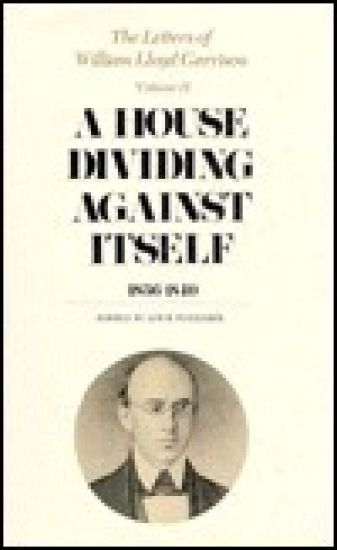
The Letters of William Lloyd Garrison

The Letters of William Lloyd Garrison

William Lloyd Garrison

Harvard University Press
1974
sidottu
As early as 1842 Garrison advanced the idea of disunion, arguing that the Constitution was "a covenant with death." Distressed by Calhoun's signing of the annexation treaty for Texas, he prophesied that civil war was inevitable. Though plagued by illness and death in his immediate family throughout the years covered in this volume, Garrison drove himself to win supporters for the radical abolitionist cause. In 1846 he traveled to Great Britain, denouncing the Free Church of Scotland for accepting funds from South Carolina. While in England he lectured often with Frederick Douglass; the two embarked the following year on a grueling lecture tour of the western United States, heretofore the exclusive domain of moderate abolitionists. In 1848, despite the objections of close friends, Garrison held the controversial Anti-Sabbath Convention in Boston. Throughout these years he continued to write extensively for the Liberator and involved himself in a variety of liberal causes; in 1849 he publicized and circulated in Massachusetts the earliest petition for women's suffrage.
The Letters of William Lloyd Garrison

The Letters of William Lloyd Garrison

William Lloyd Garrison

Harvard University Press
1971
sidottu
William Lloyd Garrison (1805-1879), outstanding among the dedicated fighters for the abolition of slavery, was also an activist in other movements such as women's and civil rights and religious reform. Never tiring in battle, he was "irrepressible, uncompromising, and inflammatory." He antagonized many, including some of his fellow reformers. There were also many who loved and respected him. But he was never overlooked. His letters, a source of the first magnitude, begin in 1822, when Garrison was seventeen, and end in 1879, the year of his death. They offer an insight into the mind and life of an outstanding figure in American history, a reformer-revolutionary who sought radical changes in the institutions of his day--in the relationship of the races, the rights of women, the nature and role of religion and religious institutions, and the relations between the state and its citizens; and who, perhaps more than any other single individual, was ultimately responsible for the emancipation of the slaves. Garrison's letters are also, sui generis, important as the expression of a vigorous writer, whose letters reflect his strength of character and warm humanity, and who appears here not only as the journalist, the reformer, and the leader of men, but also as the loving husband and father, the devoted son and son-in-law, the staunch friend, and the formidable opponent. During the five years covered in this volume Garrison's three sons were born and he entered the arena of social reform with full force. In 1836 he began his public criticism of the orthodox observance of the Sabbath. The year 1837 witnessed the severe attack from orthodox clergyman on The Liberator. In 1838 Garrison attended the Peace Convention in Boston. The simmering conflict within the antislavery movement over the issues of political action and the participation of women broke out in 1839, and at the annual meeting of the American Anti-Slavery Society in 1840, the anti-Garrisonian minority seceded and formed the American and Foreign Anti-Slavery Society. Meanwhile the World's Anti-Slavery Convention was called in London in June. Garrison attended, arriving several days after the opening. The female delegates from Massachusetts and Pennsylvania were excluded from the convention, and Garrison protested by sitting in the balcony with them and refusing to participate.

The Letters of William Lloyd Garrison

The Letters of William Lloyd Garrison

William Lloyd Garrison

Harvard University Press
1971
sidottu
William Lloyd Garrison (1805-1879), outstanding among the dedicated fighters for the abolition of slavery, was also an activist in other movements such as women's and civil rights and religious reform. Never tiring in battle, he was "irrepressible, uncompromising, and inflammatory." He antagonized many, including some of his fellow reformers. There were also many who loved and respected him. But he was never overlooked. His letters, a source of the first magnitude, begin in 1822, when Garrison was seventeen, and end in 1879, the year of his death. They offer an insight into the mind and life of an outstanding figure in American history, a reformer-revolutionary who sought radical changes in the institutions of his day--in the relationship of the races, the rights of women, the nature and role of religion and religious institutions, and the relations between the state and its citizens; and who, perhaps more than any other single individual, was ultimately responsible for the emancipation of the slaves. Garrison's letters are also, sui generis, important as the expression of a vigorous writer, whose letters reflect his strength of character and warm humanity, and who appears here not only as the journalist, the reformer, and the leader of men, but also as the loving husband and father, the devoted son and son-in-law, the staunch friend, and the formidable opponent. Included in this well illustrated first volume are Garrison's letters from the earliest known--one to his mother during his apprenticeship--through the 1831 founding of his famous newspaper, The Liberator; the founding in 1832 and 1833 of the New England and the American Anti-Slavery Societies; his first trip to England to meet with British abolitionists; his courtship and marriage; and his being dragged through the streets of Boston by a mob out to tar and feather the British abolitionist George Thompson.