
Kirjailija
William Makepeace Thackeray
Kirjat ja teokset yhdessä paikassa: 1 226 kirjaa, julkaisuja vuosilta 1991–2027, suosituimpiin kuuluu Catherine. Vertaile teosten hintoja ja tarkista saatavuus suomalaisista kirjakaupoista.
1 226 kirjaa
Kirjojen julkaisuvuodet: 1991–2027.
A Little Dinner at Timmins's
William Makepeace Thackeray
Createspace Independent Publishing Platform
2017
nidottu

Die vier George: Zeit, Hof, und Sittenbilder - Erster Band ist ein unver nderter, hochwertiger Nachdruck der Originalausgabe aus dem Jahr 1862. Hansebooks ist Herausgeber von Literatur zu unterschiedlichen Themengebieten wie Forschung und Wissenschaft, Reisen und Expeditionen, Kochen und Ern hrung, Medizin und weiteren Genres. Der Schwerpunkt des Verlages liegt auf dem Erhalt historischer Literatur. Viele Werke historischer Schriftsteller und Wissenschaftler sind heute nur noch als Antiquit ten erh ltlich. Hansebooks verlegt diese B cher neu und tr gt damit zum Erhalt selten gewordener Literatur und historischem Wissen auch f r die Zukunft bei.


Die vier George - Zeit, Hof und Sittenbilder ist ein unver nderter, hochwertiger Nachdruck der Originalausgabe aus dem Jahr 1862. Hansebooks ist Herausgeber von Literatur zu unterschiedlichen Themengebieten wie Forschung und Wissenschaft, Reisen und Expeditionen, Kochen und Ern hrung, Medizin und weiteren Genres. Der Schwerpunkt des Verlages liegt auf dem Erhalt historischer Literatur. Viele Werke historischer Schriftsteller und Wissenschaftler sind heute nur noch als Antiquit ten erh ltlich. Hansebooks verlegt diese B cher neu und tr gt damit zum Erhalt selten gewordener Literatur und historischem Wissen auch f r die Zukunft bei.

Vanity Fair Vol I: A Novel Without a Hero
William Makepeace Thackeray
Createspace Independent Publishing Platform
2017
nidottu
Vanity Fair Vol II: A Novel Without a Hero
William Makepeace Thackeray
Createspace Independent Publishing Platform
2017
nidottu
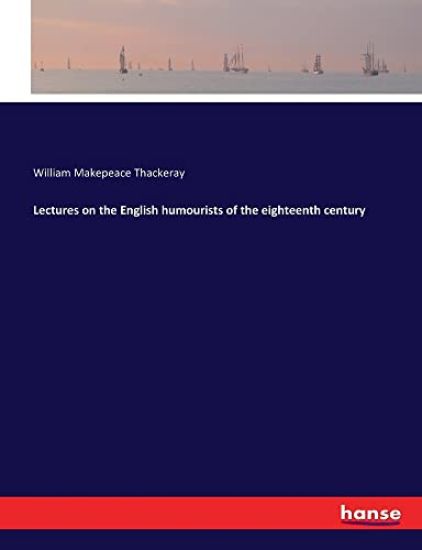
Lectures on the English humourists of the eighteenth century
William Makepeace Thackeray
Hansebooks
2017
pokkari
Lectures on the English humourists of the eighteenth century ist ein unver nderter, hochwertiger Nachdruck der Originalausgabe aus dem Jahr 1885. Hansebooks ist Herausgeber von Literatur zu unterschiedlichen Themengebieten wie Forschung und Wissenschaft, Reisen und Expeditionen, Kochen und Ern hrung, Medizin und weiteren Genres. Der Schwerpunkt des Verlages liegt auf dem Erhalt historischer Literatur. Viele Werke historischer Schriftsteller und Wissenschaftler sind heute nur noch als Antiquit ten erh ltlich. Hansebooks verlegt diese B cher neu und tr gt damit zum Erhalt selten gewordener Literatur und historischem Wissen auch f r die Zukunft bei.


Die Virginier - eine Erzählung aus dem vorigen Jahrhundert
William Makepeace Thackeray
Hansebooks
2017
pokkari
Die Virginier - eine Erz hlung aus dem vorigen Jahrhundert ist ein unver nderter, hochwertiger Nachdruck der Originalausgabe aus dem Jahr 1860. Hansebooks ist Herausgeber von Literatur zu unterschiedlichen Themengebieten wie Forschung und Wissenschaft, Reisen und Expeditionen, Kochen und Ern hrung, Medizin und weiteren Genres. Der Schwerpunkt des Verlages liegt auf dem Erhalt historischer Literatur. Viele Werke historischer Schriftsteller und Wissenschaftler sind heute nur noch als Antiquit ten erh ltlich. Hansebooks verlegt diese B cher neu und tr gt damit zum Erhalt selten gewordener Literatur und historischem Wissen auch f r die Zukunft bei.

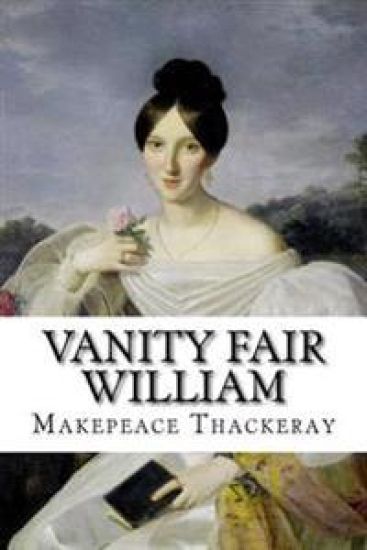
Vanity Fair William Makepeace Thackeray
William Makepeace Thackeray
Createspace Independent Publishing Platform
2016
nidottu
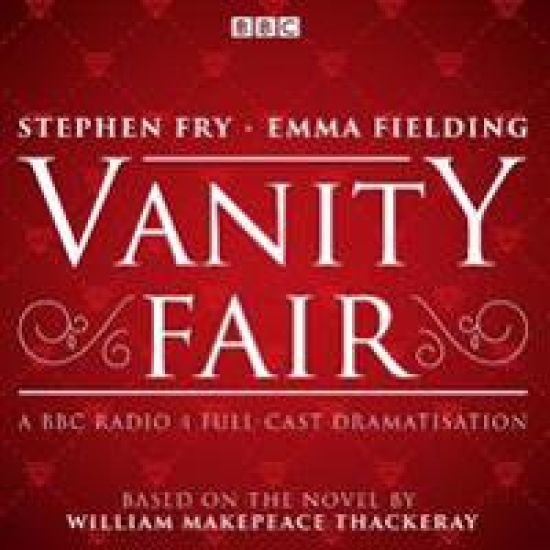
Stephen Fry narrates this BBC Radio 4 full-cast dramatisation of the famous Victorian comic novel. Orphan Becky Sharp and wealthy Amelia Sedley are best friends at Miss Pinkerton's Academy for Young Ladies. On leaving school, ambitious, social-climbing Becky looks for a rich man to support her, while the sweet-natured Amelia meets her old friend Dobbin, who is instantly captivated. Becky takes a job in the service of Sir Pitt Crawley, and uses her charm to hook his dashing son. However, marriage to Captain Rawdon of the Guards does not provide the fortune she seeks. Meanwhile, Amelia rejects the faithful Dobbin and becomes engaged to the handsome George Osborne – but destiny has some shocks in store for her, too. As time goes by, the girls' fortunes rise and fall. War, financial disaster and the ruin of her reputation leave the resourceful Becky undaunted, but Amelia finds it harder to bear fate's blows. It will be many years before their story is played out, and their futures finally decided... William Makepeace Thackeray's classic satire of passion and ambition, first published in 1847 and 1848, is a deliciously ironic portrait of English society and its mores. This engaging 2004 radio production, published for the first time on audio, features a distinguished cast including Emma Fielding as Becky Sharp, Katy Cavanagh as Amelia and Toby Jones as Jos Sedley. Duration: 5 hours approx
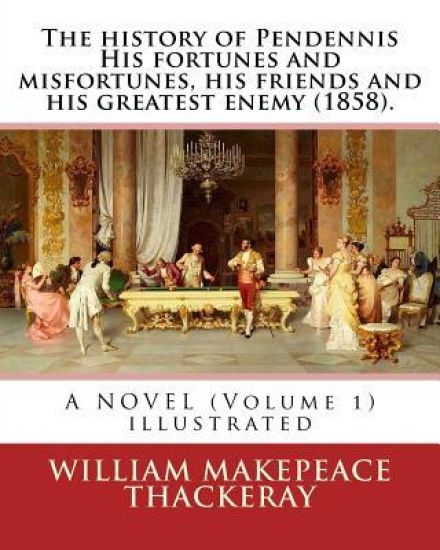
The history of Pendennis His fortunes and misfortunes, his friends and his greatest enemy (1858). A NOVEL (Volume 1): By: William Makepeace Thackeray
William Makepeace Thackeray
Createspace Independent Publishing Platform
2016
nidottu
Written immediately after Vanity Fair, Pendennis has a similar atmosphere of brooding disillusion, tempered by the most jovial of wits. But here Thackeray plunders his own past to create the character of Pendennis and the world in which he lives: from miserable schoolboy to striving journalist, from carefree Oxbridge to the high (and low) life of London. The result is a superbly panoramic blend of people, action and background. The true ebb and flow of life is caught and the credibility of Pen, his worldly uncle, the Major, and many of the other characters, extends far beyond the pages of the novel. Held together by Thackeray's flowing, confident prose, with its conversational ease of tone, Pendennis is as rich a portrait of England in the 1830s and 40s as it is a thorough and thoroughly entertaining self-portrait. ... William Makepeace Thackeray ( 18 July 1811 - 24 December 1863) was an English novelist of the 19th century. He is famous for his satirical works, particularly Vanity Fair, a panoramic portrait of English society. Thackeray, an only child, was born in Calcutta, British India, where his father, Richmond Thackeray (1 September 1781 - 13 September 1815), was secretary to the Board of Revenue in the British East India Company. His mother, Anne Becher (1792-1864), was the second daughter of Harriet Becher and John Harman Becher, who was also a secretary (writer) for the East India Company. Richmond died in 1815, which caused Anne to send her son to England in 1816, while she remained in British India. The ship on which he travelled made a short stopover at St. Helena, where the imprisoned Napoleon was pointed out to him. Once in England he was educated at schools in Southampton and Chiswick, and then at Charterhouse School, where he became a close friend of John Leech. Thackeray disliked Charterhouse, and parodied it in his fiction as "Slaughterhouse". Nevertheless, Thackeray was honoured in the Charterhouse Chapel with a monument after his death. Illness in his last year there, during which he reportedly grew to his full height of six foot three, postponed his matriculation at Trinity College, Cambridge, until February 1829. Never too keen on academic studies, Thackeray left Cambridge in 1830, but some of his earliest published writing appeared in two university periodicals, The Snob and The Gownsman. Thackeray then travelled for some time on the continent, visiting Paris and Weimar, where he met Goethe. He returned to England and began to study law at the Middle Temple, but soon gave that up. On reaching the age of 21 he came into his inheritance from his father, but he squandered much of it on gambling and on funding two unsuccessful newspapers, The National Standard and The Constitutional, for which he had hoped to write. He also lost a good part of his fortune in the collapse of two Indian banks. Forced to consider a profession to support himself, he turned first to art, which he studied in Paris, but did not pursue it, except in later years as the illustrator of some of his own novels and other writings. Thackeray's years of semi-idleness ended after he married, on 20 August 1836, Isabella Gethin Shawe (1816-1893), second daughter of Isabella Creagh Shawe and Matthew Shawe, a colonel who had died after distinguished service, primarily in India. The Thackerays had three children, all girls: Anne Isabella (1837-1919), Jane (who died at eight months old) and Harriet Marian (1840-1875), who married Sir Leslie Stephen, editor, biographer and philosopher......
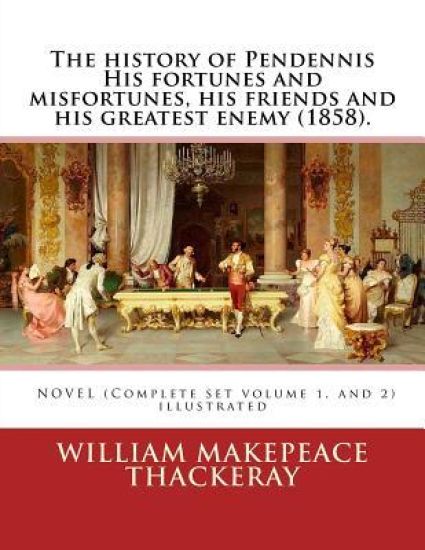
The history of Pendennis His fortunes and misfortunes, his friends and his greatest enemy (1858). A NOVEL (Complete set volume 1, and 2): By: William
William Makepeace Thackeray
Createspace Independent Publishing Platform
2016
nidottu
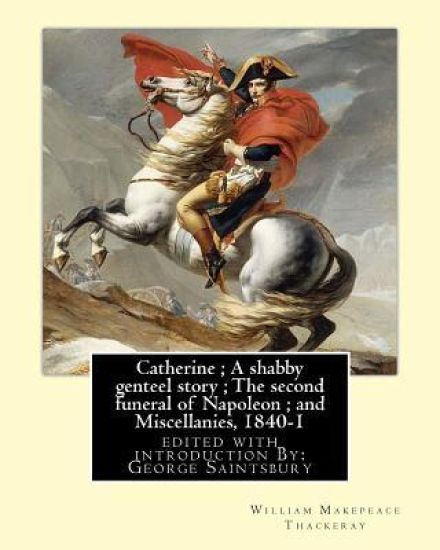
Catherine; A shabby genteel story; The second funeral of Napoleon; and Miscellanies, 1840-1: By: William Makepeace Thackeray, edited with introduction
George Saintsbury; William Makepeace Thackeray
Createspace Independent Publishing Platform
2016
nidottu
William Makepeace Thackeray ( 18 July 1811 - 24 December 1863) was an English novelist of the 19th century. He is famous for his satirical works, particularly Vanity Fair, a panoramic portrait of English society. Thackeray, an only child, was born in Calcutta, British India, where his father, Richmond Thackeray (1 September 1781 - 13 September 1815), was secretary to the Board of Revenue in the British East India Company. His mother, Anne Becher (1792-1864), was the second daughter of Harriet Becher and John Harman Becher, who was also a secretary (writer) for the East India Company. Richmond died in 1815, which caused Anne to send her son to England in 1816, while she remained in British India. The ship on which he travelled made a short stopover at St. Helena, where the imprisoned Napoleon was pointed out to him. Once in England he was educated at schools in Southampton and Chiswick, and then at Charterhouse School, where he became a close friend of John Leech. Thackeray disliked Charterhouse, and parodied it in his fiction as "Slaughterhouse". Nevertheless, Thackeray was honoured in the Charterhouse Chapel with a monument after his death. Illness in his last year there, during which he reportedly grew to his full height of six foot three, postponed his matriculation at Trinity College, Cambridge, until February 1829. Never too keen on academic studies, Thackeray left Cambridge in 1830, but some of his earliest published writing appeared in two university periodicals, The Snob and The Gownsman. Thackeray then travelled for some time on the continent, visiting Paris and Weimar, where he met Goethe. He returned to England and began to study law at the Middle Temple, but soon gave that up. On reaching the age of 21 he came into his inheritance from his father, but he squandered much of it on gambling and on funding two unsuccessful newspapers, The National Standard and The Constitutional, for which he had hoped to write. He also lost a good part of his fortune in the collapse of two Indian banks. Forced to consider a profession to support himself, he turned first to art, which he studied in Paris, but did not pursue it, except in later years as the illustrator of some of his own novels and other writings. Thackeray's years of semi-idleness ended after he married, on 20 August 1836, Isabella Gethin Shawe (1816-1893), second daughter of Isabella Creagh Shawe and Matthew Shawe, a colonel who had died after distinguished service, primarily in India. The Thackerays had three children, all girls: Anne Isabella (1837-1919), Jane (who died at eight months old) and Harriet Marian (1840-1875), who married Sir Leslie Stephen, editor, biographer and philosopher. Thackeray now began "writing for his life", as he put it, turning to journalism in an effort to support his young family. He primarily worked for Fraser's Magazine, a sharp-witted and sharp-tongued conservative publication for which he produced art criticism, short fictional sketches, and two longer fictional works, Catherine and The Luck of Barry Lyndon. Between 1837 and 1840 he also reviewed books for The Times. 4] He was also a regular contributor to The Morning Chronicle and The Foreign Quarterly Review. Later, through his connection to the illustrator John Leech, he began writing for the newly created magazine Punch, in which he published The Snob Papers, later collected as The Book of Snobs. This work popularised the modern meaning of the word "snob". Thackeray was a regular contributor to Punch between 1843 and 1854. George Edward Bateman Saintsbury ( 23 October 1845 - 28 January 1933), was an English writer, literary historian, scholar, critic and wine connoisseur.
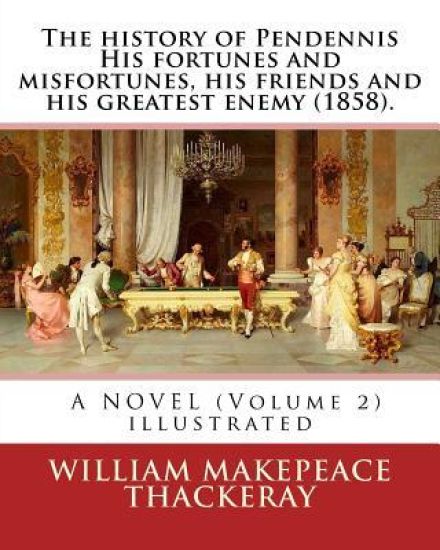
The history of Pendennis His fortunes and misfortunes, his friends and his greatest enemy (1858). A NOVEL (Volume 2): By: William Makepeace Thackeray
William Makepeace Thackeray
Createspace Independent Publishing Platform
2016
nidottu
Written immediately after Vanity Fair, Pendennis has a similar atmosphere of brooding disillusion, tempered by the most jovial of wits. But here Thackeray plunders his own past to create the character of Pendennis and the world in which he lives: from miserable schoolboy to striving journalist, from carefree Oxbridge to the high (and low) life of London. The result is a superbly panoramic blend of people, action and background. The true ebb and flow of life is caught and the credibility of Pen, his worldly uncle, the Major, and many of the other characters, extends far beyond the pages of the novel. Held together by Thackeray's flowing, confident prose, with its conversational ease of tone, Pendennis is as rich a portrait of England in the 1830s and 40s as it is a thorough and thoroughly entertaining self-portrait. ........ William Makepeace Thackeray ( 18 July 1811 - 24 December 1863) was an English novelist of the 19th century. He is famous for his satirical works, particularly Vanity Fair, a panoramic portrait of English society. Thackeray, an only child, was born in Calcutta, British India, where his father, Richmond Thackeray (1 September 1781 - 13 September 1815), was secretary to the Board of Revenue in the British East India Company. His mother, Anne Becher (1792-1864), was the second daughter of Harriet Becher and John Harman Becher, who was also a secretary (writer) for the East India Company. Richmond died in 1815, which caused Anne to send her son to England in 1816, while she remained in British India. The ship on which he travelled made a short stopover at St. Helena, where the imprisoned Napoleon was pointed out to him. Once in England he was educated at schools in Southampton and Chiswick, and then at Charterhouse School, where he became a close friend of John Leech. Thackeray disliked Charterhouse, and parodied it in his fiction as "Slaughterhouse". Nevertheless, Thackeray was honoured in the Charterhouse Chapel with a monument after his death. Illness in his last year there, during which he reportedly grew to his full height of six foot three, postponed his matriculation at Trinity College, Cambridge, until February 1829. Never too keen on academic studies, Thackeray left Cambridge in 1830, but some of his earliest published writing appeared in two university periodicals, The Snob and The Gownsman. Thackeray then travelled for some time on the continent, visiting Paris and Weimar, where he met Goethe. He returned to England and began to study law at the Middle Temple, but soon gave that up. On reaching the age of 21 he came into his inheritance from his father, but he squandered much of it on gambling and on funding two unsuccessful newspapers, The National Standard and The Constitutional, for which he had hoped to write. He also lost a good part of his fortune in the collapse of two Indian banks. Forced to consider a profession to support himself, he turned first to art, which he studied in Paris, but did not pursue it, except in later years as the illustrator of some of his own novels and other writings. Thackeray's years of semi-idleness ended after he married, on 20 August 1836, Isabella Gethin Shawe (1816-1893), second daughter of Isabella Creagh Shawe and Matthew Shawe, a colonel who had died after distinguished service, primarily in India. The Thackerays had three children, all girls: Anne Isabella (1837-1919), Jane (who died at eight months old) and Harriet Marian (1840-1875), who married Sir Leslie Stephen, editor, biographer and philosopher..........
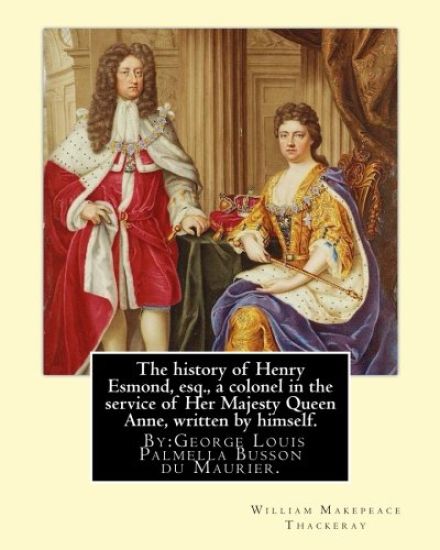
The history of Henry Esmond, esq., a colonel in the service of Her Majesty Queen Anne, written by himself. By: William Makepeace Thackeray: and By: Ge
George Du Maurier; William Makepeace Thackeray
Createspace Independent Publishing Platform
2016
nidottu
William Makepeace Thackeray ( 18 July 1811 - 24 December 1863) was an English novelist of the 19th century. He is famous for his satirical works, particularly Vanity Fair, a panoramic portrait of English society. Thackeray, an only child, was born in Calcutta, British India, where his father, Richmond Thackeray (1 September 1781 - 13 September 1815), was secretary to the Board of Revenue in the British East India Company. His mother, Anne Becher (1792-1864), was the second daughter of Harriet Becher and John Harman Becher, who was also a secretary (writer) for the East India Company. Richmond died in 1815, which caused Anne to send her son to England in 1816, while she remained in British India. The ship on which he travelled made a short stopover at St. Helena, where the imprisoned Napoleon was pointed out to him. Once in England he was educated at schools in Southampton and Chiswick, and then at Charterhouse School, where he became a close friend of John Leech. Thackeray disliked Charterhouse, and parodied it in his fiction as "Slaughterhouse". Nevertheless, Thackeray was honoured in the Charterhouse Chapel with a monument after his death. Illness in his last year there, during which he reportedly grew to his full height of six foot three, postponed his matriculation at Trinity College, Cambridge, until February 1829. Never too keen on academic studies, Thackeray left Cambridge in 1830, but some of his earliest published writing appeared in two university periodicals, The Snob and The Gownsman. Thackeray then travelled for some time on the continent, visiting Paris and Weimar, where he met Goethe. He returned to England and began to study law at the Middle Temple, but soon gave that up. On reaching the age of 21 he came into his inheritance from his father, but he squandered much of it on gambling and on funding two unsuccessful newspapers, The National Standard and The Constitutional, for which he had hoped to write. He also lost a good part of his fortune in the collapse of two Indian banks. Forced to consider a profession to support himself, he turned first to art, which he studied in Paris, but did not pursue it, except in later years as the illustrator of some of his own novels and other writings. Thackeray's years of semi-idleness ended after he married, on 20 August 1836, Isabella Gethin Shawe (1816-1893), second daughter of Isabella Creagh Shawe and Matthew Shawe, a colonel who had died after distinguished service, primarily in India. The Thackerays had three children, all girls: Anne Isabella (1837-1919), Jane (who died at eight months old) and Harriet Marian (1840-1875), who married Sir Leslie Stephen, editor, biographer and philosopher. Thackeray now began "writing for his life", as he put it, turning to journalism in an effort to support his young family. He primarily worked for Fraser's Magazine, a sharp-witted and sharp-tongued conservative publication for which he produced art criticism, short fictional sketches, and two longer fictional works, Catherine and The Luck of Barry Lyndon. Between 1837 and 1840 he also reviewed books for The Times. 4] He was also a regular contributor to The Morning Chronicle and The Foreign Quarterly Review. Later, through his connection to the illustrator John Leech, he began writing for the newly created magazine Punch, in which he published The Snob Papers, later collected as The Book of Snobs. This work popularised the modern meaning of the word "snob". Thackeray was a regular contributor to Punch between 1843 and 1854. George Louis Palmella Busson du Maurier (6 March 1834 - 8 October 1896) was a Franco-British cartoonist and author, known for his cartoons in Punch and for his novel Trilby. He was the father of actor Sir Gerald du Maurier and grandfather of writers Angela du Maurier and Dame Daphne du Maurier. He was also the father of Sylvia Llewelyn Davies and grandfather of the five boys who inspired J. M. Barrie's Peter Pan.