Kirjojen hintavertailu – 12 859 824 kirjaa ja 27 kauppaa
Kirjailija
William Shakespeare
Kirjat ja teokset yhdessä paikassa: 4 976 kirjaa, julkaisuja vuosilta 1798–2027, suosituimpiin kuuluu Hamlet. Vertaile teosten hintoja ja tarkista saatavuus suomalaisista kirjakaupoista.
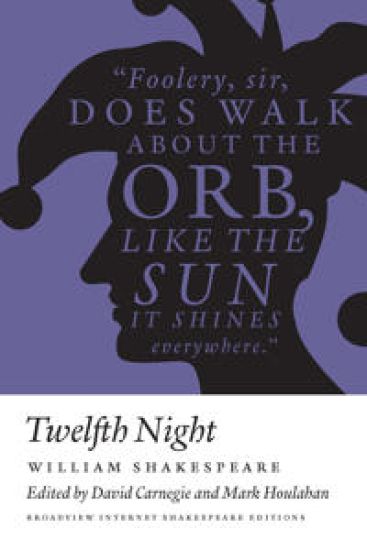
Twelfth Night has seldom been off the stage since Shakespeare's day. It has been performed for its romantic high comedy and its boisterous low comedy; with an emphasis on farce or on autumnal melancholy; as straightforward celebration of heterosexual love and marriage or as exploration of the complexity of gender. David Carnegie and Mark Houlahan's introduction to the play provides a lively discussion of the play's performance history, and encourages readers to think about stagecraft and the play as a performance text, while the historical appendices provide materials that illuminate different thematic elements of the play. Extended notes interleaved throughout the play present relevant illustrations and expand on mythological, historical, and religious references in the play. The accompanying online text will offer additional commentary on staging alternatives and more extensive visual materials.
La representaci n y puesta en escena comienza con una disputa callejera entre los Montesco y los Capuleto. El pr ncipe de Verona, Della Escala, interviene entre ellos y declara un acuerdo de paz que en caso de ser violado habr a de ser pagado con la muerte. Despu s de los sucesos, el conde Paris se re ne con el se or Capuleto para conversar sobre la idea de contraer matrimonio con su hija, pero Capuleto le pide que espere durante un plazo de dos a os m s, tiempo tras el cual Julieta cumplir a quince a os. Aprovechando el ofrecimiento, le sugiere que organice un baile familiar de car cter formal para celebrar tal acontecimiento. Mientras tanto, la se ora Capuleto y la nodriza de Julieta, intentan convencer a la joven de que acepte casarse con Paris.
A Midsummer Night's Dream is a comedy play by William Shakespeare, believed to have been written between 1590 and 1596. It portrays the events surrounding the marriage of the Duke of Athens, Theseus, and Hippolyta. These include the adventures of four young Athenian lovers and a group of six amateur actors (mechanicals), who are controlled and manipulated by the fairies who inhabit the forest in which most of the play is set. The play consists of four interconnecting plots, connected by a celebration of the wedding of Duke Theseus of Athens and the Amazon queen, Hippolyta, which is set simultaneously in the woodland and in the realm of Fairyland, under the light of the moon. The play opens with Hermia, who is in love with Lysander, resistant to her father Egeus' demand that she wed Demetrius, whom he has arranged for her to marry. Helena meanwhile pines unrequitedly for Demetrius. Enraged, Egeus invokes an ancient Athenian law before Duke Theseus, whereby a daughter needs to marry a suitor chosen by her father, or else face death. Theseus offers her another choice: lifelong chastity while worshipping the goddess Artemis as a nun. Peter Quince and his fellow players Nick Bottom, Francis Flute, Robin Starveling, Tom Snout, and Snug plan to put on a play for the wedding of the Duke and the Queen, "the most lamentable comedy and most cruel death of Pyramus and Thisbe." Quince reads the names of characters and bestows them on the players. Nick Bottom, who is playing the main role of Pyramus, is over-enthusiastic and wants to dominate others by suggesting himself for the characters of Thisbe, the Lion, and Pyramus at the same time. He would also rather be a tyrant and recites some lines of Ercles. Bottom is told by Quince that he would do the Lion so terribly as to frighten the duchess and ladies enough for the Duke and Lords to have the players hanged. Quince ends the meeting with "at the Duke's oak we meet." The play is one of Shakespeare's most popular works for the stage and is widely performed across the world.
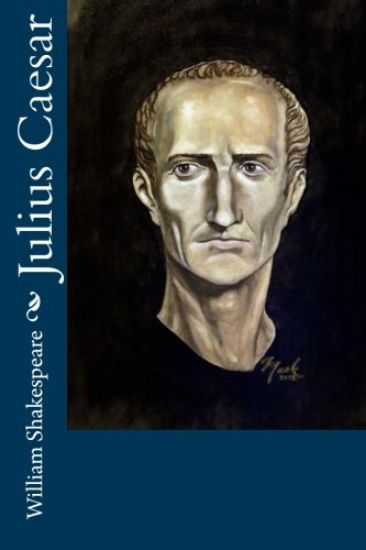
The Tragedy of Julius Caesar is a tragedy by William Shakespeare, believed to have been written in 1599. It portrays the 44 BC conspiracy against the Roman dictator Julius Caesar, his assassination and the defeat of the conspirators at the Battle of Philippi. It is one of several plays written by Shakespeare based on true events from Roman history, which also include Coriolanus and Antony and Cleopatra. The play opens with two tribunes discovering the commoners of Rome celebrating Julius Caesar's triumphant return from defeating the sons of his military rival, Pompey. The tribunes, insulting the crowd for their change in loyalty from Pompey to Caesar, attempt to end the festivities and break up the commoners, who return the insults. During the feast of Lupercal, Caesar holds a victory parade and a soothsayer warns him to "Beware the ides of March", which he ignores. Meanwhile, Cassius attempts to convince Brutus to join his conspiracy to kill Caesar. Although Brutus, friendly towards Caesar, is hesitant to kill him, he agrees that Caesar may be abusing his power. They then hear from Casca that Mark Antony has offered Caesar the crown of Rome three times and that each time Caesar refused it with increasing reluctance. On the eve of the ides of March, the conspirators meet and reveal that they have forged letters of support from the Roman people to tempt Brutus into joining. Brutus reads the letters and, after much moral debate, decides to join the conspiracy, thinking that Caesar should be killed to prevent him from doing anything against the people of Rome if he were ever to be crowned. After ignoring the soothsayer, as well as his wife Calpurnia's own premonitions, Caesar goes to the Senate. The conspirators approach him with a fake petition pleading on behalf of Metellus Cimber's banished brother. As Caesar predictably rejects the petition, Casca and the others suddenly stab him; Brutus is last. At this point, Caesar utters the famous line "Et tu, Brute?" 2] ("And you, Brutus?", i.e. "You too, Brutus?"), concluding with "Then fall, Caesar " The conspirators make clear that they committed this murder for the good of Rome, not for their own purposes, and do not attempt to flee the scene. Brutus delivers an oration defending his own actions, and for the moment, the crowd is on his side. However, Mark Antony makes a subtle and eloquent speech over Caesar's corpse, beginning with the much-quoted "Friends, Romans, countrymen, lend me your ears " 3] In this way, he deftly turns public opinion against the assassins by manipulating the emotions of the common people, in contrast to the rational tone of Brutus's speech, yet there is method in his rhetorical speech and gestures: he reminds them of the good Caesar had done for Rome, his sympathy with the poor, and his refusal of the crown at the Lupercal, thus questioning Brutus's claim of Caesar's ambition; he shows Caesar's bloody, lifeless body to the crowd to have them shed tears and gain sympathy for their fallen hero; and he reads Caesar's will, in which every Roman citizen would receive 75 drachmas. Antony, even as he states his intentions against it, rouses the mob to drive the conspirators from Rome. Amid the violence, an innocent poet, Cinna, is confused with the conspirator Lucius Cinna and is taken by the mob, which kills him for such "offenses" as his bad verses. Brutus next attacks Cassius for supposedly soiling the noble act of regicide by having accepted bribes. ("Did not great Julius bleed for justice' sake? / What villain touch'd his body, that did stab, / And not for justice?" 4]) The two are reconciled, especially after Brutus reveals that his beloved wife committed suicide under the stress of his absence from Rome; they prepare for a civil war against Mark Antony and Caesar's adopted son, Octavius, who have formed a triumvirate in Rome with Lepidus. That night, Caesar's ghost appears to Brutus with a warning of defeat.
The Beautiful Reader's Editions presents William Shakespeare's Romeo and Juliet with gorgeous illustrations and easy-to-read typography. This volume delights the eye and lovingly frames the poetic beauty of the classic play. The text is a restored version of the 1599 2nd Quarto. The 2nd Quarto was considered the first "good" published version of Romeo and Juliet and was printed during Shakespeare's lifetime. Verses that had wandered away over the centuries have been given their proper place. Jokes that blushing Victorian hands edited or removed have been brought back to their full baudy glory. This is both the play you know and love, and a play you have never read before. The book is a reader's paradise and cleans away much of the traditional academic fluff and detritis. It focuses on the rich humor and poetic jewels of the brilliant original and avoids, as far as possible, pedantic literary selfies inserted by nervous, pre-tenure dons and donas. It is the perfect gift for the bardophile in your life and will be a treasured addition to any library. IMPORTANT NOTE: Barbara A. Mowat has no association with this edition and is not the author. Some reviews and page screen shots submitted by readers below are for other publishers and were placed by Amazon's algorithms on this page. Amazon has been notified of the error. Be sure to check the edition of each review as it may apply to another book entirely.
Hamlet, hijo del difunto rey de Dinamarca, se siente melanc lico y abatido por las cosas del mundo. Su madre se ha casado con Claudio (el hermano de su padre), el nuevo rey, y Hamlet deambula por el palacio lleno de sospechas y dudas. Dos meses despu s de la muerte de su padre, Hamlet es visitado por el fantasma de su padre y le informa que ha sido asesinado por Claudio para llegar a ser rey y casarse con su madre. A Hamlet le corresponde la venganza del asesinato, pero se angustia entre la acci n y la duda y busca excusas para posponer la venganza. Se finge loco para que la gente no sospeche de lo que trama en secreto. Polonio, el chambel n de la corte, cree que la locura de Hamlet se debe a la prohibici n de que cortejase a su hija Ofelia. Hamlet aprovecha la visita de una compa a de actores a la corte para descubrir si el mensaje del fantasma es verdadero. Se reproduce en escena el asesinato de su padre y estudia las reacciones del rey Claudio. Hamlet se convence de que el fantasma ha dicho la verdad. Claudio advierte que su crimen ha sido descubierto y planifica una misi n diplom tica para enviar a Hamlet a Inglaterra. Hamlet censura a su madre, Gertrudis, y durante la conversaci n, al ponerse en evidencia un esp a con una certera estocada, Hamlet mata a Polonio que estaba escondido tras unos cortinajes. El rey teme por su vida y env a a Hamlet a Inglaterra acompa ado de dos mercenarios que llevan encargo de convencer al rey de Inglaterra para que ejecute al pr ncipe. Hamlet se entera de la misi n cambia la orden, reemplaz ndola por la muerte de los dos portadores. Hamlet cae prisionero de un pirata, pero es devuelto por ellos mismos a Dinamarca. Regresa a tiempo para presenciar el funeral de Ofelia, que se hab a ahogado. Laertes hijo de Polonio, le acusa a Hamlet de la muerte de su padre y hermana. Laertes y Claudio decide matar a Hamlet y preparan un duelo. El plan consiste en envenenar una de las espadas y tener un copa de vino envenenado para el caso de que 1a espada falle. En el duelo, Laertes hiere a Hamlet. La reina, Gertrudis, toma por equivocaci n el vino envenenado. Los duelistas intercambian las espadas. En su agon a, Laertes revela la traici n del rey. En un arranque de c lera, Hamlet arremete con la espada envenenada contra Claudio y mata al rey. Hamlet ruega a su amigo Horacio que cuente la verdadera historia de su tragedia al mundo. Hamlet se ala a Fortinbr s como el soldado m s apto para ascender al trono.
Macbeth es una de las obras m s populares de William Shakespeare. Es una tragedia en cuatro actos, en prosa y en verso, que fue compuesta probablemente hacia 1606 y estrenada poco despu s. Fue publicada por primera vez en 1623, en la edici n conocida como First Folio. Macbeth es una tragedia acerca de la traici n y la ambici n desmedida. No hay seguridad absoluta de que la tragedia sea en su totalidad obra de Shakespeare, ya que algunos afirman que ciertos pasajes podr an ser adiciones posteriores del dramaturgo Thomas Middleton, cuya obra La bruja (The witch) tiene m ltiples afinidades con Macbeth. La obra est libremente basada en el relato de la vida de un personaje hist rico, Macbeth, que fue rey de los escoceses entre 1040 y 1057. La fuente principal de Shakespeare para esta tragedia fueron las Cr nicas de Raphael Holinshed, obra de la que extrajo tambi n los argumentos de sus obras hist ricas. Holinshed se bas a su vez en Historia Gentis Scotorum (Historia de los escoceses), obra escrita en lat n por el autor escoc s Hector Boece e impresa por primera vez en Par s en 1527. Para agradar a su mecenas, el rey Jacobo V de Escocia, Boece hab a oscurecido deliberadamente la figura de Macbeth, con el fin de exaltar a un hipot tico antepasado del rey, Bancuo.