Kirjojen hintavertailu – 12 859 824 kirjaa ja 27 kauppaa
Kirjailija
William Shakespeare
Kirjat ja teokset yhdessä paikassa: 4 976 kirjaa, julkaisuja vuosilta 1798–2027, suosituimpiin kuuluu Hamlet. Vertaile teosten hintoja ja tarkista saatavuus suomalaisista kirjakaupoista.
"A truly fun, emotional, and sometimes magical first experience . . . guided by a sagacious, knowledgeable, and intuitive educator."—Library Journal The Taming of the Shrew: The 30-Minute Shakespeare offers eight scenes from this broad comedy. Opening with Petruchio and Kate's bawdy war of words, the drama continues with Bianca's courtship by Lucentio and Hortensio, disguised as pedants. The adaptation climaxes with the outlandish marriage scene, and Petruchio's relentless "taming" of Kate. The play ends with Kate's famous speech in praise of women's submission to their husbands, at once hilarious and provocative. The edition includes a preface by Nick Newlin, containing helpful advice on presenting Shakespeare in a high school setting with novice actors, as well as an appendix with play-specific suggestions and recommendations for further resources.
"A master at engaging students in the process of performing a Shakespeare scene."? Janet Field-Pickering, head of education, Folger Shakespeare Library The Merchant of Venice: The 30-Minute Shakespeare features eight scenes from this gripping classic: Shylock loans Antonio money, with the forfeit being a pound of Antonio's flesh. Comedic mayhem ensues as two foreign princes attempt to win Portia's hand. The climax is the courtroom scene where Portia, disguised as a lawyer, subjects Shylock to his harsh penalty. The drama concludes with reconciliations that land us firmly back in comic territory. The edition includes a preface by Nick Newlin, containing helpful advice on presenting Shakespeare in a high school setting with novice actors, as well as an appendix with play-specific suggestions and recommendations for further resources.
FOLGER SHAKESPEARE LIBRARY The World's Leading Center for Shakespeare Studies The Folger Shakespeare Library, home to the world's largest Shakespeare collection, brings Hamlet to life with this new full-length, full-cast dramatic recording of its definitive Folger Edition. Hamlet--Shakespeare's most popular, and perhaps most puzzling play--follows the form of a "revenge tragedy," in which the hero, Hamlet, seeks vengeance against his father's murderer, his uncle Claudius, now the king of Denmark. Much of its fascination, however, lies in its uncertainties. This new full-cast recording--based on the most respected edition of Shakespeare's classic--expertly produced by the Folger Theatre, is perfect for students, teachers, and the everyday listener.
FOLGER SHAKESPEARE LIBRARY The World's Leading Center for Shakespeare Studies The Folger Shakespeare Library, home to the world's largest Shakespeare collection, brings A Midsummer Night's Dream to life with this new full-length, full-cast dramatic recording of its definitive Folger Edition. In A Midsummer Night's Dream, Shakespeare stages the workings of love in unexpected ways. In the woods outside Athens, two young men and two young women sort themselves into couples--but not before they form first one love triangle, and then another. The king and queen of fairyland, Oberon and Titania, battle over custody of an orphan boy. Oberon uses magic to make Titania fall in love with a weaver named Bottom, in an effort to distract Titania from the custody battle. While all of this is going on, Bottom and his companions ineptly stage the tragedy of "Pyramus and Thisbe." This new full-cast recording--based on the most respected edition of Shakespeare's classic--expertly produced by the Folger Theatre, is perfect for students, teachers, and the everyday listener.
FOLGER SHAKESPEARE LIBRARY The World's Leading Center for Shakespeare Studies The Folger Shakespeare Library, home to the world's largest Shakespeare collection, brings Othello to life with this new full-length, full-cast dramatic recording of its definitive Folger Edition. In Othello, Shakespeare creates powerful drama from a marriage between the exotic Moor Othello and the Venetian lady Desdemona. Shakespeare builds many differences into his hero and heroine, including race, age, and cultural background. Yet most audiences believe the couple's strong love would overcome these differences were it not for Iago, who sets out to destroy Othello. This new full-cast recording--based on the most respected edition of Shakespeare's classic--expertly produced by the Folger Theatre, is perfect for students, teachers, and the everyday listener.
In the aftermath of civil war, Richard, Duke of Gloucester, resolves to claw his way to political power at any cost. A master of manipulation, subtle wit and beguiling charm, he orchestrates his unlawful ascent by spinning a ruthless web of deceit and betrayal. His staunch ambition has horrifying consequences when, finding himself utterly alone and steeped in dread, he is forced to answer for his bloody deeds. This official tie-in edition of Richard III was published alongside director Jamie Lloyd's new production for his Trafalgar Transformed season at the Trafalgar Studios, London, in 2014. It starred BAFTA Award-winning Martin Freeman as Richard III and Gina McKee as Queen Elizabeth. This volume includes the version of Shakespeare's text performed in the production, as well as additional material including an exclusive rehearsal diary and an interview with the director.
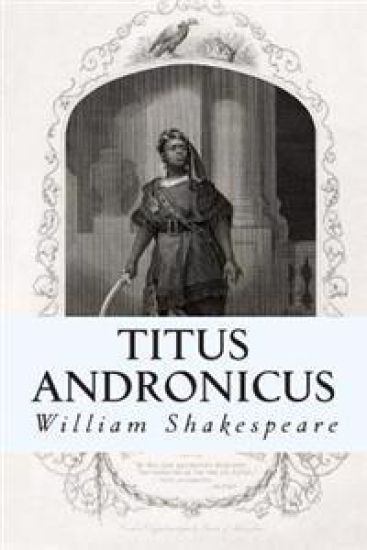
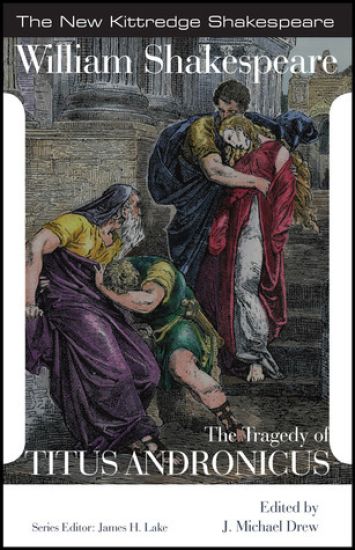
Titus Andronicus is a tragedy by William Shakespeare, and possibly George Peele, believed to have been written between 1588 and 1593. It is thought to be Shakespeare's first tragedy, and is often seen as his attempt to emulate the violent and bloody revenge plays of his contemporaries, which were extremely popular with audiences throughout the sixteenth century. The play is set during the latter days of the Roman Empire and tells the fictional story of Titus, a general in the Roman army, who is engaged in a cycle of revenge with Tamora, Queen of the Goths. It is Shakespeare's bloodiest and most violent work, and traditionally was one of his least respected plays; although it was extremely popular in its day, by the later 17th century it had fallen out of favour. In the Victorian era, it was disapproved of primarily because of what was considered to be a distasteful use of graphic violence, but from around the middle of the 20th century its reputation began to improve. The play begins shortly after the death of the Roman emperor, with his two sons, Saturninus and Bassianus, squabbling over who will succeed him. Their conflict seems set to boil over into violence until a tribune, Marcus Andronicus, announces that the people's choice for the new emperor is Marcus's brother, Titus, who will shortly return to Rome from a victorious ten-year campaign against the Goths. Titus subsequently arrives to much fanfare, bearing with him as prisoners the Queen of the Goths (Tamora), her three sons (Alarbus, Chiron, and Demetrius), and Aaron the Moor (her secret lover). Despite Tamora's desperate pleas, Titus sacrifices her eldest son, Alarbus, to avenge the deaths of his own sons during the war. Distraught, Tamora and her two surviving sons vow to obtain revenge on Titus and his family. Meanwhile, Titus refuses the offer of the throne, arguing that he is not fit to rule and instead supporting the claim of Saturninus, who then is duly elected. Saturninus tells Titus that for his first act as emperor, he will marry Titus's daughter Lavinia. Titus agrees, although Lavinia is already betrothed to Saturninus's brother, Bassianus, who refuses to give her up. Titus's sons tell Titus that Bassianus is in the right under Roman law, but Titus refuses to listen, accusing them all of treason. A scuffle breaks out, during which Titus kills his own son, Mutius. Saturninus then denounces the Andronici family for their effrontery and shocks Titus by marrying Tamora. Putting into motion her plan for revenge, Tamora advises Saturninus to pardon Bassianus and the Andronici family, which he reluctantly does. During a royal hunt the following day, Aaron persuades Demetrius and Chiron to kill Bassianus, so they may rape Lavinia. They do so, throwing Bassianus's body into a pit and dragging Lavinia deep into the forest before violently raping her. To keep her from revealing what has happened, they cut out her tongue and cut off her hands. Meanwhile, Aaron writes a forged letter, which frames Titus's sons Martius and Quintus for the murder of Bassianus. Horrified at the death of his brother, Saturninus arrests Martius and Quintus, and sentences them to death. Some time later, Marcus discovers the mutilated Lavinia and takes her to her father, who is still shocked at the accusations levelled at his sons, and upon seeing Lavinia, he is overcome with grief. Aaron then visits Titus and falsely tells him that Saturninus will spare Martius and Quintus if either Titus, Marcus, or Titus's remaining son, Lucius, cuts off one of their hands and sends it to him. Titus has Aaron cut off his (Titus') left hand and sends it to the emperor but, in return, a messenger brings Titus Martius and Quintus's severed heads, along with Titus's own severed hand. Desperate for revenge, Titus orders Lucius to flee Rome and raise an army among their former enemy, the Goths.
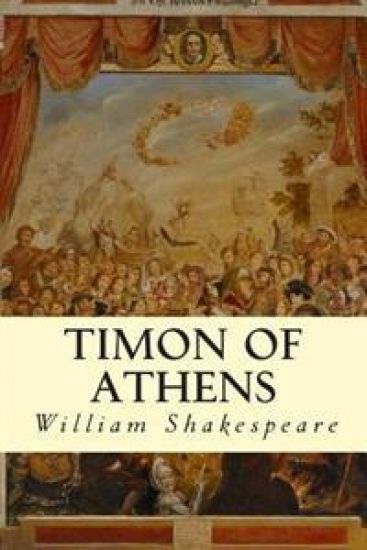
Timon of Athens is a William Shakespeare play about the fortunes of an Athenian named Timon generally regarded as one of his most obscure and difficult works. Originally grouped with the tragedies, it is generally considered one, but some scholars group it with the problem plays. In the beginning, Timon is a wealthy and generous Athenian gentleman. He hosts a large banquet, attended by nearly all the main characters. Timon gives away money wastefully, and everyone wants to please him to get more, except for Apemantus, a churlish philosopher whose cynicism Timon cannot yet appreciate. He accepts art from Poet and Painter, and a jewel from the Jeweller, but by the end of Act 1, he has given that away to another friend. Timon's servant, Lucilius, has been wooing the daughter of an old Athenian. The man is angry, but Timon pays him three talents in exchange for the couple being allowed to marry, because the happiness of his servant is worth the price. Timon is told that his friend, Ventidius, is in debtors' prison. He sends money to pay Ventidius's debt, and Ventidius is released and joins the banquet. Timon gives a speech on the value of friendship. The guests are entertained by a masque, followed by dancing. As the party winds down, Timon continues to give things away to his friends; his horses, and other possessions. The act is divided rather arbitrarily into two scenes but the experimental and/or unfinished nature of the play is reflected in that it does not naturally break into a five-act structure. Now Timon has given away all his wealth. Flavius, Timon's steward, is upset by the way Timon has spent his wealth, overextending his munificence by showering patronage on the parasitic writers and artists, and delivering his dubious friends from their financial straits; this he tells Timon when he returns from a hunt. Timon is upset that he has not been told this before, and begins to vent his anger on Flavius, who tells him that he has tried repeatedly in the past without success, and now he is at the end; Timon's land has been sold. Shadowing Timon is another guest at the banquet: the cynical philosopher Apemantus, who terrorises Timon's shallow companions with his caustic raillery. He was the only guest not angling for money or possessions from Timon. Along with a Fool, he attacks Timon's creditors when they show up to make their demands for immediate payment. Timon cannot pay, and sends out his servants to make requests for help from those friends he considers closest. Timon's servants are turned down, one by one, by Timon's false friends, two giving lengthy monologues as to their anger with them. Elsewhere, one of Alcibiades's junior officers has reached an even further point of rage, killing a man in "hot blood." Alcibiades pleads with the Senate for mercy, arguing that a crime of passion should not carry as severe a sentence as premeditated murder. The senators disagree, and, when Alcibiades persists, banish him forever. He vows revenge, with the support of his troops. The act finishes with Timon discussing with his servants the revenge he will carry out at his next banquet. Timon hosts a smaller party, intended only for those he feels have betrayed him. The serving trays are brought in, but under them the friends find rocks and lukewarm water. Timon sprays them with the water, throws the dishes at them, and flees his home. The loyal Flavius vows to find him. Timon renounces society (1803 engraving for Shakespeare, Timon of Athens, Act IV, Scene 1) Cursing the city walls, Timon goes into the wilderness and makes his crude home in a cave, sustaining himself on roots. Here he discovers an underground trove of gold. The knowledge of his discovery spreads. Alcibiades, Apemantus, and three bandits are able to find Timon before Flavius does. Accompanying Alcibiades are two prostitutes, Phrynia and Timandra, who trade barbs with the bitter Timon on the subject of venereal disease.
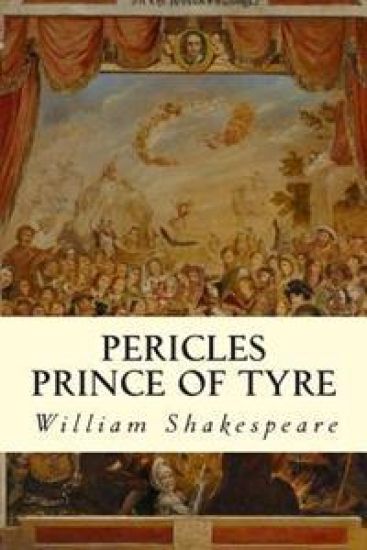
Pericles, Prince of Tyre is a Jacobean play written at least in part by William Shakespeare and included in modern editions of his collected works despite questions over its authorship, as it was not included in the First Folio. Whilst various arguments support that Shakespeare is the sole author of the play (notably DelVecchio and Hammond's Cambridge edition of the play), modern editors generally agree that Shakespeare is responsible for almost exactly half the play-827 lines-the main portion after scene 9 that follows the story of Pericles and Marina. a] Modern textual studies indicate that the first two acts of 835 lines detailing the many voyages of Pericles were written by a collaborator, which strong evidence suggests to have been the victualler, panderer, dramatist and pamphleteer George Wilkins. John Gower introduces each act with a prologue. The play opens in the court of Antiochus, king of Antioch, who has offered the hand of his beautiful daughter to any man who answers his riddle; but those who fail shall die. I am no viper, yet I feed On mother's flesh which did me breed. I sought a husband, in which labour I found that kindness in a father: He's father, son, and husband mild; I mother, wife, and yet his child. How they may be, and yet in two, As you will live, resolve it you. Pericles, the young Prince (ruler) of Tyre in Phoenicia (Lebanon), hears the riddle, and instantly understands its meaning: Antiochus is engaged in an incestuous relationship with his daughter. If he reveals this truth, he will be killed, but if he answers incorrectly, he will also be killed. Pericles hints that he knows the answer, and asks for more time to think. Antiochus grants him forty days, and then sends an assassin after him. However, Pericles has fled the city in disgust. Pericles returns to Tyre, where his trusted friend and counsellor Helicanus advises him to leave the city, for Antiochus surely will hunt him down. Pericles leaves Helicanus as regent and sails to Tarsus, a city beset by famine. The generous Pericles gives the governor of the city, Cleon, and his wife Dionyza, grain from his ship to save their people. The famine ends, and after being thanked profusely by Cleon and Dionyza, Pericles continues on. A storm wrecks Pericles' ship and washes him up on the shores of Pentapolis. He is rescued by a group of poor fishermen who inform him that Simonedes, King of Pentapolis, is holding a tournament the next day and that the winner will receive the hand of his daughter Thaisa in marriage. Fortunately, one of the fishermen drags Pericles' suit of armour on shore that very moment, and the prince decides to enter the tournament. Although his equipment is rusty, Pericles wins the tournament and the hand of Thaisa (who is deeply attracted to him) in marriage. Simonedes initially expresses doubt about the union, but soon comes to like Pericles and allows them to wed. A letter sent by the noblemen reaches Pericles in Pentapolis, who decides to return to Tyre with the pregnant Thaisa. Again, a storm arises while at sea, and Thaisa appears to die giving birth to her child, Marina. The sailors insist that Thaisa's body be set overboard in order to calm the storm. Pericles grudgingly agrees, and decides to stop at Tarsus because he fears that Marina may not survive the storm. Luckily, Thaisa's casket washes ashore at Ephesus near the residence of Lord Cerimon, a physician who revives her. Thinking that Pericles died in the storm, Thaisa becomes a priestess in the temple of Diana. Pericles departs to rule Tyre, leaving Marina in the care of Cleon and Dionyza.
With notes, exam themes and questions, an introduction and notes throughout this edition of Macbeth is ideal for students and those looking for an affordable and helpful text of Macbeth.
La representaci n y puesta en escena comienza con una disputa callejera entre los Montesco y los Capuleto. El pr ncipe de Verona, Della Escala, interviene entre ellos y declara un acuerdo de paz que en caso de ser violado habr a de ser pagado con la muerte. Despu s de los sucesos, el conde Paris se re ne con el se or Capuleto para conversar sobre la idea de contraer matrimonio con su hija, pero Capuleto le pide que espere durante un plazo de dos a os m s, tiempo tras el cual Julieta cumplir a quince a os. Aprovechando el ofrecimiento, le sugiere que organice un baile familiar de car cter formal para celebrar tal acontecimiento. Mientras tanto, la se ora Capuleto y la nodriza de Julieta, intentan convencer a la joven de que acepte casarse con Paris.