
Kirjailija
William Shakespeare
Kirjat ja teokset yhdessä paikassa: 4 976 kirjaa, julkaisuja vuosilta 1798–2027, suosituimpiin kuuluu Hamlet. Vertaile teosten hintoja ja tarkista saatavuus suomalaisista kirjakaupoista.
4 976 kirjaa
Kirjojen julkaisuvuodet: 1798–2027.
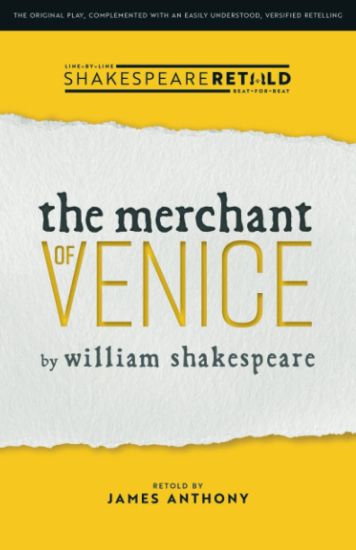
The Merchant of Venice
William Shakespeare
Double 9 Books LLP
2022
nidottu
Halvin toimitettuna 23,90 €








Manga Classics: Othello (Modern English Edition)
William Shakespeare; Michael Barltrop; Crystal S Chan
Manga Classics Inc.
2022
nidottu
Halvin toimitettuna 22,00 €
A brilliant general in the service of Venice, Othello is also the new husband of the adoring - and young - Desdemona, whose innocent hero-worship has blossomed into love. But can a beautiful girl, so much younger than her husband, truly be faithful? Othello's trusted ensign Iago seems to think not. Can Othello trust him? Can Othello trust anyone? Manga Classics presents Shakespeare's classic story of love, hate, vengeance, and betrayal, with FULL ADAPTED MODERN ENGLISH text for easy reading.

One of Shakespeare's most famous plays and one of the worlds greatest tragic romances. The story of two young people from feuding families who fall in love. Using only the original language, this play has been slimmed down so it can be performed within an hour.

Shakespeare's sonnets are poems that William Shakespeare wrote on a variety of themes. When discussing or referring to Shakespeare's sonnets, it is almost always a reference to the 154 sonnets that were first published all together in a quarto in 1609 however, there are six additional sonnets that Shakespeare wrote and included in the plays Romeo and Juliet, Henry V and Love's Labour's Lost. There is a partial sonnet found in the play Edward III. Shakespeare's sonnets are considered a continuation of the sonnet tradition that swept through the Renaissance from Petrarch in 14th-century Italy and was finally introduced in 16th-century England by Thomas Wyatt and was given its rhyming meter and division into quatrains by Henry Howard. With few exceptions, Shakespeare's sonnets observe the stylistic form of the English sonnet-the rhyme scheme, the 14 lines, and the meter. But Shakespeare's sonnets introduce such significant departures of content that they seem to be rebelling against well-worn 200-year-old traditions. Instead of expressing worshipful love for an almost goddess-like yet unobtainable female love-object, as Petrarch, Dante, and Philip Sidney had done, Shakespeare introduces a young man. He also introduces the Dark Lady, who is no goddess. Shakespeare explores themes such as lust, homoeroticism, misogyny, infidelity, and acrimony in ways that may challenge, but which also open new terrain for the sonnet form. The primary source of Shakespeare's sonnets is a quarto published in 1609 titled Shake-speare's Sonnets. It contains 154 sonnets, which are followed by the long poem "A Lover's Complaint". Thirteen copies of the quarto have survived in fairly good shape from the 1609 edition, which is the only edition there were no other printings. There is evidence in a note on the title page of one of the extant copies that the great Elizabethan actor Edward Alleyn bought a copy in June 1609 for one shilling. The sonnets cover such themes as the passage of time, love, infidelity, jealousy, beauty and mortality. The first 126 are addressed to a young man the last 28 are either addressed to, or refer to a woman. (Sonnets 138 and 144 had previously been published in the 1599 miscellany The Passionate Pilgrim). The title of the quarto, Shakespeare's Sonnets, is consistent with the entry in the Stationer Register. The title appears in upper case lettering on the title page, where it is followed by the phrase "Neuer before Imprinted".

The Taming of the Shrew is a comedy by William Shakespeare, believed to have been written between 1590 and 1592. The play begins with a framing device, often referred to as the induction, in which a mischievous nobleman tricks a drunken tinker named Christopher Sly into believing he is actually a nobleman himself. The nobleman then has the play performed for Sly's diversion. The main plot depicts the courtship of Petruchio and Katherina, the headstrong, obdurate shrew. Initially, Katherina is an unwilling participant in the relationship however, Petruchio "tames" her with various psychological torments, such as keeping her from eating and drinking, until she becomes a desirable, compliant, and obedient bride. The subplot features a competition between the suitors of Katherina's younger sister, Bianca, who is seen as the "ideal" woman. The question of whether the play is misogynistic has become the subject of considerable controversy, particularly among modern scholars, audiences, and readers. The Taming of the Shrew has been adapted numerous times for stage, screen, opera, ballet, and musical theatre perhaps the most famous adaptations being Cole Porter's Kiss Me, Kate and the 1967 film of the play, starring Elizabeth Taylor and Richard Burton. The 1999 high school comedy film 10 Things I Hate About You is also loosely based on the play. Prior to the first act, an induction frames the play as a "kind of history" played in front of a befuddled drunkard named Christopher Sly who is tricked into believing that he is a lord. The play is performed in order to distract Sly from his "wife," who is actually Bartholomew, a servant, dressed as a woman. In the play performed for Sly, the "shrew" is Katherina, the eldest daughter of Baptista Minola, a lord in Padua. Numerous men, including Tranio, deem Katherina an unworthy option for marriage because of her notorious assertiveness and willfulness. On the other hand, men such as Hortensio and Gremio are eager to marry her younger sister Bianca. However, Baptista has sworn Bianca is not allowed to marry until Katherina is wed this motivates Bianca's suitors to work together to find Katherina a husband so that they may compete for Bianca. The plot thickens when Lucentio, who has recently come to Padua to attend university, falls in love with Bianca.

The Tempest is a play by William Shakespeare, probably written in 1610-1611, and thought to be one of the last plays that Shakespeare wrote alone. After the first scene, which takes place on a ship at sea during a tempest, the rest of the story is set on a remote island, where the sorcerer Prospero, a complex and contradictory character, lives with his daughter Miranda, and his two servants-Caliban, a savage monster figure, and Ariel, an airy spirit. The play contains music and songs that evoke the spirit of enchantment on the island. It explores many themes, including magic, betrayal, revenge, and family. In Act IV, a wedding masque serves as a play-within-the play, and contributes spectacle, allegory, and elevated language. Though The Tempest is listed in the First Folio as the first of Shakespeare's comedies, it deals with both tragic and comic themes, and modern criticism has created a category of romance for this and others of Shakespeare's late plays. The Tempest has been put to varied interpretations-from those that see it as a fable of art and creation, with Prospero representing Shakespeare, and Prospero's renunciation of bsignaling Shakespeare's farewell to the stage, to interpretations that consider it an allegory of Europeans colonizing foreign lands. A ship is caught in a powerful storm, there is terror and confusion on board, and the vessel is shipwrecked. But the storm is a magical creation carried out by the spirit Ariel, and caused by the magic of Prospero, who was the Duke of Milan, before his dukedom was usurped and taken from him by his brother Antonio (aided by Alonso, the King of Naples). That was twelve years ago, when he and his young daughter, Miranda, were set adrift on the sea, and eventually stranded on an island. Among those on board the shipwreck are Antonio and Alonso. Also on the ship are Alonso's brother (Sebastian), son (Ferdinand), and "trusted counsellor", Gonzalo. Prospero plots to reverse what was done to him twelve years ago, and regain his office. Using magic he separates the shipwreck survivors into groups on the island: Ferdinand, who is found by Prospero and Miranda. It is part of Prospero's plan to encourage a romantic relationship between Ferdinand and Miranda and they do fall in love. Trinculo, the king's jester, and Stephano, the king's drunken butler who are found by Caliban, a monstrous figure who had been living on the island before Prospero arrived, and who Prospero, adopted, raised and enslaved.

Antony and Cleopatra is a tragedy by William Shakespeare. The play was performed first circa 1607 at the Blackfriars Theatre or the Globe Theatre by the King's Men. Its first appearance in print was in the Folio of 1623. The plot is based on Thomas North's translation of Plutarch's Lives and follows the relationship between Cleopatra and Mark Antony from the time of the Sicilian revolt to Cleopatra's suicide during the Final War of the Roman Republic. The major antagonist is Octavius Caesar, one of Antony's fellow triumvirs of the Second Triumvirate and the first emperor of the Roman Empire. The tragedy is mainly set in Rome and Egypt and is characterized by swift shifts in geographical location and linguistic register as it alternates between sensual, imaginative Alexandria and a more pragmatic, austere Rome. Many consider Shakespeare's Cleopatra, whom Enobarbus describes as having "infinite variety", as one of the most complex and fully developed female characters in the playwright's body of work. She is frequently vain and histrionic enough to provoke an audience almost to scorn at the same time, Shakespeare invests her and Antony with tragic grandeur. These contradictory features have led to famously divided critical responses. It is difficult to classify Antony and Cleopatra as belonging to a single genre. It can be described as a history play (though it does not completely adhere to historical accounts), as a tragedy (though not completely in Aristotelian terms), as a comedy, as a romance, and according to some critics, such as McCarter, a problem play. All that can be said with certainty is that it is a Roman play, and perhaps even a sequel to another of Shakespeare's tragedies, Julius Caesar. Antony and Cleopatra dramatizes a major event in world history: the founding of the Roman Empire. The future first emperor, Octavius Caesar (later called Augustus Caesar), cold-bloodedly manipulates other characters and exercises iron control over himself. At first, he shares power with Mark Antony, Rome's preeminent military leader, and the weaker Lepidus. Caesar needs Antony to fend off other Roman strongmen like Pompey he even offers his sister Octavia to him as a bride, despite Antony's reputation as a libertine and his past rivalry with Caesar. Once Caesar defeats Pompey, however, he needs no allies. He brings charges against Lepidus, denies Antony his spoils from Pompey's defeat, and seizes cities in the eastern Roman colonies that Antony rules.

Macbeth (full title The Tragedy of Macbeth) is a tragedy by William Shakespeare it is thought to have been first performed in 1606. It dramatises the damaging physical and psychological effects of political ambition on those who seek power for its own sake. Of all the plays that Shakespeare wrote during the reign of James I, who was patron of Shakespeare's acting company, Macbeth most clearly reflects the playwright's relationship with his sovereign. It was first published in the Folio of 1623, possibly from a prompt book, and is Shakespeare's shortest tragedy. A brave Scottish general named Macbeth receives a prophecy from a trio of witches that one day he will become King of Scotland. Consumed by ambition and spurred to action by his wife, Macbeth murders King Duncan and takes the Scottish throne for himself. He is then wracked with guilt and paranoia. Forced to commit more and more murders to protect himself from enmity and suspicion, he soon becomes a tyrannical ruler. The bloodbath and consequent civil war swiftly take Macbeth and Lady Macbeth into the realms of madness and death. Shakespeare's source for the story is the account of Macbeth, King of Scotland, Macduff, and Duncan in Holinshed's Chronicles (1587), a history of England, Scotland, and Ireland familiar to Shakespeare and his contemporaries, although the events in the play differ extensively from the history of the real Macbeth. The events of the tragedy are usually associated with the execution of Henry Garnet for complicity in the Gunpowder Plot of 1605. In the backstage world of theatre, some believe that the play is cursed, and will not mention its title aloud, referring to it instead as "The Scottish Play". Over the course of many centuries, the play has attracted some of the most renowned actors to the roles of Macbeth and Lady Macbeth. It has been adapted to film, television, opera, novels, comics, and other media. The play opens amid thunder and lightning, and the Three Witches decide that their next meeting will be with Macbeth. In the following scene, a wounded sergeant reports to King Duncan of Scotland that his generals Macbeth, who is the Thane of Glamis, and Banquo have just defeated the allied forces of Norway and Ireland, who were led by the traitorous Macdonwald, and the Thane of Cawdor. Macbeth, the King's kinsman, is praised for his bravery and fighting prowess. In the following scene, Macbeth and Banquo discuss the weather and their victory.