Kirjojen hintavertailu – 12 903 735 kirjaa ja 27 kauppaa

Kirjailija

Windy Dryden

Kirjat ja teokset yhdessä paikassa: 212 kirjaa, julkaisuja vuosilta 1990–2026, suosituimpiin kuuluu Developing Cognitive-Behavioural Counselling. Vertaile teosten hintoja ja tarkista saatavuus suomalaisista kirjakaupoista.

212 kirjaa

Kirjojen julkaisuvuodet: 1990–2026.

A Practical Guide to Rational Emotive Behavioural Coaching
In his clear and concise style, Windy Dryden outlines the steps and strategies that coaches using Rational Emotive Behavioural Coaching (REBC) should employ as a guide when working with coachees in development-focused REBC and in problem-focused REBC (addressing both practical and emotional problems). A Practical Guide to Rational Emotive Behavioural Coaching shows how REB coaches can address the inevitable obstacles to coaching progress that are likely to occur in all types of REBC and outlines the most common steps for each type of coaching, including common strategies for the implementation of each step. The book also includes a unique survey, developed by the author, designed to help coachees in development-focused REBC assess and evaluate healthy principles of living. The book will be an essential resource for coaches in practice and training, for professionals working in human resources and learning and development, and for executives in a coaching role.
The Coaching Alliance

The Coaching Alliance

Windy Dryden

Routledge
2020
nidottu
Windy Dryden’s pluralistic approach to coaching informs this uniquely straightforward guide to the coaching alliance. Drawing on examples from Dryden’s own practice, the book explores the four specific domains of the alliance: bonds, views, objectives/goals, and tasks. Dryden explains how these domains are inter-related, and how all four have an impact on the collaborative, negotiated relationship between coach and coachee. The Coaching Alliance is a clearly written, accessible guide, with one chapter dedicated to each of the four domains. It examines each domain at different stages in the coaching process and includes key points and questions for coaches to consider in sessions with clients. By taking an alliance perspective on coaching, the coach is encouraged to think clearly and constructively about building a working relationship with their coachee, clarifying views, setting goals and completing tasks. Including a wealth of practical information, this concise book will be essential for anyone working with clients in a coaching capacity.
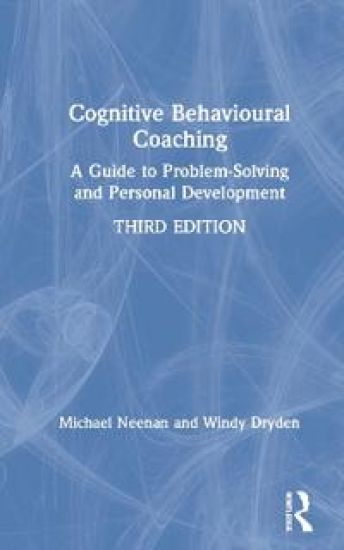
Cognitive Behavioural Coaching

Cognitive Behavioural Coaching

Michael Neenan; Windy Dryden

Routledge
2020
sidottu
The way we think profoundly influences the way we feel and behave. Therefore, it can be said that learning to think differently can enable us to feel and act differently. Derived from the methods of cognitive behaviour therapy, Cognitive Behavioural Coaching: A Guide to Problem Solving and Personal Development shows you how to help yourself by tackling self- and goal-defeating thinking and replacing it with an effective problem-solving outlook. This book gives clear and helpful advice on: Dealing with troublesome emotions Overcoming procrastination Becoming assertive Tackling poor time management Developing persistence Developing resilience Handling criticism constructively Taking risks and making better decisionsOriginally titled Life Coaching: A Cognitive Behavioural Approach, the third edition of this book has been considerably revised and updated to reflect current thinking on some of the topics discussed. This book will be invaluable to all those who are interested in becoming more personally effective in their everyday lives, and to counsellors, coaches and psychologists, students and qualified alike.
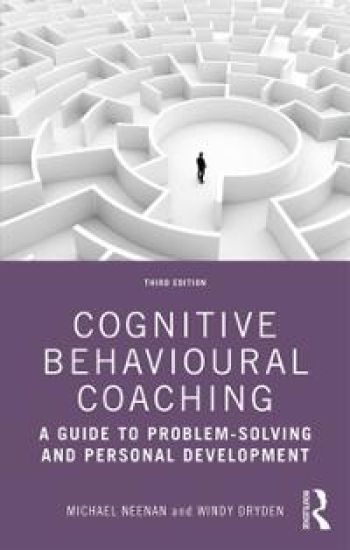
Cognitive Behavioural Coaching

Cognitive Behavioural Coaching

Michael Neenan; Windy Dryden

Routledge
2020
nidottu

Halvin toimitettuna 38,00 €

The way we think profoundly influences the way we feel and behave. Therefore, it can be said that learning to think differently can enable us to feel and act differently. Derived from the methods of cognitive behaviour therapy, Cognitive Behavioural Coaching: A Guide to Problem Solving and Personal Development shows you how to help yourself by tackling self- and goal-defeating thinking and replacing it with an effective problem-solving outlook. This book gives clear and helpful advice on: Dealing with troublesome emotions Overcoming procrastination Becoming assertive Tackling poor time management Developing persistence Developing resilience Handling criticism constructively Taking risks and making better decisionsOriginally titled Life Coaching: A Cognitive Behavioural Approach, the third edition of this book has been considerably revised and updated to reflect current thinking on some of the topics discussed. This book will be invaluable to all those who are interested in becoming more personally effective in their everyday lives, and to counsellors, coaches and psychologists, students and qualified alike.
Rational Emotive Behaviour Therapy

Rational Emotive Behaviour Therapy

Walter Matweychuk; Windy Dryden

Routledge
2019
nidottu
This straightforward guide introduces the newcomer to the core theoretical principles and therapeutic strategies of Rational Emotive Behaviour Therapy (REBT). Starting with the ABC model of emotion popularized by Albert Ellis from the outset when he developed his approach to CBT, the guide then shows how REBT distinguishes between unhealthy and healthy negative emotions. From there it outlines the four irrational attitudes theorized to be at the core of emotional and behavioural disturbance. Finally, the newcomer to REBT will develop an appreciation for how REBT inoculates clients against future problems and teaches them to maintain and extend their treatment gains. This Newcomer’s Guide will be a useful contribution to counsellors and psychotherapists in training, either in Rational Emotive Behaviour Therapy or another cognitive-behavioural approach.
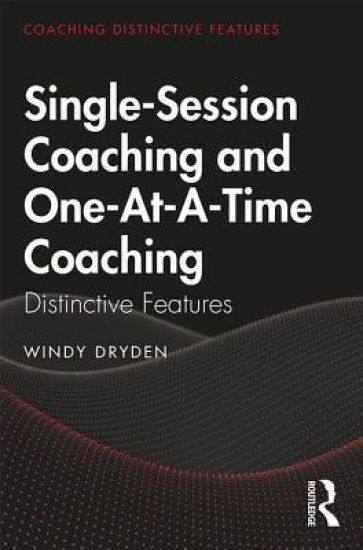
Single-Session Coaching and One-At-A-Time Coaching
In Single-Session Coaching and One-At-A-Time Coaching: Distinctive Features, Windy Dryden presents a clear and accessible overview of the theory and practice of Single-Session Coaching and One-At-A-Time Coaching (SSC/OAATC). Presented in the highly accessible Distinctive Features format, Dryden explores how these approaches allow coaches and clients to tackle problems and find solutions quickly and flexibly. Single-Session Coaching and One-At-A-Time Coaching is split in two parts, providing a complete understanding of both the theory and practice of SSC/OAATC, as well as clearly examining key topics, including the foundations of SSC/OAATC, what makes a good SSC/OAATC coach and coachee, common misconceptions, preparing for and structuring a session, and considering significant coachee variables. It explains key terminology, such as the difference between Problem-Focused and Development-Focused SSC/OAATC, and portrays these differences in useful case studies to show the benefits of each for individual clients. Finally, it concludes with details on following up with the coachee, including key questions to ask. With case studies throughout, this approach can be applied in various clinical settings, such as primary care, and non-clinical settings, such as voluntary sectors, and is ideal for time-limited scenarios in comparison to other, more time-consuming, coaching methods. This will be an invaluable tool for coaches in practice and in training, as well as for academics and students of coaching.
Single-Session Coaching and One-At-A-Time Coaching
In Single-Session Coaching and One-At-A-Time Coaching: Distinctive Features, Windy Dryden presents a clear and accessible overview of the theory and practice of Single-Session Coaching and One-At-A-Time Coaching (SSC/OAATC). Presented in the highly accessible Distinctive Features format, Dryden explores how these approaches allow coaches and clients to tackle problems and find solutions quickly and flexibly. Single-Session Coaching and One-At-A-Time Coaching is split in two parts, providing a complete understanding of both the theory and practice of SSC/OAATC, as well as clearly examining key topics, including the foundations of SSC/OAATC, what makes a good SSC/OAATC coach and coachee, common misconceptions, preparing for and structuring a session, and considering significant coachee variables. It explains key terminology, such as the difference between Problem-Focused and Development-Focused SSC/OAATC, and portrays these differences in useful case studies to show the benefits of each for individual clients. Finally, it concludes with details on following up with the coachee, including key questions to ask. With case studies throughout, this approach can be applied in various clinical settings, such as primary care, and non-clinical settings, such as voluntary sectors, and is ideal for time-limited scenarios in comparison to other, more time-consuming, coaching methods. This will be an invaluable tool for coaches in practice and in training, as well as for academics and students of coaching.
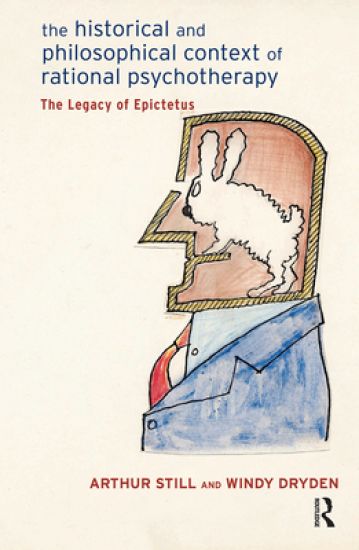
The Historical and Philosophical Context of Rational Psychotherapy
This book brings together the papers written by the authors over the last fifteen years on the historical and philosophical foundations of Albert Ellis' Rational Psychotherapy (later Rational Emotive Behavior Therapy, REBT) and its relationship to Stoicism, especially the later practical form represented by Epictetus. It goes beneath the well known similarities between Stoic "spiritual exercises" and modern psychotherapy, to look at the cause of these similarities. These lie in the conceptual continuities that connect the Stoics and other ancient philosophies with the modern cultural framework underlying psychotherapy.
Helping Clients Deal with Adversity by Changing their Attitudes
Helping Clients Deal with Adversity by Changing Their Attitudes: A Concise Therapist Guide provides an outline for therapists wishing to help clients deal with life’s adversities by encouraging them to change their attitudes. Divided in two parts, this book first provides a thorough, but concise, introduction to attitude-based approach to therapy, then applies these ideas to therapy. By redefining established concepts of ‘rational’ and ‘irrational’ beliefs in terms of the ‘rigidity’ and ‘extremity’ of client attitudes, Professor Dryden puts forward a language and an approach that is more acceptable to both clients and therapists. Helping Clients Deal with Adversity by Changing Their Attitudes will be a great asset to clinical and counselling psychologists, counsellors, and psychotherapists as well as trainees in these areas. It will be particularly of interest to CBT practitioners and students who do not cover REBT in their training, but are looking for a concise guide to how its attitudinal focus can be understood and applied in clinical practice.
Rational Emotive Behaviour Therapy in India
Rational Emotive Behaviour Therapy in India: Very Brief Therapy for Problems of Daily Living is the first book of its kind to look specifically at using Rational Emotive Behaviour Therapy (REBT) for helping people with problems that are common in India. Based on training workshops given by Professor Windy Dryden in Mumbai, this book presents transcripts of the workshop sessions alongside professional commentary, followed by reflections from the volunteers themselves. With the emphasis on everyday problems, and clear examples of how REBT is applied, Rational Emotive Behaviour Therapy in India will be essential reading for psychotherapists, students, and other mental health professionals working in India, and anyone interested in the cross-cultural application of psychotherapy.
Rational Emotive Behaviour Therapy in India
Rational Emotive Behaviour Therapy in India: Very Brief Therapy for Problems of Daily Living is the first book of its kind to look specifically at using Rational Emotive Behaviour Therapy (REBT) for helping people with problems that are common in India. Based on training workshops given by Professor Windy Dryden in Mumbai, this book presents transcripts of the workshop sessions alongside professional commentary, followed by reflections from the volunteers themselves. With the emphasis on everyday problems, and clear examples of how REBT is applied, Rational Emotive Behaviour Therapy in India will be essential reading for psychotherapists, students, and other mental health professionals working in India, and anyone interested in the cross-cultural application of psychotherapy.
Single-Session ‘One-at-a-Time’ Therapy
Single-Session ‘One-at-a-Time’ Therapy: A Rational Emotive Behaviour Therapy Approach details a specific approach to Single-Session Therapy (SST) known as ‘One-At-A-Time’ (OAAT) Therapy and shows how this can be implemented from a Rational Emotive Behaviour Therapy (REBT) perspective. Windy Dryden argues that OAAT Therapy is a time-efficient, cost-effective means of providing help according to need. Single-Session ‘One-at-a-Time’ Therapy outlines an innovative and experimental approach to improving mental health and will appeal to psychotherapists and counsellors looking for an accessible and authoritative guide to brief therapeutic work.
Single-Session Therapy (SST)

Single-Session Therapy (SST)

Windy Dryden

Routledge
2018
nidottu
Even in one session a therapist can make a difference. Single Session Therapy: 100 Key Points and Techniques presents the 100 main features of this way of working, providing an accessible, succinct overview of this way of working, based on the author's extensive work demonstrating the effectiveness of SST. Divided into 9 sections, guiding you through every aspect of the therapy, the book covers topic such as: The goals of SST Characteristics of ‘good’ SST clients Responding effectively to the client’s very first contact Creating and maintaining a working focus Making an emotional impactBoth concise and practical, Single Session Therapy: 100 Key Points and Techniques will be invaluable to psychotherapists and counsellors in training and practice.
The Relevance of Rational Emotive Behaviour Therapy for Modern CBT and Psychotherapy
The Relevance of Rational Emotive Behaviour Therapy for Modern CBT and Psychotherapy explores the contemporary relevance of this treatment for modern psychotherapy, from the point of view of a leading contributor. First founded in 1955 by Albert Ellis, REBT still has much to offer the field. Despite this, the therapy has been increasingly neglected by cognitive behaviour therapy and other practitioners. To demonstrate its contributed relevance, Professor Windy Dryden outlines in this book his current thinking and practice in regard to REBT. He advocates its key features of flexibility and non-extremeness, and explores what he believes REBT has to contribute to the discussion surrounding contemporary issues in psychotherapy. The Relevance of Rational Emotive Behaviour Therapy for Modern CBT and Psychotherapy is an excellent resource for CBT and other therapists who would like to know more about the relevance of REBT to their work.
Very Brief Therapeutic Conversations
In Very Brief Therapeutic Conversations, Windy Dryden demonstrates the therapeutic value of very brief interventions in counselling, psychotherapy and coaching, using a wide range of techniques and skills to bring this novel approach to life. The book provides an informative and innovative guide on 'how to do' very brief therapy in 30 minutes or less. The often fascinating and universal problems the volunteers discuss, as well as the goal and guiding principles of this novel therapy, are explored in the first half of this book. Inspired by Ellis’s therapeutic ‘Friday Night Workshops’, transcripts from Dryden’s own therapeutic conversations at his 'live sessions' with volunteers form the second half of the book. Very Brief Therapeutic Conversations is an accessible and entertaining read for all therapists, whether in training or practice, who want to see very clear examples of theory being put into practice.
Very Brief Therapeutic Conversations
In Very Brief Therapeutic Conversations, Windy Dryden demonstrates the therapeutic value of very brief interventions in counselling, psychotherapy and coaching, using a wide range of techniques and skills to bring this novel approach to life. The book provides an informative and innovative guide on 'how to do' very brief therapy in 30 minutes or less. The often fascinating and universal problems the volunteers discuss, as well as the goal and guiding principles of this novel therapy, are explored in the first half of this book. Inspired by Ellis’s therapeutic ‘Friday Night Workshops’, transcripts from Dryden’s own therapeutic conversations at his 'live sessions' with volunteers form the second half of the book. Very Brief Therapeutic Conversations is an accessible and entertaining read for all therapists, whether in training or practice, who want to see very clear examples of theory being put into practice.
Flexibility-Based Cognitive Behaviour Therapy
In this book, Windy Dryden brings together the four major strands that have shaped his idiosyncratic approach to clinical practice – (i) Cognitive Behaviour Therapy; (ii) flexibility in practice; (iii) Rational Emotive Behaviour Therapy; and (iv) pluralism – an approach he calls ‘Flexibility-Based Cognitive Behaviour Therapy’. Perhaps uniquely for the literature, this volume provides an extended account of how a world-leading therapist personally thinks about and practices psychotherapy. As well as insights from over 40 years as a therapist, the book reflects the most the recent developments in Dryden’s work, and highlights both the different theories he is using and the core building blocks of his practice. Aimed at therapists in training and practice, Flexibility-Based Cognitive Behaviour Therapy presents a rare opportunity to gain an insight from one of the leading figures in the field of psychotherapy.
Flexibility-Based Cognitive Behaviour Therapy
In this book, Windy Dryden brings together the four major strands that have shaped his idiosyncratic approach to clinical practice – (i) Cognitive Behaviour Therapy; (ii) flexibility in practice; (iii) Rational Emotive Behaviour Therapy; and (iv) pluralism – an approach he calls ‘Flexibility-Based Cognitive Behaviour Therapy’. Perhaps uniquely for the literature, this volume provides an extended account of how a world-leading therapist personally thinks about and practices psychotherapy. As well as insights from over 40 years as a therapist, the book reflects the most the recent developments in Dryden’s work, and highlights both the different theories he is using and the core building blocks of his practice. Aimed at therapists in training and practice, Flexibility-Based Cognitive Behaviour Therapy presents a rare opportunity to gain an insight from one of the leading figures in the field of psychotherapy.
A Practical Guide to Rational Emotive Behavioural Coaching
In his clear and concise style, Windy Dryden outlines the steps and strategies that coaches using Rational Emotive Behavioural Coaching (REBC) should employ as a guide when working with coachees in development-focused REBC and in problem-focused REBC (addressing both practical and emotional problems). A Practical Guide to Rational Emotive Behavioural Coaching shows how REB coaches can address the inevitable obstacles to coaching progress that are likely to occur in all types of REBC and outlines the most common steps for each type of coaching, including common strategies for the implementation of each step. The book also includes a unique survey, developed by the author, designed to help coachees in development-focused REBC assess and evaluate healthy principles of living. The book will be an essential resource for coaches in practice and training, for professionals working in human resources and learning and development, and for executives in a coaching role.