Kirjojen hintavertailu – 12 903 735 kirjaa ja 27 kauppaa
Kirjailija
Windy Dryden
Kirjat ja teokset yhdessä paikassa: 212 kirjaa, julkaisuja vuosilta 1990–2026, suosituimpiin kuuluu Developing Cognitive-Behavioural Counselling. Vertaile teosten hintoja ja tarkista saatavuus suomalaisista kirjakaupoista.
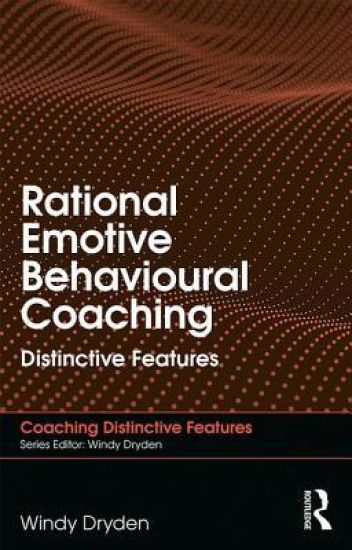
This concise and accessible book introduces the 30 Distinctive Features of Rational Emotive Behavioural Coaching, also known as REBC, an approach which applies the principles of REBT to coaching. Divided between 10 theoretical and 20 practical features, the book covers a range of topics, including meaning and values, development, the working alliance, dealing with obstacles and common coachee problems. The book sets out two different approaches: development-focused REBC, which concentrates on the coachee’s areas of development, and problem-focused REBC, which concentrates on the coachee’s practical and emotional problems of living. Within the latter category, the book also distinguishes between practical problem-focused REBC and emotional problem-focused REBC. Rational Emotive Behavioural Coaching: Distinctive Features will be an essential reference for anyone seeking to understand the key features of this unique approach to coaching.
This concise and accessible book introduces the 30 Distinctive Features of Rational Emotive Behavioural Coaching, also known as REBC, an approach which applies the principles of REBT to coaching. Divided between 10 theoretical and 20 practical features, the book covers a range of topics, including meaning and values, development, the working alliance, dealing with obstacles and common coachee problems. The book sets out two different approaches: development-focused REBC, which concentrates on the coachee’s areas of development, and problem-focused REBC, which concentrates on the coachee’s practical and emotional problems of living. Within the latter category, the book also distinguishes between practical problem-focused REBC and emotional problem-focused REBC. Rational Emotive Behavioural Coaching: Distinctive Features will be an essential reference for anyone seeking to understand the key features of this unique approach to coaching.
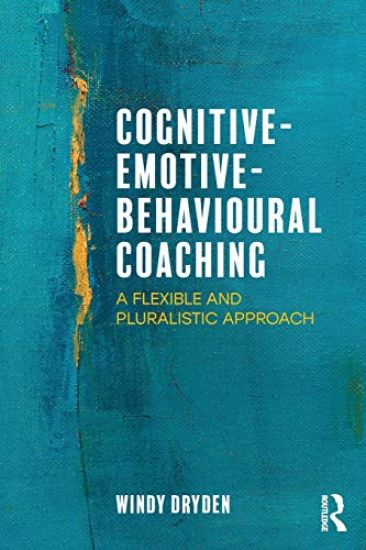
This accessible introduction to cognitive-emotive-behavioural coaching (CEBC) emphasises the role emotions play in coaching and explores how coaches can acknowledge them in their work, as well as demonstrating how CEBC can be enriched with a flexible and pluralistic approach. Windy Dryden explores both the range of issues that CEBC can deal with, including practical problems, emotional difficulties and self-development, and outlines the frameworks that coaches need in order to work in each type of CEBC. The book also includes a discussion of the central role of the coaching alliance and is illustrated with three case studies. Written in Dryden’s characteristically clear and straightforward style, this book will be essential reading for coaches of all backgrounds, including those in training, coaching psychologists and coach supervisors.
This accessible introduction to cognitive-emotive-behavioural coaching (CEBC) emphasises the role emotions play in coaching and explores how coaches can acknowledge them in their work, as well as demonstrating how CEBC can be enriched with a flexible and pluralistic approach. Windy Dryden explores both the range of issues that CEBC can deal with, including practical problems, emotional difficulties and self-development, and outlines the frameworks that coaches need in order to work in each type of CEBC. The book also includes a discussion of the central role of the coaching alliance and is illustrated with three case studies. Written in Dryden’s characteristically clear and straightforward style, this book will be essential reading for coaches of all backgrounds, including those in training, coaching psychologists and coach supervisors.
Windy Dryden’s pluralistic approach to coaching informs this uniquely straightforward guide to the coaching alliance. Drawing on examples from Dryden’s own practice, the book explores the four specific domains of the alliance: bonds, views, objectives/goals, and tasks. Dryden explains how these domains are inter-related, and how all four have an impact on the collaborative, negotiated relationship between coach and coachee. The Coaching Alliance is a clearly written, accessible guide, with one chapter dedicated to each of the four domains. It examines each domain at different stages in the coaching process and includes key points and questions for coaches to consider in sessions with clients. By taking an alliance perspective on coaching, the coach is encouraged to think clearly and constructively about building a working relationship with their coachee, clarifying views, setting goals and completing tasks. Including a wealth of practical information, this concise book will be essential for anyone working with clients in a coaching capacity.
This straightforward guide introduces the newcomer to the core theoretical principles and therapeutic strategies of Rational Emotive Behaviour Therapy (REBT). Starting with the ABC model of emotion popularized by Albert Ellis from the outset when he developed his approach to CBT, the guide then shows how REBT distinguishes between unhealthy and healthy negative emotions. From there it outlines the four irrational attitudes theorized to be at the core of emotional and behavioural disturbance. Finally, the newcomer to REBT will develop an appreciation for how REBT inoculates clients against future problems and teaches them to maintain and extend their treatment gains. This Newcomer’s Guide will be a useful contribution to counsellors and psychotherapists in training, either in Rational Emotive Behaviour Therapy or another cognitive-behavioural approach.
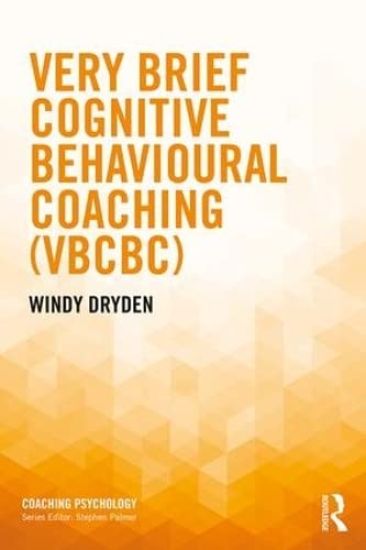
In Very Brief Cognitive Behavioural Coaching Windy Dryden presents VBCBC: a unique approach to coaching from a cognitive behavioural perspective which takes place over the course of one to three sessions. The approach is designed to help coachees identify at least one major objective, discuss and select ways to achieve it and, if necessary, deal with obstacles that they experience in pursuing it. The book presents the basic assumptions of the Very Brief Cognitive Behavioural Coaching (VBCBC) approach, how it can be understood from the perspective of working alliance theory and recommendations concerning when it can be used and when not. Dryden begins by defining coaching and explaining the aims of VBCBC, before examining the input factors which can increase its effectiveness and concluding with a seven-stage process view. The book also includes a transcript of a real VBCBC session, with commentary. Written clearly and accessibly, this will be essential reading for coaches of all backgrounds interested in brief approaches, including those in training, coaching psychologists and coach supervisors.
In Very Brief Cognitive Behavioural Coaching Windy Dryden presents VBCBC: a unique approach to coaching from a cognitive behavioural perspective which takes place over the course of one to three sessions. The approach is designed to help coachees identify at least one major objective, discuss and select ways to achieve it and, if necessary, deal with obstacles that they experience in pursuing it. The book presents the basic assumptions of the Very Brief Cognitive Behavioural Coaching (VBCBC) approach, how it can be understood from the perspective of working alliance theory and recommendations concerning when it can be used and when not. Dryden begins by defining coaching and explaining the aims of VBCBC, before examining the input factors which can increase its effectiveness and concluding with a seven-stage process view. The book also includes a transcript of a real VBCBC session, with commentary. Written clearly and accessibly, this will be essential reading for coaches of all backgrounds interested in brief approaches, including those in training, coaching psychologists and coach supervisors.
Four Approaches to Counselling and Psychotherapy provides an essential introduction to and overview of the main models of psychotherapy and counselling. With a new preface from Windy Dryden, this Classic Edition traces the development of counselling and psychotherapy, and examines the relationship between the two. The authors consider the four main models - psychodynamic, humanistic, integrative and cognitive-behavioural - before focusing on the most popular approach for each, including person-centred, rational emotive behavioural, and multimodal. Each approach is clearly examined in terms of its historical context and development, its main theoretical concepts and its aims. Written clearly and concisely, the book will have international appeal as an ideal introductory text for all those embarking on psychotherapy and counselling courses. It will also prove invaluable to students requiring a clear introduction to the subject.
Four Approaches to Counselling and Psychotherapy provides an essential introduction to and overview of the main models of psychotherapy and counselling. With a new preface from Windy Dryden, this Classic Edition traces the development of counselling and psychotherapy, and examines the relationship between the two. The authors consider the four main models - psychodynamic, humanistic, integrative and cognitive-behavioural - before focusing on the most popular approach for each, including person-centred, rational emotive behavioural, and multimodal. Each approach is clearly examined in terms of its historical context and development, its main theoretical concepts and its aims. Written clearly and concisely, the book will have international appeal as an ideal introductory text for all those embarking on psychotherapy and counselling courses. It will also prove invaluable to students requiring a clear introduction to the subject.
This best-selling, practical, evidence-based guide to the cognitive behavioural approach takes you step-by-step through the process of counselling, from initial contact with the client to termination and follow up. The book follows a skills-based format based around the Bordin and Dryden model of bonds, goals, tasks and views, with expanded case material to further illustrate links between theory and practice. This third edition includes new content on: · the working alliance – what it is and why it is so important · challenges and pitfalls in the counselling process · when to challenge and when not to challenge clients beliefs · emotional problems such as shame, guilt and jealousy as well as anxiety, depression and anger. Drawing on their own extensive experience and contemporary research, the authors provide a concise overview of the cognitive behavioural approach, with new material on emotional problems rarely covered in practitioner guides, a strong emphasis on the therapeutic alliance, and updated bibliographic references throughout. Praise for the Previous Edition: "An elegant and informative guide to the practice of cognitive behavioural counselling … recommended for all CBT practitioners." - Mick Power, Professor of Clinical Psychology, University of Edinburgh "A deserved best-seller for over 20 years. Peter Trower and colleagues have completely revised and updated the book in light of the enormous scientific achievements of CBT in this time. This brilliant book is essential reading for all cognitive behavioural practitioners." - Max Birchwood, Professor of Youth Mental Health, University of Birmingham ?" An absolutely wonderful book on cognitive behavioural counselling. It includes not only the basic information but also recent conceptual advances in the field. Truly, I cannot recommend this book highly enough!" - E. Thomas Dowd, International Editor, Journal of Cognitive Psychotherapy
This best-selling, practical, evidence-based guide to the cognitive behavioural approach takes you step-by-step through the process of counselling, from initial contact with the client to termination and follow up. The book follows a skills-based format based around the Bordin and Dryden model of bonds, goals, tasks and views, with expanded case material to further illustrate links between theory and practice. This third edition includes new content on: · the working alliance – what it is and why it is so important · challenges and pitfalls in the counselling process · when to challenge and when not to challenge clients beliefs · emotional problems such as shame, guilt and jealousy as well as anxiety, depression and anger. Drawing on their own extensive experience and contemporary research, the authors provide a concise overview of the cognitive behavioural approach, with new material on emotional problems rarely covered in practitioner guides, a strong emphasis on the therapeutic alliance, and updated bibliographic references throughout. Praise for the Previous Edition: "An elegant and informative guide to the practice of cognitive behavioural counselling … recommended for all CBT practitioners." - Mick Power, Professor of Clinical Psychology, University of Edinburgh "A deserved best-seller for over 20 years. Peter Trower and colleagues have completely revised and updated the book in light of the enormous scientific achievements of CBT in this time. This brilliant book is essential reading for all cognitive behavioural practitioners." - Max Birchwood, Professor of Youth Mental Health, University of Birmingham ?" An absolutely wonderful book on cognitive behavioural counselling. It includes not only the basic information but also recent conceptual advances in the field. Truly, I cannot recommend this book highly enough!" - E. Thomas Dowd, International Editor, Journal of Cognitive Psychotherapy
Rational-emotive therapy was developed over a number of years from the work of Albert Ellis, who set up the Institute of Rational-Emotive Therapy in New York. As a form of therapy it integrates some of the features of both the behaviour therapies and the more traditional psychotherapies, although its closest links are with cognitive behaviour therapy. Originally published in 1984, this was the first book by a British author on this subject and it brings together all the author’s previous work in this area. Its unique character is that it presents both the fundamentals, based on the work of Ellis, and innovations, developed in part by the author, extending this work. The book therefore combines theory and practice and will be of interest to those in counselling, clinical psychology, psychiatry and social work, as well as those in nursing and occupational therapy.
In his earlier book Rational-Emotive Therapy: Fundamentals and Innovations Dr Dryden outlined the central features of Rational-Emotive Therapy (RET) as it had developed in and from the work of Albert Ellis. He then proceeded to discuss innovations within the theory, several of which had been instigated by the author. Originally published in 1987, this book builds upon these latter elements. It discusses the theoretical basis of RET, arguing that it can be accurately described as theoretically consistent eclectic therapy, and analyses the problems encountered in, and the benefits derived from, its practice. At the time this book provided a state of the art discussion of RET and will still be of interest for those involved in counselling, psychotherapy, clinical psychology, psychiatry and social work.
Leading psychologist, lecturer, and author Windy Dryden has compiled his most valuable writings on Rational Emotive Behaviour Therapy from the last thirty five years. This collection reveals the thinking, concepts and practical experience that have made Dryden one of the most respected and cited REBT authorities of our time. Dryden has authored or edited over 195 books and established Europe’s first Masters in REBT. While his primary allegiance remains with REBT, he has published extensively on CBT and the wider issues of psychotherapy. Dryden’s pluralistic perspective on REBT comes through in such seminal pieces as: The therapeutic alliance in rational-emotive individual therapy Compromises in rational-emotive therapy Adapting CBT to a broad clientele Unconditional self-acceptance and self-compassion
How to Help Your Clients Get the Most Out of CBT: A therapist's guide is a practical guide, which will show therapists, both experienced and novice, how to assist clients and help them decide whether CBT is suitable for them and, if so, to help them get the most out of therapy. Rather than concentrating on skills, the book covers the realities of practice, with chapters on how to make therapeutic agreements with the client, helping clients prepare for sessions, and how to deal with lack of therapeutic progress should that occur. The book can be used in conjunction with a book for clients, How to Get the Most Out of CBT: A client’s guide, which is written for those considering using or already consulting a cognitive behaviour therapist. This concise and highly practical book will be an invaluable resource to Cognitive Behaviour Therapists in practice and training.
How to Get the Most Out of Cognitive Behaviour Therapy (CBT): A client’s guide is aimed at those who are either considering consulting a cognitive behaviour therapist or who are actually consulting such a therapist. Written by one of the world’s leading CBT practitioners, it will steer you through the CBT process. The guide will help you to decide whether CBT is right for you, give you advice about how to make a therapeutic agreement with a therapist, show you how to prepare for CBT sessions and how to apply what you have learned from CBT after therapy has ended. How to Get the Most Out of Cognitive Behaviour Therapy (CBT) is a concise and practical guide that will help you to understand the CBT process and how to make the most of your therapy, no matter which CBT approach your therapist practises, so that you continue to benefit from it once therapy has ended and can learn to be your own therapist.
How to Get the Most Out of Cognitive Behaviour Therapy (CBT): A client’s guide is aimed at those who are either considering consulting a cognitive behaviour therapist or who are actually consulting such a therapist. Written by one of the world’s leading CBT practitioners, it will steer you through the CBT process. The guide will help you to decide whether CBT is right for you, give you advice about how to make a therapeutic agreement with a therapist, show you how to prepare for CBT sessions and how to apply what you have learned from CBT after therapy has ended. How to Get the Most Out of Cognitive Behaviour Therapy (CBT) is a concise and practical guide that will help you to understand the CBT process and how to make the most of your therapy, no matter which CBT approach your therapist practises, so that you continue to benefit from it once therapy has ended and can learn to be your own therapist.
How to Help Your Clients Get the Most Out of CBT: A therapist's guide is a practical guide, which will show therapists, both experienced and novice, how to assist clients and help them decide whether CBT is suitable for them and, if so, to help them get the most out of therapy. Rather than concentrating on skills, the book covers the realities of practice, with chapters on how to make therapeutic agreements with the client, helping clients prepare for sessions, and how to deal with lack of therapeutic progress should that occur. The book can be used in conjunction with a book for clients, How to Get the Most Out of CBT: A client’s guide, which is written for those considering using or already consulting a cognitive behaviour therapist. This concise and highly practical book will be an invaluable resource to Cognitive Behaviour Therapists in practice and training.