Kirjojen hintavertailu – 12 903 725 kirjaa ja 27 kauppaa

Kirjailija

Witold Pedrycz

Kirjat ja teokset yhdessä paikassa: 45 kirjaa, julkaisuja vuosilta 1989–2026, suosituimpiin kuuluu Automata Theory and Formal Languages. Vertaile teosten hintoja ja tarkista saatavuus suomalaisista kirjakaupoista.

45 kirjaa

Kirjojen julkaisuvuodet: 1989–2026.

Knowledge-Based Clustering

Knowledge-Based Clustering

Witold Pedrycz

John Wiley Sons Inc
2005
sidottu
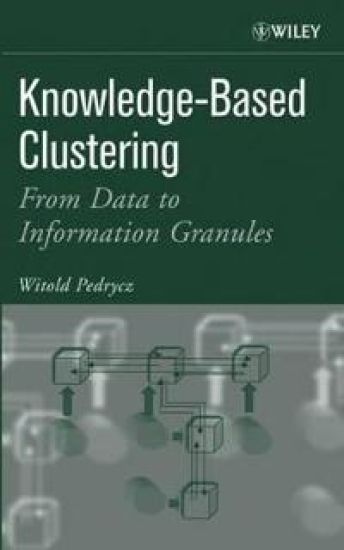
A comprehensive coverage of emerging and current technology dealing with heterogeneous sources of information, including data, design hints, reinforcement signals from external datasets, and related topicsCovers all necessary prerequisites, and if necessary,additional explanations of more advanced topics, to make abstract concepts more tangibleIncludes illustrative material andwell-known experimentsto offer hands-on experience
Granular Computing

Granular Computing

Andrzej Bargiela; Witold Pedrycz

Springer-Verlag New York Inc.
2002
sidottu
This book is about Granular Computing (GC) - an emerging conceptual and of information processing. As the name suggests, GC concerns computing paradigm processing of complex information entities - information granules. In essence, information granules arise in the process of abstraction of data and derivation of knowledge from information. Information granules are everywhere. We commonly use granules of time (seconds, months, years). We granulate images; millions of pixels manipulated individually by computers appear to us as granules representing physical objects. In natural language, we operate on the basis of word-granules that become crucial entities used to realize interaction and communication between humans. Intuitively, we sense that information granules are at the heart of all our perceptual activities. In the past, several formal frameworks and tools, geared for processing specific information granules, have been proposed. Interval analysis, rough sets, fuzzy sets have all played important role in knowledge representation and processing. Subsequently, information granulation and information granules arose in numerous application domains. Well-known ideas of rule-based systems dwell inherently on information granules. Qualitative modeling, being one of the leading threads of AI, operates on a level of information granules. Multi-tier architectures and hierarchical systems (such as those encountered in control engineering), planning and scheduling systems all exploit information granularity. We also utilize information granules when it comes to functionality granulation, reusability of information and efficient ways of developing underlying information infrastructures.
Software Engineering

Software Engineering

James F. Peters; Witold Pedrycz

John Wiley Sons Inc
2000
sidottu
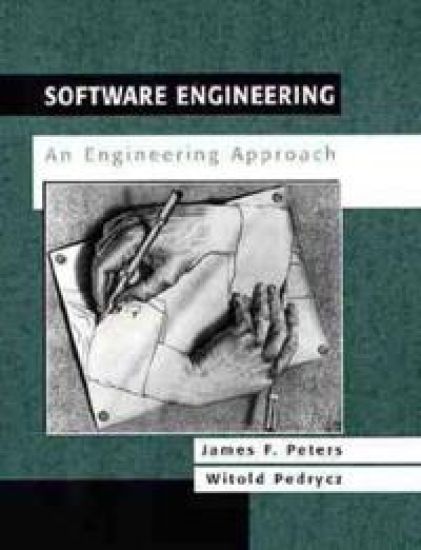
A clear-cut, practical approach to software development! Emphasizing both the design and analysis of the technology, Peters and Pedrycz have written a comprehensive and complete text on a quantitative approach to software engineering. As you read the text, you'll learn the software design practices that are standard practice in the industry today. Practical approaches to specifying, designing and testing software as well as the foundations of Software Engineering are also presented. And the latest information in the field, additional experiments, and solutions to selected problems are available at the authors's web site (httpp//www.ee.umanitoba.ca/~clib/main.html). Key Features * Thorough coverage is provided on the quantitative aspects of software Engineering including software measures, software quality, software costs and software reliability. * A complete case study allows students to trace the application of methods and practices in each chapter. * Examples found throughout the text are in C++ and Java. * A wide range of elementary and intermediate problems as well as more advanced research problems are available at the end of each chapter. * Students are given the opportunity to expand their horizons through frequent references to related web pages.
Data Mining Methods for Knowledge Discovery

Data Mining Methods for Knowledge Discovery

Krzysztof J. Cios; Witold Pedrycz; Roman W. Swiniarski

Springer
1998
sidottu
Data Mining Methods for Knowledge Discovery provides an introduction to the data mining methods that are frequently used in the process of knowledge discovery. This book first elaborates on the fundamentals of each of the data mining methods: rough sets, Bayesian analysis, fuzzy sets, genetic algorithms, machine learning, neural networks, and preprocessing techniques. The book then goes on to thoroughly discuss these methods in the setting of the overall process of knowledge discovery. Numerous illustrative examples and experimental findings are also included. Each chapter comes with an extensive bibliography. Data Mining Methods for Knowledge Discovery is intended for senior undergraduate and graduate students, as well as a broad audience of professionals in computer and information sciences, medical informatics, and business information systems.
Fuzzy Relation Equations and Their Applications to Knowledge Engineering

Fuzzy Relation Equations and Their Applications to Knowledge Engineering

Antonio Di Nola; S. Sessa; Witold Pedrycz; E. Sanchez

Springer
1989
sidottu
It took many decades for Peirce's coneept of a relation to find its way into the microelectronic innards of control systems of eement kilns, subway trains, and tunnel-digging machinery. But what is amazing is that the more we leam about the basically simple coneept of a relation, the more aware we become of its fundamental importanee and wide ranging ramifications. The work by Di Nola, Pedrycz, Sanchez, and Sessa takes us a long distanee in this direction by opening new vistas on both the theory and applications of fuzzy relations - relations which serve to model the imprecise coneepts which pervade the real world. Di Nola, Pedrycz, Sanchez, and Sessa focus their attention on a eentral problem in the theory of fuzzy relations, namely the solution of fuzzy relational equations. The theory of such equations was initiated by Sanchez in 1976, ina seminal paper dealing with the resolution of composite fuzzy relational equations. Sinee then, hundreds of papers have been written on this and related topics, with major contributions originating in France, Italy, Spain, Germany, Poland, Japan, China, the Soviet Union, India, and other countries. The bibliography included in this volume highlights the widespread interest in the theory of fuzzy relational equations and the broad spectrum of its applications.