Kirjojen hintavertailu – 12 903 727 kirjaa ja 27 kauppaa

Kirjailija

Wolfgang Ernst

Kirjat ja teokset yhdessä paikassa: 24 kirjaa, julkaisuja vuosilta 1992–2026, suosituimpiin kuuluu Akribie und Obsession. Vertaile teosten hintoja ja tarkista saatavuus suomalaisista kirjakaupoista.

24 kirjaa

Kirjojen julkaisuvuodet: 1992–2026.

Transitive Media [Philosophy]

Transitive Media [Philosophy]

Wolfgang Ernst

UNIVERSITY OF EXETER PRESS
2026
sidottu
With the pervasive digitalization of communication and information devices in society, and with the increasing supremacy of software that dissimulates its physical medium, actual technologies are increasingly disappearing behind their user-oriented surfaces and manifest content. The more human users are superficially in touch with such devices, the more their technical essence recedes into an almost non-intelligible sphere, culminating in the hidden layers of neuronal nets in Artificial Intelligence. Transitive Media [Philosophy] argues for a media engagement that instead stays close to the mechanism and becomes conscious of its knowledge value in real time. Rejecting symbolic abstraction, the book argues for a ‘transitive’ engagement, in the grammatical sense of an immediate relation between verbal expression and its objects where the actor remains entangled in the action. Concrete technical scenarios explore how knowledge arises from real-time interaction with machines, whether through reactivating obsolete devices in Berlin’s Media Archaeological Fundus, analysing glitches as epistemic revelations, or reframing writing itself as a technical act. A hands-on, entangled philosophy emerges through—not just about—technology. Addressing a broad readership in media culture and philosophy, this volume offers a new kind of doing-media theory, urging readers to trade passive observation for embodied, operational insight to achieve a more conscious dialogue with their smartphones, tablets and other such items. Emerging from the author’s long academic training in media theories and from practical media-archaeological experience with generations of technical devices, this provocative book compels a rethink of how thought and technology co-constitute one another.
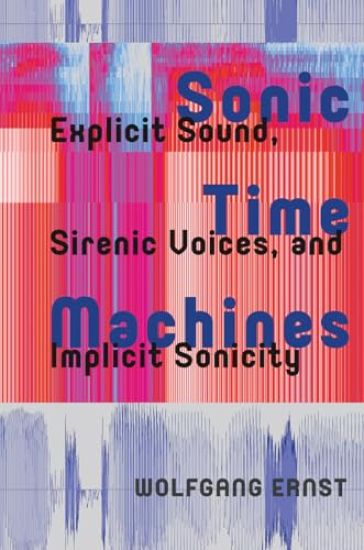
Sonic Time Machines

Sonic Time Machines

Wolfgang Ernst

TAYLOR FRANCIS LTD
2025
nidottu
Our studies of aesthetics and knowledge have long tended to privilege the visual - at the expense, Wolfgang Ernst argues, of the aural. Sonic Time Machines aims to correct that, presenting a striking new approach to theorising sound that investigates its split existence: as a temporal effect in a techno-cultural context and as a source of knowledge and information. Ernst creates a new term for the concept at the heart of the book, sonicity, a flexible and powerful term that allows him to consider sound with all its many physical, philosophical, and cultural valences.
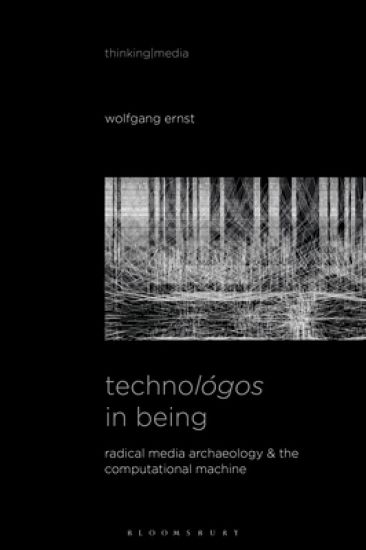
Technológos in Being

Technológos in Being

Wolfgang Ernst

BLOOMSBURY PUBLISHING PLC
2022
nidottu
Wolfgang Ernst’s new work, Technológos in Being, in its explicit media-scientific approach, aligns with the politics of the thinking media series to publish innovative works that advance media studies towards the ‘new sciences.’ Ernst’s invites readers to re-adjust their ideas of Media Studies: the conviction that an extended understanding of "medium" needs to include a concept of materiality that focuses on "non- human" agencies as well. The book grounds media analysis radically in the technological apparatuses, relays, transistors, hard- and software, to precisely locate the scenes, operations and frictions where reasoning logos and ‘informable’ matter interfere.
Halluzinogen

Halluzinogen

Wolfgang Ernst

Books on Demand
2021
pokkari
Der neunzehnj hrige Felix - ein Einzelg nger -, der unzufrieden mit seinem Leben ist, sucht einen Ausweg aus der Alltags-Tristesse. Nach gr ndlicher berlegung beschlie t er sein Leben grundlegend zu ver ndern. Die berlegungen m nden in dem Entschluss, das Abenteuer zu suchen. Ausgel st von einem Internet-Chat verschl gt es Felix nach Brasilien. Doch anstatt einer Welt seiner Tr ume findet er sich an einem Ort voller Menschenverachtung und Habgier wieder. Zeitgleich mit einer auf dem Markt aufgetauchten neuartigen Droge verschwinden auf r tselhafte Weise junge M nner. Die sterreischiche und die deutsche Polizei vermuten einen Zusammenhang und ermitteln.
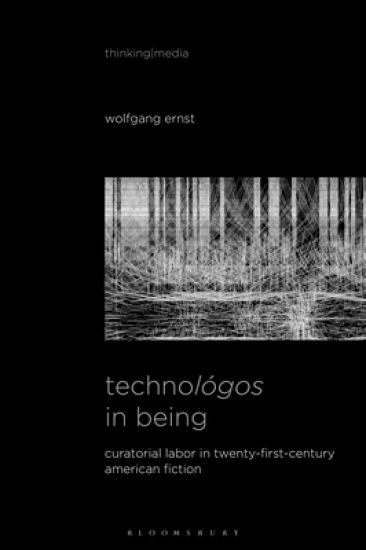
Technológos in Being

Technológos in Being

Wolfgang Ernst

Bloomsbury Academic USA
2021
sidottu
Wolfgang Ernst’s new work, Technológos in Being, in its explicit media-scientific approach, aligns with the politics of the thinking media series to publish innovative works that advance media studies towards the ‘new sciences.’ Ernst’s invites readers to re-adjust their ideas of Media Studies: the conviction that an extended understanding of "medium" needs to include a concept of materiality that focuses on "non- human" agencies as well. The book grounds media analysis radically in the technological apparatuses, relays, transistors, hard- and software, to precisely locate the scenes, operations and frictions where reasoning logos and ‘informable’ matter interfere.
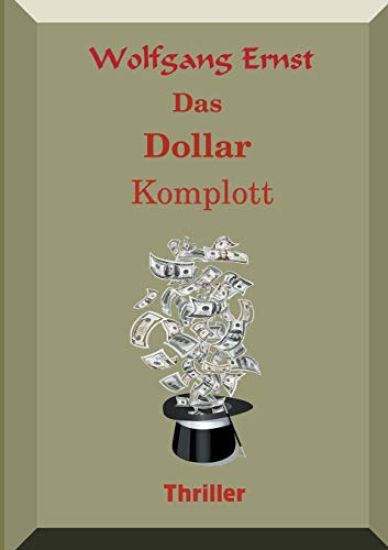
Das Dollarkomplott

Das Dollarkomplott

Wolfgang Ernst

Books on Demand
2020
pokkari
Das Dollarkomplott ist ein spannungsgeladener Thriller, der sich mit den Machenschaften einer im Geheimen t tigen Gruppe gr enwahnsinniger Vertreter des Geldadels besch ftigt, die es sich in den Kopf gesetzt haben, die Welt nach ihren Vorstellungen zu regieren.
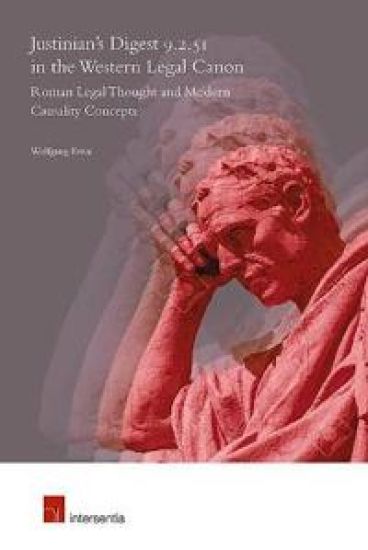
Justinian's Digest 9.2.51 in the Western Legal Canon
Justinian 's Digest, enacted 533 CE, collects excerpts of high-calibre writings from Roman legal intellectuals, produced in the first and second centuries CE. Since the High Middle Ages it has been used as a quarry of legal concepts and doctrines. Concerning the liabilities of two consecutive attackers, the first of whom mortally wounds the victim, while the second finishes the job and leaves the victim dead, the Digest preserves two conflicting texts: Celsus (67130 CE) held that the second attacker is liable, under the relevant statute (the lex Aquilia), for killing, whereas the first attacker should be liable for wounding only. Julian (ca 110ca 175 CE), in contrast, advocated holding both attackers liable as killers. To the present day, commentators on Justinian's Digest have been challenged to make sense of the conflict between these two statements. Ever more elaborate interpretations have been advanced, unlocking a range of diverse issues of causality and evidence, deterrence and statutory interpretation. Like few other texts from Roman lawyers, Julians essay (D. 9.2.51), mirrored in a colourful spectrum of intellectual responses, emerged as a signature piece of the western legal canon. Focussed on the history of one case, this book provides an exhaustive review of past and present interpretations and makes for a historiography of Roman law scholarship, from its medieval beginnings to our contemporary research activities.

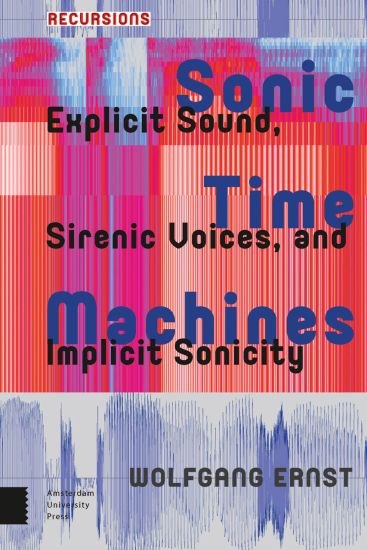
Sonic Time Machines

Sonic Time Machines

Wolfgang Ernst

Amsterdam University Press
2016
sidottu
Our studies of aesthetics and knowledge have long tended to privilege the visual - at the expense, Wolfgang Ernst argues, of the aural. Sonic Time Machines aims to correct that, presenting a striking new approach to theorising sound that investigates its split existence: as a temporal effect in a techno-cultural context and as a source of knowledge and information. Ernst creates a new term for the concept at the heart of the book, "sonicity," a flexible and powerful term that allows him to consider sound with all its many physical, philosophical, and cultural valences.
Chronopoetics

Chronopoetics

Wolfgang Ernst

Rowman Littlefield International
2016
sidottu
Wolfgang Ernst has demonstrated that the knowledge of time-giving (‘chrono-poetical’) media and their temporal essence enriches the tradition of philosophical inquiry into the nature of ‘time’. This book, a translated and abridged edition of Ernst’s two major volumes, Chronopoetik and Gleichursprünglichkeit, undertakes this on three levels: a close analysis of time-critical moments within media technologies; descriptions of how media temporalities affect and disrupt the traditional human sense of time; and questioning the traditional position of media time within cultural history. The book brings together two fields of inquiry: the technological analysis of media time processes and the venerable tradition of philosophical inquiry into the nature of time. Ernst argues that the scientific inquiry into the nature of time is enriched by the media-technological context. The book exposes a media theoretical approach to contemporary media culture that derives from the combination of philosophical reflection on the essence of technology and a close analysis of technological devices themselves. Ultimately Ernst addresses a fundamental concern of past, contemporary and future media culture: the position of technology in culture under the focused perspective of its tempor(e)alities.
Chronopoetics

Chronopoetics

Wolfgang Ernst

Rowman Littlefield International
2016
nidottu
Wolfgang Ernst has demonstrated that the knowledge of time-giving (‘chrono-poetical’) media and their temporal essence enriches the tradition of philosophical inquiry into the nature of ‘time’. This book, a translated and abridged edition of Ernst’s two major volumes, Chronopoetik and Gleichursprünglichkeit, undertakes this on three levels: a close analysis of time-critical moments within media technologies; descriptions of how media temporalities affect and disrupt the traditional human sense of time; and questioning the traditional position of media time within cultural history. The book brings together two fields of inquiry: the technological analysis of media time processes and the venerable tradition of philosophical inquiry into the nature of time. Ernst argues that the scientific inquiry into the nature of time is enriched by the media-technological context. The book exposes a media theoretical approach to contemporary media culture that derives from the combination of philosophical reflection on the essence of technology and a close analysis of technological devices themselves. Ultimately Ernst addresses a fundamental concern of past, contemporary and future media culture: the position of technology in culture under the focused perspective of its tempor(e)alities.
Stirrings in the Archives

Stirrings in the Archives

Wolfgang Ernst

Rowman Littlefield
2015
sidottu
Like most of Wolfgang Ernst’s work, Das Rumoren der Archiv explored the concept of archival and media theory from a current cultural digital context. Ernst challenges the traditional perspective of the cultural heritage institution and how it relied on media for creating, storing and disseminating digital information. Archives have a place in a digital society, and the archivist’s role will be more increasingly vital in the future. As Ernst points out, his work will show a way out of the archive, away from the notion that the era of archive is coming to an end. Here is the long-awaited English translation of this seminal work exploring cultural heritage before the archives, throughout history, and from today into the future. Ernst work emphasized a need to recognize media as a method for capturing and preserving our collective cultural identity. It is vital that archivists promoted a greater awareness of how media technology augmented the creation, management, and dissemination of digital content.
Gehirn Und Zauberspruch

Gehirn Und Zauberspruch

Wolfgang Ernst

Peter Lang AG
2013
sidottu
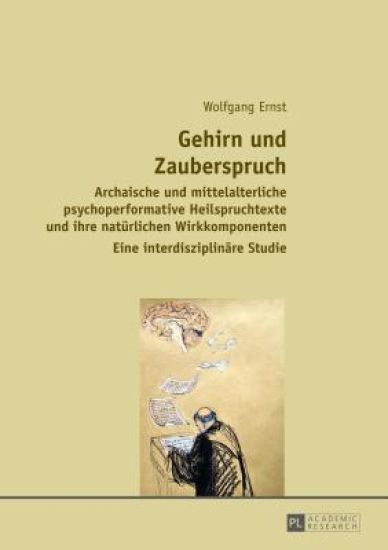
Seit Beginn menschlicher Kultur waren Heilkundige bemuht, Kranken auch mit geeigneten Worten zu helfen. Archaische und mittelalterliche Heilspruchtexte, bisher als magische oder per Wortakt performierende Instrumente gedeutet, werden vom Autor erstmals nach neurobiologisch moeglichen Funktionsablaufen unter die Lupe genommen. Textinhalte und Wortfiguren werden nach Kriterien emotionaler Verarbeitung per frontaler Regulierung, als Reaktion auf kognitive Inkongruenzen, als Imagination von Regression und als extro- und introversive Katharsis beschrieben. Dabei zeigt sich, dass fliessende reziproke Vermittlungen von Kultur zu Natur moeglich waren: Wort und Ritus konnten zur Aktivierung innerer Bilder und damit neuronaler Aktivitaten bis zu immunologischen Veranderungen beitragen.
Digital Memory and the Archive

Digital Memory and the Archive

Wolfgang Ernst

University of Minnesota Press
2012
nidottu
In the popular imagination, archives are remote, largely obsolete institutions: either antiquated, inevitably dusty libraries or sinister repositories of personal secrets maintained by police states. Yet the archive is now a ubiquitous feature of digital life. Rather than being deleted, e-mails and other computer files are archived. Media software and cloud storage allow for the instantaneous cataloging and preservation of data, from music, photographs, and videos to personal information gathered by social media sites. In this digital landscape, the archival-oriented media theories of Wolfgang Ernst are particularly relevant. Digital Memory and the Archive, the first English-language collection of the German media theorist’s work, brings together essays that present Ernst’s controversial materialist approach to media theory and history. His insights are central to the emerging field of media archaeology, which uncovers the role of specific technologies and mechanisms, rather than content, in shaping contemporary culture and society. Ernst’s interrelated ideas on the archive, machine time and microtemporality, and the new regimes of memory offer a new perspective on both current digital culture and the infrastructure of media historical knowledge. For Ernst, different forms of media systems-from library catalogs to sound recordings-have influenced the content and understanding of the archive and other institutions of memory. At the same time, digital archiving has become a contested site that is highly resistant to curation, thus complicating the creation and preservation of cultural memory and history.
Digital Memory and the Archive

Digital Memory and the Archive

Wolfgang Ernst

University of Minnesota Press
2012
sidottu
In the popular imagination, archives are remote, largely obsolete institutions: either antiquated, inevitably dusty libraries or sinister repositories of personal secrets maintained by police states. Yet the archive is now a ubiquitous feature of digital life. Rather than being deleted, e-mails and other computer files are archived. Media software and cloud storage allow for the instantaneous cataloging and preservation of data, from music, photographs, and videos to personal information gathered by social media sites. In this digital landscape, the archival-oriented media theories of Wolfgang Ernst are particularly relevant. Digital Memory and the Archive, the first English-language collection of the German media theorist’s work, brings together essays that present Ernst’s controversial materialist approach to media theory and history. His insights are central to the emerging field of media archaeology, which uncovers the role of specific technologies and mechanisms, rather than content, in shaping contemporary culture and society. Ernst’s interrelated ideas on the archive, machine time and microtemporality, and the new regimes of memory offer a new perspective on both current digital culture and the infrastructure of media historical knowledge. For Ernst, different forms of media systems-from library catalogs to sound recordings-have influenced the content and understanding of the archive and other institutions of memory. At the same time, digital archiving has become a contested site that is highly resistant to curation, thus complicating the creation and preservation of cultural memory and history.