Kirjojen hintavertailu – 12 859 829 kirjaa ja 27 kauppaa

Kirjailija

Zhong Lin Wang

Kirjat ja teokset yhdessä paikassa: 15 kirjaa, julkaisuja vuosilta 1995–2026, suosituimpiin kuuluu Elastic and Inelastic Scattering in Electron Diffraction and Imaging. Vertaile teosten hintoja ja tarkista saatavuus suomalaisista kirjakaupoista.

Nimi esiintyy myös muodoissa: Zhong-lin Wang

15 kirjaa

Kirjojen julkaisuvuodet: 1995–2026.

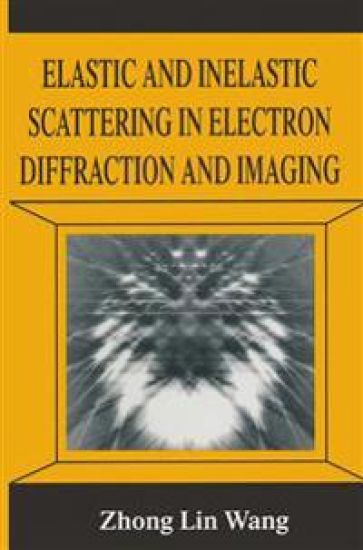
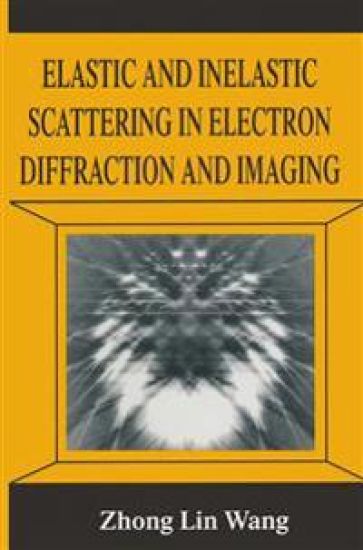
Elastic and Inelastic Scattering in Electron Diffraction and Imaging
Elastic and inelastic scattering in transmission electron microscopy (TEM) are important research subjects. For a long time, I have wished to systematically summarize various dynamic theories associated with quantitative electron micros­ copy and their applications in simulations of electron diffraction patterns and images. This wish now becomes reality. The aim of this book is to explore the physics in electron diffraction and imaging and related applications for materials characterizations. Particular emphasis is placed on diffraction and imaging of inelastically scattered electrons, which, I believe, have not been discussed exten­ sively in existing books. This book assumes that readers have some preknowledge of electron microscopy, electron diffraction, and quantum mechanics. I anticipate that this book will be a guide to approaching phenomena observed in electron microscopy from the prospects of diffraction physics. The SI units are employed throughout the book except for angstrom (A), which is used occasionally for convenience. To reduce the number of symbols used, the Fourier transform of a real-space function P'(r), for example, is denoted by the same symbol P'(u) in reciprocal space except that r is replaced by u. Upper and lower limits of an integral in the book are (-co, co) unless otherwise specified. The (-co, co) integral limits are usually omitted in a mathematical expression for simplification. I very much appreciate opportunity of working with Drs. J. M. Cowley and J. C. H. Spence (Arizona State University), J.

Functional and Smart Materials

Functional and Smart Materials

Zhong-lin Wang; Z.C. Kang

Springer-Verlag New York Inc.
2013
nidottu
In the search for new functional materials, a clear understanding about the relationship between the physical properties and the atomic-scale structure of materials is needed. Here, the authors provide graduate students and scientists with an in-depth account of the evolutionary behavior of oxide functional materials within specific structural systems, discussing the intrinsic connections among these different structural systems. Over 300 illustrations and key appendices support the text.
Reflection Electron Microscopy and Spectroscopy for Surface Analysis
In this book the theories, techniques and applications of reflection electron microscopy (REM), reflection high-energy electron diffraction (RHEED) and reflection electron energy-loss spectroscopy (REELS) are comprehensively reviewed for the first time. The book is divided into three parts: diffraction, imaging and spectroscopy. The text is written to combine basic techniques with special applications, theories with experiments, and the basic physics with materials science, so that a full picture of RHEED and REM emerges. An entirely self-contained study, the book contains much invaluable reference material, including FORTRAN source codes for calculating crystal structures data and electron energy loss spectra in different scattering geometries. This and many other features make the book an important and timely addition to the materials science literature.
Electron Microscopy of Nanotubes

Electron Microscopy of Nanotubes

Zhong-lin Wang; Chun Hui

Springer-Verlag New York Inc.
2003
sidottu
Research in carbon nanotubes has reached a horizon that is impacting a variety of fields, such as nanoelectronics, flat panel display, composite materials, sensors, nanodevices, and novel instrumentation. The unique structures of the nanotubes result in numerous superior physical and chemical properties, such as the strongest mechan­ ical strength, the highest thermal conductivity, room-temperature ballistic quantum conductance, electromechanical coupling, and super surface functionality. Several books are available that introduce the synthesis, physical and chemical properties, and applications of carbon nanotubes. Among the various analytical techniques, high-resolution transmission electron microscopy (HRTEM) has played a key role in the discovery and characterization of carbon nanotubes. It may be claimed that carbon nanotubes might not have been discovered without using HRTEM. There is a great need for a book that addresses the theory, techniques, and applications of electron microscopy and associated techniques for nanotube research. The objective of this book is to fill this gap. The potential of HRTEM is now well accepted in wide-ranging communities such as materials science, physics, chemistry, and electrical engineering. TEM is a powerful technique that is indispensable for characterizing nanomaterials and is a tool that each major research institute must have in order to advance its research in nanotechnology.
Reflection Electron Microscopy and Spectroscopy for Surface Analysis
In this book the theories, techniques and applications of reflection electron microscopy (REM), reflection high-energy electron diffraction (RHEED) and reflection electron energy-loss spectroscopy (REELS) are comprehensively reviewed for the first time. The book is divided into three parts: diffraction, imaging and spectroscopy. The text is written to combine basic techniques with special applications, theories with experiments, and the basic physics with materials science, so that a full picture of RHEED and REM emerges. An entirely self-contained study, the book contains much invaluable reference material, including FORTRAN source codes for calculating crystal structures data and electron energy loss spectra in different scattering geometries. This and many other features make the book an important and timely addition to the materials science literature.
Elastic and Inelastic Scattering in Electron Diffraction and Imaging

Elastic and Inelastic Scattering in Electron Diffraction and Imaging

Zhong-lin Wang

Kluwer Academic/Plenum Publishers
1995
sidottu
Elastic and inelastic scattering in transmission electron microscopy (TEM) are important research subjects. For a long time, I have wished to systematically summarize various dynamic theories associated with quantitative electron micros­ copy and their applications in simulations of electron diffraction patterns and images. This wish now becomes reality. The aim of this book is to explore the physics in electron diffraction and imaging and related applications for materials characterizations. Particular emphasis is placed on diffraction and imaging of inelastically scattered electrons, which, I believe, have not been discussed exten­ sively in existing books. This book assumes that readers have some preknowledge of electron microscopy, electron diffraction, and quantum mechanics. I anticipate that this book will be a guide to approaching phenomena observed in electron microscopy from the prospects of diffraction physics. The SI units are employed throughout the book except for angstrom (A), which is used occasionally for convenience. To reduce the number of symbols used, the Fourier transform of a real-space function P'(r), for example, is denoted by the same symbol P'(u) in reciprocal space except that r is replaced by u. Upper and lower limits of an integral in the book are (-co, co) unless otherwise specified. The (-co, co) integral limits are usually omitted in a mathematical expression for simplification. I very much appreciate opportunity of working with Drs. J. M. Cowley and J. C. H. Spence (Arizona State University), J.

Elastic and Inelastic Scattering in Electron Diffraction and Imaging

Elastic and Inelastic Scattering in Electron Diffraction and Imaging

Zhong Lin Wang

Springer International Publishing AG
2025
sidottu
This book provides an in-depth exploration of the physics underlying electron diffraction and imaging, with a focus on their applications in materials characterization. Originally published in 1995, the first edition systematically summarized various dynamic theories associated with quantitative electron microscopy and their applications in simulations of electron diffraction patterns and images. Since then, significant progress has been made in the field, necessitating this revised second edition. The second edition introduces new content, particularly emphasizing the diffraction and imaging of inelastically scattered electrons, a topic that has not been extensively covered in existing literature. This edition also includes updated theories and methodologies, reflecting the advancements in the field over the past decades. The book assumes that readers have a foundational understanding of electron microscopy, electron diffraction, and quantum mechanics. It aims to serve as a comprehensive guide for approaching phenomena observed in electron microscopy from the perspective of diffraction physics.
Contact-Electrification of Matter

Contact-Electrification of Matter

Zhong Lin Wang

Springer International Publishing AG
2025
sidottu
This book provides a comprehensive exploration of contact electrification across solid-solid, solid-liquid, and gas-solid interfaces. It looks into the underlying physics mechanisms, offering theoretical models and experimental methods to quantify and understand this ubiquitous yet complex phenomenon. Covering fundamental concepts such as triboelectricity, energy band models, and tribovoltaic effects, the book discusses the interactions and charge transfer processes that occur at various interfaces. Special attention is given to the role of material properties, electron transfer dynamics, and external factors such as surface roughness and environmental conditions. Each chapter builds upon foundational principles to provide a cohesive framework for understanding both the beneficial applications and potential drawbacks of contact electrification. In addition to theoretical insights, this book highlights cutting-edge technological applications related to contact-electrification, including triboelectric nanogenerators (TENGs), self-powered sensors, and contact-electro-catalysis. Practical implementations span fields such as sustainable energy harvesting, biomedical applications, environmental sensing, and advanced materials design. Written and edited by experts in the field, this book serves as an essential resource for researchers, engineers, and advanced students in materials science, physics, chemistry, and electrical engineering. With its rigorous treatment of the subject and focus on both foundational science and applied technologies, this book is poised to set the standard for research in contact electrification for years to come.
New Advances in Maxwell’s Equations and Applications

New Advances in Maxwell’s Equations and Applications

Er-Ping Li; Zhong Lin Wang

Springer International Publishing AG
2025
sidottu
This book offers a comprehensive examination of ongoing advancements in theoretical and experimental approaches to Maxwell's equations. It focuses on three key aspects: quantum effects, scale effects, and kinetic effects, which exert subtle influences at microscopic levels. Addressing pressing challenges for future progress, the text explores the interplay of these phenomena within classical electromagnetism. The evolution of data communication and information technology has led to a demand for high-density, minimization, ultra-compact nano-photo-electronic integration. As electronic devices scale down to nanometer and sub-nanometer levels, classical Maxwell’s equations reveal quantum effects. This book provides insights into these advancements, focusing on potential applications in nano-scale electronic and optic devices. Tailored for physicists, engineering scientists, electronics engineers, and developers, this text serves as a valuable resource. It guides readers from classical Maxwell’s equations to their quantum-affected counterparts, providing essential insights for electromagnetic simulation and the design of nano-scale electronic and optic systems. With its blend of theoretical foundations and practical applications, this book equips professionals with the knowledge needed to apply these advancements in real-world scenarios.
Piezotronics and Piezo-Phototronics

Piezotronics and Piezo-Phototronics

Zhong Lin Wang; Yan Zhang; Weiguo Hu

Springer International Publishing AG
2023
sidottu
Co-authored by the discoverer of the piezotronic effect, this book is a fundamental and comprehensive survey of piezotronics and piezo-phototronics. Piezotronics is a term broadly applied to devices fabricated using the piezopotential as a “gate” voltage to tune/control charge carrier transport at a contact or junction. The piezo-phototronic effect describes the use of the piezopotential to control the carrier generation, transport, separation and/or recombination for improving the performance of optoelectronic devices. The book first introduces the theory of the piezotronic effect and its applications in transistors, sensors, and catalysis. Subsequent chapters comprehensively cover the fundamentals of the piezo-phototronic effect and its impacts on photon sensors, solar cells, and LEDs. The updated and significantly expanded second edition covers the most recent advances and breakthroughs in this field over the last decade — gas, chemical, and biological nanosensors; quantumdots, wells, and wires; piezocatalysis; the piezo-photonic effect; and the pyro-phototronic effect. This seminal book serves as a basic text for scientists and students in the field of piezotronic devices and third-generation semiconductors.
Triboelectric Nanogenerators

Triboelectric Nanogenerators

Zhong Lin Wang; Long Lin; Jun Chen; Simiao Niu; Yunlong Zi

Springer International Publishing AG
2018
nidottu
This book introduces an innovative and high-efficiency technology for mechanical energy harvesting. The book covers the history and development of triboelectric nanogenerators, basic structures, working principles, performance characterization, and potential applications. It is divided into three parts: Part A illustrates the fundamental working modes of triboelectric nanogenerators with their prototype structures and theoretical analysis; Part B and Part C introduce two categories of applications, namely self-powered systems and self-powered active sensors. The book will be an ideal guide to scientists and engineers beginning to study triboelectric nanogenerators or wishing to deepen their knowledge of the field. Readers will be able to place the technical details about this technology in context, and acquire the necessary skills to reproduce the experimental setups for fabrication and measurement.
Triboelectric Nanogenerators

Triboelectric Nanogenerators

Zhong Lin Wang; Long Lin; Jun Chen; Simiao Niu; Yunlong Zi

Springer International Publishing AG
2016
sidottu
This book introduces an innovative and high-efficiency technology for mechanical energy harvesting. The book covers the history and development of triboelectric nanogenerators, basic structures, working principles, performance characterization, and potential applications. It is divided into three parts: Part A illustrates the fundamental working modes of triboelectric nanogenerators with their prototype structures and theoretical analysis; Part B and Part C introduce two categories of applications, namely self-powered systems and self-powered active sensors. The book will be an ideal guide to scientists and engineers beginning to study triboelectric nanogenerators or wishing to deepen their knowledge of the field. Readers will be able to place the technical details about this technology in context, and acquire the necessary skills to reproduce the experimental setups for fabrication and measurement.
Piezotronics and Piezo-Phototronics

Piezotronics and Piezo-Phototronics

Zhong Lin Wang

Springer-Verlag Berlin and Heidelberg GmbH Co. K
2016
nidottu
The fundamental principle of piezotronics and piezo-phototronics were introduced by Wang in 2007 and 2010, respectively. Due to the polarization of ions in a crystal that has non-central symmetry in materials, such as the wurtzite structured ZnO, GaN and InN, a piezoelectric potential (piezopotential) is created in the crystal by applying a stress. Owing to the simultaneous possession of piezoelectricity and semiconductor properties, the piezopotential created in the crystal has a strong effect on the carrier transport at the interface/junction. Piezotronics is for devices fabricated using the piezopotential as a “gate” voltage to control charge carrier transport at a contact or junction. The piezo-phototronic effect uses the piezopotential to control the carrier generation, transport, separation and/or recombination for improving the performance of optoelectronic devices, such as photon detector, solar cell and LED. The functionality offered by piezotroics and piezo-phototronics are complimentary to CMOS technology. There is an effective integration of piezotronic and piezo-phototronic devices with silicon based CMOS technology. Unique applications can be found in areas such as human-computer interfacing, sensing and actuating in nanorobotics, smart and personalized electronic signatures, smart MEMS/NEMS, nanorobotics and energy sciences. This book introduces the fundamentals of piezotronics and piezo-phototronics and advanced applications. It gives guidance to researchers, engineers and graduate students.