Kirjojen hintavertailu – 12 859 826 kirjaa ja 27 kauppaa
Kirjailija
Aeschylus
Kirjat ja teokset yhdessä paikassa: 240 kirjaa, julkaisuja vuosilta 1845–2026, suosituimpiin kuuluu Aeschylus Plays: I. Vertaile teosten hintoja ja tarkista saatavuus suomalaisista kirjakaupoista.
The Tragedies of Aeschylos is an unchanged, high-quality reprint of the original edition of 1891. Hansebooks is editor of the literature on different topic areas such as research and science, travel and expeditions, cooking and nutrition, medicine, and other genres. As a publisher we focus on the preservation of historical literature. Many works of historical writers and scientists are available today as antiques only. Hansebooks newly publishes these books and contributes to the preservation of literature which has become rare and historical knowledge for the future.
O Tit nas Promith as d netai ston K fkaso timorim nos ap' to D a. O phaistos ton simpon i, kath s to Kr tos kai i V a ton karph noun al pita. Sti sin khia ton episk ptontai i Okean des pou ton simpono n ki aft s. rkhetai sti sin khia o Okean s simvoul vontas ipokh risi kai k mpsi tis adiallax as. O Promith as arn tai. Tr tos episk ptis i I (k ri tou nakhou) kiniyim ni ap' tin ory tis ras. Sti siz tisi o Promith as promant vi apallay tou diou kai tis I s ap' ta din sto m llon. Aph ni kai k pio iponoo meno sto khor ti gnor zi mistik yia tin katastroph tou D a. Ta l yia tou ako gontai. Se l go pht ni o Erm s kai ton apil yia na tou aposp si to mistik . M taia epim ni. O Promith as antist ketai ak mi kai ston keravn tou D a. Sto t los tou rgou vouli zi sta v thi maz me to khor , pou tou m ni pist s.
O Aiskh los parous ase tin tragod a P rses okt khr nia met ti l xi ton Persik n Pol mon (472 p. Kh), kerd zontas, m lista, to pr to vrav o. nai i pr ti oloklirom ni tragod a pou dias zetai ap tin arkha a Ell da. Parousi zi tin plevr ton Pers n met tin ekstrat a tou X rxi stin Ell da, i op a, telik , vith stike sti navmakh a tis Salam nas.
I s ngrousi ton d o yion tou Id poda nai to th ma ton Ept ep Th vas. Met tin apok lipsi ton phrikt n pr xe n tou, o Id podas phise ton thr no stous d o yious tou, ton Eteokl kai ton Polin ki. Ek ni simph nisan na kiverno n ti Th va enall x. Ost so, tan rthe i sir tou Polin ki na anal vi tin exous a, o Eteokl s den t rise tin ip skhes tou. Aft prok lese tin ory tou Polin ki, o op os simm khise me ton vasili tou rgous drasto kai org nose ekstrat a enant on tis Th vas. Ept arkhig ap k the na ap ta d o ant pala strat vmata parat khtikan ekat rothen ton ept pil n tis p lis. O Eteokl s kai o Polin kis kat lixan na vr skontai o nas ap nanti ston llo stin vdomi p li. O Eteokl s nai o monakhik s kentrik s roas tis tragod as. I Th va vr sketai se asphiktik kat stasi poliork as ki ek nos prospath na organ si tin antep thesi, se mia m khi katadikasm ni na katal xi khor s pragmatik nikit .
Pr kitai yia to pr to dr ma tis Triloy as Or stia ki anaph retai stin dolophon a tou Agam mnona ap tin s zigo tou Klitaimn stra kai ton erast tis A yistho. I skin tis proph tidos Kass ndras, pou od retai yia tin aikhmalos a tis, an ki stis trayik teres tou pangosm ou The trou. Met phrasi se st khous, tou Grip ri.
The Choephori - The Libation Bearers - Aeschylus The Libation Bearers is the second play of the Oresteia. It deals with the reunion of Agamemnon's children, Electra and Orestes, and their revenge. Orestes kills Clytemnestra to avenge the death of Agamemnon, Orestes' father. Storyline Orestes arrives at the grave of his father, accompanied by his cousin Pylades, the son of the king of Phocis, where he has grown up in exile; he places two locks of his hair on the tomb. Orestes and Pylades hide as Electra, Orestes' sister, arrives at the grave accompanied by a chorus of elderly slave women (the libation bearers of the title) to pour libations on Agamemnon's grave; they have been sent by Clytemnestra in an effort "to ward off harm" (l.42). Just as the ritual ends, Electra spots a lock of hair on the tomb which she recognizes as similar to her own; subsequently she sees two sets of footprints, one of which has proportions similar to hers. At this point Orestes and Pylades emerge from their hiding place and Orestes gradually convinces her of his identity. Now, in the longest and most structurally complex lyric passage in extant Greek tragedy, the chorus, Orestes, and Electra, attempt to conjure the departed spirit of Agamemnon to aid them in revenging his murder. Orestes then asks "why she sent libations, what calculation led her to offer too late atonement for a hurt past cure" (l.515
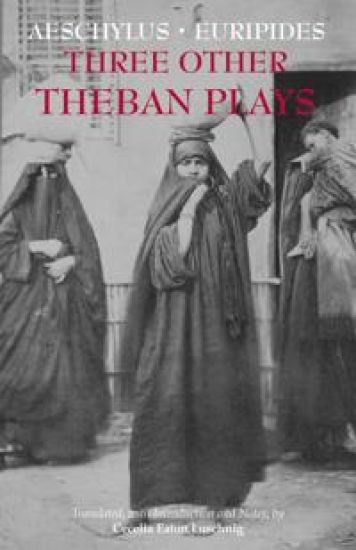
Though now associated mainly with Sophocles' Theban Plays and Euripides' Bacchae , the theme of Thebes and its royalty was a favorite of ancient Greek poets, one explored in a now lost epic cycle, as well as several other surviving tragedies. With a rich Introduction that sets three of these plays within the larger contexts of Theban legend and of Greek tragedy in performance, Cecelia Eaton Luschnig's annotated translation of Aeschylus' Seven Against Thebes , Euripides' Suppliants , and Euripides' Phoenician Women offers a brilliant constellation of less familiar Theban playsthose dealing with the war between Oedipus' sons, its casualties, and survivors.