Kirjojen hintavertailu – 12 859 827 kirjaa ja 27 kauppaa

Kirjailija

Aeschylus

Kirjat ja teokset yhdessä paikassa: 240 kirjaa, julkaisuja vuosilta 1845–2026, suosituimpiin kuuluu Aeschylus Plays: I. Vertaile teosten hintoja ja tarkista saatavuus suomalaisista kirjakaupoista.

240 kirjaa

Kirjojen julkaisuvuodet: 1845–2026.

Agamemnon

Agamemnon

Aeschylus

University of Wisconsin Press
2016
nidottu
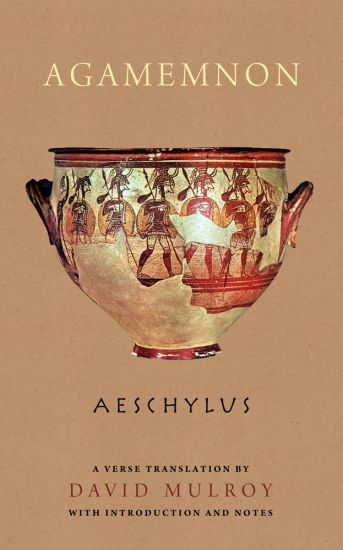
A new verse translation of Agamemnon, the first play in Aeschylus’s trilogy The Oresteia. Agamemnon, King of Argos, returns to Greece a victor in the Trojan War, bringing with him the seer Cassandra as his war-prize and concubine. Awaiting him is his vengeful wife Clytemnestra, who is angry at Agamemnon’s sacrifice of their daughter Iphigeneia to the gods, jealous of Cassandra, and guilty of taking a lover herself. The events that unfold catch everyone in a bloody net, including their absent son Orestes. Aeschylus was the first of the three great tragic dramatists of ancient Greece, a forerunner of Sophocles and Euripides. His earlier tragedies were largely choral pageants with minimal plots. In Agamemnon, he retains the lyricism of those works, but he infuses this drama with such creativity and energy that the spectator or reader is constantly spellbound. From the speech of the weary watchman on the roof, lying on his forepaws like a dog, to the blood-splattered Clytemnestra who likens herself to a garden in bloom, passage after passage demands to be included in anthologies of Greece’s greatest poems. Translator David Mulroy brings this ancient tragedy to life for modern readers and audiences. Using end rhyme and strict metrics, he combines the buoyant lyricism of the Greek text with a faithful rendering of its meaning in lucid English. The Agamemnon no longer needs to be called a difficult play.
The Oresteia

The Oresteia

Aeschylus

Methuen Drama
2015
nidottu
He who learns must suffer. Before setting out for the Trojan War, King Agamemnon sacrificed his daughter Iphigenia. Many years later, when Agamemnon returns to his palace, his adulterous Queen Clytemnestra takes her revenge by brutally murdering him and installing her lover on the throne. How will the gods judge Orestes, their estranged son, who must avenge his father’s death by murdering his mother? The curse of the House of Atreus, passing from generation to generation, is one of the great myths of Western literature. In the hands of Aeschylus, the story enacts the final victory of reason and justice over superstition and barbarity. The original trilogy, comprising Agamemnon, The Libation Bearers and Eumenides, is distilled into one thrilling three-act play in this magnificent new translation by award-winning playwright Rory Mullarkey.
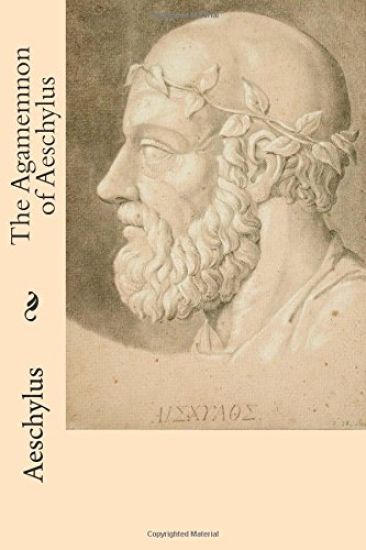
The Agamemnon of Aeschylus

The Agamemnon of Aeschylus

Aeschylus

Createspace Independent Publishing Platform
2015
nidottu
Agamemnon is the first of the three plays within the Oresteia trilogy. It details the homecoming of Agamemnon, King of Mycenae, from the Trojan War. After ten years of warfare, Troy had fallen and all of Greece could lay claim to victory. Waiting at home for Agamemnon is his wife, Queen Clytemnestra, who has been planning his murder. She desires his death to avenge the sacrifice of her daughter Iphigenia, to exterminate the only thing hindering her from commandeering the crown, and finally be able to publicly embrace her long-time-lover Aegisthus. The play opens to a watchman looking down and over the sea, reporting that he has been lying restless "like a dog" for a year, waiting to see some sort of signal confirming a Greek victory in Troy. He laments the fortunes of the house, but promises to keep silent: "A huge ox has stepped onto my tongue." The watchman sees a light far off in the distance-a bonfire signaling Troy's fall-and is overjoyed at the victory and hopes for the hasty return of his King, as the house has "wallowed" in his absence. Clytaemnestra is introduced to the audience and she declares that there will be celebrations and sacrifices throughout the city as Agamemnon and his army return. Upon the return of Agamemnon, his wife laments in full view of Argos how horrible the wait for her husband, and King, has been. After her soliloquy, Clytemnestra pleads with and convinces Agamemnon to walk on the robes laid out for him. This is a very ominous moment in the play as loyalties and motives are questioned. The King's new concubine, Cassandra, is now introduced and this immediately spawns hatred from the queen, Clytemnestra. Cassandra is ordered out of her chariot and to the altar where, once she is alone, is heard crying out insane prophecies to Apollo about the death of Agamemnon and her own shared fate. Inside the house a cry is heard; Agamemnon has been stabbed in the bathtub. The chorus separate from one another and ramble to themselves, proving their cowardice, when another final cry is heard. When the doors are finally opened, Clytemnestra is seen standing over the dead bodies of Agamemnon and Cassandra. Clytemnestra describes the murder in detail to the chorus, showing no sign of remorse or regret. Suddenly the exiled lover of Clytemnestra, Aegisthus, bursts into the palace to take his place next to her. Aegisthus proudly states that he devised the plan to murder Agamemnon and claim revenge for his father (the father of Aegisthus, Thyestes, was tricked into eating two of his sons by his brother Atreus, the father of Agamemnon). Clytemnestra claims that she and Aegisthus now have all the power and they re-enter the palace with the doors closing behind them.
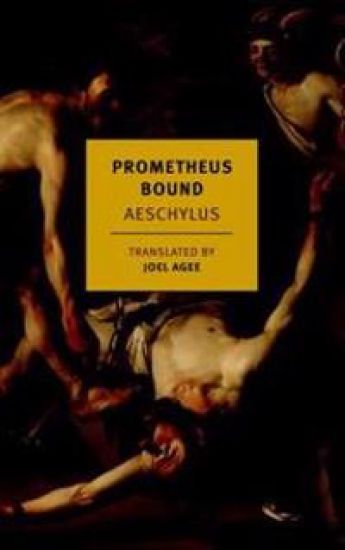
Prometheus Bound

Prometheus Bound

Aeschylus; Joel Agee

NYRB Classics
2015
nidottu
"Prometheus Bound" is the starkest and strangest of the classic Greek tragedies, a play in which god and man are presented as radically, irreconcilably at odds. It begins with the shock of hammer blows as the Titan Prometheus is shackled to a rock in the Caucasus. This is his punishment for giving the gift of fire to humankind and for thwarting Zeus's decision to exterminate the human race. Prometheus's pain is unceasing, but he refuses to recant his commitment to humanity, to whom he has also brought the knowledge of writing, mathematics, medicine, and architecture. He hints that he knows how Zeus will be brought low in the future, but when Hermes demands that Prometheus divulge his secret, he refuses and is sent spinning into the abyss by a divine thunderbolt. To whom does humanity look for guidance: to the supreme deity or to the rebel Titan? What law controls the cosmos? "Prometheus Bound," one of the great poetic achievements of the ancient world, appears here in a splendid new translation by Joel Agee that does full justice to the harsh and keening music of the original Greek.
The Oresteia

The Oresteia

Aeschylus; Hugh (TRN) Lloyd-Jones

University of California Press
2014
pokkari
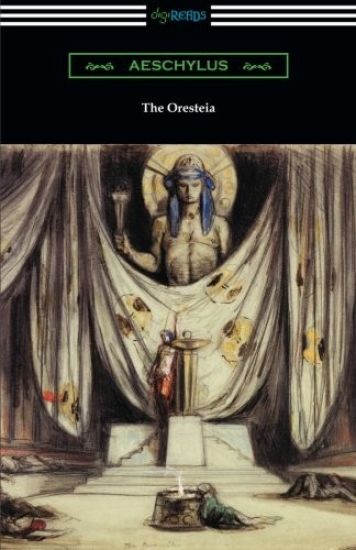
The most famous series of ancient Greek plays, and the only surviving trilogy, is the Oresteia of Aeschylus, consisting of Agamemnon, Choephoroe, and Eumenides. These three plays recount the murder of Agamemnon by his queen Clytemnestra on his return from Troy with the captive Trojan princess Cassandra; the murder in turn of Clytemnestra by their son Orestes; and Orestes' subsequent pursuit by the Avenging Furies (Eumenides) and eventual absolution. Hugh Lloyd-Jones's informative notes elucidate the text, and introductions to each play set the trilogy against the background of Greek religion as a whole and Greek tragedy in particular, providing a balanced assessment of Aeschylus's dramatic art. This superior translation should be read by every student of Greek civilization, classical literature, and drama.
The Oresteia

The Oresteia

Aeschylus

Bloomsbury Academic
2014
nidottu
First performed in 458BC, Aeschylus's trilogy of plays - known collectively as The Oresteia - remains perhaps the great masterpiece of Ancient tragic drama. Telling the bloody story of the House of Atreus, Aeschylus's tragedy stages an eternal debate about justice and revenge that remains relevant more than two millenia later. Now available in the Bloomsbury Revelations series in this classic and authoritative translation by Hugh Lloyd-Jones, this book contains the text of all three plays - Agamemnon, The Libation Bearers and The Eumenides - with extensive scholarly annotation throughout.
Aeschylus: Suppliant Women

Aeschylus: Suppliant Women

Aeschylus

Aris Phillips Ltd
2013
nidottu
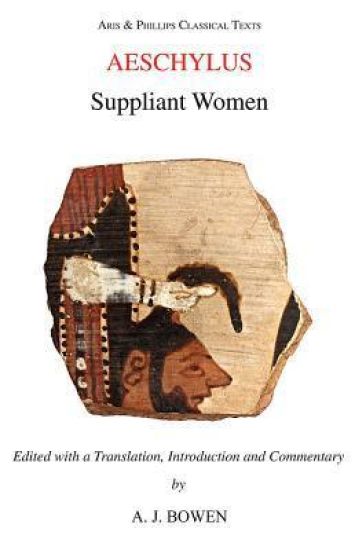
Aeschylus starts his tetralogy boldly, making the Danaids themselves prologue, chorus and protagonist. Guided by their father Danaus, these girls have fled from Egypt, where their cousins want to marry them, to seek asylum in Argos: they claim descent from Io, who was driven to Egypt five generations earlier when Zeus' love for her was detected by jealous Hera. In the long first movement of the play the Danaids argue their claim, pressing it with song and dance of pathos and power, upon the reluctant Argive king. He, forced eventually by their threat of suicide, puts the case to his people, who vote to accept the girls, but while they sing blessings on Argos, Danaus spies their cousins' ships arriving. Left on their own when he goes for help, they sing more seriously of suicide, and seek sanctuary upstage when the Egyptians enter. A remarkable tussle of two choruses ensues; in the nick of time the king arrives, sees off the Egyptians (but they promise a return) and offers his hospitality. The girls want their father, however, and go when guided by him and his escort of Argive soldiers. Their final song has elements of wedding song in it; they share it, provocatively, with the Argives. The rest of the tetralogy is lost, but enough is known to indicate that marriage is the theme. Aeschylus probably surprised his first audience in his use of the myth; his command of theatre and poetry is fully mature. A. J. Bowen is an Emeritus Fellow of Jesus College, Cambridge. From 1993 to 2007 he was Orator of the University.
Aeschylus: Suppliant Women

Aeschylus: Suppliant Women

Aeschylus

Aris Phillips Ltd
2013
sidottu
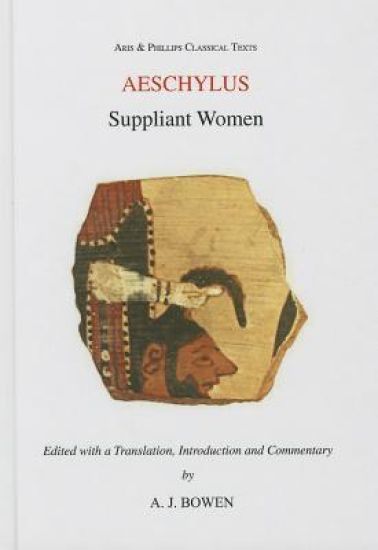
Aeschylus starts his tetralogy boldly, making the Danaids themselves prologue, chorus and protagonist. Guided by their father Danaus, these girls have fled from Egypt, where their cousins want to marry them, to seek asylum in Argos: they claim descent from Io, who was driven to Egypt five generations earlier when Zeus' love for her was detected by jealous Hera. In the long first movement of the play the Danaids argue their claim, pressing it with song and dance of pathos and power, upon the reluctant Argive king. He, forced eventually by their threat of suicide, puts the case to his people, who vote to accept the girls, but while they sing blessings on Argos, Danaus spies their cousins' ships arriving. Left on their own when he goes for help, they sing more seriously of suicide, and seek sanctuary upstage when the Egyptians enter. A remarkable tussle of two choruses ensues; in the nick of time the king arrives, sees off the Egyptians (but they promise a return) and offers his hospitality. The girls want their father, however, and go when guided by him and his escort of Argive soldiers. Their final song has elements of wedding song in it; they share it, provocatively, with the Argives. The rest of the tetralogy is lost, but enough is known to indicate that marriage is the theme. Aeschylus probably surprised his first audience in his use of the myth; his command of theatre and poetry is fully mature. A. J. Bowen is an Emeritus Fellow of Jesus College, Cambridge. From 1993 to 2007 he was Orator of the University.
The Prometheus Bound of Aeschylus

The Prometheus Bound of Aeschylus

Aeschylus

Cambridge University Press
2013
pokkari
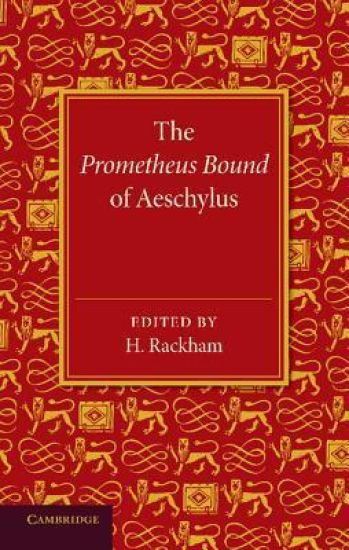
Originally published in 1899 as part of the Pitt Press Series, this book contains the Greek text of Aeschylus' Prometheus Bound. The tragedy is prefaced with a history of Prometheus in Greek myth and an attempted reconstruction of the other two plays in the Prometheus trilogy, of which Prometheus Bound is the only extant piece, with detailed notes following at the end of the text. This book will be of value to anyone with an interest in early Athenian drama.