Kirjailija
Andrew Taylor
Kirjat ja teokset yhdessä paikassa: 125 kirjaa, julkaisuja vuosilta 1995–2027, suosituimpiin kuuluu The World of Gerard Mercator. Vertaile teosten hintoja ja tarkista saatavuus suomalaisista kirjakaupoista.
125 kirjaa
Kirjojen julkaisuvuodet: 1995–2027.
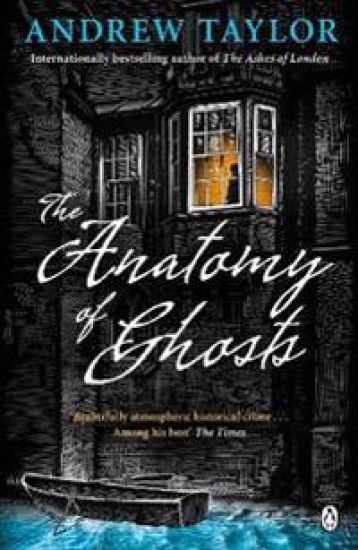
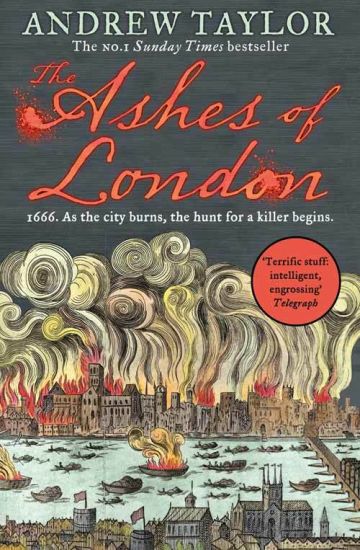
The Anatomy of Ghosts is a gripping historical mystery from the bestselling author of The Ashes of London1786, Jerusalem College, Cambridge. The ghost of murdered Sylvia Whichcote is sighted prowling the grounds by commoner Frank Oldershaw. Worried her son is descending into madness, Frank's anxious mother employs rationalist John Holdsworth to investigate the sighting, throwing the uneasy status quo at the college into chaos. For the sinister Holy Ghost Club governs the privileged life at Jerusalem. Pursued by the ghost of his dead wife, Maria, and Elinor, the very-much-alive Master's wife, Holdsworth must unravel the circumstances surrounding Sylvia's death or succumb to the hauntings himself . . .
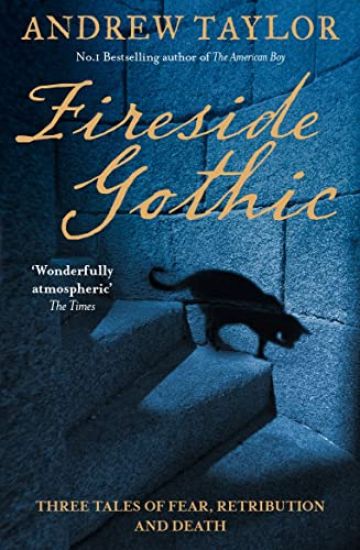
It's Christmas before the Great War and two lonely schoolboys have been left in the care of an elderly teacher. There is little to do but listen to his eerie tales about the nearby Cathedral. The boys concoct a plan to discover if the stories are true. But curiosity can prove fatal.
Building on his debut collection Radio Mast Horizon (Shearsman Books, 2013) Andrew Taylor takes the reader on a journey through landscapes and places such as the Welsh hills, the West Coast Mainline and the north docks of Liverpool. Travel is a recurring theme throughout these poems, alongside music and the seasons and the shifts they bring. From having coffee in quiet city-centre cafes to travelling around complete rail networks, Taylor invites the reader into a world that is both personal and universal.
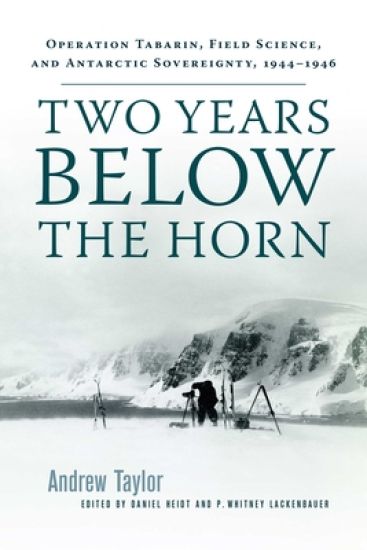
In Two Years Below the Horn, engineer Andrew Taylor vividly recounts his experiences and accomplishments during Operation Tabarin, a landmark British expedition to Antarctica to establish sovereignty and conduct science during the Second World War. When mental strain led the operation's first commander to resign, Taylor-a military engineer with extensive prewar surveying experience-became the first and only Canadian to lead an Antarctic expedition. As commander of the operation, Taylor oversaw construction of the first permanent base on the Antarctic continent at Hope Bay. From there, he led four-man teams on two epic sledging journeys around James Ross Island,overcoming arduous conditions and correcting cartographic mistakes made by previous explorers. The editors' detailed afterword draws on Taylor's extensive personal papers to highlight Taylor's achievements and document his significant contributions to polar science. This book will appeal to readers interested in the history of polar exploration, science, and sovereignty. It also sheds light on the little known contribution of a Canadian to a distant theatre of the Second World War. The wartime service of Major Taylor reveals important new details about a groundbreaking operation that laid the foundation for the British Antarctic Survey and marked a critical moment in the transition from the heroic to the modern scientific era in polar exploration.
In Two Years Below the Horn, engineer Andrew Taylor vividly recounts his experiences and accomplishments during Operation Tabarin, a landmark British expedition to Antarctica to establish sovereignty and conduct science during the Second World War. When mental strain led the operation's first commander to resign, Taylor— a military engineer with extensive prewar surveying experience—became the first and only Canadian to lead an Antarctic expedition. As Commander of the operation, Taylor oversaw construction of the first permanent base on the Antarctic continent at Hope Bay. From there, he led four-man teams on two epic sledging journeys around James Ross Island, overcoming arduous conditions and correcting cartographic mistakes made by previous explorers. The editors' detailed afterword draws on Taylor's extensive personal papers to highlight Taylor's achievements and document his significant contributions to polar science. This book will appeal to readers interested in history of polar exploration, science and sovereignty. It also sheds light on the little-known contribution of a Canadian to a distant theatre of the Second World War. The wartime service of Major Taylor reveals important new details about a groundbreaking operation that laid the foundation for the British Antarctic Survey and marked a critical moment in the transition from the heroic to the modern scientific era in polar exploration.
The first book in the No. 1 Times bestselling series ââ?¬Ë? This is terrific stuffââ?¬â?¢ Daily Telegraph ââ?¬Ë? A breathtakingly ambitious picture of an eraââ?¬â?¢ Financial Times ââ?¬Ë? A masterclass in how to weave a well-researched history into a complex plotââ?¬â?¢ The Times
The night before Christmas is a time when magic happens, if only you know where to look for it... A Christmas Carol for Evie is a modern fairy story that gives fairy godmothers a chance to speak for themselves. What they have to say will bring tears to your eyes. A small gem of a book, beautifully written, with 8 black and white illustrations.
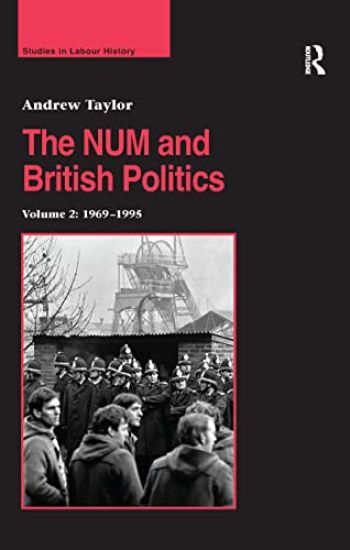
This book is the second of two volumes examining the place of the National Union of Mineworkers in post-war British politics. Covering the years 1969 to 1995, it charts reactions to the pit closures programme of the late 1950s and 1960s and the development of the NUM's reputation as the union that could topple governments. This reputation influenced profoundly the relationship between the NUM and successive Labour and Conservative administrations, underpinning changes in the state's approach to industrial disputes, so vividly manifested in the strike of 1984-85. Following the same intellectual path as volume one, this book concentrates on 'high' politics and the relationship between the NUM, the government and the National Coal Board. It highlights many of the same the key themes of the first volume, particularly the internal political process whereby the mineworkers' tendency to fragmentation was managed, and which was to eventually lead to the breakdown of this internal political process and the fragmentation of the NUM. Volume two explores how these fractures impacted upon such key issues as the formation of the 'Broad Left', the election of Joe Gormley as NUM President in 1971 and the strikes of 1972 and 1974 and relations with the Wilson and Heath governments. It then examines the election of Arthur Scargill in 1981 and the subsequent shifting of the union's political centre of gravity, together with the Conservative government's determination to use the power of the state to destroy the power of the NUM. The myths and legends surrounding the NUM and its power to bring down governments is still strong today, yet this book challenges many of the notions surrounding its strength, militancy and cohesiveness. Instead what emerges is a more complex picture as the union struggled to translate local loyalties into national solidarity. Whilst nationalisation initially helped this process, growing frustration exploded at the end of the 1960s, ushering in a period of

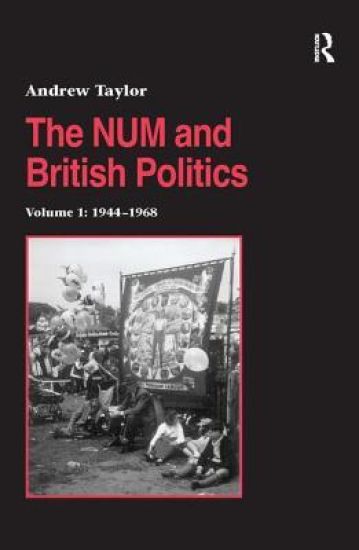
From its formation in 1944, the National Union of Mineworkers (NUM) was one of the most powerful and important players on the British political and industrial stage. Whilst the nation relied upon coal for its electricity production, domestic heating and railway transportation, the miners and their unions would always play a central role in national politics with the ability to cause massive disruption to the nation, should they decide to strike, as they did in 1972 and 1974. However, as the country began to move towards other forms of energy, such as oil and gas, the power of the mineworkers correspondingly decreased, leaving the once mighty union to come to terms with a very different world by the early eighties. The NUM and British Politics makes use of union material and party and government archives as well as oral testimony, much of it highly confidential, to present the first overall account of the evolving nature of the tripartite relationship between the miners, the NUM and the state.
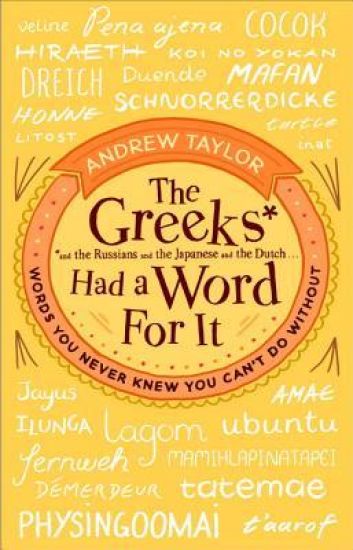
Do you ever search in vain for exactly the right word? Perhaps you want to articulate the vague desire to be far away. Or you can’t quite convey that odd urge to go outside and check to see if anyone is coming. Maybe you’re struggling to express there being just the right amount of something – not too much, but not too little. While the English may not have a word for it, the good news is that the Greeks, the Norwegians, the Dutch or possibly the Inuits probably do. Whether it’s the Norwegian forelsket (that feeling of euphoria at the start of a love affair) or the Indonesian jayus (a joke so poorly told and so unfunny that you can’t help but laugh), this delightful smörgåsbord of wonderful words from around the world will come to the rescue when the English language fails. Part glossary, part amusing musings, but wholly enlightening and entertaining, The Greeks Had a Word For It means you’ll never again be lost for just the right word.
In Newport County AFC: The First 100 Years, author and club historian Andrew Taylor celebrates Newport County AFC's first century, detailing the club's highs and lows over the years.
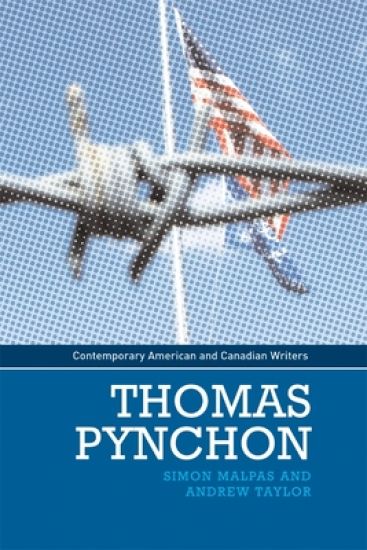
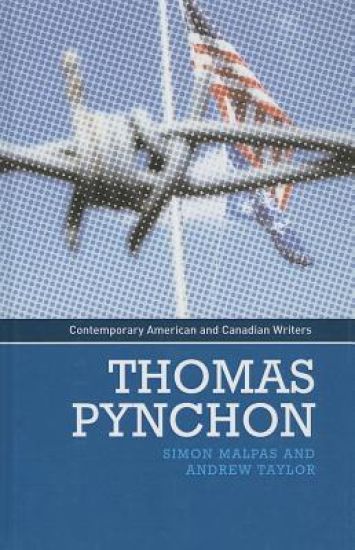
Now available in paperback, this is a comprehensive study of the most influential figure in postwar American literature. Over a writing career spanning more than fifty years, Thomas Pynchon has been at the forefront of America’s engagement with postmodern literary possibilities. In chapters that address the full range of Pynchon’s career, from his earliest short stories and first novel, V., to his most recent work, this book offers highly accessible and detailed readings of a writer whose work is indispensable to understanding how the American novel has met the challenges of postmodernity. The authors discuss Pynchon’s relationship to literary history, his engagement with discourses of science and utopianism, his interrogation of imperialism and his preoccupation with the paranoid sensibility. Invaluable to Pynchon scholars and to everyone working in the field of contemporary American fiction, this study explores how Pynchon’s complex narratives work both as exuberant examples of formal experimentation and as serious interventions in the political health of the nation.
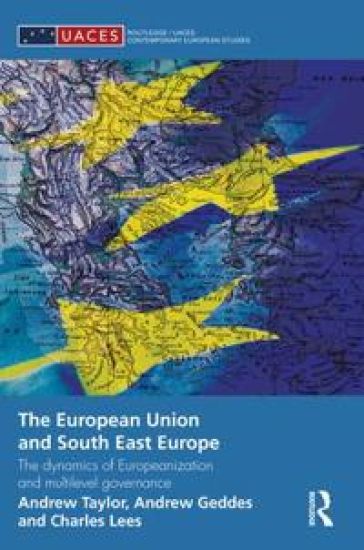
The European Union and South East Europe
Andrew Geddes; Charles Lees; Andrew Taylor
Routledge
2015
nidottu
This book explores the interaction of the EU in Greece, Slovenia, Croatia, and Macedonia in three key policy sectors – cohesion, border managements and the environment – and assesses the degree to which the European Union’s engagement with the democracies of South East Europe has promoted Europeanization and Multi-Level Governance. Although there is a tendency to view the Balkans as peripheral, this book argues that South East European states are central to what the EU is and aspires to become, and goes to the heart of many of the key issues confronting the EU. It compares changing modes of governance in the three policy areas selected because they are contentious issues in domestic politics and have trans-boundary policy consequences, in which there is significant EU involvement. The book draws on over 100 interviews conducted to explore actor motivation, preferences and perceptions in the face of pressure to adapt from the EU and uses Social Network Analysis. Timely and informative, this book considers broader dilemmas of integration and enlargement at a time when the EU’s effectiveness is under close scrutiny. The European Union and South East Europe will be of interest to students and scholars of European politics, public policy, and European Union governance and integration.
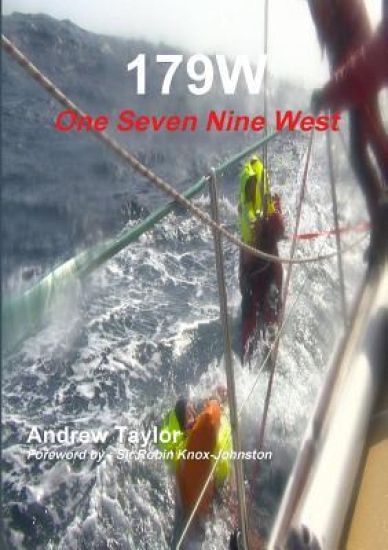
Sunday 30th March 2014. Andrew Taylor, an amateur sailor, taking part in the 9th Clipper round the world yacht race, aboard the 70' ocean racing yacht 'Derry LondonDerry Doire'. Fell overboard during horrific weather conditions and was lost at sea for 1hour and 40minutes in the very middle of the icy cold North Pacific. The crew of the yacht were totally alone in their search and the eventual dramatic recovery of Andrew, who was deeply hypothermic when recovered. This book sets the scene as to how Andrew initially came to be competing in the race, his team's eventful and truly amazing journey yacht racing over 45,000 miles around the world. The epic story of his desperate fight for survival in the North Pacific. Andrew's miraculous, surprising, and almost immediate return to ocean yacht racing. All sales proceeds from this book go to charity, split equally between; The Ellen MacArthur Cancer Trust and The Newmarket Day Centre
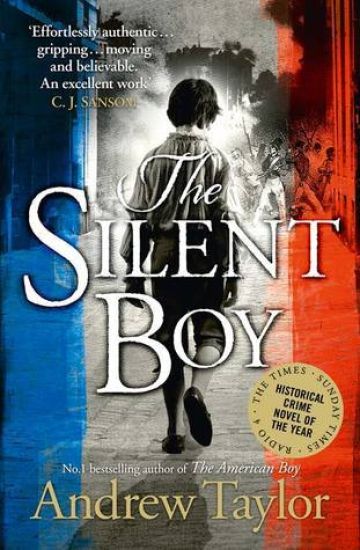
From the No. 1 bestselling author of THE AMERICAN BOY comes a brilliant new historical thriller set during the French Revolution. Selected as Historical Novel of the Year by The Times and Sunday Times, and picked as one of Radio 4â??s Crime Books of the Year.
Newport County AFC The First 100 Years
Andrew Taylor; John Aldridge
Amberley Publishing
2014
sidottu
The 2012/13 season marked 100 years of professional football in Newport, a century during which Newport County AFC has played a major role in raising the profile of the city, and taken generations of supporters on an emotional roller coaster, ranging from glorious successes to the depths of despair. County’s first 100 years has seen great highs: winning championships, a Wembley Cup Final and even stunning the football world by reaching the quarter finals of the European Cup Winners’ Cup. Such successes are all the more treasured as the club regularly faced financial difficulties, bad luck and misfortune. Ultimately, this led to the lowest point any supporter could endure – the bankruptcy of the original club in 1989. But this is also an inspiring story of defiant resistance, with supporters immediately reforming the club against all odds and battling for the right to regain their place in the Football League. County entered its centenary season at a new ground: Rodney Parade, the traditional home of Newport Rugby. With County having been formed as a local alternative to rugby, perhaps this will, after all, be where County come to enjoy their greatest success.
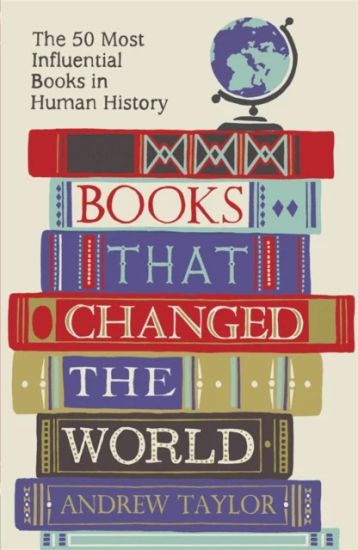
Books that Changed the World
Andrew Taylor
Quercus Publishing
2014
pokkari
Halvin toimitettuna 18,50 €
Books That Changed the World tells the fascinating stories behind 50 books that, in ways great and small, have changed the course of human history. Andrew Taylor sets each text in its historical context and explores its wider influence and legacy. Whether he's discussing the incandescent effect of The Qu'ran, the enduring influence of Adam Smith's Wealth of Nations, of the way in which Uncle Tom's Cabin by Harriet Beecher Stowe galavanized the anti-slavery movement, Taylor has written a stirring and informative testament to human ingenuity and endeavour. Ranging from The Iliad to Harry Potter and the Philosopher's Stone, the Kama Sutra to Lady Chatterley's Lover, this is the ultimate, thought-provoking read for book-lovers everywhere.
This is a comprehensive study of the most influential figure in postwar American literature. Over a writing career spanning more than fifty years, Thomas Pynchon has been at the forefront of America’s engagement with postmodern literary possibilities. In chapters that address the full range of Pynchon’s career, from his earliest short stories and first novel, V., to his most recent work, this book offers highly accessible and detailed readings of a writer whose work is indispensable to understanding how the American novel has met the challenges of postmodernity. The authors discuss Pynchon’s relationship to literary history, his engagement with discourses of science and utopianism, his interrogation of imperialism and his preoccupation with the paranoid sensibility. Invaluable to Pynchon scholars and to everyone working in the field of contemporary American fiction, this study explores how Pynchon’s complex narratives work both as exuberant examples of formal experimentation and as serious interventions in the political health of the nation.
The House and the Senate floors are the only legislative forums where all members of the U. S. Congress participate and each has a vote. Andrew J. Taylor explores why floor power and floor rights in the House are more restricted than in the Senate and how these restrictions affect the legislative process. After tracing the historical development of floor rules, Taylor assesses how well they facilitate a democratic legislative process—that is, how well they facilitate deliberation, transparency, and widespread participation. Taylor not only compares floor proceedings between the Senate and the House in recent decades; he also compares recent congressional proceedings with antebellum proceedings. This unique, systematic analysis reveals that the Senate is generally more democratic than the House—a somewhat surprising result, given that the House is usually considered the more representative and responsive of the two. Taylor concludes with recommendations for practical reforms designed to make floor debates more robust and foster representative democracy.