Kirjailija
Andrew Taylor
Kirjat ja teokset yhdessä paikassa: 125 kirjaa, julkaisuja vuosilta 1995–2027, suosituimpiin kuuluu The World of Gerard Mercator. Vertaile teosten hintoja ja tarkista saatavuus suomalaisista kirjakaupoista.
125 kirjaa
Kirjojen julkaisuvuodet: 1995–2027.
'Andrew Taylor is a master story-teller' Daily Telegraph From the No.1 bestselling author of The Ashes of London and The Fire Court, this is the final instalment in the acclaimed Lydmouth seriesAs a young police officer in Palestine during the closing months of the Mandate - the cradle of Middle Eastern terrorism - Richard Thornhill saw and did things which still haunt his dreams and make him fear for his sanity. Is he himself a killer? Now, when a retired police officer is found dead in the ruins of Lydmouth Castle, the past has come back to claim Detective Inspector Thornhill, and he is under suspicion of another murder. His wife Edith and former lover Jill Francis join forces in an uneasy alliance to try to help him. But there are many complications - scandalous allegations have been made about Miss Awre's School of Dancing; the Ruispidge Charity's annual dance for young people is under threat; teenagers haunt the newly opened Italian coffee bar and yearn for fumbled intimacies in the sheltering darkness of the Rex Cinema. And the Spring floods are rising higher than they have in living memory, drowning a multitude of secrets . . .'An excellent writer. He plots with care and intelligence and the solution to the mystery is satisfyingly chilling' The Times'The most under-rated crime writer in Britain today' Val McDermid 'There is no denying Taylor's talent, his prose exudes a quality uncommon among his contemporaries' Time Out
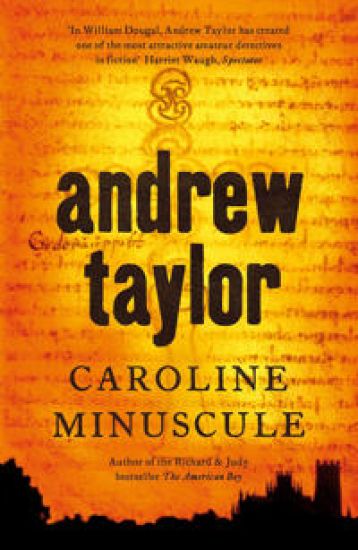
The first book in the brilliant William Dougal crime series, from the bestselling author of The American Boy and The Ashes of London. William Dougal, a post-graduate expert in the medieval script of Caroline Minuscule, stumbles on the garroted corpse of his tutor - and finds himself embroiled in a hunt for a cache of diamonds, a deadly fairy story in which no one obeys the rules, least of all Dougal's girlfriend Amanda. As the body count rises, the couple pursue both the diamonds and their doom from London, to an East Anglian cathedral close, from Cambridge to a wintry Suffolk estuary.
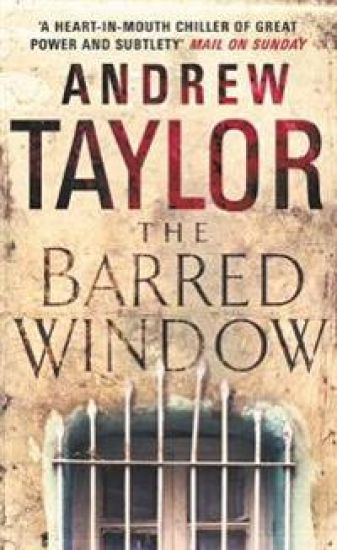
48 years in the same house, in the same room, with the same barred windowsThe Barred Windows is a psychological thriller packed with twists and turns from the bestselling author of The Ashes of LondonIt is 1993 and Thomas Penmarsh has lived in Finisterre, the house by the sea, all his life, sleeping each night in the room with the barred window. He's only 48 but has been an old man since one evening in 1967 when he lost everything he valued. With the death of his controlling mother, Thomas finally becomes master of his own house. When Esmond, his cousin and childhood confidante, comes to live with him Thomas is overjoyed - Esmond always looks after him . . . But is Esmond all that he seems? And why is he so concerned that Alice wants to come home too? Darling Alice, whom neither have seen since that fateful night twenty-six years ago.
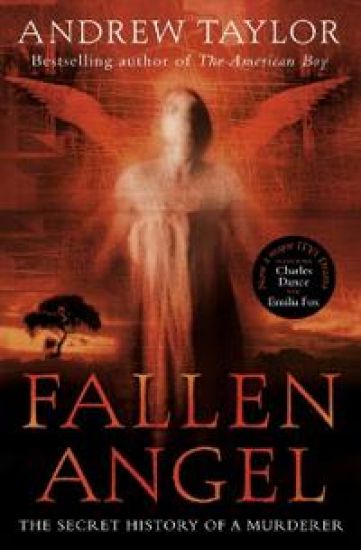
The thrilling and powerful psychological trilogy, reissued to coincide with a major 3 part TV adaptation, Fallen Angel, starring Charles Dance and Emilia Fox, from the bestelling author of ââ?¬Ë? The American Boyââ?¬â?¢.
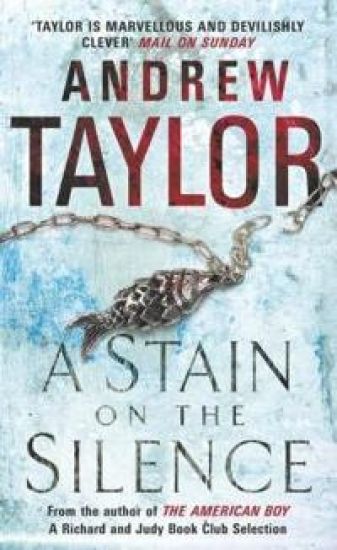
A Stain on the Silence is a gripping thriller from the bestselling author of The Ashes of LondonYou can run from a guilty conscience, but you can't hide . . . James wasn't much more than a child when he had an affair with Lily. And now, twenty-four years later, Lily confesses to James that their affair led to a daughter, Kate. And Kate desperately needs her father's help: she's wanted for murder. But there is no room for murder in James's life. He has a wife, a good job, a nice house in the country . . . As Kate comes crashing into his world, so she lights the fuse under his ordered life. Because James has also been keeping a secret - a very dark and deadly one...
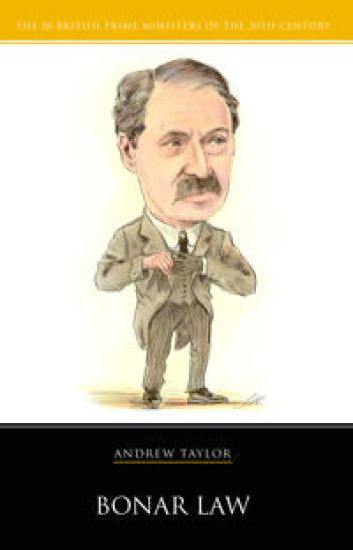
Bonar Law was a prominent opponent of Home Rule for Ireland; he also served the shortest term of any of Britain's 20th century Prime Ministers. In 1922 he was responsible for ending the coalition.
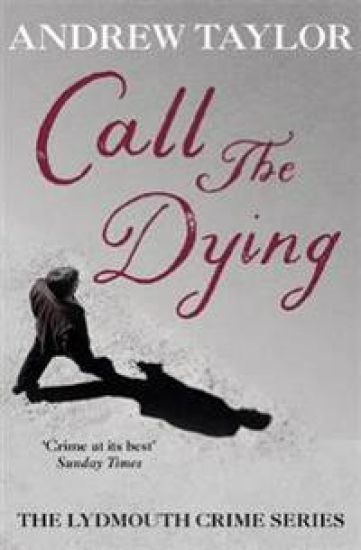
'Andrew Taylor is a master story-teller' Daily Telegraph From the No.1 bestselling author of The Ashes of London and The Fire Court, this is the seventh instalment in the acclaimed Lydmouth seriesLove and need make unexpected bedfellows, and both are blind. As the grip of a long hard winter tightens on Lydmouth, a dead woman calls the dying in a seance behind net curtains. Two provincial newspapers are in the throes of a bitter circulation war. A lorry-driver broods, and an office boy loses his heart. Britain is basking in the warm glow of post-war tranquillity, but in the quiet town of Lydmouth, darker forces are at play. The rats are fed on bread and milk, a gentleman's yellow kid glove is mislaid on a train, and something disgusting is happening at Mr Prout's toyshop. Returning to a town shrouded in intrigue and suspicion, Jill Francis becomes acting editor of the Gazette. Meanwhile, there's no pleasure left in the life of Detective Chief Inspector Richard Thornhill. Only a corpse, a television set and the promise of trouble to come.'An excellent writer. He plots with care and intelligence and the solution to the mystery is satisfyingly chilling' The Times'The most under-rated crime writer in Britain today' Val McDermid 'There is no denying Taylor's talent, his prose exudes a quality uncommon among his contemporaries' Time Out
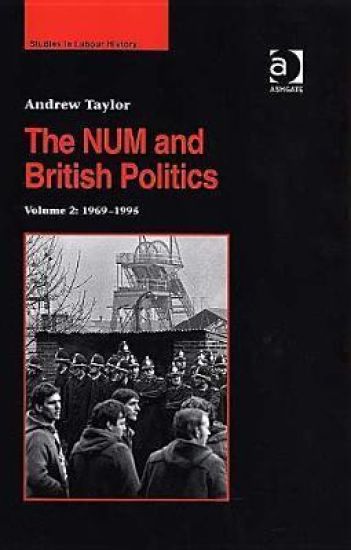
This book is the second of two volumes examining the place of the National Union of Mineworkers in post-war British politics. Covering the years 1969 to 1995, it charts reactions to the pit closures programme of the late 1950s and 1960s and the development of the NUM's reputation as the union that could topple governments. This reputation influenced profoundly the relationship between the NUM and successive Labour and Conservative administrations, underpinning changes in the state's approach to industrial disputes, so vividly manifested in the strike of 1984-85. Following the same intellectual path as volume one, this book concentrates on 'high' politics and the relationship between the NUM, the government and the National Coal Board. It highlights many of the same the key themes of the first volume, particularly the internal political process whereby the mineworkers' tendency to fragmentation was managed, and which was to eventually lead to the breakdown of this internal political process and the fragmentation of the NUM. Volume two explores how these fractures impacted upon such key issues as the formation of the 'Broad Left', the election of Joe Gormley as NUM President in 1971 and the strikes of 1972 and 1974 and relations with the Wilson and Heath governments. It then examines the election of Arthur Scargill in 1981 and the subsequent shifting of the union's political centre of gravity, together with the Conservative government's determination to use the power of the state to destroy the power of the NUM. The myths and legends surrounding the NUM and its power to bring down governments is still strong today, yet this book challenges many of the notions surrounding its strength, militancy and cohesiveness. Instead what emerges is a more complex picture as the union struggled to translate local loyalties into national solidarity. Whilst nationalisation initially helped this process, growing frustration exploded at the end of the 1960s, ushering in a period of
England 1819. Two enigmatic Americans arrive in London and soon after a bank collapses. A man is found dead on a building site; another goes missing in the teeming stews of the city's notorious Seven Dials district. A deathbed vigil ends in an act of theft, and a beautiful heiress flirts with her inferiors. A strange destiny connects each of these events to an American boy, Edgar Allan Poe, who was brought to England by his foster father and sent to the leafy village of Stoke Newington to be educated. An Unpardonable Crime is a twenty-first-century novel with a nineteenth-century voice. It is both a multilayered literary murder mystery and a love story, its setting ranging from the coal-scented fogs of late-Regency London to the stark winter landscapes of Gloucestershire. And at its center is the boy who does not really belong anywhere, an actor who never learns the significance of his part.
Edgar Allan Poe is the American boy, a child standing on the edge of mysteries. In 1819 two Americans arrive in London, and soon afterwards a bank collapses, a man is found dead and mutilated, a heiress flirts with her inferiors, and a schoolmaster struggles to understand what is happening.
A student in early 1800s England, a young Edgar Allan Poe and his schoolmaster become caught up in an intricate series of bizarre and violent events--including a bank collapse, a flirtatious young heiress, and a horrific mutilation murder--that has its origins in the New World and a bitter episode of corruption during the War of 1812. 40,000 first printing.
From its formation in 1944, the National Union of Mineworkers (NUM) was one of the most powerful and important players on the British political and industrial stage. Whilst the nation relied upon coal for its electricity production, domestic heating and railway transportation, the miners and their unions would always play a central role in national politics with the ability to cause massive disruption to the nation, should they decide to strike, as they did in 1972 and 1974. However, as the country began to move towards other forms of energy, such as oil and gas, the power of the mineworkers correspondingly decreased, leaving the once mighty union to come to terms with a very different world by the early eighties. The NUM and British Politics makes use of union material and party and government archives as well as oral testimony, much of it highly confidential, to present the first overall account of the evolving nature of the tripartite relationship between the miners, the NUM and the state.
'Andrew Taylor is a master story-teller' Daily Telegraph From the No.1 bestselling author of The Ashes of London and The Fire Court, this is the fifth instalment in the acclaimed Lydmouth seriesWhen Mattie Harris's body is found drowned in the river, everyone in Lydmouth knows something is wrong. Mattie wasn't a swimmer - it can't have been a simple accident. She was drunk on the last night of her life - could she have fallen in? Or was she pushed? Mattie was a waitress, of no importance at all, so when Lydmouth's most prominent citizens become very anxious to establish that her death was accidental, Jill Francis's suspicions become roused. In the meantime she is becoming ever closer to Inspector Richard Thornhill, and discovering that the living have as many secrets as the dead...'An excellent writer. He plots with care and intelligence and the solution to the mystery is satisfyingly chilling' The Times'The most under-rated crime writer in Britain today' Val McDermid 'There is no denying Taylor's talent, his prose exudes a quality uncommon among his contemporaries' Time Out
'Andrew Taylor is a master story-teller' Daily Telegraph From the No.1 bestselling author of The Ashes of London and The Fire Court, this is the fourth instalment in the acclaimed Lydmouth seriesThe Korean war rumbles in the background throughout this novel as a reporter is found murdered at the Bathurst Arms, squatters are evicted from a military camp and there are new developments in the three-year-old hunt for a missing teenager. And in spite of all that's going on, Jill Francis, a local journalist, and DI Richard Thornhill find they can no longer resist their feelings for each other.'An excellent writer. He plots with care and intelligence and the solution to the mystery is satisfyingly chilling' The Times'The most under-rated crime writer in Britain today' Val McDermid 'There is no denying Taylor's talent, his prose exudes a quality uncommon among his contemporaries' Time Out
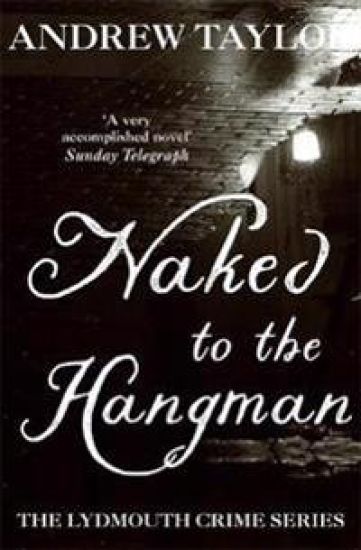
'Andrew Taylor is a master story-teller' Daily Telegraph From the No.1 bestselling author of The Ashes of London and The Fire Court, this is the third instalment in the acclaimed Lydmouth seriesAfter the coldest night of the year, they find the man's body. He is dangling from the Hanging Tree on the outskirts of a village near Lydmouth, with his trousers round his ankles. Is it suicide, murder, or accidental death resulting from some bizarre sexual practice? Journalist Jill Francis and Detective Inspector Thornhill become involved in the case in separate ways. Jill is also drawn unwillingly into the affairs of the small public school where the dead man taught. Meanwhile a Peeping Tom is preying upon Lydmouth; Jill has just moved into her own house and is afraid she is being watched. And there are more distractions, on a personal level, for policeman and reporter . . .'An excellent writer. He plots with care and intelligence and the solution to the mystery is satisfyingly chilling' The Times'The most under-rated crime writer in Britain today' Val McDermid 'There is no denying Taylor's talent, his prose exudes a quality uncommon among his contemporaries' Time Out
'Andrew Taylor is a master story-teller' Daily Telegraph From the No.1 bestselling author of The Ashes of London and The Fire Court, this is the second instalment in the acclaimed Lydmouth seriesWhen a spinster of the parish is found bludgeoned to death in St John's, and the church's most valuable possession, the Lydmouth chalice, is missing, the finger of suspicion points at the new vicar, who is already beset with problems. The glare of the police investigation reveals shabby secrets and private griefs. Jill Francis, struggling to find her feet in her new life, stumbles into the case at the beginning. But even a journalist cannot always watch from the sidelines. Soon she is inextricably involved in the Suttons' affairs. Despite the electric antagonism between her and Inspector Richard Thornhill, she has instincts that she can't ignore . . .'An excellent writer. He plots with care and intelligence and the solution to the mystery is satisfyingly chilling' The Times'The most under-rated crime writer in Britain today' Val McDermid 'There is no denying Taylor's talent, his prose exudes a quality uncommon among his contemporaries' Time Out
'Andrew Taylor is a master story-teller' Daily Telegraph From the No.1 bestselling author of The Ashes of London and The Fire Court, this is the sixth instalment in the acclaimed Lydmouth seriesWhen the body of Rufus Moorcroft, a middle-aged widower with a distinguished war record, is found in his summerhouse, the verdict is suicide. But both reporter Jill Francis and her lover, Detective Richard Thornhill, approaching the case from different angles, discover there's more to it than that. The key to the mystery stretches back to a highly-charged summer before the war, and back to another death. A local asylum plays a part, as do a moderately famous artist and his wife; Superintendent Williamson, now retired and loathing it; Councillor Bernie Broadbent - a man with more pies than fingers to put in them; a Cambridge don; an aristocratic unmarried mother, now gleefully drawing her old-age pension; and - to Thornhill's surprise and growing horror - his own wife, Edith.'An excellent writer. He plots with care and intelligence and the solution to the mystery is satisfyingly chilling' The Times'The most under-rated crime writer in Britain today' Val McDermid 'There is no denying Taylor's talent, his prose exudes a quality uncommon among his contemporaries' Time Out
The intellectual relationship between Henry James and his father, who was a philosopher and theologian, proved to be an influential resource for the novelist. Andrew Taylor explores how James's writing responds to James Senior's epistemological, thematic and narrative concerns, and relocates these concerns in a more secularised and cosmopolitan cultural milieu. Taylor examines the nature of both men's engagement with autobiographical strategies, issues of gender reform, and the language of religion. He argues for a reading of Henry James that is informed by an awareness of paternal inheritance. Taylor's study reveals the complex and at times antagonistic dialogue between the elder James and his peers, particularly Emerson and Whitman, in the vanguard of mid nineteenth-century American Romanticism. Through close readings of a wide range of novels and texts, he demonstrates how this dialogue anticipates James's own theories of fiction and selfhood.
Generations of scholars have meditated upon the literary devices and cultural meanings of The Song of Roland. But according to Andrew Taylor not enough attention has been given to the physical context of the manuscript itself. The original copy of The Song of Roland is actually bound with a Latin translation of the Timaeus. Textual Situations looks at this bound volume along with two other similarly bound medieval volumes to explore the manuscripts and marginalia that have been cast into shadow by the fame of adjacent texts, some of the most read medieval works. In addition to the bound volume that contains The Song of Roland, Taylor examines the volume that binds the well-known poem "Sumer is icumen in" with the Lais of Marie de France, and a volume containing the legal Decretals of Gregory IX with marginal illustrations of wayfaring life decorating its borders. Approaching the manuscript as artifact, Textual Situations suggests that medieval texts must be examined in terms of their material support-that is, literal interpretation must take into consideration the physical manuscript itself in addition to the social conventions that surround its compilation. Taylor reconstructs the circumstances of the creation of these medieval bound volumes, the settings in which they were read, inscribed, and shared, and the social and intellectual conventions surrounding them.
David Byfield, a widowed parish priest, brings home a new wife. Soon the murders and blasphemies begin. But does the responsibility lie in the present or the past? And can Byfield break through to the truth before the final tragedy destroys what he most cherishes?