Kirjojen hintavertailu – 12 903 725 kirjaa ja 27 kauppaa

Kirjailija

Angus Konstam

Kirjat ja teokset yhdessä paikassa: 123 kirjaa, julkaisuja vuosilta 1993–2027, suosituimpiin kuuluu Warships in the Battle of Britain 1940. Vertaile teosten hintoja ja tarkista saatavuus suomalaisista kirjakaupoista.

123 kirjaa

Kirjojen julkaisuvuodet: 1993–2027.

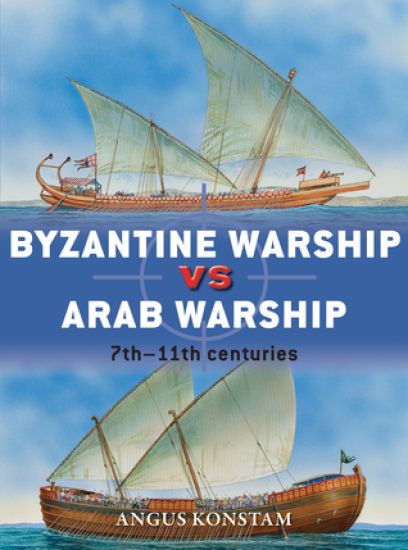
Byzantine Warship vs Arab Warship

Byzantine Warship vs Arab Warship

Angus Konstam

Osprey Publishing
2015
nidottu
Employing rigorous analysis and lively narrative alongside specially commissioned artwork, this study casts new light on the rivalry between two vessels of war in the Mediterranean. For four hundred years the Byzantine Empire’s naval forces vied with the warships of the Islamic world for mastery of the Mediterranean. At the heart of this confrontation were the fighting vessels of the two powers, the Byzantine dromon and the Arabic shalandi, both oared warships. In those four centuries of warfare between two major maritime powers, both the Byzantines and the Arabs left us records of their doctrine and tactics, as well as of how their ships were built. Featuring full-colour artwork and rigorous analysis from an authority on naval warfare, this enthralling book offers a glimpse of the long-lost world of war at sea in the age of Byzantium.
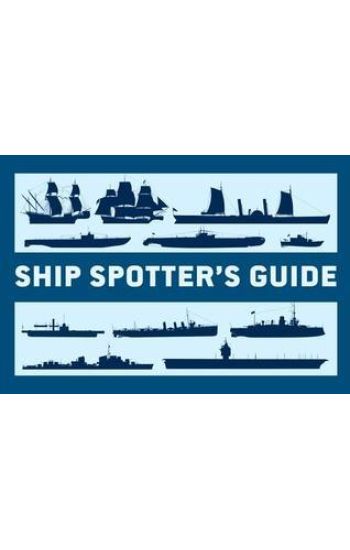
Ship Spotter’s Guide

Ship Spotter’s Guide

Angus Konstam

Osprey Publishing
2014
nidottu

Halvin toimitettuna 14,90 €

A compact guide to 40 of the most iconic ships that have shaped warfare from the Ancient world to today. Since the days of the Ancient Greeks, naval ships of all sizes have revolutionized warfare. From the Viking longship, pirate ships and super dreadnoughts to today’s nuclear submarines and aircraft carriers, naval warfare has proved to be an essential component of military forces across the world. The Ship Spotter’s Guide provides essential information on 40 iconic ships, using detailed profile artwork to illustrate and aid recognition, as well as specification boxes to provide all the technical details.
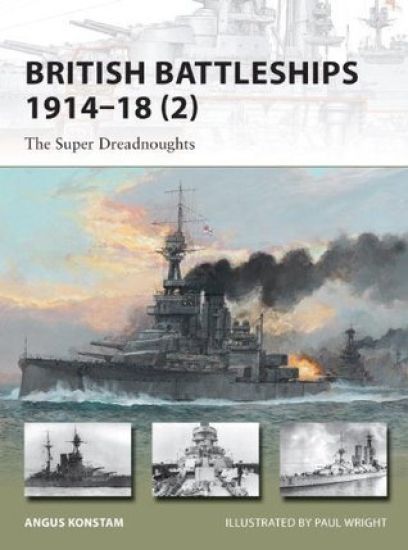
British Battleships 1914–18 (2)

British Battleships 1914–18 (2)

Angus Konstam

Osprey Publishing
2013
nidottu
In 1906, the Germans began building their own dreadnought fleet armed with larger guns, word of which soon reached the British Admiralty. This raised the spectre that the British dreadnought fleet would be outgunned, and prompted the Admiralty to order the building of their own “super dreadnoughts”. The first of these new dreadnoughts were laid down in 1909, and entered service three years later. The British public supported this programme, and the slogan “we want eight and cannot wait” became popular, a reference to the building of eight of these super dreadnoughts. Four more super dreadnoughts entered service in 1914. By then the Admiralty had developed a new programme of “fast battleships”, armed with 15-inch guns. These powerful warships entered service in time to play a part in the battle of Jutland in 1916. World War I broke out before the Royal Navy had fully evaluated these new warships, and so lessons had to be learned through experience – often the hard way. Although none of these super dreadnoughts were lost in battle, their performance at the battle of Jutland led to a re-evaluation of the way they were operated. Still, for four years they denied control of the sea to the enemy, and so played a major part in the final collapse of Imperial Germany.
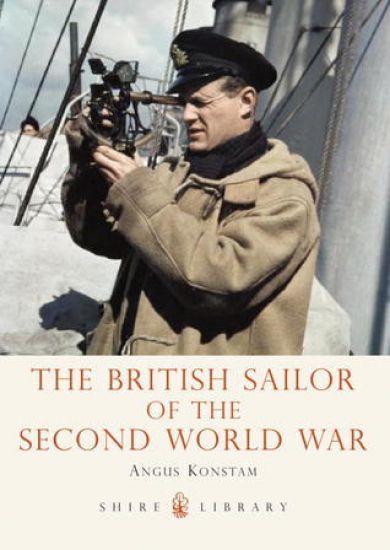
The British Sailor of the Second World War

The British Sailor of the Second World War

Angus Konstam

Shire Publications
2013
nidottu
This book tells the dramatic story of how the Royal Navy transformed ordinary citizens into first-rate sailors and navy personnel during the Second World War. It covers how they were recruited and trained and how they endured life at sea in hostile waters, protecting convoys in the Mediterranean, hunting submarines in the Atlantic, and standing up to relentless air attacks in the Pacific. Told through vivid first-hand accounts of life onboard, it reveals what it was like to be a sailor navigating, patrolling, and fighting in the largest theatre of the war – the vast oceans.
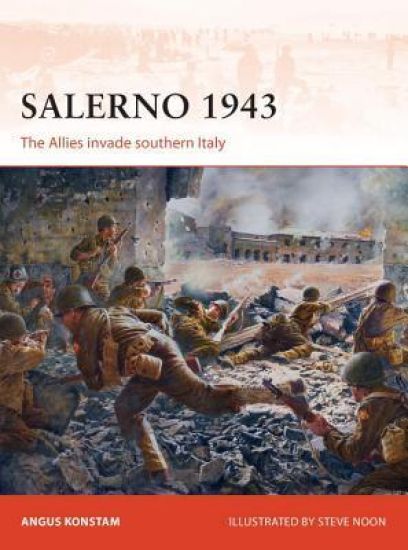
Salerno 1943

Salerno 1943

Angus Konstam

Osprey Publishing
2013
nidottu
A meticulous illustrated examination of Operation Avalanche, the highly contested British and US invasion of the Italian mainland. In mid-September 1943, as the opening move of the Allied campaign to liberate the mainland of Italy, an Anglo-American invasion force landed on the beaches of the Gulf of Salerno, only a few dozen miles to the south of Naples. Italy had just surrendered, and the soldiers in the landing craft prayed that the invasion would be unopposed. It was not to be. The Germans had seized control of the Italian-built beach defences, and were ready and waiting. The ferocious ten-day battle at Salerno was eventually decided by a combination of Allied reinforcements, and secondary landings in support of the beleaguered Salerno bridgehead. Using documentary records, memoirs and eyewitness accounts from all sides, Angus Konstam recreates the battle day by day, hour by hour. His methodically researched account offers a fresh perspective on a decisive battle that has largely been neglected by British and American historians.
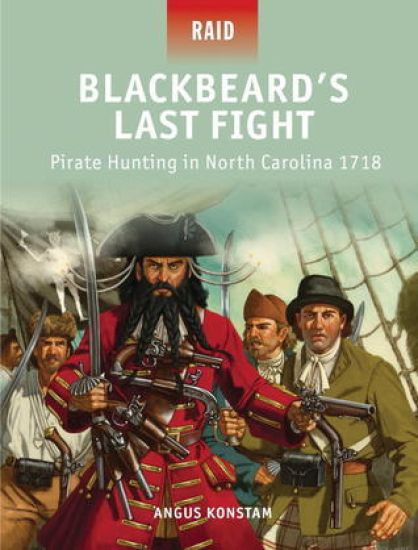
Blackbeard’s Last Fight

Blackbeard’s Last Fight

Angus Konstam

Osprey Publishing
2013
nidottu
In April 1713 the War of the Spanish Succession came to an end. During the conflict hundreds of privateers – licenced pirates – preyed on enemy shipping throughout the Caribbean. These privateers now found themselves out of a job, and many turned to piracy. One of theme was Edward Teach – more popularly known as “Blackbeard”. He joined the pirates in New Providence (now Nassau) in the Bahamas, and by early 1717 he had become a pirate captain. From then on he caused havoc off the North American seaboard, in the West Indies and off Honduras, before appearing off Charleston, South Carolina in May 1718. He blockaded this major port for a week, an act that made Blackbeard the most notorious pirate of his day.
British Battleships 1914–18 (1)

British Battleships 1914–18 (1)

Angus Konstam

Osprey Publishing
2013
nidottu
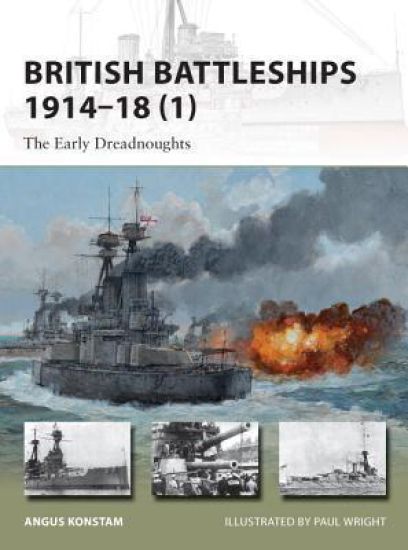
The launch of HMS Dreadnought in 1906 changed the face of naval warfare. The first half-dozen dreadnoughts were all improvements of the basic Dreadnought design, all carrying ten 12-inch guns. It was only in 1911, with the launch of HMS Neptune that the layout of this powerful armament was altered as a result of practical experience. Two more versions of the Neptune entered service later that same year. These nine improved dreadnoughts formed the core of the British High Seas Fleet. They would soon, however, be outclassed by a new breed of “super dreadnoughts”, the subject of the second volume in this two-part story. While these new battleships carried larger 13.5-inch guns, they proved less successful as all-round battleships than their more lightly-armed predecessors. One last 12-inch gun dreadnought entered service in 1914, when a seven turret battleship being built for the Turks was commandeered by the Royal Navy, and re-named HMS Agincourt. This New Vanguard title, the first of two covering these famous warships will uncover the full story of the British battleships of World War I. The book will look at their revolutionary design, the 12-inch guns that provided them with their firepower, and the way these guns were fired in anger.
British Light Cruisers 1939–45

British Light Cruisers 1939–45

Angus Konstam

Osprey Publishing
2012
nidottu
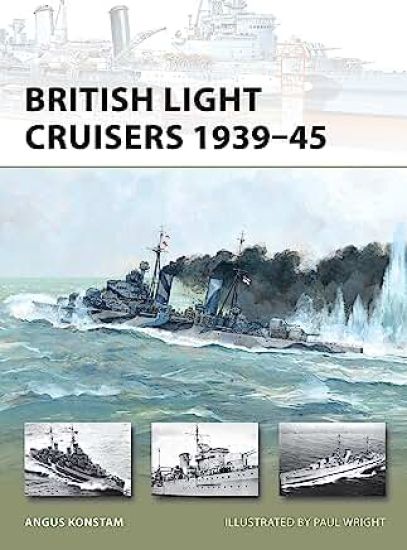
The light cruiser was a natural development of the sailing frigate – a fast multi-purpose warship that could patrol the sea lanes, protect convoys and scout for enemy battle fleets. By the inter-war period the need for this type of ship was even more important, given the increasing need for protection from aircraft, and the need to screen the fleet from submarines or destroyers. Wartime experience had shown that the British light cruiser was one of the most versatile types of ship in the Royal Navy, able to protect other warships, bombard enemy shores, guard life-saving convoys and intercept and destroy enemy warships. These were truly the workhorses of the wartime Royal Navy. While the battleships and carriers grabbed the headlines, these sleek, elegant warships quietly got on with the job of securing control of the seas.
British Heavy Cruisers 1939–45

British Heavy Cruisers 1939–45

Angus Konstam

Osprey Publishing
2012
nidottu
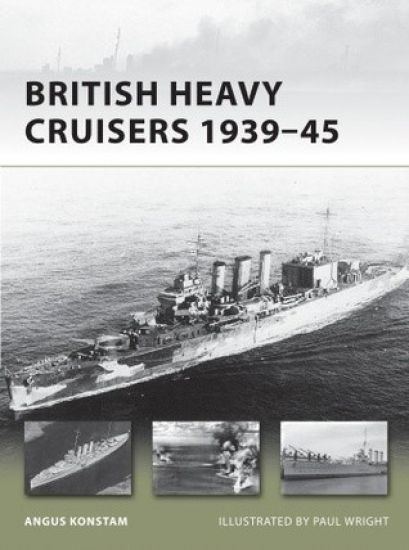
The idea of a heavy cruiser emerged in the aftermath of World War I, and was closely linked to the limits set by the inter-war Washington Naval Treaty. The pre-World War I concept of armoured cruisers had been abandoned, but in their stead the Admiralty saw a place for powerful cruisers, able to patrol the sea lanes of the British Empire, and which were well-armed enough that they could destroy enemy commerce cruisers. The result was a group of British warships, known as the 'Washington Treaty Cruisers', that did everything the Admiralty wanted, but which conformed to the limits imposed by the treaty. These impressive cruisers were high-sided, spacious and stately – perfect peacetime ambassadors for British power. In war they also packed a considerable punch. During World War II the Royal Navy's thirteen heavy cruisers saw service in every theatre of the war, whether facing the Bismarck in the North Atlantic or enduring kamikaze attacks in the Pacific.
Warships of the Anglo-Dutch Wars 1652–74

Warships of the Anglo-Dutch Wars 1652–74

Angus Konstam

Osprey Publishing
2011
nidottu
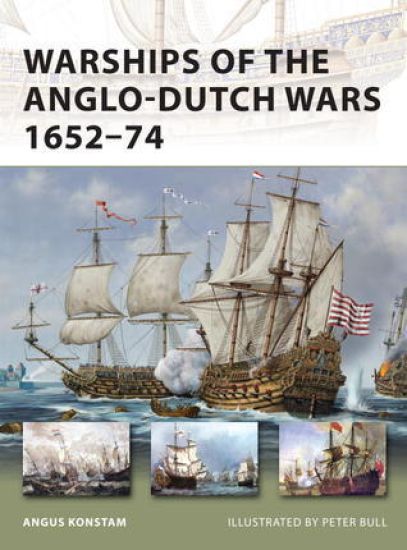
Three times during the 17th century, England and Holland went to war as part of an ongoing struggle for economic and naval supremacy. Primarily fought in the cold waters of the North Sea and the English Channel, the wars proved revolutionary in their impact upon warship design, armament, and naval tactics. During this time, the warship evolved into the true ship-of-the-line that would dominate naval warfare until the advent of steam power. This book traces the development of these warships in the context of the three Anglo–Dutch wars.
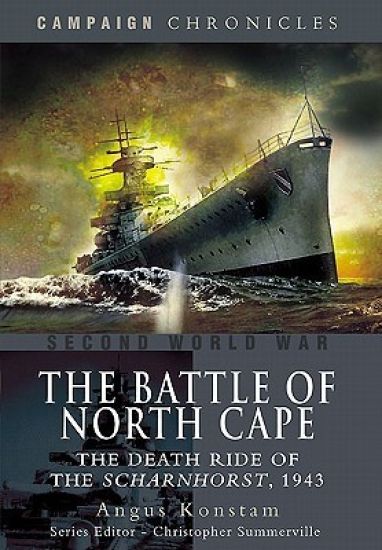
Battle of North Cape: The Death Ride of the Scharnhorst, 1943
'Angus Konstam's gripping account tells the story of this crucial but under-studied naval battle, and explains why the hopes of the German Kriegsmarine went down with their last great ship; only 37 of the German battlecruiser's 1700 crew were saved.' - The Nautical Magazine'Angus Konstam's book is an excellent read and strongly recommended...thoughtful and totally engrossing... If you are interested in the Royal Navy in the Second World War, the Arctic convoy campaign or capital ship actions, The Battle of North Cape is well worth its cover price.' - Naval ReviewOn 25 December 1943 the German battlecruiser Scharnhorst slipped out Altenfjord in Norway to attack Artic convoy JW55B which was carrying vital war supplies to the Soviet Union. But British naval intelligence knew of the Scharnhorst's mission before she sailed and the vulnerable convoy was protected by a large Royal Naval force including the battleship Duke of York. In effect the Scharnhorst was sailing into a trap. One of the most compelling naval dramas of the Second World War had begun. ANGUS KONSTAM is a highly respected and widely published military historian. The body of his work encompasses everything from ancient Greece to the Second World War. However, his main field is maritime and naval history. He has published books on Blackbeard: America's Most Notorious Pirate, The History of Pirates, PT Boats: US Naval Torpedo Boats, The History of Shipwrecks, Hunt the Bismarck and the 7th U-Boat Flotilla. His most recent books include Salerno 1943: The Allied Invasion of Italy and Piracy.
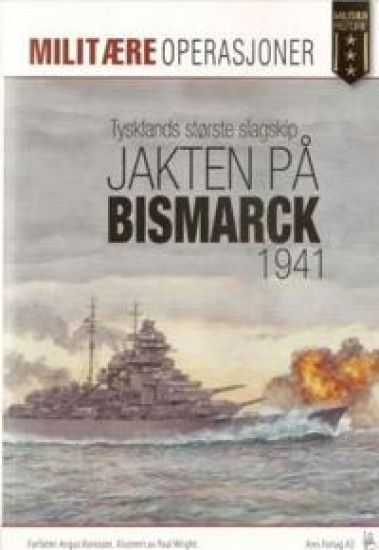
Jakten på Bismarck 1941

Jakten på Bismarck 1941

Angus Konstam

Ares forlag
2011
nidottu
Da det tyske slagskipet Bismarck brøt ut i Nord-Atlanteren i mai 1941 var det en av de aller mest dramatiske hendelsene som skjedde på havet under den andre verdenskrig. Det skjedd i en periode der ressursene til Royal Navy var strukket til det ytterste. Den britiske Home Fleet var helt nødt til å møte dette moderne og kraftige tyske slagskipet, som ble ansett for å være det farligste av alle slagskip i verden. Bismarck og hennes partner Prinz Eugen kjempet mot og senket HMS Hood - Royal Navy stolthet - i slaget i Danmarkstredet - før hun brøt ut i Nord-Atlanteren. Alle tilgjengelige ressurser i Royal Navy ble mobilisert for å finne henne og nedkjempe henne. Hun ble til slutt skadet av et antikt Swordfish-torpedofly, for så å bli senket av slagskipene, krysserne og jagerne til Royal Navy. Færre enn 200 av Bismarcks mannskap på 2000 mann overlevde. Boken er rikt illustrert med kart, malerier, 3D perspektiver og mange fotografier.
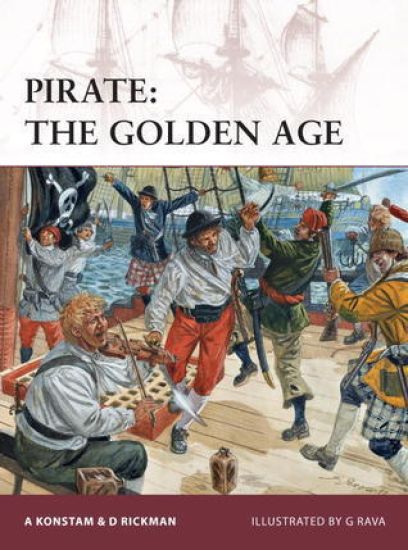
Pirate

Pirate

Angus Konstam; David Rickman

Osprey Publishing
2011
nidottu
This book describes the life of a pirate in the early 18th century, the 'Golden Age of Piracy'. It charts the way these men (and a few women) were recruited, how they operated, what they looked like and what prospects their lives held. In the process the book strips away many of the myths associated with piracy to reveal the harsh realities of those who lived beyond the normal bounds of society. Written by pirate expert Angus Konstam, the book draws on decades of research into the subject, and pulls together information from a myriad of sources including official reports, contemporary newspaper reports, trial proceedings and court testimony last words on the scaffold, letters and diaries as well as archaeological evidence and relevant objects and artefacts from museum collections on both sides of the Atlantic. A must have for fans of the classic pirate stories or warfare in the early 18th century.
Pirates: The Complete History from 1300 BC to the Present Day

Pirates: The Complete History from 1300 BC to the Present Day

Angus Konstam

Lyons Press
2011
nidottu

Halvin toimitettuna 26,20 €

Angus Konstam setssail through the brutal history of piracy, separating myth from legend and fact from fiction. Pirates takes us into the depths of the pirate's dark world, examining the many colorful characters from Cretans and Vikings to French corsairs and the British rogues of the golden age of piracy, such as Blackbeard and Captain Kidd and even two women pirates, Mary Read and Ann Bonny, who became pregnant to avoid execution. A blood-soaked, riveting account, itprovides a complete history of the fearsome threat on the high seas from the marauders in the pages of antiquity to the Somali pirates in the headlines of today.
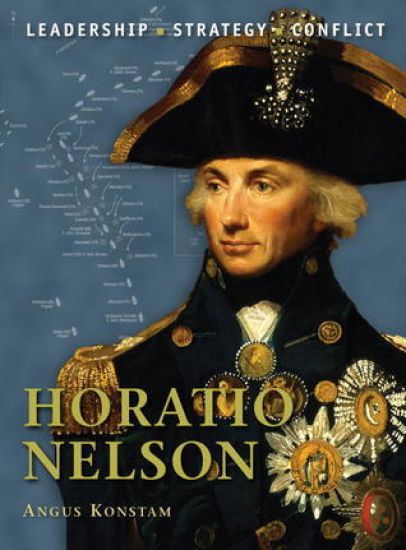
Horatio Nelson

Horatio Nelson

Angus Konstam

Osprey Publishing
2011
nidottu
The most famous admiral in history, Horatio Nelson's string of naval victories helped secure Britain's place as the world's dominant maritime power, a position she held for more than a century after Nelson's death. A young officer during the American Revolution, Nelson rose to prominence during Britain's war with Revolutionary France, becoming a hero at the battle of Cape St. Vincent. He went on to win massive victories at the Nile and Copenhagen, before leading the British to their historic victory at Trafalgar in 1805. But, in that moment of his greatest glory, Nelson was struck down by a French sharpshooter. Today Nelson is revered as an almost mythical figure – a naval genius and a national hero. He was also a deeply flawed individual whose vanity, ego and private life all threatened to overshadow his immense abilities. This book reveals the real Nelson.
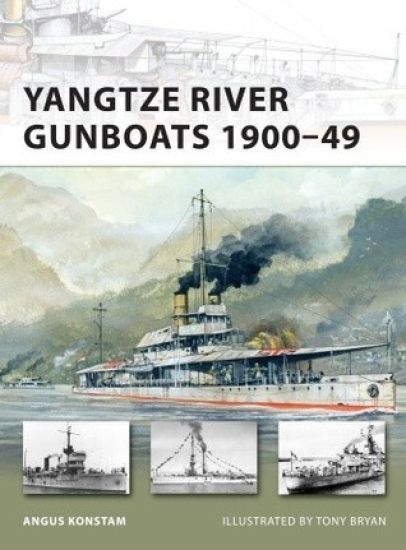
Yangtze River Gunboats 1900–49

Yangtze River Gunboats 1900–49

Angus Konstam

Osprey Publishing
2011
nidottu
From the end of the 19th century through the first half of the 20th, most Western powers maintained a naval presence in China. These gunboats protected traders and missionaries, safeguarded national interests, and patrolled Chinese rivers in search of pirates. It was a wild, lawless time in China as ruthless warlords fought numerous small wars to increase their power and influence. This book covers the gunboats of all the major nations that stationed naval forces in China, including America, Britain, France, Germany, Italy, Portugal, and Japan, and looks at such famous incidents as the Japanese bombing of the USS Patay and the dramatic escape of the HMS Amethyst from Communist forces in 1947, which marked the end of the gunboat era.
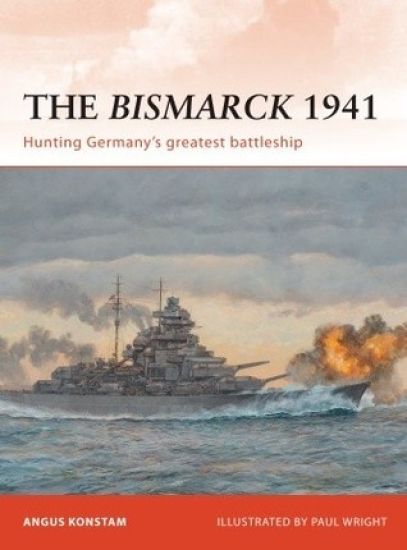
The Bismarck 1941

The Bismarck 1941

Angus Konstam

Osprey Publishing
2011
nidottu
A highly illustrated account of the hunt for the Bismarck. The break of the German battleship Bismarck into the North Atlantic in May 1941 was one of the most dramatic episodes of World War II. It began with a battle between the Bismarck and the British battleship Prince of Wales and the heavy cruiser Hood. The Hood was blown to pieces, while the battered Prince of Wales managed to escape. The British then focused all of their resources on hunting the mighty German battleship and eventually brought her down. Supported by birds'-eye-view maps and archive photography, this volume recounts the fight in detail.
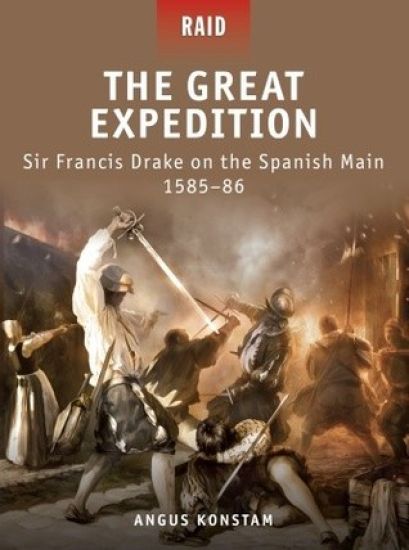
The Great Expedition

The Great Expedition

Angus Konstam

Osprey Publishing
2011
nidottu
In 1585, the English launched a pre-emptive strike against Spain, by attacking her New World colonies. Led by Sir Francis Drake, in command of 21 ships and 1,800 soldiers, the expedition struck first at the Canary Islands, then attacked the city of Santo Domingo and the treasure port of Cartagena. Frequently outnumbered, Drake's soldiers won an series of spectacular victories and, laden with treasure, sailed home to a hero's welcome.
Marlborough

Marlborough

Angus Konstam

Osprey Publishing
2010
nidottu
John Churchill, 1st Duke of Marlborough, is one of the great commanders of history. Using his great charm and diplomatic skills he was able to bind troops from various European states into a cohesive army that won a string of victories over the French armies of King Louis XIV, the first of which was perhaps his most spectacular triumph - the battle of Blenheim. Other great victories followed, but political and social turmoil proved harder opponents to defeat. This book provides a detailed look at the many highs and lows in the career of the most successful British general of his era.
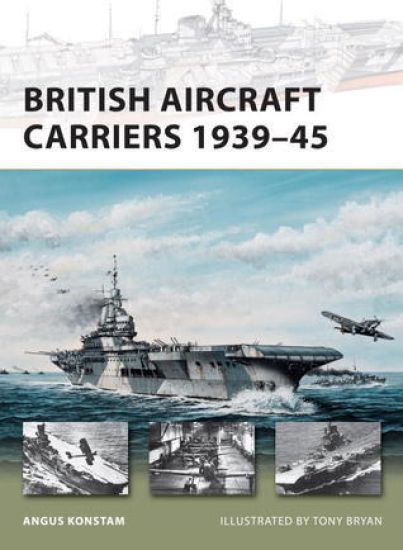
British Aircraft Carriers 1939–45

British Aircraft Carriers 1939–45

Angus Konstam

Osprey Publishing
2010
nidottu
With war against Germany looming, Britain pushed forward its carrier program in the late 1930s. In 1938, the Royal Navy launched the HMS Ark Royal, its first-ever purpose-built aircraft carrier. This was quickly followed by others, including the highly-successful Illustrious class. Smaller and tougher than their American cousins, the British carriers were designed to fight in the tight confines of the North Sea and the Mediterranean. Over the next six years, these carriers battled the Axis powers in every theatre, attacking Italian naval bases, hunting the Bismark, and even joining the fight in the Pacific. This book tells the story of the small, but resilient, carriers and the crucial role they played in the British war effort.