Kirjojen hintavertailu – 12 903 725 kirjaa ja 27 kauppaa

Kirjailija

Angus Konstam

Kirjat ja teokset yhdessä paikassa: 123 kirjaa, julkaisuja vuosilta 1993–2027, suosituimpiin kuuluu Warships in the Battle of Britain 1940. Vertaile teosten hintoja ja tarkista saatavuus suomalaisista kirjakaupoista.

123 kirjaa

Kirjojen julkaisuvuodet: 1993–2027.

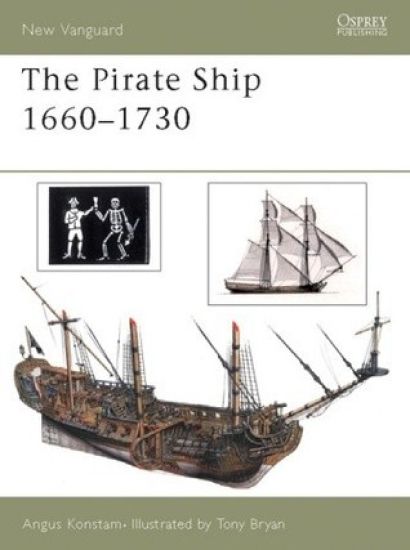
The Pirate Ship 1660–1730

The Pirate Ship 1660–1730

Angus Konstam

Osprey Publishing
2003
nidottu
Although pirates have a fascination which has resulted in the production of numerous books and documentaries in recent years (including titles by Osprey), no detailed depiction of their ships has ever been produced. Following the success of the Elite Series Pirates title, this book will provide a detailed description and pictorial exploration of the ships that scoured the high seas during the 'Golden age of Piracy'. Concentrating on the vessels of the leading (and most colourful) pirates of their age, the book will incorporate the latest archaeological evidence to produce a fascinating and spirited account of these craft.
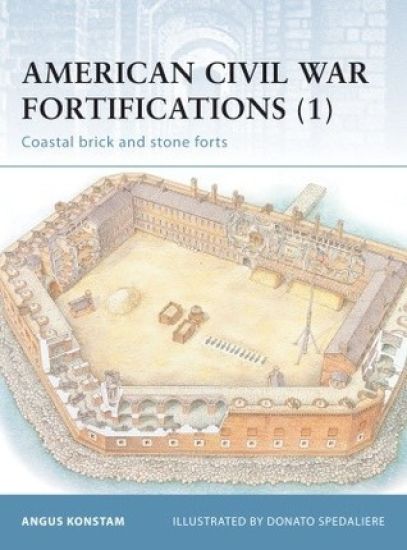
American Civil War Fortifications (1)

American Civil War Fortifications (1)

Angus Konstam

Osprey Publishing
2003
nidottu
At the start of the American Civil War (1861), some of the most powerful torts in the country were located in the secessionist states, and many of these fell into Confederate hands. Although a handful of key sites remained in the Union, the remainder had to be won back through bombardment or assault. Forts such as Fort Sumter, Fort Morgan and Fort Pulaski formed the centerpiece in the struggle for control of the Confederate coastline. This book examines the stone forts that played a crucial part in the course of the Civil War, covering their design, construction, and the way they were armed and manned.
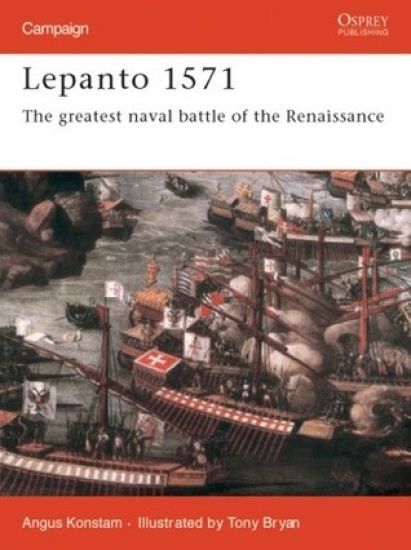
Lepanto 1571

Lepanto 1571

Angus Konstam

Osprey Publishing
2003
nidottu
For much of the 16th century the Mediterranean was a battleground between Christians and Muslims. The war galley was the predominant warship type of the era, and a battle between two large war galley fleets was expected to decide the fate of the entire Mediterranean basin. In August 1571 an Ottoman fleet of some 235 galleys encountered the Christian fleet led by Spain, the Papacy and Venice. This work details a five hour melee in which the Christians inflicted a decisive defeat on the Turks in a battle which proved to be the last great galley fight of all time.
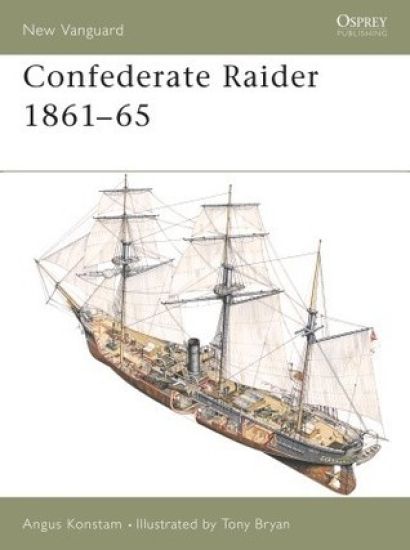
Confederate Raider 1861–65

Confederate Raider 1861–65

Angus Konstam

Osprey Publishing
2003
nidottu
The Confederate states adopted radical solutions to counter the naval superiority of their opponents. One solution was the adoption of commerce raiders. This work describes the reasons which forced the confederates to resort to commerce raiding, and outlines the way in which these craft were converted or specially built to perform their role. It details the way these craft operated, how they were manned, and how they fought.
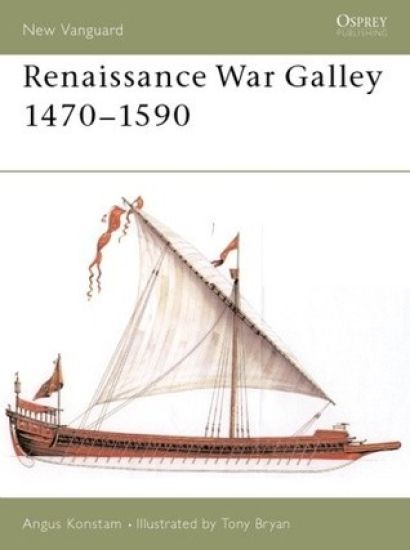
Renaissance War Galley 1470–1590

Renaissance War Galley 1470–1590

Angus Konstam

Osprey Publishing
2002
nidottu
For most of the Renaissance period, naval warfare in the Mediterranean was dominated by the war galley, a unique naval vessel for a momentous age. During the struggle for supremacy between Christian and Muslim powers, war galleys formed the backbone of the rival battlefleets. Different regions of the Mediterranean produced their own versions of the war galley, thereby producing a number of variants on the basic design tailored to the needs and resources of particular nations. This title examines the development of the war galley from its classically inspired resurrection in the 15th century until its demise in the early 17th century.
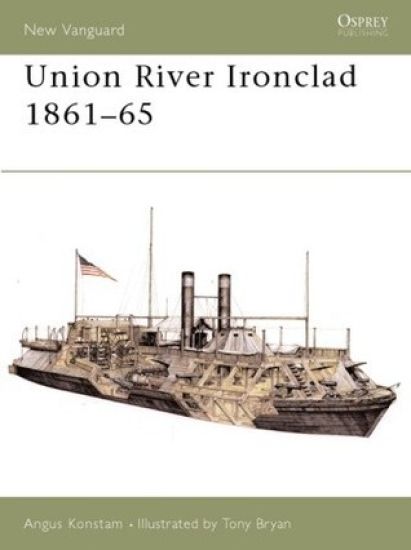
Union River Ironclad 1861–65

Union River Ironclad 1861–65

Angus Konstam

Osprey Publishing
2002
nidottu
At the start of the American Civil War, neither side had warships on the Mississippi River, which was a vital strategic artery. In what would prove the vital naval campaign of the war, both sides fought for control of the river. While the Confederates relied on field fortifications and small gunboats, the Union built a series of revolutionary river ironclads. First commissioned in January 1862, these ironclads spent the next two years wresting control of the Mississippi, fighting in a string of decisive engagements that altered the entire course of the war. This book explains how these vessels worked, how they were constructed, how they were manned and how they were fought.
Guilford Courthouse 1781

Guilford Courthouse 1781

Angus Konstam

Osprey Publishing
2002
nidottu
When the British Lord Cornwallis launched his invasion of North Carolina in early 1781, his objective was to destroy General Nathaniel Greene's army. Greene fell back before him into Virginia, yet the American force grew daily as militia flocked to the colours. At Guilford Courthouse on 15 March 1781 the two armies met. This book describes the see-saw battle that ensued as victory seemed to be within the American grasp, but the British held off a fierce counterattack by American infantry and cavalry, and forced Greene to concede the field. It was a British victory but at a terrible cost - Cornwallis lost over a quarter of his men.
Pictish Warrior AD 297-841

Pictish Warrior AD 297-841

Angus Konstam; Paul Wagner

Osprey Publishing
2002
nidottu
The origins of the Picts are an interesting and hotly debated topic. Fundamentally, they were Celts, and numerous similarities exist between Welsh, Irish and British contemporaries. Their role as an enemy of Rome and their place in Dark Age Britain is often underrated. The Pictish warrior was not "ordinary" - he was noble - and warfare was enshrined in law as the duty and privilege of the landed aristocracy only. The warrior, whether one of the king's household troop, or a member of a wandering mercenary band, was part of an identifiable and close-knit unit. In these fraternities the warriors lived, ate, slept, fought and died together. This volume shows how, despite this, group cohesion does not seem to have been a military strong point and the emphasis for the warrior was on individual skill in single combat.
Hampton Roads 1862

Hampton Roads 1862

Angus Konstam

Osprey Publishing
2002
nidottu
During the winter of 1861-62, Confederate engineers transformed an old wooden steam frigate, the USS Merrimac, into a steam-powered ironclad warship, the CSS Virginia, capable of withstanding the fire of any other warship afloat. Overnight the CSS Virginia had rendered the old wooden fleets obsolete. While similar developments were taking place concurrently in Europe, it was in Hampton Roads, Virginia, that the first clash between two ironclads would take place. The result was one of the strangest naval battles of all time - a well-matched clash between two technically different and revolutionary warships. This book details why the battle of Hampton Roads has been seen as one of the most important navel battles in history, ushering in a new age of naval warfare and warship design.
Mississippi River Gunboats of the American Civil War 1861–65
At the start of the American Civil War, neither side had warships on either side of the Mississippi River and in the first few months of the war, both sides scrambled to gather a flotilla, converting existing riverboats for naval use. These ships wrere converted into powerful naval weapons, despite a lack of resources, trained manpower and suitable vessels. The creation of a river fleet was a miracle of ingenuity, improvisation and logistics, particularly for the South. This title describes their design, development and operation throughout the American Civil War.
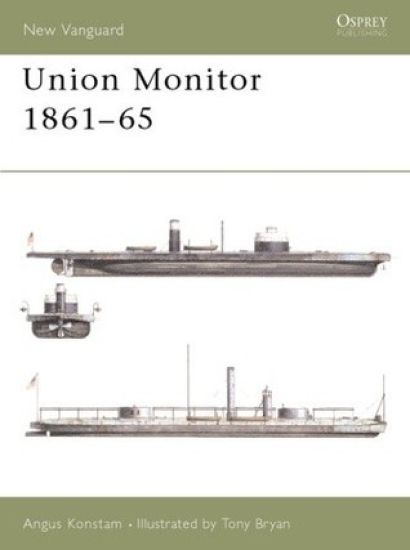
Union Monitor 1861–65

Union Monitor 1861–65

Angus Konstam

Osprey Publishing
2002
nidottu
The first seagoing ironclad was the USS Monitor, and its profile has made it one of the most easily recognised warships of all time. Following her inconclusive battle with the Confederate ironclad Virginia the production of Union monitors was accelerated. By the end of the year a powerful squadron of monitor vessels protected the blockading squadrons off the Southern coastline, and were able to challenge Confederate control of her ports and estuaries. Further technological advancements were included in subsequent monitor designs, and by the end of the war the US Navy possessed an powerful modern coastal fleet, carrying the most powerful artillery afloat. This book covers the design, development and operational history of the Union's Monitor fleet.
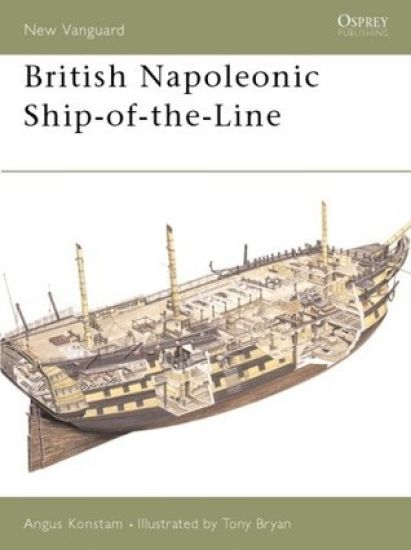
British Napoleonic Ship-of-the-Line

British Napoleonic Ship-of-the-Line

Angus Konstam

Osprey Publishing
2001
nidottu
The French Revolutionary and Napoleonic Wars encompassed a period when rival European fleets vied for naval supremacy, and naval tactics were evolving. The British Royal Navy emerged triumphant as the leading world sea power, and the epitome of Britannic naval strength was the Ship of the Line. These "wooden walls" were more than merely floating gun batteries: they contained a crew of up to 800 men, and often had to remain at sea for extended periods. This text offers detailed coverage of the complex vessels that were the largest man-made structures produced in the pre-Industrial era. It includes discussion of some of the most famous individuals and ships of the day, such as Nelson, Cochrane, HMS Victory and HMS Indefatigable. There is also a catalogue of all British Ships-of-the-Line from 1792 to 1815, as well as Orders of Battle for Trafalgar, Copenhagen and the Nile.
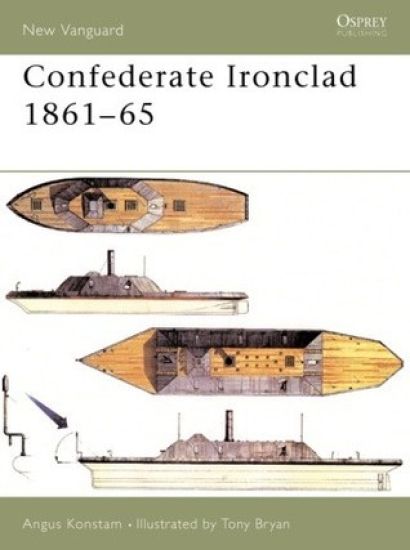
Confederate Ironclad 1861–65

Confederate Ironclad 1861–65

Angus Konstam

Osprey Publishing
2001
nidottu
The creation of a Confederate ironclad fleet was a miracle of ingenuity, improvisation and logistics. Surrounded by a superior enemy fleet, Confederate designers adapted existing vessels or created new ones from the keel up with the sole purpose of breaking the naval stranglehold on the nascent country. Her ironclads were build in remote cornfields, on small inland rivers or in naval yards within sight of the enemy. The result was an unorthodox but remarkable collection of vessels, which were able to contest the rivers and coastal waters of the South for five years. This title explains how these vessels worked, how they were constructed, how they were manned and how they fought.
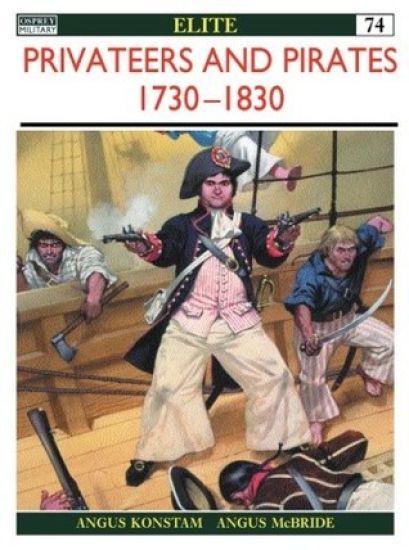
Privateers & Pirates 1730–1830

Privateers & Pirates 1730–1830

Angus Konstam

Osprey Publishing
2001
nidottu
Following the pirate scourge of the early 18th century, sea captains took to privateering as a means of making money. A form of nationally sponsored piracy, it reached its peak during the American Revolution, with the fledgling American navy relying on privateers to disrupt British shipping between England and the rebellious colonies. It details the privateer captains of the golden age of "state-sponsored piracy" - men such as John Paul Jones, Jean Lafitte, and Benito de Soto. It includes episodes such as Bonhomme Richard's epic battle with HMS Serapis.
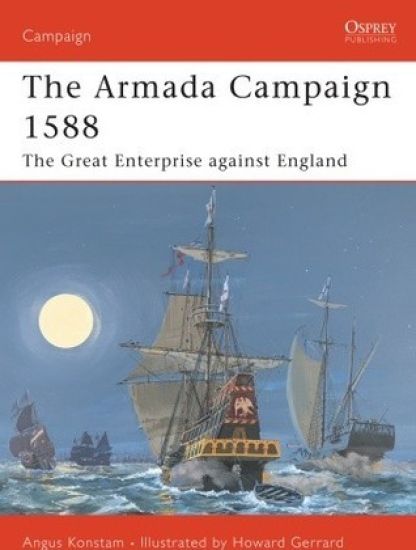
The Armada Campaign 1588

The Armada Campaign 1588

Angus Konstam

Osprey Publishing
2001
nidottu
Ever a popular subject, the thwarted invasion of England by the Spanish Armada is studied here in detail. How Philip ll's fleet was, in a few short days, stopped from invading England and forced into full retreat is looked at in a new and fascinating way, With the help of battle plans and bird's eye views of the action Angus Konstam, a leading historian in the field, here considers many of the intriguing questions surrounding the campaign, Why did the Armada fail? Were the English really superior in ships and gunnery? And perhaps the most fascinating of all, what would have happened if the Spanish had succeeded?
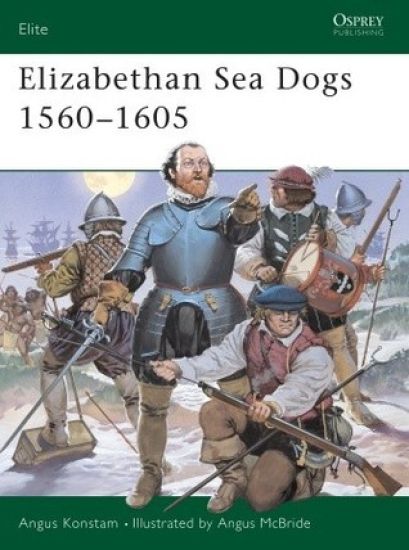
Elizabethan Sea Dogs 1560–1605

Elizabethan Sea Dogs 1560–1605

Angus Konstam

Osprey Publishing
2000
nidottu
The swashbuckling English sea captains of the Elizabethan era were a particular breed of adventurer, combining maritime and military skill with a seemingly insatiable appetite for Spanish treasure. Angus Konstam describes these characters, including such well-known sea dogs as Francis Drake, Walter Raleigh, John Hawkins and Martin Frobisher. For about 40 years they fought a private war with the Spanish, and while their success in defeating the Spanish Armada is well known, this book also covers their exploits in the New World.
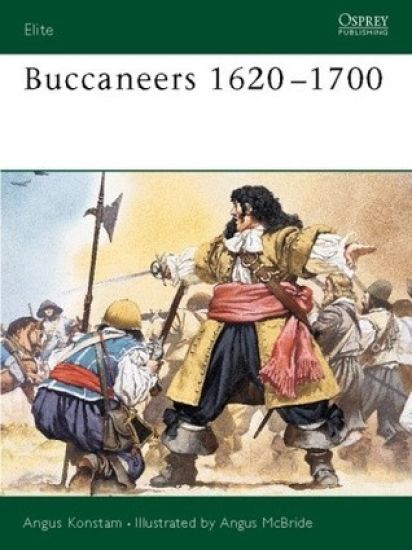
Buccaneers 1620–1700

Buccaneers 1620–1700

Angus Konstam

Osprey Publishing
2000
nidottu
Before the era of great pirates in the early 18th century, there was an even more bloodthirsty phase of attacks in the Caribbean known as the 'Buccaneering Era'. For over 50 years, English, French and Dutch buccaneers launched a series of devastating attacks on Spanish towns, ports and shipping. Well-known buccaneers such as Captain Henry Morgan carried out their raids under the protection of the English crown, and in 1692, the French even used buccaneers to help its army capture the great Spanish city of Cartagena! Elite 67, 69 and 74 are also available in a single volume special edition as 'Pirates'.
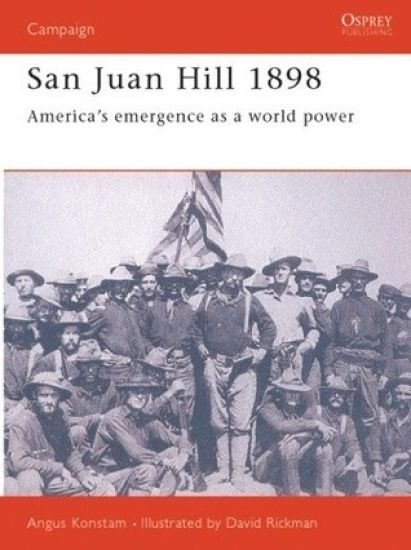
San Juan Hill 1898

San Juan Hill 1898

Angus Konstam

Osprey Publishing
1998
nidottu
A compact volume on a key, early battle in US American history. Labelled a 'splendid little war' by Senator John Hay, the Spanish American War was a peculiar event in America's history, provoked as much by the press as by political pressures. Here, aided by superbly detailed maps and artwork, Angus Konstam deals with the clashes at Las Guasimas and El Caney, the capture of San Juan Hill, and the naval battle and siege of Santiago. The war was to mark the end of Spanish sovereignty in her 'New World', and the establishment of the United States of America as a world power.
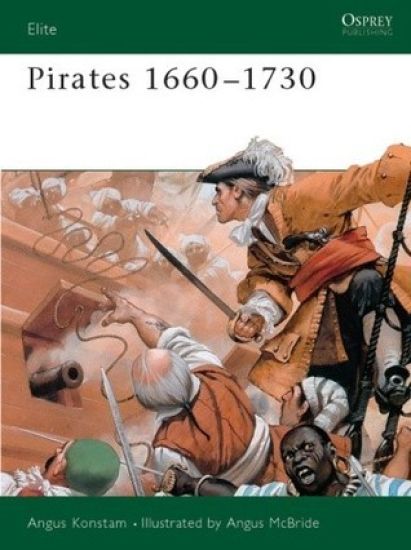
Pirates 1660–1730

Pirates 1660–1730

Angus Konstam

Osprey Publishing
1998
nidottu
This book aims to portray an accurate picture of the pirates who sailed in the waters of the Caribbean and off the American coastline during the "golden age" of piracy and shows that the life of a pirate was nasty, brutish and short (with one or two notable exceptions). It traces the origins of piratical activity in the 16th century and examines the Boucaneer (Bucaneer) culture in Jamaica and Hispaniola. It details what drove individuals to a life of piracy, how they dressed, their weaponry, the ships they used and the codes by which they operated, for example, disciplinary procedures and the division of booty. It also catalogues the main characters active during this period: Edward "Blackbeard" Teach, Henry Morgan, Henry "Long Ben" Avery, Stede Bonnet, William Kidd, John "Calico Jack" Rackham and the female duo associated with him, Anne Bonny and Mary Read.
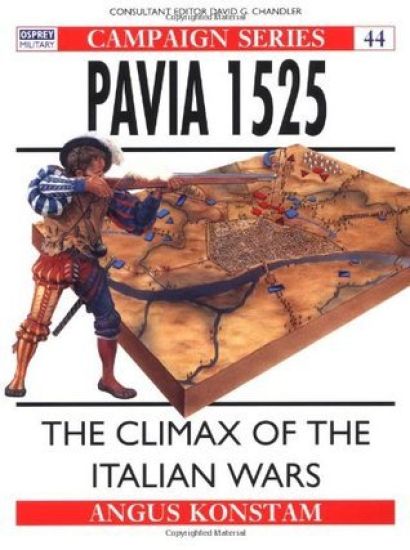
Pavia 1525

Pavia 1525

Angus Konstam

Osprey Publishing
1996
nidottu
A detailed, illustrated look at arguably the first modern battle, marking the rise of hand held weapons as a tool of warfare. In this titanic clash the most decisive of the Italian Wars, caused by French territorial ambitions in first the Kingdom of Naples and then the Duchy of Milan the French troops were smashed by the Spanish Imperial Army. King Francis I was captured, and the cream of his nobility slaughtered. France's greatest defeat since Agincourt, the battle dramatically swung the balance of power in Western Europe. Complete with battlescene maps and stunning artwork throughout, Angus Konstam describes the battle and its significance to modern-day warfare.