Kirjojen hintavertailu – 12 903 725 kirjaa ja 27 kauppaa

Kirjailija

Anthony Walsh

Kirjat ja teokset yhdessä paikassa: 62 kirjaa, julkaisuja vuosilta 1995–2025, suosituimpiin kuuluu Love. Vertaile teosten hintoja ja tarkista saatavuus suomalaisista kirjakaupoista.

62 kirjaa

Kirjojen julkaisuvuodet: 1995–2025.

Correctional Assessment, Casework, and Counseling

Correctional Assessment, Casework, and Counseling

Anthony Walsh; Jessica Wells; Shaun M. Gann

Springer Nature Switzerland AG
2021
nidottu
This book combines the latest in sociology, psychology, and biology to present evidence-based research on what works in community and institutional corrections. It spans from the theoretical underpinning of correctional counseling to concrete examples and tools necessary for professionals in the field. This book equips readers with the ability to understand what we should do, why we should do it, and tools for how to do it in the field. It discusses interviewing, interrogating, and theories of directive and nondirective counseling, including group counseling. It discusses the strengths and weaknesses of various correctional approaches such as cognitive-behavioral therapies, group counseling, and therapeutic communities. It introduces ethical and legal considerations for correctional professionals. With an explanation of the presentence investigation report, case management, and appendices containing a variety of classification and assessment instruments, this volume provides practical, hands-on experience. Students of criminal justice, psychology and social work will gain an understanding of the unique challenges to correctional success and practical applications of their studies. "This book is a teacher/student/practitioner's dream. Grounded in theory and evidence-based research on best practices, it is accessible, well-written, filled with sound insights and tools for working with criminal justice clients. I have used and loved each new edition of this fine text." — Dorothy S. McClellan, Texas A&M University-Corpus Christi
Love

Love

Anthony Walsh

Routledge
2019
nidottu
Love is a little word with a universe of meanings and has engaged people's interest throughout human history. The need to give and receive love lies deep within human nature. Philosophers, poets, theologians, sociologists, and scientists have all attempted to explain its exact origin, but is it an evolutionary adaptation, or a social construct? Walsh discusses that the nature of and need for love has biological origins. He draws upon Darwin's sexual selection theory to define the perceptions of love by infants through the process of experience-dependent brain wiring. He observes that mother love makes a child capable of loving and that father love makes a child feel worthy of love. He appraises the origin and purpose of romantic love in his discussions on sexual reproduction by looking at chemical and neurological responses to love and the influence of love on one's physical and mental health. With frequent quotes from literary masters like Shakespeare to orient one's scientific and humanistic understanding of love, Walsh goes on to explore various styles of romantic love, including monogamy, promiscuity, bartering love, and betrayed love; the effects of a skewed sex ratio on dating and mating practices; and the age-old quest for a perfect society populated by perfect people obeying the biblical command to "love one another."
Key Contested Issues in Criminology and Criminal Justice
Key Contested Issues in Criminology and Criminal Justice addresses the key issues within criminology and criminal justice that are strongly contested among scholars in the field. Covering 18 different themes, the book identifies the ways in which different issues are contested and demonstrates how biopsychosocial concepts and methods can inform most of them. It is divided into four broad sections. The first section examines philosophical issues such as the value of philosophy in criminology/criminal justice, the role of ideology in our disciplines, and the issues of human nature and free will versus determinism. The second section explains the biopsychosocial perspective that provides the framework used in exploring the various issues. It explores the possibility of integrating the natural sciences with criminology, behavioral and molecular genetics, evolutionary theory, and neuroscience. It also considers issues related to child maltreatment, brain development, and the role of rationality vis-à-vis emotion in decision-making. The third section examines crime causation and contains chapters on social learning versus control theories, radical/critical theories, the relationship between intelligence and criminal behavior, issues of SES, poverty, and crime, and whether religion is a barrier or bridge to antisocial behavior. The final section looks at four issues in criminal justice: the police abolition movement, the nature of punishment and its justifications by the criminal justice system, and issues in sentencing and the death penalty. Key Contested Issues in Criminology and Criminal Justice will be of value to students and scholars in criminology and criminal justice, as well as to criminal justice practitioners.
Key Contested Issues in Criminology and Criminal Justice
Key Contested Issues in Criminology and Criminal Justice addresses the key issues within criminology and criminal justice that are strongly contested among scholars in the field. Covering 18 different themes, the book identifies the ways in which different issues are contested and demonstrates how biopsychosocial concepts and methods can inform most of them. It is divided into four broad sections. The first section examines philosophical issues such as the value of philosophy in criminology/criminal justice, the role of ideology in our disciplines, and the issues of human nature and free will versus determinism. The second section explains the biopsychosocial perspective that provides the framework used in exploring the various issues. It explores the possibility of integrating the natural sciences with criminology, behavioral and molecular genetics, evolutionary theory, and neuroscience. It also considers issues related to child maltreatment, brain development, and the role of rationality vis-à-vis emotion in decision-making. The third section examines crime causation and contains chapters on social learning versus control theories, radical/critical theories, the relationship between intelligence and criminal behavior, issues of SES, poverty, and crime, and whether religion is a barrier or bridge to antisocial behavior. The final section looks at four issues in criminal justice: the police abolition movement, the nature of punishment and its justifications by the criminal justice system, and issues in sentencing and the death penalty. Key Contested Issues in Criminology and Criminal Justice will be of value to students and scholars in criminology and criminal justice, as well as to criminal justice practitioners.
Crime Prevention and Treatment Policies

Crime Prevention and Treatment Policies

Anthony Walsh

TAYLOR FRANCIS LTD
2025
nidottu
This book shows how to use biopsychosocial assessment for crime prevention and to achieve more individualized treatment for those who commit crimes. Author Anthony Walsh, a prominent figure in biosocial criminology for more than four decades, examines the treatment policy recommendations of major criminological theories and how they might be improved by integrating relevant biopsychosocial insights. Walsh contends that sound crime prevention and treatment policies must be based on empirical evidence derived from theories about the causes of crime if they are to reduce incarceration rates. The biopsychosocial perspective improves on traditional theories by examining all putative causes of crime from the micro to the macro— from neurons to neighborhoods— and should thus improve prevention and treatment efforts. The understanding of the genetic, neurobiological, and physiological components of antisocial behavior has improved exponentially over the past three decades. The relevant biological measures (e.g., genotyping, hormone assays, autonomic system arousal levels, resting heart rates) are routinely examined in university labs for research purposes. This book shows how measures of these components can be fruitfully integrated into the risk- need- responsivity model of offender treatment. Offering a fresh perspective, this book is essential for both scholars and practitioners wishing to explore treatment modalities that consider the biological aspects of criminality.
Crime Prevention and Treatment Policies

Crime Prevention and Treatment Policies

Anthony Walsh

TAYLOR FRANCIS LTD
2025
sidottu
This book shows how to use biopsychosocial assessment for crime prevention and to achieve more individualized treatment for those who commit crimes. Author Anthony Walsh, a prominent figure in biosocial criminology for more than four decades, examines the treatment policy recommendations of major criminological theories and how they might be improved by integrating relevant biopsychosocial insights. Walsh contends that sound crime prevention and treatment policies must be based on empirical evidence derived from theories about the causes of crime if they are to reduce incarceration rates. The biopsychosocial perspective improves on traditional theories by examining all putative causes of crime from the micro to the macro— from neurons to neighborhoods— and should thus improve prevention and treatment efforts. The understanding of the genetic, neurobiological, and physiological components of antisocial behavior has improved exponentially over the past three decades. The relevant biological measures (e.g., genotyping, hormone assays, autonomic system arousal levels, resting heart rates) are routinely examined in university labs for research purposes. This book shows how measures of these components can be fruitfully integrated into the risk- need- responsivity model of offender treatment. Offering a fresh perspective, this book is essential for both scholars and practitioners wishing to explore treatment modalities that consider the biological aspects of criminality.
Sexuality and Crime

Sexuality and Crime

Anthony Walsh

TAYLOR FRANCIS LTD
2024
nidottu
Written by one of the leading figures in biosocial criminology and evolutionary psychology, this work explores the tight relationship between criminality and indiscriminate sexuality within the framework of life history theory. The underlying thesis is that traits associated with a strong libido, indiscriminately expressed, are intertwined with traits associated with criminal behavior; that is, excessive interest in sexual adventures pursued in an irresponsible way is undergirded by the same individual short- run hedonistic traits that define criminality. While traditional criminology tends to view sexual and criminal behavior as separate domains, many biosocial criminologists, evolutionary psychologists, neuroscientists, and behavioral and molecular geneticists are not at all surprised that a link exists between criminality and sexuality. Research shows that the statistical relationship between indiscriminate sexuality and criminal behavior is stronger than for most other variables associated with crime, although most studies dealing with this relationship are from outside the dominant environmentalist paradigm of criminology. Using life history theory as the theoretical umbrella for exploring the relationship between indiscriminate sexuality and criminal behavior, the book explores how and why criminal behavior is related to hypersexuality. Life history theory, which has a long and fruitful history of use among evolutionary biologists who use it to investigate the relationship between mating strategies and the environment among various species of animals (including humans) is particularly suited to understanding how an exclusive focus on mating effort is related to criminal behavior. This book will be of interest to scholars and students in criminology, psychology, and sociology, and anyone interested in examining the interconnection between biological, psychological, and socio- environmental factors in relation to criminal behavior.
Understanding Biosocial Criminology

Understanding Biosocial Criminology

Anthony Walsh

EDWARD ELGAR PUBLISHING LTD
2024
sidottu
Informative and insightful, this prescient book argues that biosocial criminology is a powerful paradigm for understanding criminal behavior, crucially outlining its nature via nurture perspective, as opposed to nature versus nurture. Examining the core correlations between criminal activity and the identifying characteristics of age, sex, race, intelligence and poverty, Anthony Walsh contends that the biosocial perspective is criminology’s future as it encompasses all relevant factors that influence human behavior, from neurons to neighborhoods. Walsh draws from evolutionary biology, genetics, and neurobiology to emphasize that in order to understand the traits and behaviors of any species, it is necessary to inquire about their function, phylogeny, ontogeny, and causation. Offering a unique perspective, Understanding Biosocial Criminology concludes that the environment is deeply involved in behavior, yet also insists that humans are not simply reactors to externalities. Uniting the biological and social sciences, this book will be an interesting read for academics, students and researchers in criminology, social psychology, and sociology and sociological theory. Its insight into criminal behavior will also be of interest to professionals and practitioners working in the legal field.
God and the Big Existential Questions

God and the Big Existential Questions

Anthony Walsh

Ethics International Press Ltd
2023
sidottu
Existential questions are deep and profound, philosophical questions that concern our very existence, such as "How did we get here"? "What is the meaning and purpose of my life'? "Is there a God"? and "What happens to me when I die"? Humans have been asking these questions for as long as we have been able to think and reason, and each possible answer spawns a host of additional questions. Existential questions are perhaps ultimately unanswerable, but we must accept the challenge and try, and must entertain the possibility that they may be. The author looks to science and philosophy for answers to such questions. Both modes of thought seek knowledge in their own manner, but philosophers must develop a greater tolerance for ambiguity than scientists because they ask many questions that are only partially amenable, or not at all, to empirical testing, and for which there are no universally agreed upon answers. Philosophy thus ventures into areas that science cannot or will not go. Scientists and philosophers work with different goals and are judged by different standards, although they both share the tools of logic, conceptual analysis, and rigorous argumentation. Questions for which we can acquire definite answers though mathematics and experimentation are the realm of science; questions for which we have no definite answers are the grist for the philosopher's mill. It is this intellectual uncertainty in which the value of philosophy resides because it engages a liberating doubt.
Sexuality and Crime

Sexuality and Crime

Anthony Walsh

TAYLOR FRANCIS LTD
2023
sidottu
Written by one of the leading figures in biosocial criminology and evolutionary psychology, this work explores the tight relationship between criminality and indiscriminate sexuality within the framework of life history theory. The underlying thesis is that traits associated with a strong libido, indiscriminately expressed, are intertwined with traits associated with criminal behavior; that is, excessive interest in sexual adventures pursued in an irresponsible way is undergirded by the same individual short- run hedonistic traits that define criminality. While traditional criminology tends to view sexual and criminal behavior as separate domains, many biosocial criminologists, evolutionary psychologists, neuroscientists, and behavioral and molecular geneticists are not at all surprised that a link exists between criminality and sexuality. Research shows that the statistical relationship between indiscriminate sexuality and criminal behavior is stronger than for most other variables associated with crime, although most studies dealing with this relationship are from outside the dominant environmentalist paradigm of criminology. Using life history theory as the theoretical umbrella for exploring the relationship between indiscriminate sexuality and criminal behavior, the book explores how and why criminal behavior is related to hypersexuality. Life history theory, which has a long and fruitful history of use among evolutionary biologists who use it to investigate the relationship between mating strategies and the environment among various species of animals (including humans) is particularly suited to understanding how an exclusive focus on mating effort is related to criminal behavior. This book will be of interest to scholars and students in criminology, psychology, and sociology, and anyone interested in examining the interconnection between biological, psychological, and socio- environmental factors in relation to criminal behavior.
The Social Institutions Through the Contrasting Visions of Plato and Aristotle
Many of the fundamental questions philosophers and social scientists ask, necessarily entail examining the role of the social institutions. Social institutions are synchronized systems of self-enforcing regulative rules, behaviors, and practices designed for the perpetuation of important societal functions and which give durable structure to social interactions. Everything in human life entails aspects of one or more of these institutions. There are people in academia that want to sweep "dead white males" under the historical carpet, but two dead white men we cannot ignore when examining the social institutions are Plato and Aristotle. These men have been at the heart of Western culture for more than two millennia and still continue to shape it. There are few social or political issues today that were not thought about by these two great men. They had a lot to say about the social institutions, but they had contrasting visions on most things pertaining to them that may be broadly viewed as liberal and conservative, or what economist/philosopher Thomas Sowell calls unconstrained and constrained visionaries, respectively. The book is a scholarly work on these two foundational philosophers, but will also serve as a supplementary text for a sociology class (introduction to sociology, or one specifically devoted to the social institutions).
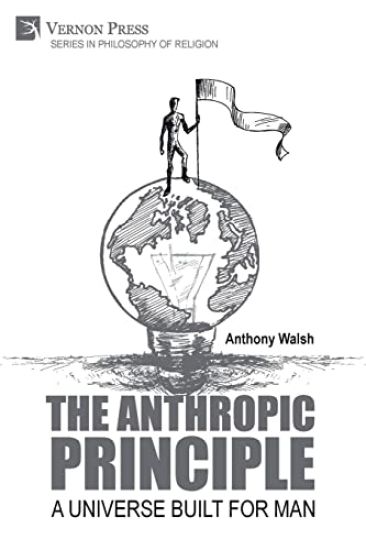
The Anthropic Principle

The Anthropic Principle

Anthony Walsh

Vernon Press
2022
pokkari
The Copernican Principle states that humankind is an insignificant assemblage of chemical scum living on an accidental planet in a suburb of a purposeless universe. Many prominent scientists, including Nobel laureate physicists, have questioned this scurrilous principle, which has led physicists to propose the Anthropic Principle. This principle posits a purposeful link between the structure of the universe and the existence of humankind and its specialness. The numerous features of the universe are so freakishly fine-tuned for the existence of intelligent life that physicists are beginning to come to grips with the notion that our universe is profoundly purposeful and that there is a powerful and incredibly intelligent Mind behind it all.
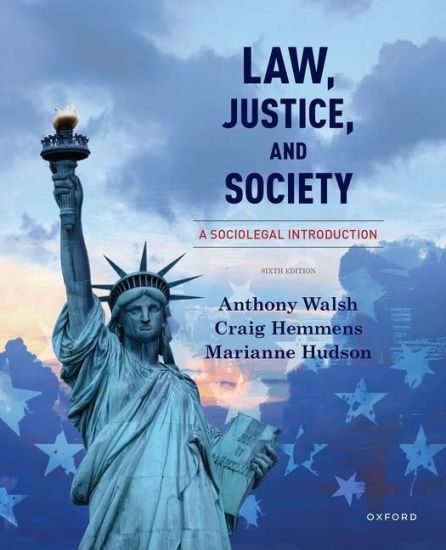
Law, Justice, and Society: A Sociolegal Introduction

Law, Justice, and Society: A Sociolegal Introduction

Anthony Walsh; Craig Hemmens; Marianne Hudson

Oxford University Press
2022
nidottu
An accessible and lively introduction to the field, Law, Justice, and Society: A Sociolegal Introduction, Sixth Edition, explores the relationship between legal systems and other social institutions using a distinctive sociological point of view. Anthony Walsh, Craig Hemmens, and Marianne Hudson provide detailed discussions of the various ways in which law impacts people based on race, class, gender, and age while also introducing students to the origins of the law, the history and development of the American legal system, the sociology of law, court structure, and the difference between civil and criminal law.
Race and Crime

Race and Crime

Anthony Walsh

NOVA SCIENCE PUBLISHERS INC
2022
sidottu
In addition to being one of the few books offering a conservative viewpoint on race and crime, this book differs from others about race and crime in a number of ways. Although concepts, data, and explanations are dispersed throughout, it is divided into three broad categories: Conceptual, Statistical Data, and Explanation. The first concept it looks at is the different mindsets and temperaments of liberals and conservatives that have been noted ever since Plato and Aristotle. It has been consistently shown that liberals and conservatives typically differ in their loci of control: external and internal, respectively. Differences in the locus of control lead to quite different interpretations of raw data. It then looks at the concept of race and whether or not it exists. This issue is examined in two chapters; the first in terms of molecular genetics, and the second in terms of evolutionary theory. Then, the concepts of racism and poverty are addressed. Criminological statistical data is analysed and crime is examined in a cross-cultural context. Explanations for the crime data are proposed.
Natural Theology

Natural Theology

Anthony Walsh

NOVA SCIENCE PUBLISHERS INC
2021
sidottu
Natural theology is the process of observing nature and engaging science and reason to provide evidence for God's existence by "reasoning to the best explanation". It sets aside the revealed word and engages only with the evidence supplied by science, history, and philosophical reasoning to affirm the existence of God. This book provides signposts to God from solid evidence from physics, chemistry, biology, the social sciences, philosophy, and history. This evidence has forced many scientists, including a number of Nobel laureates in science, who have thought deeply about the ultimate meaning of their work to accept Almighty God.