
Kirjailija
Anthony Walsh
Kirjat ja teokset yhdessä paikassa: 62 kirjaa, julkaisuja vuosilta 1995–2025, suosituimpiin kuuluu Love. Vertaile teosten hintoja ja tarkista saatavuus suomalaisista kirjakaupoista.
62 kirjaa
Kirjojen julkaisuvuodet: 1995–2025.
The main feature of this work is that it explores criminal behavior from all aspects of Tinbergen's Four Questions. Rather than focusing on a single theoretical point of view, this book examines the neurobiology of crime from a biosocial perspective. It suggests that it is necessary to understand some genetics and neuroscience in order to appreciate and apply relevant concepts to criminological issues. Presenting up-to-date information on the circuitry of the brain, the authors explore and examine a variety of characteristics, traits and behavioral syndromes related to criminal behavior such as ADHD, intelligence, gender, the age-crime curve, schizophrenia, psychopathy, violence and substance abuse. This book brings together the sociological tradition with the latest knowledge the neurosciences have to offer and conveys biological information in an accessible and understanding way. It will be of interest to scholars in the field and to professional criminologists.

Dead Sector: Salt Lake City: Zombie Apocalypse in Utah's Capitol City
Anthony Walsh; Dallin Smith
Createspace Independent Publishing Platform
2016
nidottu
This is the place Where the undead feast Horror, carnage and nothing short of complete mayhem has fallen upon Utah's capitol city A group of potential survivors as diverse as the city itself have assembled out of necessity only after discovering that their beloved city has been overran by the plague of violent walking corpses. Jason, a three time loser must rescue his love and make it to the safety that Salt Lake has to offer. The journey, fraught with danger at every turn, brings the survivors to the realization that tomorrow could very likely be just a pipe dream.

Love is a little word with a universe of meanings and has engaged people's interest throughout human history. The need to give and receive love lies deep within human nature. Philosophers, poets, theologians, sociologists, and scientists have all attempted to explain its exact origin, but is it an evolutionary adaptation, or a social construct? Walsh discusses that the nature of and need for love has biological origins. He draws upon Darwin's sexual selection theory to define the perceptions of love by infants through the process of experience-dependent brain wiring. He observes that mother love makes a child capable of loving and that father love makes a child feel worthy of love. He appraises the origin and purpose of romantic love in his discussions on sexual reproduction by looking at chemical and neurological responses to love and the influence of love on one's physical and mental health. With frequent quotes from literary masters like Shakespeare to orient one's scientific and humanistic understanding of love, Walsh goes on to explore various styles of romantic love, including monogamy, promiscuity, bartering love, and betrayed love; the effects of a skewed sex ratio on dating and mating practices; and the age-old quest for a perfect society populated by perfect people obeying the biblical command to "love one another."

Dead Sector: Miami
Anthony Walsh; Drake Romero
Createspace Independent Publishing Platform
2016
nidottu
A brutal tale as told by a new recruit of a well known law firm in Miami, FL. The horror starts in the unlikely place of a professional basketball game and leads though the streets and buildings of the famous coastal city. Zombies are quickly turning the living into a blood crazed horde out to feed their eternal hunger by turning Miami into a hot bed of mayhem. It is up to Phillip and his colleagues to survive the onslaught of the living dead and find salvation before it is too late

Dead Sector: Denver
Anthony Walsh; Jason Hartwell
Createspace Independent Publishing Platform
2016
nidottu
Denver is being attacked by the undead A handful of survivors band together to fight their way out of the "Mile High City" to find possible refuge at the Red Rocks Amphitheatre. Ravenous and blood thirsty, the yellow eyed fiends nip at their heels as well as their throats trying to feed their insatiable hunger for flesh. Colorado's biggest city has been brought to its knees. It's up to the team of survivors to quell the zombie uprisings and seek out safety before they all become what they fear the most... THE UNDEAD
Understanding and Using Statistics for Criminology and Criminal Justice
Jonathon A. Cooper; Peter A. Collins; Anthony Walsh
Oxford University Press
2015
nidottu
Understanding and Using Statistics for Criminology and Criminal Justice shows students how to critically examine the use and interpretation of statistics, covering not only the basics but also the essential probabilistic statistics that students will need in their future careers. Taking a conceptual approach, this unique text introduces students to the mindset of statistical thinking. It presents formulas in a step-by-step manner; explains the techniques using detailed, real-world examples; and encourages students to become insightful consumers of research. FEATURES * Assumes minimal knowledge of math and is accessible to students at all levels * Incorporates examples from real journals, showing how statistics are used in practice * Explains the purpose of hypothesis testing more clearly than any other text, clarifying the concept of probability and its relationship to statistics * Call-out boxes provide more in-depth explanations of concepts
Anthony Walsh bridges the divide separating sociology from biology—a divide created in the late nineteenth century when sociology emerged from the fields of social theory and philosophy. Walsh focuses on the viewpoint held by former American Sociological Association president Douglas Massey: sociologists have allowed the fact that we are social beings to obscure the biological foundations upon which our behaviour ultimately rests. Walsh argues that sociology has nothing to fear and a wealth of riches to gain if it pays attention to the theories, concepts, and methodologies of the biological sciences. Both study the same phenomena. Beginning with an examination of the reasons why we need a biosocial approach, Walsh explores sociology's traditional "taboo" concepts (reductionism, essentialism, etc.) and how those concepts are viewed in the natural sciences. Throughout the work, the author introduces relevant concepts from genetics and the neurosciences, using examples that will appeal to all sociologists. Later chapters apply his introductory arguments to traditional substantive sociological issues such as culture, crime, gender, socialization, social class, and the family. This book will be essential to all sociologists, evolutionary biologists, and scholars interested in the history of this important divide between the fields and where it currently stands.
Criminologists can benefit from questioning the underlying assumptions upon which they rest their work. Philosophy has the ability to clarify our thoughts, inform us of why we think about things the way we do, solve contradictions in our thinking we never knew existed, and even dissolve some dichotomies we thought were cast in stone. One of those dichotomies is free will vs. determinism. Criminology must reckon with both free will and agency, as posited by some theories, and determinism, as posited by others—including the ever more influential fields of genetics and biosocial criminology. Criminological Theory: Assessing Philosophical Assumptions examines philosophical concepts such as these in the context of important criminological theories or issues that are foundational but not generally considered in the literature on this topic. The uniqueness of this treatment of criminological theory is that rather than reporting what this person or that has said about a particular theory, Walsh exposes the philosophical assumptions underlying the theory. Students and scholars learn to clarify their own biases and better analyze the implications of a broad range of theories of crime and justice.
Few issues cause academics to disagree more than gender and race, especially when topics are addressed in terms of biological differences. To conduct research in these areas or comment favorably on research can subject one to scorn. When these topics are addressed, they generally take the form of philosophical debates. Anthony Walsh focuses upon such debates and supporting research. He divides parties into biologists and social constructionists, arguing that biologists remain focused on laboratory work, while constructionists are acutely aware of the impact of biologists in contested territories. Science Wars introduces the ideas motivating the parties and examines social constructionism and its issues with science. He explores arguments over conceptual tools scientists love and constructionists abhor, and he provides a solid discussion of the co-evolution of genes and culture. Walsh then focuses his attention on gender, how constructionists view it, and the neuroscience explanation of gender differences. Moving to race, Walsh looks at how some have tried to bury the concept of race, while others emphasize it. He considers definitions of race—essentialist, taxonomic, population, and lineage—as they have evolved from the time of the Enlightenment to the present. And finally, he attempts to bring the opposing sides together by pointing out what each can bring to a meaningful discussion.
Social class has been at the forefront of sociological theories of crime from their inception. It is explicitly central to some theories such as anomie/strain and conflict, and nips aggressively at the periphery of others such as social control theory. Yet none of these theories engage in a systematic exploration of what social class is, how individuals come to be placed in one rung of the class ladder rather than another, or the precise nature of the class-crime relationship. This book avers that the same factors that help to determine a person’s class level also help to determine that person’s risk for committing criminal acts. Social class is a modern outcome of primordial status-striving and requires explanation using the modern tools of genetics, neurobiology, and evolutionary biology, and this is what this book does. Many aspects of criminal behavior can be understood by examining the shared factors that lead to the success or failure in the workplace and to pro- or antisocial activities. A biosocial approach requires reducing sociology’s “master variable” to a lower level analysis to examine its constituent parts, which is resisted by many criminologists as highly controversial. However, this book makes plain that the more we know about the nature side of behavior the more important we find the nurture side to be. It makes clear how the class/crime relationship and criminology in general, can benefit from the biosocial perspective; a perspective that many criminological luminaries expect to be the dominant paradigm for the twenty first century.

Numerous criminologists have noted their dissatisfaction with the state of criminology. The need for a new paradigm for the 21st century is clear. However, many distrust biology as a factor in studies of criminal behavior, whether because of limited exposure or because the orientation of criminology in general has a propensity to see it as racist, classist, or at least illiberal. This innovative new book by noted criminologist Anthony Walsh dispels such fears, examining how information from the biological sciences strengthens criminology work and both complements and improves upon traditional theories of criminal behavior. With its reasoned case for biological science as a fundamental tool of the criminologist, Walsh's groundbreaking work will be required reading for all students and faculty within the field of criminology.
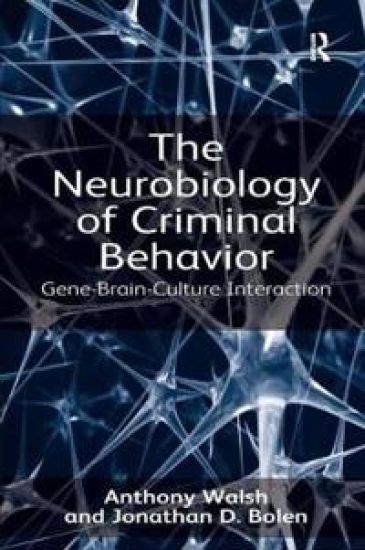
The Neurobiology of Criminal Behavior
Anthony Walsh; Jonathan D. Bolen
Ashgate Publishing Limited
2012
sidottu
The main feature of this work is that it explores criminal behavior from all aspects of Tinbergen's Four Questions. Rather than focusing on a single theoretical point of view, this book examines the neurobiology of crime from a biosocial perspective. It suggests that it is necessary to understand some genetics and neuroscience in order to appreciate and apply relevant concepts to criminological issues. Presenting up-to-date information on the circuitry of the brain, the authors explore and examine a variety of characteristics, traits and behavioral syndromes related to criminal behavior such as ADHD, intelligence, gender, the age-crime curve, schizophrenia, psychopathy, violence and substance abuse. This book brings together the sociological tradition with the latest knowledge the neurosciences have to offer and conveys biological information in an accessible and understanding way. It will be of interest to scholars in the field and to professional criminologists.
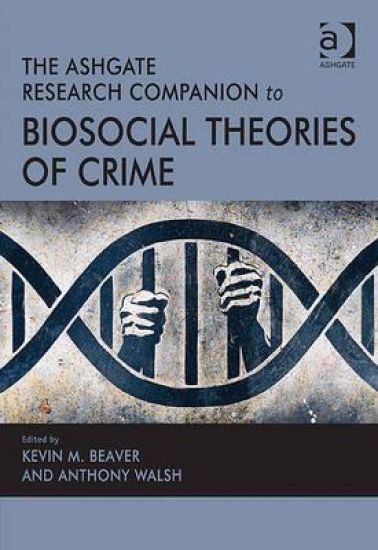
The Ashgate Research Companion to Biosocial Theories of Crime
Anthony Walsh
Ashgate Publishing Limited
2011
sidottu
In response to exciting developments in genetics, neuroscience and evolutionary psychology, a number of criminologists have embraced the position that criminal behaviour is the product of biological, psychological, and sociological factors operating together in complex ways. They have come to realize that if they are to capture the dynamic nature of criminal behaviour then they must span multiple levels of analysis and thus multiple disciplines. The explosion of interest in this field of biosocial criminology over the past ten years means that the time is ripe for this research companion aimed at graduate students and scholars, giving them an essential overview of the current state of research in the field. The authors are experts in a variety of disciplines (sociology, psychology, biology, criminal justice, and neuroscience), but they all have in common a strong interest in criminal behaviour. This unique book is essential and accessible reading for all students and scholars in the field.
Social class has been at the forefront of sociological theories of crime from their inception. It is explicitly central to some theories such as anomie/strain and conflict, and nips aggressively at the periphery of others such as social control theory. Yet none of these theories engage in a systematic exploration of what social class is, how individuals come to be placed in one rung of the class ladder rather than another, or the precise nature of the class-crime relationship. This book avers that the same factors that help to determine a person’s class level also help to determine that person’s risk for committing criminal acts. Social class is a modern outcome of primordial status-striving and requires explanation using the modern tools of genetics, neurobiology, and evolutionary biology, and this is what this book does. Many aspects of criminal behavior can be understood by examining the shared factors that lead to the success or failure in the workplace and to pro- or antisocial activities. A biosocial approach requires reducing sociology’s “master variable” to a lower level analysis to examine its constituent parts, which is resisted by many criminologists as highly controversial. However, this book makes plain that the more we know about the nature side of behavior the more important we find the nurture side to be. It makes clear how the class/crime relationship and criminology in general, can benefit from the biosocial perspective; a perspective that many criminological luminaries expect to be the dominant paradigm for the twenty first century.
Research Methods in Criminal Justice and Criminology
Lee Ellis; Richard D. Hartley; Anthony Walsh
Rowman Littlefield Publishers
2010
nidottu
Research Methods in Criminal Justice and Criminology is a core text for criminology and criminal justice research methods courses. It strives to offer a general foundation of knowledge that transcends particular topics or subject areas, allowing students to apply research methods and concepts to a multitude of scenarios. Even though the textbook has been written primarily for criminal justice and criminology majors, there is an underlying recognition that research methods and findings are common among all of the social sciences. This text has been designed to be user-friendly, even when dealing with some fairly complex statistical and theoretical concepts. The most critical points are clearly stated and illustrated with examples chosen to be interesting in their own right.
Research Methods in Criminal Justice and Criminology
Lee Ellis; Richard D. Hartley; Anthony Walsh
Rowman Littlefield Publishers
2010
sidottu
Research Methods in Criminal Justice and Criminology is a core text for criminology and criminal justice research methods courses. It strives to offer a general foundation of knowledge that transcends particular topics or subject areas, allowing students to apply research methods and concepts to a multitude of scenarios. Even though the textbook has been written primarily for criminal justice and criminology majors, there is an underlying recognition that research methods and findings are common among all of the social sciences. This text has been designed to be user-friendly, even when dealing with some fairly complex statistical and theoretical concepts. The most critical points are clearly stated and illustrated with examples chosen to be interesting in their own right.
Numerous criminologists have noted their dissatisfaction with the state of criminology. The need for a new paradigm for the 21st century is clear. However, many distrust biology as a factor in studies of criminal behavior, whether because of limited exposure or because the orientation of criminology in general has a propensity to see it as racist, classist, or at least illiberal. This innovative new book by noted criminologist Anthony Walsh dispels such fears, examining how information from the biological sciences strengthens criminology work and both complements and improves upon traditional theories of criminal behavior. With its reasoned case for biological science as a fundamental tool of the criminologist, Walsh's groundbreaking work will be required reading for all students and faculty within the field of criminology.
Introduction to Criminology: A Text/Reader
Anthony Walsh; Craig Hemmens
Sage Publications, Inc
2008
nidottu
Course CartridgesCourse cartridges offer you provide you with flexible, editable content in formats that import easily into most major learning management systems. This course cartridge includes all the assets found on this Instructor Teaching Site and relevant links from the Student Study Site in and easy to upload package. Combining the didactic approach of a textbook with well-edited critical research articles, Introduction to Criminology provides the best of both worlds, offering a unique new spin on the core textbook format. Organized like a more traditional introductory criminology text, this Text/Reader is divided into 14 sections that contain all the usual topics taught in an introduction to criminology course. After a comprehensive overview, each section has an introductory "mini-chapter" that provides engaging coverage of key concepts, developments, controversial issues, and research in the field. These authored introductions are followed by carefully selected and edited original research articles. The readings were written by criminology experts and often have a policy orientation that will help address student interest in the "so what?" application of theory. Key Features and Benefits Features the unique "How to Read a Research Article"-tied to the first reading in the book-to guide students in understanding and learning from the edited articles that appear throughout the text Boasts extensive and innovative coverage of the field of criminology, with special emphasis on the modern psychosocial and biosocial theories and concepts and integrating them with traditional sociological theories Utilizes unique summary tables at the ends of all theory chapters to allow students to quickly observe differences and similarities between competing theories Concludes all theory chapters with a distinctive section that presents policy and prevention implications to describe how the theories can be applied to social and criminal justice policies Covers a wide variety of crime typologies, including serial killing, terrorism, substance abuse, white-collar crime, and organized crime-topics of particular interest to students Provides an introduction to each reading to give students an overview of the purpose, main points, and conclusions of each article, and evaluates their policy implications Offers a clear and concise summary of key terms and concepts in each section coupled with discussion questions that enhance student comprehension of both the authored text and the readings Ancillaries Instructor Resources on CD include computerized testing, PowerPoint slides, teaching activities, and more. Contact Customer Care at 1-800-818-7243 (6 a.m. - 5 p.m., PT) to request a copy. A robust Student study site at www.sagepub.com/walshstudy/ features additional readings, self-quizzes, e-flashcards, links to audio and video archives of NPR and Frontline, and Web exercises. Intended Audience This unique text/reader is designed for students enrolled in Introduction to Criminology courses. Interested in a text/ reader for another criminology or criminal justice here? Explore other titles in the series.