Kirjojen hintavertailu – 12 903 725 kirjaa ja 27 kauppaa
Kirjailija
Anthony Walsh
Kirjat ja teokset yhdessä paikassa: 62 kirjaa, julkaisuja vuosilta 1995–2025, suosituimpiin kuuluu Love. Vertaile teosten hintoja ja tarkista saatavuus suomalaisista kirjakaupoista.
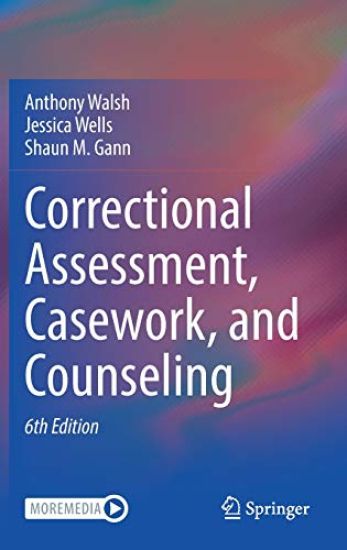
This book combines the latest in sociology, psychology, and biology to present evidence-based research on what works in community and institutional corrections. It spans from the theoretical underpinning of correctional counseling to concrete examples and tools necessary for professionals in the field. This book equips readers with the ability to understand what we should do, why we should do it, and tools for how to do it in the field. It discusses interviewing, interrogating, and theories of directive and nondirective counseling, including group counseling. It discusses the strengths and weaknesses of various correctional approaches such as cognitive-behavioral therapies, group counseling, and therapeutic communities. It introduces ethical and legal considerations for correctional professionals. With an explanation of the presentence investigation report, case management, and appendices containing a variety of classification and assessment instruments, this volume provides practical, hands-on experience. Students of criminal justice, psychology and social work will gain an understanding of the unique challenges to correctional success and practical applications of their studies. "This book is a teacher/student/practitioner's dream. Grounded in theory and evidence-based research on best practices, it is accessible, well-written, filled with sound insights and tools for working with criminal justice clients. I have used and loved each new edition of this fine text." — Dorothy S. McClellan, Texas A&M University-Corpus Christi
The second edition of Research Methods for Criminology and Criminal Justice is a core text for criminology and criminal justice research methods courses. This text offers a general foundation of knowledge that transcends particular topics or subject areas, allowing students to apply the methods and concepts discussed to a multitude of scenarios. Within the first five chapters, students learn (a) the philosophy behind scientific research, (b) the role of theory and hypotheses in the research process, (c) ethical issues in conducting research in our field, and (d) how research reports are structured. Thereafter, each new chapter will add information and examples that help students move toward a further understanding of research design and methodology that can be applied across the social and behavioral sciences to better understand social phenomena.
Research Methods in Criminal Justice and Criminology is a core text for criminology and criminal justice research methods courses. It strives to offer a general foundation of knowledge that transcends particular topics or subject areas, allowing students to apply research methods and concepts to a multitude of scenarios.
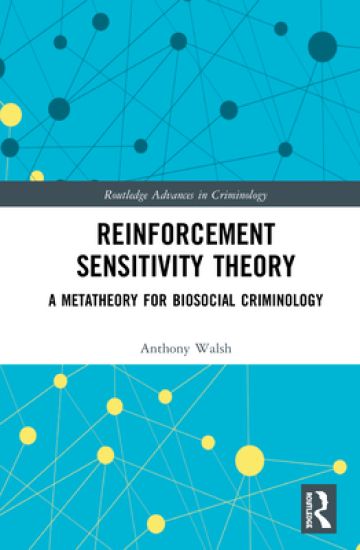
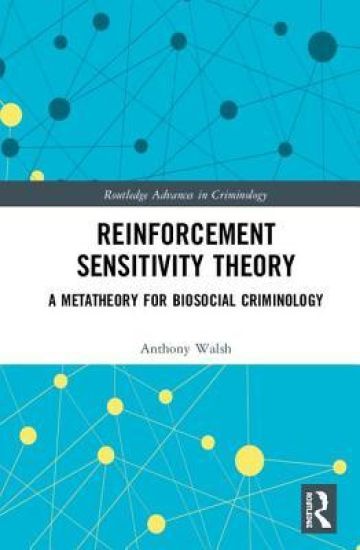
Some of the brightest minds in criminology who were nurtured on the strictly environmentalist paradigm of the 20th century have declared that biosocial criminology is the paradigm for the 21st century. This book attempts to unite this ever-growing field with the premier neurobiological theory of personality, otherwise known as reinforcement sensitivity theory (RST). Anthony Walsh places the highly variable number of biosocial approaches under a single theoretical umbrella, whilst providing a unique integrative framework. As the leading neurobiological theory of personality and behavior in psychology today, RST focuses around the age-old question of how naturally selfish social animals can achieve their wants and needs without alienating others in their social groups. RST posits that evolution has built into humans three interacting systems: the behavioral approach system; the behavioral inhibition system; and the fight/flight/freeze system. RST identifies the neurobiological and genetic functions underlying each system and has found a cascade of supporting evidence. Throwing new light on many areas of concern to criminologists, such as psychopathy, violence, ADHD, and schizophrenia, this book will be of interest to scholars and upper-level students in the field. Additional features such as Focus Boxes and diagrams delve into measurement techniques and brain areas.
"It may seem bizarre, but in my opinion, science offers a surer path to God than religion...science has actually advanced to the point where what were formerly religious questions can be seriously tackled" (Paul Davies, Astrophysicist). Anthony Walsh's latest riposte to atheistic arguments against God's existence draws on Natural Theology, a knowledge of God based on evidence from both the natural and social sciences. Covering everything from the Big Bang and the origins of life to the mystery of intelligent consciousness, Walsh makes even the most technical scientific writings accessible to the general reader and tackles a question few books on the relationship between science and religion have ever sought to address: how does Christianity positively affect societies, families, and individuals in terms of democracy, justice, happiness, health, and prosperity?
"It may seem bizarre, but in my opinion, science offers a surer path to God than religion...science has actually advanced to the point where what were formerly religious questions can be seriously tackled" (Paul Davies, Astrophysicist). Anthony Walsh's latest riposte to atheistic arguments against God's existence draws on Natural Theology, a knowledge of God based on evidence from both the natural and social sciences. Covering everything from the Big Bang and the origins of life to the mystery of intelligent consciousness, Walsh makes even the most technical scientific writings accessible to the general reader and tackles a question few books on the relationship between science and religion have ever sought to address: how does Christianity positively affect societies, families, and individuals in terms of democracy, justice, happiness, health, and prosperity?
Written by two academic scholars and former practitioners, Corrections: From Research, to Policy, to Practice, Second Edition offers students a 21st-century look into the treatment and rehabilitative themes that drive modern-day corrections. Authors Mary K. Stohr and Anthony Walsh expertly weave together research, policy, and practice to give readers a foundational understanding of the field of corrections. Readers will gain a comprehensive and practical understanding of corrections, as well as exposure to often-overlooked topics, including correctional programming and treatment, special problem-solving courts, and comparative corrections.
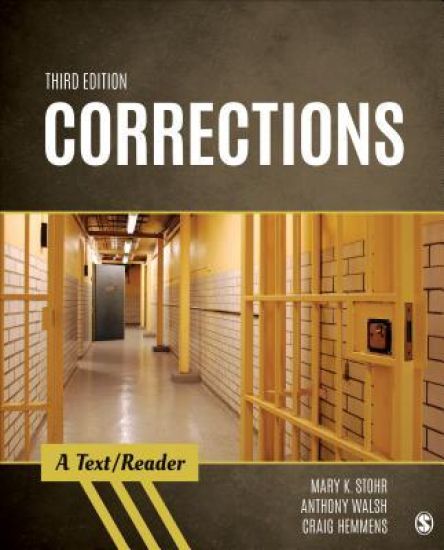
The Third Edition of Corrections: A Text/Reader provides students with the best of both worlds—a brief authored text accompanied by carefully selected and edited readings. Clear explanations of all of the major course topics help students understand the impact of new directions and policy in corrections. Policy-oriented original research articles demonstrate how research drives these advances. Designed throughout to enhance understanding, the book includes a helpful "How to Read a Research Article" section before the first reading, as well as article introductions, photographs, and discussion questions that capture students’ interest and help them develop their critical thinking skills. New to the Third Edition Nearly 75% of the journal articles have been updated to introduce students to current research on important topics such as racial and ethnic disparities in probation, influences on inmate misconduct, transgender prison inmates, and lethal injection protocol. Updated and expanded coverage of ethical considerations, special populations, and the history of corrections provides students with the context for understanding policy decisions and their consequences, both past and present. New Sections on Ethics (Section IV) and the Death Penalty (Section XVI) offer students insights into key issues in corrections today. More coverage on disparities in sentencing and drug courts encourages students to think critically about U. S. drug policies and their effectiveness. Additional content on federal procedures and private prisons shows real examples of private prisons, their profit motives, and the effect they have on the correctional system. The most current data, facts, statistics, and research are included throughout the book to provide students with insights into the world of corrections today. Give your students the SAGE edge! SAGE edge offers a robust online environment featuring an impressive array of free tools and resources for review, study, and further exploration, keeping both instructors and students on the cutting edge of teaching and learning.
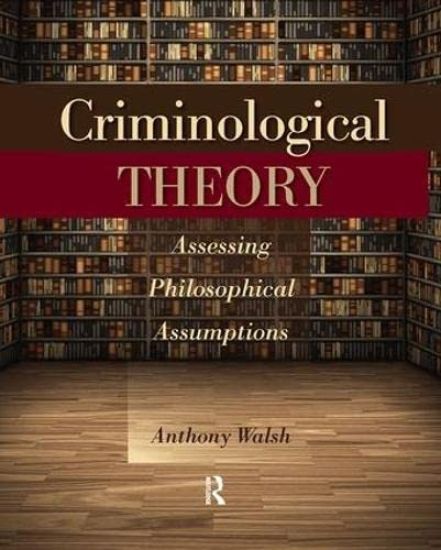
Criminologists can benefit from questioning the underlying assumptions upon which they rest their work. Philosophy has the ability to clarify our thoughts, inform us of why we think about things the way we do, solve contradictions in our thinking we never knew existed, and even dissolve some dichotomies we thought were cast in stone. One of those dichotomies is free will vs. determinism. Criminology must reckon with both free will and agency, as posited by some theories, and determinism, as posited by others—including the ever more influential fields of genetics and biosocial criminology. Criminological Theory: Assessing Philosophical Assumptions examines philosophical concepts such as these in the context of important criminological theories or issues that are foundational but not generally considered in the literature on this topic. The uniqueness of this treatment of criminological theory is that rather than reporting what this person or that has said about a particular theory, Walsh exposes the philosophical assumptions underlying the theory. Students and scholars learn to clarify their own biases and better analyze the implications of a broad range of theories of crime and justice.
Some of the brightest minds in criminology who were nurtured on the strictly environmentalist paradigm of the 20th century have declared that biosocial criminology is the paradigm for the 21st century. This book attempts to unite this ever-growing field with the premier neurobiological theory of personality, otherwise known as reinforcement sensitivity theory (RST). Anthony Walsh places the highly variable number of biosocial approaches under a single theoretical umbrella, whilst providing a unique integrative framework. As the leading neurobiological theory of personality and behavior in psychology today, RST focuses around the age-old question of how naturally selfish social animals can achieve their wants and needs without alienating others in their social groups. RST posits that evolution has built into humans three interacting systems: the behavioral approach system; the behavioral inhibition system; and the fight/flight/freeze system. RST identifies the neurobiological and genetic functions underlying each system and has found a cascade of supporting evidence. Throwing new light on many areas of concern to criminologists, such as psychopathy, violence, ADHD, and schizophrenia, this book will be of interest to scholars and upper-level students in the field. Additional features such as Focus Boxes and diagrams delve into measurement techniques and brain areas.
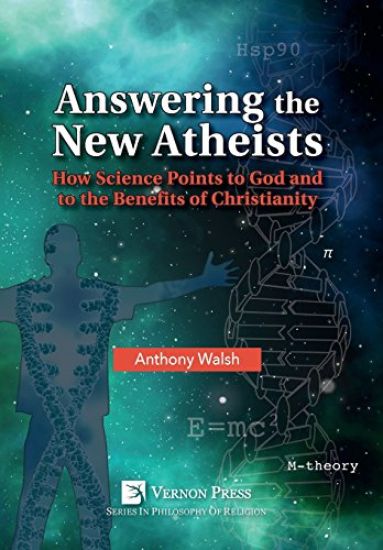
In the face of increasing attacks on Christianity by militant new atheists, Christians should be able to robustly defend their beliefs in the language spoken by Christianity's detractors--science. Atheists claim that science and religion are incompatible and in constant conflict, but this book argues that this is assuredly not true. In order to rebut the polemic agenda of the new atheists who want God banned from the public square, this book engages with the physical and natural sciences, social science, philosophy, and history. It shows that evidence from these diverse disciplines constitutes clear signposts to God and the benefits of Christianity for societies, families, and individuals. Answering the New Atheists begins by examining what new atheism is, before demolishing its claim that Christianity is harmful by showing the many benefits it has for freedom and democracy, morality, longevity, and physical and mental health. Many historians of science contend that science was given its impetus by the Christian principle that a rational God wants us to discover his fingerprints on nature. Thus, in subsequent chapters, Walsh presents a well-informed and philosophical-based analysis of the Big Bang and cosmic fine-tuning, the unimaginable improbability of factors that make this planet habitable, and the multiverse often called the "last refuge of the desperate atheist." Interdisciplinary in its approach, this book adeptly explores the very problematic issues of the origin and evolution of life that have forced many top-rate scientists including Nobel Prize winners, who have thought deeply about the philosophical meaning of their work, to accept God as the Creator of everything.
In the face of increasing attacks on Christianity by militant new atheists, Christians should be able to robustly defend their beliefs in the language spoken by Christianity's detractors--science. Atheists claim that science and religion are incompatible and in constant conflict, but this book argues that this is assuredly not true. In order to rebut the polemic agenda of the new atheists who want God banned from the public square, this book engages with the physical and natural sciences, social science, philosophy, and history. It shows that evidence from these diverse disciplines constitutes clear signposts to God and the benefits of Christianity for societies, families, and individuals. Answering the New Atheists begins by examining what new atheism is, before demolishing its claim that Christianity is harmful by showing the many benefits it has for freedom and democracy, morality, longevity, and physical and mental health. Many historians of science contend that science was given its impetus by the Christian principle that a rational God wants us to discover his fingerprints on nature. Thus, in subsequent chapters, Walsh presents a well-informed and philosophical-based analysis of the Big Bang and cosmic fine-tuning, the unimaginable improbability of factors that make this planet habitable, and the multiverse often called the "last refuge of the desperate atheist." Interdisciplinary in its approach, this book adeptly explores the very problematic issues of the origin and evolution of life that have forced many top-rate scientists including Nobel Prize winners, who have thought deeply about the philosophical meaning of their work, to accept God as the Creator of everything.
This book addresses the benefits of Christianity for all, the degradation of our culture since the 1950s, the pernicious effects that cultural Marxism has had on Western cultures, and the loss of religious freedom as the Founders envisioned it due to a number of Supreme Court rulings. We cannot understand the culture war and cultural debasement until we understand cultural Marxism. Cultural Marxism has been "hiding in plain sight" since the 1930 with the immigration to the United States of a cadre of intellectuals from Germany who brought with them the folderol of critical theory, political correctness, gender neutrality, radical feminism, and moral relativism. This intellectual moonshine is designed to weaken family structure and individual morality, and it has worked. The ultimate purpose of cultural Marxism is to destroy Western civilization from within. This goal is clearly and unambiguously stated in their books and articles. In numerous places in these books and articles, cultural Marxists are adamant that if socialism is ever to come to America the two epicenters of Western morality, the family and Christianity, will have to be destroyed by slow, stealthy, and incremental attacks on them. They have been aided in their efforts by anti-Christian rulings by the United States Supreme Court since the 1940s. I do not claim in any sense that the Supreme Court is engaged in a conspiracy with cultural Marxists. Their rulings have been based on a reading of the Establishment Clause of the First Amendment that its authors would not recognize, and have used this clause to eviscerate the Free Exercise Clause--America's "first freedom." The Court has purged Christianity from the public square, and in doing so it has unwittingly helped the cultural Marxist agenda by spiritually disarming America.
This book addresses the benefits of Christianity for all, the degradation of our culture since the 1950s, the pernicious effects that cultural Marxism has had on Western cultures, and the loss of religious freedom as the Founders envisioned it due to a number of Supreme Court rulings. We cannot understand the culture war and cultural debasement until we understand cultural Marxism. Cultural Marxism has been "hiding in plain sight" since the 1930 with the immigration to the United States of a cadre of intellectuals from Germany who brought with them the folderol of critical theory, political correctness, gender neutrality, radical feminism, and moral relativism. This intellectual moonshine is designed to weaken family structure and individual morality, and it has worked. The ultimate purpose of cultural Marxism is to destroy Western civilization from within. This goal is clearly and unambiguously stated in their books and articles. In numerous places in these books and articles, cultural Marxists are adamant that if socialism is ever to come to America the two epicenters of Western morality, the family and Christianity, will have to be destroyed by slow, stealthy, and incremental attacks on them. They have been aided in their efforts by anti-Christian rulings by the United States Supreme Court since the 1940s. I do not claim in any sense that the Supreme Court is engaged in a conspiracy with cultural Marxists. Their rulings have been based on a reading of the Establishment Clause of the First Amendment that its authors would not recognize, and have used this clause to eviscerate the Free Exercise Clause--America's "first freedom." The Court has purged Christianity from the public square, and in doing so it has unwittingly helped the cultural Marxist agenda by spiritually disarming America.
Few issues cause academics to disagree more than gender and race, especially when topics are addressed in terms of biological differences. To conduct research in these areas or comment favorably on research can subject one to scorn. When these topics are addressed, they generally take the form of philosophical debates. Anthony Walsh focuses upon such debates and supporting research. He divides parties into biologists and social constructionists, arguing that biologists remain focused on laboratory work, while constructionists are acutely aware of the impact of biologists in contested territories. Science Wars introduces the ideas motivating the parties and examines social constructionism and its issues with science. He explores arguments over conceptual tools scientists love and constructionists abhor, and he provides a solid discussion of the co-evolution of genes and culture. Walsh then focuses his attention on gender, how constructionists view it, and the neuroscience explanation of gender differences. Moving to race, Walsh looks at how some have tried to bury the concept of race, while others emphasize it. He considers definitions of race essentialist, taxonomic, population, and lineage as they have evolved from the time of the Enlightenment to the present. And finally, he attempts to bring the opposing sides together by pointing out what each can bring to a meaningful discussion.
Anthony Walsh bridges the divide separating sociology from biology a divide created in the late nineteenth century when sociology emerged from the fields of social theory and philosophy. Walsh focuses on the viewpoint held by former American Sociological Association president Douglas Massey: sociologists have allowed the fact that we are social beings to obscure the biological foundations upon which our behaviour ultimately rests. Walsh argues that sociology has nothing to fear and a wealth of riches to gain if it pays attention to the theories, concepts, and methodologies of the biological sciences. Both study the same phenomena. Beginning with an examination of the reasons why we need a biosocial approach, Walsh explores sociology's traditional "taboo" concepts (reductionism, essentialism, etc.) and how those concepts are viewed in the natural sciences. Throughout the work, the author introduces relevant concepts from genetics and the neurosciences, using examples that will appeal to all sociologists. Later chapters apply his introductory arguments to traditional substantive sociological issues such as culture, crime, gender, socialization, social class, and the family. This book will be essential to all sociologists, evolutionary biologists, and scholars interested in the history of this important divide between the fields and where it currently stands.