Kirjojen hintavertailu – 12 859 819 kirjaa ja 27 kauppaa

Kirjailija

Anton Chekhov

Kirjat ja teokset yhdessä paikassa: 644 kirjaa, julkaisuja vuosilta 1896–2026, suosituimpiin kuuluu Anton Chekhov's Selected Plays. Vertaile teosten hintoja ja tarkista saatavuus suomalaisista kirjakaupoista.

644 kirjaa

Kirjojen julkaisuvuodet: 1896–2026.

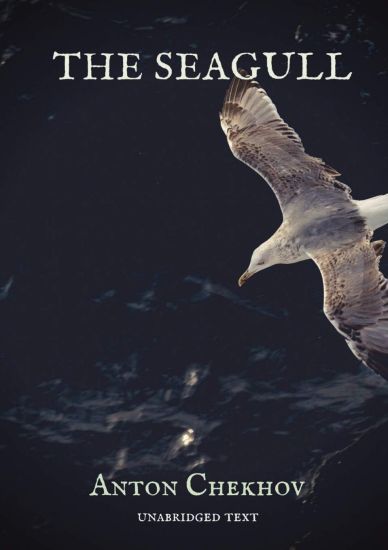
The Seagull

The Seagull

Anton Chekhov

Graphic Arts Books
2020
pokkari
“Chekhov, speaking simply and never otherwise than as an artist and a humane man, shows us in fullness and plenitude the mystery of our lives.”—Eudora Welty “What writers influenced me as a young man? Chekhov! As a dramatist? Chekhov! As a story writer? Chekhov!”-Tennessee Williams The Seagull is Anton Chekhov’s brilliant four-act play that is considered a monumental work of drama, and one of the most sublime literary examinations of the complexities of love and friendship. First performed over a century ago, this play remains one of the most widely staged productions throughout the world. The four protagonists in The Seagull are all artists; Trigorin is a well-established writer, Arkadina is a renowned yet aging actress, her son Treplev is a struggling writer, and Nina is a young aspiring actress who is in love with Treplev. Success in love and in their art is a shared intent, yet within the play each character experiences an existential crisis in the darkness of unrequited love. With its play-within-a-play, its nods to Shakespeare, and intimate and profound character portrayals, this is an essential read for all serious students of drama and Russian literature. With an eye-catching new cover, and professionally typeset manuscript, this edition of The Seagull is both modern and readable.
Ochen strashnye rasskazy

Ochen strashnye rasskazy

Nikolaj Gogol; Aleksandr Bestuzhev-Marlinskij; Arthur Doyle; Anton Chekhov; Edgar Allan Poe

Kacheli
2020
sidottu
Prividenija, mistika, zakoldovannye mesta i predmety i, konechno, Vij, prishedshij prjamo iz preispodnej. V sbornike pod podarochnoj oblozhkoj s zolotoj folgoj vy najdete istorii, kholodjaschie krov, - ot masterov strashnogo rasskaza: Nikolaja Gogolja, Edgara Po, Vladimira Odoevskogo i drugikh. Rasskazy dopolnjajut fantazijnye, polnye metafor i pugajuschikh obrazov illjustratsii Olgi Nekhodovoj. Knigi serii "Kalejdoskop" pokazhut chitateljam: klassika mozhet byt neverojatno uvlekatelnoj! Dlja srednego i starshego shkolnogo vozrasta. Perevodchiki: Rogov V., Chukovskij Nikolaj Korneevich, Chukovskaja M. N., Balmont Konstantin DmitrievichKhudozhnik: Nekhodova Olga
A.P. Chekhov. Rasskazy

A.P. Chekhov. Rasskazy

Anton Chekhov

Strekoza
2020
sidottu
V knigu voshli 24 rasskaza Antona Pavlovicha Chekhova. Oni smeshnye i tragichnye, jumoristicheskie i sarkastichnye, o dobre i ljubvi, o poshlosti i bezdarnosti, o ljudjakh, so vsemi ikh dostoinstvami i porokami. Rekomendovano dlja chtenija v srednem i starshem shkolnom vozraste.
Izbrannoe. Sereznoe. V 2 tomakh. Tom 2
Dvukhtomnik izbrannykh sochinenij ("Izbrannoe: Smeshnoe" i "Izbrannoe: Sereznoe"), izdavaemyj k 160-letiju so dnja rozhdenija velikogo pisatelja, nagljadno predstavljaet obe storony chekhovskogo darovanija, pomogaja chitatelju sozdat garmonichnoe vpechatlenie o "literaturnom litse" Antona Pavlovicha. V "Izbrannoe: Sereznoe" voshli luchshie rasskazy i povesti zrelogo perioda tvorchestva pisatelja - 1888-1902 godov. Uzhe sovremennaja Chekhovu literaturnaja kritika otmechala: Chekhov prinadlezhit k chislu khudozhnikov, kotorye "ne sochinjajut sjuzhetov, a nakhodjat ikh vsjudu v zhizni; kuda on ni posmotrit, vezde dlja nego istochnik tvorchestva; gde my s vami nichego ne uvidim, ne pojmem, ne pochuvstvuem, gde dlja nas vsjo prosto, obydenno - tam dlja nego tseloe otkrytie. Chekhov vidit za vsem etim tseluju zhizn, kotoruju umeet tak ponjat, tak poljubit, chto i my nachinaem ee ljubit i ponimat". I v etom ubezhdaemsja s godami vsjo bolshe i bolshe.
Izbrannoe. Smeshnoe. V 2 tomakh. Tom 1.
Dvukhtomnik izbrannykh sochinenij ("Izbrannoe: Smeshnoe" i "Izbrannoe: Sereznoe"), izdavaemyj k 160-letiju so dnja rozhdenija velikogo pisatelja, nagljadno predstavljaet obe storony chekhovskogo darovanija, pomogaja chitatelju sozdat garmonichnoe vpechatlenie o "literaturnom litse" Antona Pavlovicha. V "Izbrannoe: Smeshnoe" voshli proizvedenija Chekhova 1880-1887 godov. Zdes sobrana tak nazyvaemaja chekhovskaja jumoristika, teksty, kotorye on podpisyval "Chelovek bez selezenki", "Brat svoego brata", no chasche vsego - "Antosha Chekhonte". Chekhov zhil v iskljuchitelno smeshnoe vremja. I v tom, chto on pisal smeshnye rasskazy, net nichego udivitelnogo. Gomericheski smeshny byli vse: studenty, liberaly, ministry, zemskie dejateli, nevinnye devushki, prostitutki, dachniki, uchitelja, svjaschenniki, intelligenty, krestjane, sudi, zloumyshlenniki... Tak byvaet v gody bolshogo obschestvennogo otchajanija i shirokomasshtabnogo krushenija nadezhd. Sostavitel Aleksej Kostanjan.
Belolobyj. Rasskazy dlja detej

Belolobyj. Rasskazy dlja detej

Anton Chekhov

Prof-Press
2020
sidottu
V dannuju seriju voshli proizvedenija pisatelej i poetov, izvestnykh ne tolko shkolnikam, no i vzroslym: I. Turgeneva, L. Tolstogo, A. Chekhova, A. Gajdara i mnogikh drugikh. V knigakh dannoj serii predstavleny kak skazki i jumoristicheskie rasskazy priznannykh masterov zhanra: V. Dragunskogo, L. Kaminskogo, I. Antonovoj, - tak i bolee serjoznye rasskazy i povesti klassikov i sovremennykh pisatelej. Chjorno-belye illjustratsii ne otvlekajut chitatelja ot ponimanija teksta, i v tozhe vremja sposobstvujut luchshemu vosprijatiju proizvedenija. Knigi dannoj serii budut, nesomnenno, interesny i polezny vsem shkolnikam. Dlja mladshego i srednego shkolnogo vozrasta.
O ljubvi

O ljubvi

Anton Chekhov

Arkadija
2020
sidottu
A. P. Chekhov sozdal tselyj tsikl rasskazov o ljubvi. Tonkij jumor, inogda perekhodjaschij v edkuju ironiju, glubokij psikhologizm, velikolepnyj stil i schemjaschaja, pochti nostalgicheskaja grust sdelali eti rasskazy obraztsom russkoj ljubovnoj prozy. Ikh sjuzhety prosty, no v etoj prostote skryvaetsja podlinnaja krasota i pravda zhizni. Redaktor: Stupnenkova ElenaKhudozhnik: Kotelnikova Ljudmila
Detskaja biblioteka. Mezhdu vekom vosemnadtsatym i dvadtsatym

Detskaja biblioteka. Mezhdu vekom vosemnadtsatym i dvadtsatym

Aleksandr Shishkov; Anton Chekhov

Detskoe vremja
2020
sidottu
Pered vami pervaja kniga iz novoj serii: "Knigi o knigakh". Smozhete li vy nazvat russkikh detskikh poetov XIX veka? Dlja nespetsialistov vopros okazhetsja ne takim prostym. Basni Krylova, skazki Pushkina, stikhi Nekrasova; izbrannye proizvedenija Lermontova, Feta, Majkova, Plescheeva, razlichnye khrestomatii iz stikhov klassikov russkoj literatury - vot to nasledie, kotoroe bolee stoletija iz goda v god pereizdajotsja dlja vsjo novykh pokolenij detej. Velikie dostoinstva etikh knig nesomnenny, no tolko obratim vnimanie, chto i basni Krylova, i skazki Pushkina sochinjalis dlja vzroslykh chitatelej. Izbrannaja antologija iz literatury dlja vzroslykh - do KHKh veka takim obraz detskoj literatury predstaval vo mnogikh evropejskikh stranakh, i Rossija ne byla iskljucheniem. I vsjo zhe v dorevoljutsionnoj Rossii sluchilos neskolko vydajuschikhsja serjoznykh sobytij, svjazannykh s bytovaniem detskoj literatury. Eta kniga poznakomit s tremja takimi sobytijami." Detskaja biblioteka" A. S. Shishkova - odna iz pervykh v evropejskoj literature knig, obraschjonnykh neposredstvenno k detjam. (Pro ejo svoeobrazie i udivitelnuju sudbu ejo avtora chitajte v predislovii k pervoj chasti.)"Nechajannaja" poezija Modzalevskogo zanjala unikalnoe mesto v istorii russkoj detskoj literatury - vojdja v zhizn soten tysjach krestjanskikh detej po vsej Rossii vmesto s "Rodnym Slovom" Ushinskogo. Bodroe, realistichnoe, zadornoe, no soedinjonnoe s mjagkostju, sentimentalnostju i sderzhannoj nazidatelnostju napravlenie detskoj poezii ot Shishkova k Modzalevskomu svjazalo epokhi Derzhavina i Krylova, Pushkina i Zhukovskogo s KHKh vekom; a v predrevoljutsionnye gody naibolee organichnym ejo prodolzheniem vygljadit poezija M. P. Chekhova, brata Antona Pavlovicha i redaktora zhurnala "Zolotoe detstvo". Kazhdaja iz trekh chastej knigi soderzhit izbrannye stikhotvorenija avtorov i predvarjaetsja statej ot sostavitelej. Sostaviteli Andrej Rusakov i Mikhail Jasnov.
The Horse Stealers

The Horse Stealers

Anton Chekhov

Les Prairies Numeriques
2020
pokkari
The Horse-Stealers by Anton TchekhovA HOSPITAL assistant, called Yergunov, an empty-headed fellow, known throughout the district as a great braggart and drunkard, was returning one evening in Christmas week from the hamlet of Ryepino, where he had been to make some purchases for the hospital. That he might get home in good time and not be late, the doctor had lent him his very best horse. At first it had been a still day, but at eight o'clock a violent snow-storm came on, and when he was only about four miles from home Yergunov completely lost his way. He did not know how to drive, he did not know the road, and he drove on at random, hoping that the horse would find the way of itself. Two hours passed the horse was exhausted, he himself was chilled, and already began to fancy that he was not going home, but back towards Ryepino. But at last above the uproar of the storm he heard the far-away barking of a dog, and a murky red blur came into sight ahead of him: little by little, the outlines of a high gate could be discerned, then a long fence on which there were nails with their points uppermost, and beyond the fence there stood the slanting crane of a well. The wind drove away the mist of snow from before the eyes, and where there had been a red blur, there sprang up a small, squat little house with a steep thatched roof. Of the three little windows one, covered on the inside with something red, was lighted up. What sort of place was it? Yergunov remembered that to the right of the road, three and a half or four miles from the hospital, there was Andrey Tchirikov's tavern. He remembered, too, that this Tchirikov, who had been lately killed by some sledgedrivers, had left a wife and a daughter called Lyubka, who had come to the hospital two years before as a patient. The inn had a bad reputation, and to visit it late in the evening, and especially with someone else's horse, was not free from risk. But there was no help for it. Yergunov fumbled in his knapsack for his revolver, and, coughing sternly, tapped at the window-frame with his whip. "Hey who is within?" he cried. "Hey, granny let me come in and get warm " With a hoarse bark a black dog rolled like a ball under the horse's feet, then another white one, then another black one-there must have been a dozen of them. Yergunov looked to see which was the biggest, swung his whip and lashed at it with all his might. A small, long-legged puppy turned its sharp muzzle upwards and set up a shrill, piercing howl. Yergunov stood for a long while at the window, tapping. But at last the hoar-frost on the trees near the house glowed red, and a muffled female figure appeared with a lantern in her hands. "Let me in to get warm, granny," said Yergunov. "I was driving to the hospital, and I have lost my way. It's such weather, God preserve us. Don't be afraid we are your own people, granny." "All my own people are at home, and we didn't invite strangers," said the figure grimly. "And what are you knocking for? The gate is not locked."

The Duel

The Duel

Anton Chekhov

Les Prairies Numeriques
2020
pokkari
Laevsky is a dissipated romantic given to gambling and flirtation. He has run off to the sea with another man's wife and quickly grown tired of her, but two obstacles block his route to escape: he is broke, and he faces the absolute enmity of Von Koren, an arrogant zoologist and former friend who can no longer tolerate Laevsky's irresponsibility. Soon Laevsky confronts Von Koren, accusing him of meddling in his affairs, but Von Koren maneuvers a criticism Laevsky makes of their mutual friend, Dr. Samoylenko, into a challenge to a duel.
The Wife and Other Stories

The Wife and Other Stories

Anton Chekhov

Les Prairies Numeriques
2020
pokkari
The Wife and Other Stories by Anton ChekhovI RECEIVED the following letter: "DEAR SIR, PAVEL ANDREITCH "Not far from you-that is to say, in the village of Pestrovo-very distressing incidents are taking place, concerning which I feel it my duty to write to you. All the peasants of that village sold their cottages and all their belongings, and set off for the province of Tomsk, but did not succeed in getting there, and have come back. Here, of course, they have nothing now everything belongs to other people. They have settled three or four families in a hut, so that there are no less than fifteen persons of both sexes in each hut, not counting the young children and the long and the short of it is, there is nothing to eat. There is famine and there is a terrible pestilence of hunger, or spotted, typhus literally every one is stricken. The doctor's assistant says one goes into a cottage and what does one see? Every one is sick, every one delirious, some laughing, others frantic the huts are filthy there is no one to fetch them water, no one to give them a drink, and nothing to eat but frozen potatoes. What can Sobol (our Zemstvo doctor) and his lady assistant do when more than medicine the peasants need bread which they have not? The District Zemstvo refuses to assist them, on the ground that their names have been taken off the register of this district, and that they are now reckoned as inhabitants of Tomsk and, besides, the Zemstvo has no money. "Laying these facts before you, and knowing your humanity, I beg you not to refuse immediate help. "Your well-wisher." Obviously the letter was written by the doctor with the animal name* or his lady assistant. Zemstvo doctors and their assistants go on for years growing more and more convinced every day that they can do nothing, and yet continue to receive their salaries from people who are living upon frozen potatoes, and consider they have a right to judge whether I am humane or not. *Sobol in Russian means "sable-marten."-TRANSLATOR'S NOTE. Worried by the anonymous letter and by the fact that peasants came every morning to the servants' kitchen and went down on their knees there, and that twenty sacks of rye had been stolen at night out of the barn, the wall having first been broken in, and by the general depression which was fostered by conversations, newspapers, and horrible weather-worried by all this, I worked listlessly and ineffectively. I was writing "A History of Railways" I had to read a great number of Russian and foreign books, pamphlets, and articles in the magazines, to make calculations, to refer to logarithms, to think and to write then again to read, calculate, and think but as soon as I took up a book or began to think, my thoughts were in a muddle, my eyes began blinking, I would get up from the table with a sigh and begin walking about the big rooms of my deserted country-house.
The Schoolmistress and Other Stories

The Schoolmistress and Other Stories

Anton Chekhov

Les Prairies Numeriques
2020
pokkari
The Schoolmistress and Other Stories The Tales of Chekhov Vol. IXGrisha, a fat, solemn little person of seven, was standing by the kitchen door listening and peeping through the keyhole. In the kitchen something extraordinary, and in his opinion never seen before, was taking place. A big, thick-set, red-haired peasant, with a beard, and a drop of perspiration on his nose, wearing a cabman's full coat, was sitting at the kitchen table on which they chopped the meat and sliced the onions. He was balancing a saucer on the five fingers of his right hand and drinking tea out of it, and crunching sugar so loudly that it sent a shiver down Grisha's back. Aksinya Stepanovna, the old nurse, was sitting on the dirty stool facing him, and she, too, was drinking tea. Her face was grave, though at the same time it beamed with a kind of triumph. Pelageya, the cook, was busy at the stove, and was apparently trying to hide her face. And on her face Grisha saw a regular illumination: it was burning and shifting through every shade of colour, beginning with a crimson purple and ending with a deathly white. She was continually catching hold of knives, forks, bits of wood, and rags with trembling hands, moving, grumbling to herself, making a clatter, but in reality doing nothing. She did not once glance at the table at which they were drinking tea, and to the questions put to her by the nurse she gave jerky, sullen answers without turning her face. "Help yourself, Danilo Semyonitch," the nurse urged him hospitably. "Why do you keep on with tea and nothing but tea? You should have a drop of vodka " And nurse put before the visitor a bottle of vodka and a wine-glass, while her face wore a very wily expression. "I never touch it.... No ..." said the cabman, declining. "Don't press me, Aksinya Stepanovna." "What a man ... A cabman and not drink ... A bachelor can't get on without drinking. Help yourself " The cabman looked askance at the bottle, then at nurse's wily face, and his own face assumed an expression no less cunning, as much as to say, "You won't catch me, you old witch " "I don't drink please excuse me. Such a weakness does not do in our calling. A man who works at a trade may drink, for he sits at home, but we cabmen are always in view of the public. Aren't we? If one goes into a pothouse one finds one's horse gone if one takes a drop too much it is worse still before you know where you are you will fall asleep or slip off the box. That's where it is." "And how much do you make a day, Danilo Semyonitch?" "That's according. One day you will have a fare for three roubles, and another day you will come back to the yard without a farthing. The days are very different. Nowadays our business is no good. There are lots and lots of cabmen as you know, hay is dear, and folks are paltry nowadays and always contriving to go by tram. And yet, thank God, I have nothing to complain of. I have plenty to eat and good clothes to wear, and ...we could even provide well for another..." (the cabman stole a glance at Pelageya) "if it were to their liking...." Grisha did not hear what was said further.
The Seagull

The Seagull

Anton Chekhov

Les Prairies Numeriques
2020
pokkari
The Seagull by Anton ChekhovThe Seagull is a play by Russian dramatist Anton Chekhov, written in 1895 and first produced in 1896. The Seagull is generally considered to be the first of his four major plays. It dramatises the romantic and artistic conflicts between four characters: the famous middlebrow story writer Boris Trigorin, the ingenue Nina, the fading actress Irina Arkadina, and her son the symbolist playwright Konstantin Treplyov. Though the character of Trigorin is considered Chekhov's greatest male role, like Chekhov's other full-length plays, The Seagull relies upon an ensemble cast of diverse, fully developed characters. In contrast to the melodrama of mainstream 19th-century theatre, lurid actions (such as Konstantin's suicide attempts) are not shown onstage. Characters tend to speak in ways that skirt around issues rather than addressing them directly in other words, their lines are full of what is known in dramatic practice as subtext. The opening night of the first production was a famous failure. Vera Komissarzhevskaya, playing Nina, was so intimidated by the hostility of the audience that she lost her voice. Chekhov left the audience and spent the last two acts behind the scenes. When supporters wrote to him that the production later became a success, he assumed that they were merely trying to be kind. When Konstantin Stanislavski, the seminal Russian theatre practitioner of the time, directed it in 1898 for his Moscow Art Theatre, the play was a triumph. Stanislavski's production of The Seagull became "one of the greatest events in the history of Russian theatre and one of the greatest new developments in the history of world drama". Stanislavski is also the director that caused The Seagull to be perceived as a tragedy by becoming overzealous with the concept of subtext, whereas Chekhov intended for it to be a comedy. After purchasing the Melikhovo farm in 1892, Chekhov had built in the middle of a cherry orchard a lodge consisting of three rooms, one containing a bed and another a writing table. In spring, when the cherries were in blossom, it was pleasant to live in this lodge, but in winter it was so buried in the snow that pathways had to be cut to it through drifts as high as a man. Chekhov eventually moved in and in a letter written in October 1895 wrote: I am writing a play which I shall probably not finish before the end of November. I am writing it not without pleasure, though I swear fearfully at the conventions of the stage. It's a comedy, there are three women's parts, six men's, four acts, landscapes (view over a lake) a great deal of conversation about literature, little action, tons of love.
Ivanoff

Ivanoff

Anton Chekhov

Les Prairies Numeriques
2020
pokkari
Ivanoff (Ivanov)Anton Chekhov Ivanov (Russian: Иванов драма в четырёх действиях (Ivanov: drama in four acts) also translated as "Ivanoff") is a four-act drama by the Russian playwright Anton Chekhov. Ivanov was first performed in 1887, when Fiodor Korsh, owner of the Korsh Theatre in Moscow, commissioned Chekhov to write a comedy. Chekhov, however, responded with a four-act drama, which he wrote in ten days. The first performance was not a success and the production disgusted Chekhov himself. In a letter to his brother, he wrote that he "did not recognise his first remarks as my own" and that the actors "do not know their parts and talk nonsense". Irritated by this failure, Chekhov made alterations to the play. Consequently, the final version is different from that first performance. After this revision, it was accepted to be performed in St. Petersburg in 1889. Chekhov's revised version was a success and offered a foretaste of the style and themes of his subsequent masterpieces. Nikolai Ivanov - A government official concerned with peasant affairs, Chekhov paints him as the quintessentially melancholy Russian from the upper social strata. Severely afflicted by internal conflicts his loss of appetite for life, love of his wife, and external pressures managing his estate and his debts, collide in a melodramatic climax. Anna (born as Sarah Abramson) - Ivanov's wife of 5 years who (unknowingly) suffers from tuberculosis. She renounced her Jewish heritage and converted to Russian Orthodox in order to marry Ivanov. Paul Lebedev - Chairman of the rural district council. Confidant and good friend to Ivanov. Zinaida - Lebedev's wife. She is a wealthy lender to whom Ivanov owes a large sum of money. Sasha - The Lebedevs' 20-year-old daughter. She is infatuated with Ivanov, an infatuation which ends in her nearly marrying him. Eugene Lvov - A pompous young doctor on the council's panel, and an honest man. Throughout the play, he moralizes and attacks Ivanov's character. He later resolves to reveal what he believes are Ivanov's intentions in marrying Sasha. Count Matthew Shabelsky - Ivanov's maternal uncle, a geriatric buffoon. He indulges in antisemitic jokes but his tenderness to Anna is unmistakable. Martha Babakina - A young widow, estate-owner, and the daughter of a rich businessman. She has a turbulent relationship with the Count. Michael Borkin - A distant relative of Ivanov and manager of his estate. Somewhat of a jester, he comes out with many money-making schemes throughout the play - including his proposal for the Count and Martha Babakina to marry. Dmitry Kosykh - An excise officer.
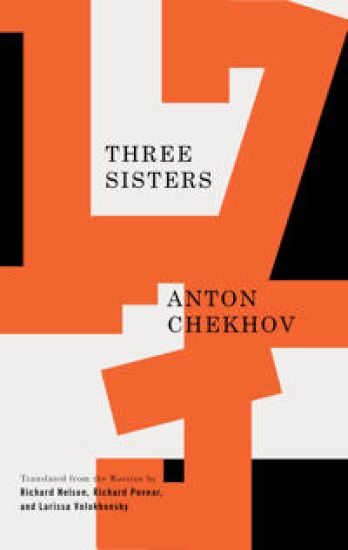
Three Sisters

Three Sisters

Anton Chekhov

Theatre Communications Group Inc.,U.S.
2020
nidottu

Halvin toimitettuna 25,30 €

After their father's death, Olga, Masha, and Irina find life in their small Russian town stifling and hopeless. They long to return to Moscow, the bustling metropolis they left eleven years ago, but their brother Andrei's gambling habits have trapped them in their small provincial lives. A masterful new translation of Chekhov's exploration of yearning and disillusionment.
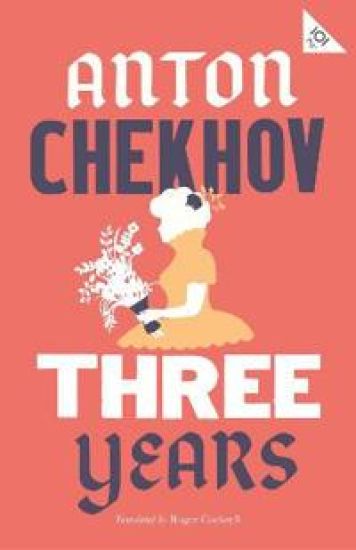
Three Years: New Translation

Three Years: New Translation

Anton Chekhov

Alma Classics
2020
nidottu

Halvin toimitettuna 12,80 €

On a visit to a provincial town to see his sister Nina who is suffering from cancer, Alexei Laptev, who works for his father’s Moscow haberdashery business, falls in love with Yulia, the daughter of her doctor, and proposes to her. Although she does not reciprocate his feelings, she agrees to marry him and live with him in the capital, where the couple’s relationship is marred by tensions: Yulia is filled with regrets about her choice and boredom with her new existence, while Alexei is nagged by the suspicion that she married him for his money alone. However, as time passes and misfortune strikes, they both learn to reassess all of their assumptions. Chekhov’s second longest prose work after The Steppe, Three Years is, in the author’s own words, “a novel of Moscow life” and an examination of its merchant classes. A powerful story of redemption and the nuances of human relationships, the novella helped cement Chekhov’s reputation as a major figure in Russian literature.