Kirjailija
Anton Chekhov
Kirjat ja teokset yhdessä paikassa: 644 kirjaa, julkaisuja vuosilta 1896–2026, suosituimpiin kuuluu Anton Chekhov's Selected Plays. Vertaile teosten hintoja ja tarkista saatavuus suomalaisista kirjakaupoista.
644 kirjaa
Kirjojen julkaisuvuodet: 1896–2026.
Love and Other Stories (1922) is a collection of twenty-three stories by Russian writer Anton Chekhov. Recognized today as foundational for the development of the modern short story, Anton Chekhov has transcended Russian literature to become one of the most popular and acclaimed authors in history, in any language. This collection showcases the author’s unique talent for illuminating the intricacies of love and critiquing the values of social and political circles. In “Love,” an aging bachelor meets a beautiful young woman named Sasha, sending passionate letters and soon proposing to her. Despite signs of irreconcilable differences—namely, Sasha’s youthful innocence and childish disposition—he marries her and soon longs for the freedom of single life. “A Country Cottage” follows a young couple on a moonlit stroll in the vicinity of their humble home. Passing the local train station, they playfully discuss their plans for dinner while remarking on the beauty of the landscape. When a train passes through bearing a group of unexpected visitors, however, they find themselves torn between a longing for solitude and their tedious social obligations. In “The Death of a Government Clerk,” a low-level official accidentally sneezes on the person sitting in front of him during a theater performance, only to realize the man is a prominent General. Horrified, the clerk spends the next day attempting to atone for his mistake, only to enrage the man further. With a beautifully designed cover and professionally typeset manuscript, this edition of Anton Chekhov’s Love and Other Stories is a classic of Russian literature reimagined for modern readers.
Contains a collection of some of the best short stories ever written by Anton Chekhov. Contained within this volume are the following: The Darling, Ariadne, Polinka, Anyuta, The Two Volodyas, The Trousseau, The Helpmate, Talent, An Artist's Story, Three Years
What can you learn about love and life from one of the greatest plays of all time, written by one of the greatest writers of all time, who also happened to define modern theater as we know it?"... Many conversations about literature, little action, and five poods 181 pounds] of love." That is how Anton Chekhov described his comedy, in which Medvedenko loves Masha, Masha loves Treplev, Treplev loves Nina, and Nina loves Trigorin, all while Shamrayev loves Polina Andreyevna, Polina Andreyevna loves Dorn, Dorn loves Arkadina, and Arkadina loves Trigorin. The situation becomes less comedic for a short period of time when two of these characters fall in love with each other, but "the circumstances have unexpectedly made it so that" this arcadia doesn't last too long. There is little action in the play, other than the characters living their lives: some suffering from the creative process, some searching for fame, some desperately trying to live, some constantly attempting to end their own life or challenging others to a duel, all while new art forms are struggling to co-exist with the old... and-did we forget?-everybody is looking for love... Translated by a Russian director and actor, who also happens to be an attorney in New York, this dramatic translation is deeply rooted in insights from his ongoing work on his own theatrical production as director and on the character of Trigorin as actor. Many textual and visual elements and clues that are essential to the story and character interpretation are presented in English language for the first time. The book includes online access to additional materials, including director's selected notes, audio and video resources. Ч, the service and trade mark that we use for The Seagull-related endeavors, is both a letter in the Russian alphabet and the number four. The letter, pronounced as ch] or tch], is the first letter of the following relevant words in Russian: the author's family namethe play's name ch ika]the family name of the composer Pyotr Tchaikovsky, a contemporary and friend of Chekhov, whose music is used extensively in the theatrical productionthe word for the number four chet re]The number symbolizes: the four actsthe four seasons corresponding to each of the four actsthe four characters, whose lives intertwine the most
A secret terrorist group infiltrates the household of a government official’s son, with a view to spying on the father and, ultimately, assassinating him. But the young man entrusted with the task – an ailing, world-weary “nobody” – seized with the purposelessness of life and a sense of his own impending death, gradually becomes disillusioned with his mission, and decides to embark on a new path which will lead him to tragedy. Combining psychological detail with a strong sense of place and time, The Story of a Nobody bears all the hallmarks of Chekhov’s genius, and perfectly captures the political and social tensions of its day.
'This beautifully produced edition collects, in chronological order, fifty-two of Anton Chekhov's short stories written between 1883 and 1898. It is a 'full deck', intended to reflect the diversity and inventiveness of the author's lesser-known fiction ... compelling and even graceful' The Times Literary SupplementA masterfully rendered volume of Chekhov's stories from award-winning translators Richard Pevear and Larissa VolokhonskyChekhov's genius left an indelible impact on every literary form in which he wrote, but none more so than short fiction. Now, renowned translators Richard Pevear and Larissa Volokhonsky give us their superb renderings of fifty-two Chekhov stories. This volume, which spans the full arc of Chekhov's career and includes a number of tales translated into English for the first time, reveals the extraordinary variety of his work. Ranging from the farcically comic to the darkly complex, the stories are populated by a remarkable range of characters who come from all parts of Russia, all walks of life, and who, taken together, have democratized the short story. This is a collection that promises profound delight.'The premier Russian-to-English translators of the era' The New Yorker'The reinventors of the classic Russian novel for our times' PEN/Book of the Month Translation Prize Citation
Love and Other Stories (1922) is a collection of twenty-three stories by Russian writer Anton Chekhov. Recognized today as foundational for the development of the modern short story, Anton Chekhov has transcended Russian literature to become one of the most popular and acclaimed authors in history, in any language. This collection showcases the author’s unique talent for illuminating the intricacies of love and critiquing the values of social and political circles. In “Love,” an aging bachelor meets a beautiful young woman named Sasha, sending passionate letters and soon proposing to her. Despite signs of irreconcilable differences—namely, Sasha’s youthful innocence and childish disposition—he marries her and soon longs for the freedom of single life. “A Country Cottage” follows a young couple on a moonlit stroll in the vicinity of their humble home. Passing the local train station, they playfully discuss their plans for dinner while remarking on the beauty of the landscape. When a train passes through bearing a group of unexpected visitors, however, they find themselves torn between a longing for solitude and their tedious social obligations. In “The Death of a Government Clerk,” a low-level official accidentally sneezes on the person sitting in front of him during a theater performance, only to realize the man is a prominent General. Horrified, the clerk spends the next day attempting to atone for his mistake, only to enrage the man further. With a beautifully designed cover and professionally typeset manuscript, this edition of Anton Chekhov’s Love and Other Stories is a classic of Russian literature reimagined for modern readers.
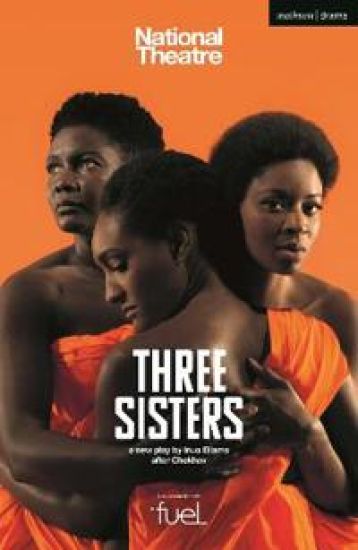
Chekhov’s iconic characters are relocated to Nigeria in this bold new adaptation. Owerri, 1967, on the brink of the Biafran Civil War. Lolo, Nne Chukwu and Udo are grieving the loss of their father. Months before, two ruthless military coups plunged the country into chaos. Fuelled by foreign intervention, the conflict encroaches on their provincial village, and the sisters long to return to their former home in Lagos. Following his smash-hit Barber Shop Chronicles, Inua Ellams returns to the National Theatre with this heartbreaking retelling of Chekhov's classic play.
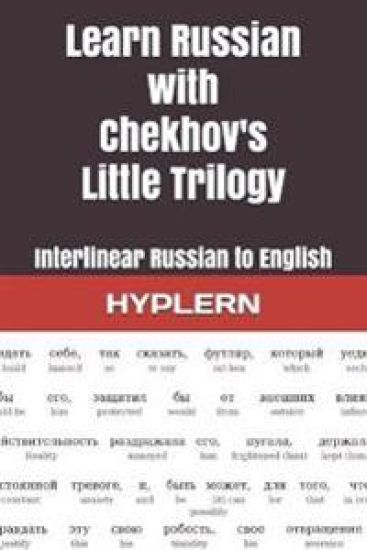
Learn Russian with Chekhov's Little Trilogy
Kees Van Den End; Bermuda Word Hyplern; Anton Chekhov
Bermuda Word
2021
nidottu
Halvin toimitettuna 21,30 €
Best way to learn Russian by readingLearn Russian with three short stories by famous Russian author Anton Chekhov. The best way to learn Russian just by reading. No need to look up words with our interlinear material We have added a word for word interlinear translation to the Russian text. This means that the meaning of every Russian word is immediately accessible, which in turn will make it much easier for you to expand your Russian vocabulary fast. How to learn Russian with this bookUse the following method to learn Russian vocabulary fast and easy. Read the stories and re-read them until you know almost all the words. This is a fast process because there's no lookup time. Then focus on the remaining words that you still don't know by marking those in the text or noting their pages. Because of the literal and idiomatic interlinear text this is the best way to learn Russian reading fast. Also, contact us on shop.hyplern.com for non-translated pdf versions of this book with which you can practice reading Russian without the interlinear translation. The same goes for the mp3s that go with the text. The best app to learn Russian is also available for this book, HypLern Online. For import on Paperwhite, just ask us for a pdf once you bought the Kindle or Paperback version of this book. The HypLern project has been creating manually word-for-word translated language material since 2006. The aim of our project is to allow students to start reading the language of their choice immediately, and expand their vocabulary fast. Learn Russian from basics by reading from day one. Check out our HypLern interlinear Dutch, French, German, Spanish or other languages on Amazon as well
The Cook's Wedding and Other Stories "", has been considered a very important part of the human history, but is currently not available in printed formats. Hence so that this work is never forgotten we have made efforts in its preservation by republishing this book in a modern format so that it is never forgotten and always remembered by the present and future generations. These books are not made of scanned copies of their original work and hence the text is clear and readable. This whole book has been reformatted, retyped and designed.
The Schoolmistress and Other Stories (1920) is a collection of short stories by Russian writer Anton Chekhov. “The Schoolmistress” was written in 1897 and published in an issue of Moscow’s daily newspaper Russkiye Vedomosti. Even for Chekhov, whose work is characteristically bleak and noted for its unsparing realism, the title story of this collection is particularly hopeless. And yet, reading it alongside these other stories by a true icon of world and Russian literature, one cannot help but feel a sense of hope, reminded—as Chekhov’s readers almost invariably are—of the light one finds in even the darkest of places. “The Schoolmistress,” which Chekhov wrote in Nice, is a brief story that follows Maria Vasilyevna as she returns to the village where she lives and works after collecting her pay in town. On the way, her cart nearly overturns, and she is forced to get out in the middle of a freezing river. To dry off, she takes a break at a local tavern, where she meets the formerly handsome Khanov, a landlord of her acquaintance. As she continues on her journey, she muses on her lot in life. Beset with memories and regrets, she struggles to make it home to a life she can hardly bear. “A Nervous Breakdown,” originally published in 1889, is the story of a young law student who reluctantly agrees to accompany his friends on a night in Moscow’s red-light district. Overwhelmed with despair and guilt, he struggles to reconcile what he sees with his own idealistic sense of the world. These are only two of the twenty-one works collected in The Schoolmistress and Other Stories, which showcase the immense talents of Anton Chekhov, an icon of Russian literature. With a beautifully designed cover and professionally typeset manuscript, this edition of Anton Chekhov’s The Schoolmistress and Other Stories is a classic of Russian literature reimagined for modern readers.
The Cherry Orchard (1903) is Russian playwright and short story writer Anton Chekhov’s final play. It was first performed at the Moscow Art Theatre in 1904, directed by acclaimed actor Konstantin Stanislavski—who also played the role of Leonid Gayev, the bizarre and uninspired brother of Madame Ranevskaya. It has since become one of twentieth century theater’s most important—and most frequently staged—dramatic works. After five years of living in Paris with her lover—where she fled following the death of her young son—Madame Ranevskaya is brought back to her Russian estate by her daughter Anya. In her absence, Varya, Ranevskaya’s adopted daughter, has cared for the estate to the best of her ability, but the family’s debts have forced them to put the house and its renowned cherry orchard up for auction. Leonid Gayev, Madame Ranevskaya’s brother, hopes to keep the estate, while Yermolai Lopakhin—a wealthy neighbor despite being born a peasant—encourages the family to sell. Although they initially shelter Madame Ranevskaya, she soon discovers the truth and decides—against the family’s wishes—to throw a party none of them can afford. As the play reaches its tragic conclusion, the wealthy are forced to acknowledge their circumstances have changed, and the characters who depend on them for employment must do what they can to survive. The Cherry Orchard is a powerful drama that takes an unsparing appraisal of the massive shift in political and social circumstances undergone by Russians in the early twentieth century. With a beautifully designed cover and professionally typeset manuscript, this edition of Anton Chekhov’s The Cherry Orchard is a classic of Russian literature reimagined for modern readers.
Three Sisters (1900) is a drama in four acts by Russian playwright and short story writer Anton Chekhov. It was first performed at the Moscow Art Theatre in 1901, directed by acclaimed actor Konstantin Stanislavski—who also played the role of Aleksandr Ignatyevich Vershinin, a philosophizing artillery officer in love with middle Prozorov sister Masha. Reviews were mixed at first, but as the play continued to run, Three Sisters became a popular success, acclaimed by audiences and critics alike. The play follows the Provorov family, focusing on sisters Olga, Masha, and Irina, as well as their brother Andrei. Each character struggles to balance their secret ambitions while facing the daily circumstances of reality. Olga, the oldest sister, is an unmarried schoolteacher who often finds herself responsible for the lives and happiness of others. Masha, the middle sister, is unhappily married to the kind Latin teacher Fyodor Kulygin, who knows about her affair with Lieutenant-Colonel Vershinin but continues to love and care for her. Irina, the youngest, is a vain and childish woman engaged to a man she respect but does not love. Andrei is initially an ambitious and energetic young man whose ill-fated marriage ruins not only his prospects of becoming a professor in Moscow, but his will to live as a man with any sense of self-respect. Natasha, who begins as an orphaned young woman unfit for high society, eventually emerges as a manipulative, envious woman whose love for her two children is matched only by her will to control the lives of the entire Prozorov family. Three Sisters by Anton Chekhov is a brilliant drama whose complex characters make us believe, for a time, in an art more real than life. With a beautifully designed cover and professionally typeset manuscript, this edition of Anton Chekhov’s Three Sisters is a classic of Russian literature reimagined for modern readers.
Uncle Vanya (1898) is a four-act play by Russian short story writer and playwright Anton Chekhov. It was first performed at the Moscow Art Theatre in 1899, directed by acclaimed actor Konstantin Stanislavski—who also played the role of Astrov. Reviews were lukewarm at first, but as the play continued to run, Uncle Vanya gained both popularity and critical prowess, and has since become one of the most influential dramas ever produced. When retired Professor Aleksandr Serebryakov and his young second wife Yelena arrive at their country estate, they disrupt the mundanity and relative boredom of provincial life for its inhabitants. While the elderly Serebryakov enjoys life in the city, Sonya, his daughter, and Vanya, his first wife’s brother, remain at the estate to manage its daily upkeep. Vanya, whose only companion is Mikhail Astrov, a doctor dissatisfied with his life and role in the rural community, regrets his failure to become a man of letters, and blames Serebryakov for saddling him with responsibility for the estate. He also loves the beautiful Yelena and wishes he had realized it before she married his brother-in-law. Meanwhile, Sonya secretly loves Astrov, but fears he thinks of her as only a friend. As Serebryakov’s decision to sell the estate in order to increase his income is revealed, Vanya—incensed by years of disappointment and disrespect, as well as his by own mother’s idolization of the Professor—reaches his breaking point, bringing the play to its startling, powerful conclusion. Uncle Vanya is a masterful drama that illuminates the intersecting obligations of family while dissecting the bitterness and ambition which so often define the relationships of men. With a beautifully designed cover and professionally typeset manuscript, this edition of Anton Chekhov’s Uncle Vanya is a classic of Russian literature reimagined for modern readers.
Ivanov (1889) is a drama in four acts by Russian writer Anton Chekhov. Written in ten days, the play premiered in 1887 at Moscow’s Korsh Theatre and was initially a failure due to its rushed composition, production issues, and significant changes made to Chekhov’s script. Disappointed but far from discouraged, Chekhov reworked the play to his satisfaction, and the edited version premiered to rave reviews in St. Petersburg in 1889. The play follows a man named Nikolai Ivanov and his wife Anna Petrovna. Deeply in debt, Ivanov is unable to pay for the recommended treatment for his wife’s tuberculosis, which requires an extended stay in Crimea. When Ivanov leaves his estate to visit the Lebedev’s, a wealthy socialite family to whom he is indebted, Anna and Lvov secretly follow him. There, he is seduced by the Lebedev’s daughter Sasha, who confesses her love for him and convinces Ivanov to betray his wife. Anna witnesses their act in secret, and later confronts the man for whom she gave up her religion, family, and inheritance to marry. Incensed, Ivanov reveals to her the true nature of her illness, and the reality of his depravity is revealed. As the play concludes, Lvov decides that in order to prevent Ivanov from ruining the lives of others, he must be willing to risk his own. Ivanov is a psychologically intense drama by Anton Chekhov, a master storyteller whose characters always seem to lurk at the limit of decency, and yet remain fearfully human. With a beautifully designed cover and professionally typeset manuscript, this edition of Anton Chekhov’s Ivanov is a classic of Russian literature reimagined for modern readers.
The Bishop and Other Stories (1919) is a collection of short stories by Russian writer Anton Chekhov. The title story of the collection, originally published in 1902, finds the author at his most introspective. Written while Chekhov was dealing with the long term effects of tuberculosis, a period in which he began to accept the inevitability of his own death, “The Bishop” is a meditative story that follows a dedicated man who, in the face of oblivion, wants nothing more than to go about his work to the best of his ability. “The Bishop” is the story of a man named Pyotr. Set during Easter Week, it begins while Pyotr is passing out palms at a service on the night before Palm Sunday. As he begins to feel faint, he sees his mother—whose presence he did not expect—and begins to cry. Over the next several days, Pyotr goes about his duties, caring for the sick and dying, officiating at the local cathedral, and meeting with his colleagues, all while growing sicker and increasingly irritable. As he succumbs to typhoid fever, his mother and his faith are all he has left in a world that will soon forget him. “The Letter” is a similarly religious, earlier story in which a conversation between two priests, Father Orlov and Father Anastasi, is interrupted by the deacon. As the three discuss what is to be done with the deacon’s wayward son, the difference between morality and mercy is illuminated for all to see. The Bishop and Other Stories is a collection of seven short works of fiction by Russian literary icon Anton Chekhov. With a beautifully designed cover and professionally typeset manuscript, this edition of Anton Chekhov’s The Bishop and Other Stories is a classic of Russian literature reimagined for modern readers.
The Lady with the Dog and Other Stories (1917) is a collection of nine stories by Russian writer Anton Chekhov. Recognized today as foundational for the development of the modern short story, Anton Chekhov has transcended Russian literature to become one of the most popular and acclaimed authors in history, in any language. This collection includes “The Lady with the Dog,” a meditative tale of forbidden desire and the frailty of hope described by Vladimir Nabokov as “one of the greatest stories ever written” despite breaking “[a]ll the traditional rules” of storytelling. The title story of the collection follows Dmitri Gurov, a married middle-aged man who falls in love with a young newlywed while on vacation in Yalta. The woman he desires, Anna Sergeyevna, is also unhappy with her marriage, and soon the two spend their days together before Anna decides to go home to her husband. Back in Moscow, Gurov—a man who has had many affairs—finds himself unable to shake the memory of Anna, and longs for the chance to see her once more. In “A Doctor’s Visit,” a young doctor named Korlyov journeys to the home of a recently deceased industrialist, where he has been called to care for the frail heiress Liza. There, he finds himself beset with dark thoughts and even darker visions, and soon discovers that the cure for Liza’s illness may be far beyond his skill. With a beautifully designed cover and professionally typeset manuscript, this edition of Anton Chekhov’s The Lady with the Dog and Other Stories is a classic of Russian literature reimagined for modern readers.
From the celebrated, award-winning translators of Anna Karenina and The Brothers Karamazov a lavish volume of stories by one of the most influential short fiction writers of all time. Anton Chekhov left an indelible impact on every literary form in which he wrote, but none more so than short fiction. Now, renowned translators Richard Pevear and Larissa Volokhonsky give us their renderings of fifty-two Chekhov stories. These stories, which span the complete arc of his career, reveal the extraordinary variety and unexpectedness of his work, from the farcically comic to the darkly complex, showing that there is no one single type of "Chekhov story." They are populated by a remarkable range of characters who come from all parts of Russia and all walks of life, including landowners, peasants, soldiers, farmers, teachers, students, hunters, shepherds, mistresses, wives, and children. Taken together, they demonstrate how Chekhov democratized the form. Included in this volume are tales translated into English for the first time, including "Reading" and "An Educated Blockhead." Early stories such as "Joy," "Anguish," and "A Little Joke" sit alongside such later works as "The Siren," "Big Volodya and Little Volodya," "In the Cart," and "About Love." In its range, in its narrative artistry, and in its perceptive probing of the human condition, this collection promises profound delight.