
Kirjojen hintavertailu – 10 495 686 kirjaa ja 27 kauppaa
Kirjailija
Arthur Koestler
Kirjat ja teokset yhdessä paikassa: 44 kirjaa, julkaisuja vuosilta 1968–2025, suosituimpiin kuuluu Darkness at Noon. Vertaile teosten hintoja ja tarkista saatavuus suomalaisista kirjakaupoista.
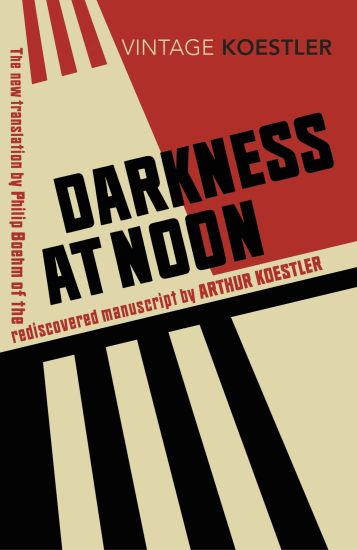
A brilliant new translation of Koestler's long-lost original manuscript. A chilling and unforgettable 20th century classic.From a prison cell in an unnamed country run by a totalitarian government Rubashov reflects. Once a powerful player in the regime, mercilessly dispensing with anyone who got in the way of his party’s aims, Rubashov has had the tables turned on him. He has been arrested and he’ll be interrogated, probably tortured and certainly executed.Darkness at Noon is as gripping as a thriller and a seminal work of twentieth-century literature. Published in Great Britain in 1940, it was feted by George Orwell, went on to be translated into thirty languages and is considered the finest work of pre-eminent European master, Arthur Koestler. And yet the novel’s worldwide reputation has, for over seventy years, been based on the first incomplete and inexpert English translation – Koestler’s original manuscript was lost when he fled the German occupation of Paris in 1940.In 2016, a student discovered that long-lost manuscript in a Zurich archive. At last, with the publication of this new translation of the rediscovered original, Koestler’s masterpiece can be experienced afresh and in its entirety for the first time.THE NEW TRANSLATION BY PHILIP BOEHM
Arthur Koestler (1905-1983) oli Ungari juudi päritolu Briti kirjanik, intellektuaal, ajakirjanik ja pühendunud antifashist, kel oli erakordne oskus olla ajaloo tähtsündmuste tunnistaja ja kroonikuna õigel ajal õiges kohas. Kolleeg ja sõber George Orwell nimetas Koestlerit oma ajastu silmapaistvaimaks isiksuseks.Romaanis "Keskpäevapimedus" (1940) käsitleb autor 1930ndatel Nõukogude Liidus aset leidnud poliitiliste näidiskohtuprotsesside psühholoogilisi mehhanisme ja toob päevavalgele totalitaarse rezhiimi halastamatu masinavärgi. Koestleri tuntuimat teost peetakse 20. sajandi üheks parimaks poliitiliseks romaaniks, mis on mõjukuselt võrreldav Kafka "Protsessi" ning Orwelli "Loomade farmi" ja "1984ga".Autobiograafilises essees "Pühendatud" kirjeldab Koestler meeleseisundit ja põhjusi, mis suunasid teda ennast nooremas eas, idealismist pimestatuna, kommunistliku parteiga liituma. Teos ilmus 1949. aastal kogumikus "The God That Failed" koos teiste partei tegevuses pettunud ja sellele selja keeranud autorite esseedega.
The first volume of the remarkable autobiography of Arthur Koestler, author of Darkness at Noon.In 1931, Arthur Koestler joined the Communist Party, an event he felt to be second only in importance to his birth in shaping his destiny. Before that point, he lived a tumultuous and varied existence. He was a member of the duelling fraternity at the University of Vienna; a collective farm worker in Galilee; a tramp and street vendor in Haifa; the editor of a weekly paper in Cairo; the foreign correspondent of the biggest continental newspaper chain in Paris and the Middle East; a science editor in Berlin; and a member of the North Pole expedition of the Graf Zeppelin. Written with enormous zest, joie de vivre and frankness, Arrow in the Blue is a fascinating self-portrait of a remarkable young man at the heart of the events that shaped the twentieth century. The second volume of Arthur Koestler's autobiography is The Invisible Writing.
In 1937 during the Spanish Civil War, Arthur Koestler, a German exile writing for a British newspaper, was arrested by Nationalist forces in M laga. He was then sentenced to execution and spent every day awaiting death--only to be released three months later under pressure from the British government. Out of this experience, Koestler wrote Darkness at Noon, his most acclaimed work in the United States, about a man arrested and executed in a Communist prison. Dialogue with Death is Koestler's riveting account of the fall of M laga to rebel forces, his surreal arrest, and his three months facing death from a prison cell. Despite the harrowing circumstances, Koestler manages to convey the stress of uncertainty, fear, and deprivation of human contact with the keen eye of a reporter.
Koestler's story, first published in 1940, of an old-guard communist who falls victim to Stalin's purges, yet attains a personal freedom in his destruction.
El cero y el infinito da a conocer las confesiones que los viejos bolcheviques se vieron forzados a hacer en los Juicios de Mosc .Durante las purgas estalinistas, el viejo revolucionario Nicol s Rubachof es encarcelado y sometido a tortura psicol gica por el partido al que ha dedicado toda su vida. La presi n que el r gimen ejerce sobre l terminar por mostrarle la iron a y la vileza de una dictadura que secree instrumento de liberaci n. Publicada originalmente en 1941, El cero y el infinito es la obra maestra de Arthur Koestler, un retrato estremecedor del totalitarismo y sus mecanismos de destrucci n moral. "Koestler nos leg una obra que por siempre resultar atractiva y estimulante a quienes admiren a los hombres de principios o disfruten sin m s de las batallas de ideas." - Christopher Hitchens ENGLISH DESCRIPTION The discovered lost text of Arthur Koestler's modern masterpiece, Darkness at Noon--the haunting portrait of a revolutionary, imprisoned and tortured under totalitarian rule--is now restored and in a completely new translation. In print continually since 1941, Darkness at Noon has been translated into over 30 languages and is both a stirring novel and a classic anti-fascist text. What makes its popularity and tenacity even more remarkable is that all existing versions of Darkness at Noon are based on a hastily made English translation of the original German by a novice translator at the outbreak of World War II. Set in the 1930s at the height of the purge and show trials of a Stalinist Moscow, Darkness at Noon is a haunting portrait of an aging revolutionary, Nicholas Rubashov, who is imprisoned, tortured, and forced through a series of hearings by the Party to which he has dedicated his life. As the pressure to confess preposterous crimes increases, he re-lives a career that embodies the terrible ironies and betrayals of a merciless totalitarian movement masking itself as an instrument of deliverance. Koestler's portrayal of Stalin-era totalitarianism and fascism is as chilling and resonant today as it was in the 1940s and during the Cold War. Rubashov's plight explores the meaning and value of moral choices, the attractions and dangers of idealism, and the corrosiveness of political corruption. Like The Trial, 1984, and Animal Farm, this is a book you should read as a citizen of the world, wherever you are and wherever you come from.
The Act of Creation begins where this view ceases to be true. Koestler affirms that all creatures have the capacity for creative activity, frequently suppressed by the automatic routines of thought and behavior that dominate their lives. The study of psychology has offered little in the way of an explanation of the creative process, and Koestler suggests that we are at our most creative when rational thought is suspended - for example in dreams and trance-like states. Then the mind is capable of receiving inspiration and insight.Taking humor as his starting point, Koestler examines what he terms 'bisociative' thinking - the creative leap made by the mind that gives rise to new and startling perceptions and glimpses of reality. From here he assesses the workings of the mind of the scientific or artistic genius. The general reader as well as the reader with a deeper knowledge of the topics covered will find this richly documented study of creativity both illuminating and compelling.
The newly discovered lost text of Arthur Koestler's modern masterpiece, Darkness at Noon--the haunting portrait of a revolutionary, imprisoned and tortured under totalitarian rule--is now restored and in a completely new translation. Editor Michael Scammell and translator Philip Boehm bring us a brilliant novel, a remarkable discovery, and a new translation of an international classic. In print continually since 1940, Darkness at Noon has been translated into over 30 languages and is both a stirring novel and a classic anti-fascist text. What makes its popularity and tenacity even more remarkable is that all existing versions of Darkness at Noon are based on a hastily made English translation of the original German by a novice translator at the outbreak of World War II. In 2015, Matthias We el stumbled across an entry in the archives of the Zurich Central Library that is a scholar's dream: "Koestler, Arthur. Rubaschow: Roman. Typoskript, M rz 1940, 326 pages." What he had found was Arthur Koestler's original, complete German manuscript for what would become Darkness at Noon, thought to have been irrevocably lost in the turmoil of the war. With this stunning literary discovery, and a new English translation direct from the primary German manuscript, we can now for the first time read Darkness at Noon as Koestler wrote it. Set in the 1930s at the height of the purge and show trials of a Stalinist Moscow, Darkness at Noon is a haunting portrait of an aging revolutionary, Nicholas Rubashov, who is imprisoned, tortured, and forced through a series of hearings by the Party to which he has dedicated his life. As the pressure to confess preposterous crimes increases, he re-lives a career that embodies the terrible ironies and betrayals of a merciless totalitarian movement masking itself as an instrument of deliverance. Koestler's portrayal of Stalin-era totalitarianism and fascism is as chilling and resonant today as it was in the 1940s and during the Cold War. Rubashov's plight explores the meaning and value of moral choices, the attractions and dangers of idealism, and the corrosiveness of political corruption. Like The Trial, 1984, and Animal Farm, this is a book you should read as a citizen of the world, wherever you are and wherever you come from.
Reflections on Hanging is a searing indictment of capital punishment, inspired by its author’s own time in the shadow of a firing squad. During the Spanish Civil War, Arthur Koestler was held by the Franco regime as a political prisoner, and condemned to death. He was freed, but only after months of witnessing the fates of less-fortunate inmates. That experience informs every page of the book, which was first published in England in 1956, and followed in 1957 by this American edition.As Koestler ranges across the history of capital punishment in Britain (with a focus on hanging), he looks at notable cases and rulings, and portrays politicians, judges, lawyers, scholars, clergymen, doctors, police, jailers, prisoners, and others involved in the long debate over the justness and effectiveness of the death penalty.In Britain, Reflections on Hanging was part of a concerted, ultimately successful effort to abolish the death penalty. At that time, in the forty-eight United States, capital punishment was sanctioned in forty-two of them, with hanging still practiced in five. This edition includes a preface and afterword written especially for the 1957 American edition. The preface makes the book relevant to readers in the U.S.; the afterword overviews the modern-day history of abolitionist legislation in the British Parliament.Reflections on Hanging is relentless, biting, and unsparing in its details of botched and unjust executions. It is a classic work of advocacy for some of society’s most defenseless members, a critique of capital punishment that is still widely cited, and an enduring work that presaged such contemporary problems as the sensationalism of crime, the wrongful condemnation of the innocent and mentally ill, the callousness of penal systems, and the use of fear to control a citizenry.
Fängslad på falska grunder, dömd till döden, minns Rubasjov hur han själv angivit människor som sedan försvunnit. I celler intill honom finns forna fiender såväl som vänner och vänners släktingar. Med papper och penna försöker Rubasjov få ihop det akuta dilemmat med sin politiska övertygelse och sina tidigare handlingar. Till sist skriver han under en absurd bekännelse och möter sitt öde. När Arthur Koestler skrev Natt klockan tolv på dagen [1940] låg stora delar av Europa under totalitära regimers stövelhälar. Ofta jämförd med Alexander Solzjenitsyn och George Orwell räknas Natt klockan tolv på dagen till de viktigaste politiska romaner som skrivits. Översatt av Tore Zetterholm och med ett nyskrivet förord av Göran Rosenberg. ARTHUR KOESTLER [1905-1983] var en brittisk författare med ungersk-judiska rötter. Natt klockan tolv på dagen skrevs på tyska i Paris med titeln Sonnenfinsternis [1940], ett manus som gick förlorat vid hans flykt undan nazisterna. Hans partner, skulptören Daphne Hardys engelska översättning Darkness at Noon [1941] kom att bli en världsklassiker. Romanen behandlar Moskvarättegångarna 1936 1938 och är genom Koestlers förstahandserfarenhet från resor i Sovjet en av de mest inflytelserika skildringarna av Stalintiden. »Ett antitotalitärt mästerverk.« Per T. Ohlsson, Sydsvenskan »Grym, fängslande skildring av den ryska revolutionens logik. Intensivt och subtilt intellektuellt drama.« Times Literary Supplement