Kirjailija
Bertrand Russell
Kirjat ja teokset yhdessä paikassa: 548 kirjaa, julkaisuja vuosilta 1912–2026, suosituimpiin kuuluu The Atomic Age. Vertaile teosten hintoja ja tarkista saatavuus suomalaisista kirjakaupoista.
548 kirjaa
Kirjojen julkaisuvuodet: 1912–2026.
Détente or Destruction, 1955-57 continues publication of Routledge's multi-volume critical edition of Bertrand Russell's shorter writings. Between September 1955 and November 1957 Russell published some sixty-one articles, reviews, statements, contributions to books and letters to editors, over fifty of which are contained in this volume. The texts, several of them hitherto unpublished, reveal the deepening of Russell's commitment to the anti-nuclear struggle, upon which he embarked in the previous volume of Collected Papers (Man's Peril, 1954-55). Continuing with the theme of nuclear peril, this volume contains discussion of nuclear weapons, world peace, prospects for disarmament and British-Soviet friendship against the backdrop of the Cold War. One of the key papers in this volume is Russell's message to the inaugural conference of the Pugwash movement, which Russell was instrumental in launching and which became an influential, independent forum of East-West scientific cooperation and counsel on issues as an internationally agreed nuclear test-ban. In addition to the issues of war and peace, Russell, now in his eighties, continued to take an interest in a wide variety of themes. Russell not only addresses older controversies over nationalism and empire, religious belief and American civil liberties, he also confronts head-on the new and pressing matters of armed intervention in Hungary and Suez, and of the manufacture and testing of the British hydrogen bomb. This volume includes seven interviews ranging from East-West Relations after the Geneva conference to a Meeting with Russell.
Written in response to the devastation of World War I, "Why Men Fight" lays out Bertrand Russell's ideas on war, pacifism, reason, impulse, and personal liberty. Russell argues that when individuals live passionately, they wi
The Problems of Philosophy (Barnes & Noble Library of Essential Reading)
Bertrand Russell
Barnes Noble Inc
2004
pokkari
This is an immensely intelligible, thought-provoking guide by a Nobel prize-winner that considers such topics as the distinction between appearance and reality, the existence and nature of matter, idealism, inductive logic, intuitive knowledge, many other subjects. For students and general readers, there is no finer introduction to philosophy than this informative, affordable and highly readable edition. It is an intelligible and stimulating guide to those problems of philosophy that he believes will provoke positive and constructive discussion.
Intolerance and bigotry lie at the heart of all human suffering. So claims Bertrand Russell at the outset of In Praise of Idleness, a collection of essays in which he espouses the virtues of cool reflection and free enquiry; a voice of calm in a world of maddening unreason. From a devastating critique of the ancestry of fascism to a vehement defence of 'useless' knowledge, with consideration given to everything from insect pests to the human soul, this is a tour de force that only Bertrand Russell could perform.
'These propositions may seem mild, yet, if accepted, they would absolutely revolutionize human life.'With these words Bertrand Russell introduces what is indeed a revolutionary book. Taking as his starting-point the irrationality of the world, he offers by contrast something 'wildly paradoxical and subversive' - a belief that reason should determine human actions. Today, besieged as we are by the numbing onslaught of twenty-first-century capitalism, Russell's defence of scepticism and independence of mind is as timely as ever. In clear, engaging prose, he guides us through the key philosophical issues that affect our daily lives - freedom, happiness, emotions, ethics and beliefs - and offers no-nonsense advice.
While its tone is playful and frivolous, this book poses tough questions over the nature of religion and belief. Religion provides comfortable responses to the questions that have always beset humankind - why are we here, what is the point of being alive, how ought we to behave? Russell snatches that comfort away, leaving us instead with other, more troublesome alternatives: responsibility, autonomy, self-awareness. He tells us that the time to live is now, the place to live is here, and the way to be happy is to ensure others are happy.
The key to human nature that Marx found in wealth and Freud in sex, Bertrand Russell finds in power. Power, he argues, is man's ultimate goal, and is, in its many guises, the single most important element in the development of any society. Writting in the late 1930s when Europe was being torn apart by extremist ideologies and the world was on the brink of war, Russell set out to found a 'new science' to make sense of the traumatic events of the day and explain those that would follow. The result was Power, a remarkable book that Russell regarded as one of the most important of his long career. Countering the totalitarian desire to dominate, Russell shows how political enlightenment and human understanding can lead to peace - his book is a passionate call for independence of mind and a celebration of the instinctive joy of human life.
Along with Why I Am Not a Christian, this essay must rank as the most articulate example of Russell's famed atheism. It is also one of the most notorious. Used as evidence in a 1940 court case in which Russell was declared unfit to teach college-level philosophy, What I Believe was to become one of his most defining works. The ideas contained within were and are controversial, contentious and - to the religious - downright blasphemous. A remarkable work, it remains the best concise introduction to Russell's thought.
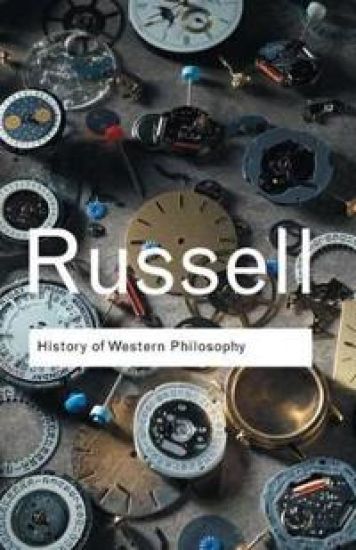
First published in 1946, History of Western Philosophy went on to become the best-selling philosophy book of the twentieth century. A dazzlingly ambitious project, it remains unchallenged to this day as the ultimate introduction to Western philosophy. Providing a sophisticated overview of the ideas that have perplexed people from time immemorial, it is 'long on wit, intelligence and curmudgeonly scepticism', as the New York Times noted, and it is this, coupled with the sheer brilliance of its scholarship, that has made Russell's History of Western Philosophy one of the most important philosophical works of all time.
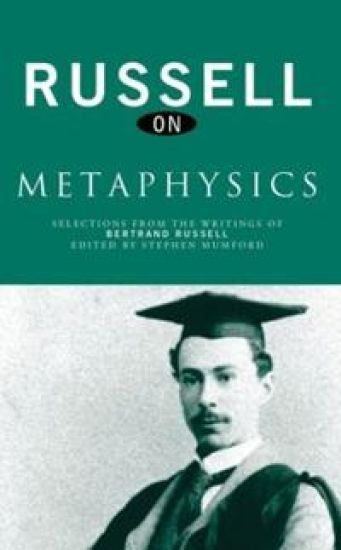
Is the world of appearances the real world? Are there facts that exist independently of our minds? Are there vague objects? Russell on Metaphysics brings together for the first time a comprehensive selection of Russell's writing on metaphysics in one volume. Russell's major and lasting contribution to metaphysics has been hugely influential and his insights have led to the establishment of analytic philosophy as a dominant stream in philosophy. Stephen Mumford chronicles the metaphysical nature of these insights through accessible introductions to the texts, setting them in context and understanding their continued importance. Russell on Metaphysics is both a valuable introduction to Bertrand Russell as a metaphysician, and an introduction to analytic philosophy and its history.
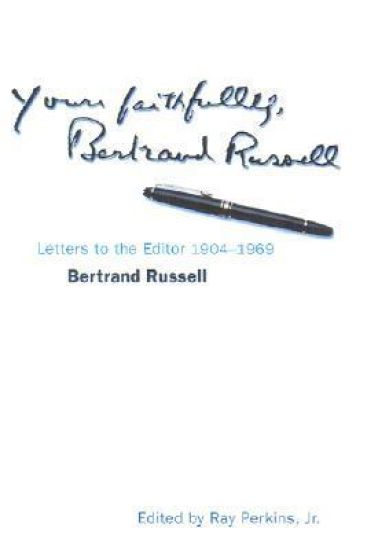
This comprehensive volume captures one of the twentieth century's greatest philosopher's lifelong battle with the forces of injustice, ignorance, and cruelty - a crusade not always welcomed by his own government, which twice imprisoned him. Russell used his more than 400 letters to the editor, most of which are collected in this volume, to reach large numbers of the public quickly when his controversial stances made it difficult to have his articles published in the popular press. Yours Faithfully, Bertrand Russell allows us to see Russell at his polemical best, dueling wittily and wisely with both ordinary citizens and the most powerful political leaders of his day, freely expressing his insights on a wide range of subjects from war and peace to human rights, early childhood education, sexual ethics, and religion. These letters tell us much about the social and political history of our last century and relay an inspiring story of one man's protracted efforts to infuse the public spirit with reason and compassion.
'A scientific opinion is one which there is some reason to believe is true; an unscientific opinion is one which is held for some reason other than its probable truth.' - Bertrand RussellOne of Russell's most important books, this early classic on science illuminates his thinking on the promise and threat of scientific progress. Russell considers three questions fundamental to an understanding of science: the nature and scope of scientific knowledge, the increased power over nature that science affords, and the changes in the lives of human beings that result from new forms of science. With customary wit and clarity, Russell offers brilliant discussions of many major scientific figures, including Aristotle, Galileo, Newton and Darwin. With a new introduciton by David Papineau, King's College, London.
'The purpose of this book is to trace the opposition and interaction of two main causes of change in the Nineteenth century: the belief in freedom which was common to Liberals and Radicals, and the necessity for organization which arose through industrial and scientific technique.' - Bertrand Russell A revealing account by one of the twentieth century's greatest minds, charting the struggle between two determining forces in nineteenth century history: freedom and control. Russell's text sweeps from the defeat of Napoleon and the Congress of Vienna to the lead up to the First World War. It is full of lively portraits, including Malthus, Mill, Bentham and Marx. Russell examines the founding of democracy in America and the struggle with slavery, and brings to life the ideas of Jefferson, Jackson and Lincoln.
Available for the first time in many years, Commonsense and Nuclear Warfare presents Russell's keen insights into the threat of nuclear conflict, and his argument that the only way to end this threat is to end war itself. Written at the height of the Cold War, this volume is crucial for understanding Russell's involvement in the Campaign for Nuclear Disarmament and his passionate campaigning for peace. It remains an extremely important book in today's uncertain nuclear world, and is essential reading for all those interested in Russell and postwar history. Includes a new introduction by Ken Coates, Chairman of The Bertrand Russell Peace Foundation.
The Problems of Philosophy
Bertrand Russell
Oxford University Press
2001
nidottu
Halvin toimitettuna 19,90 €
'Is there any knowledge in the world which is so certain that no reasonable man could doubt it?' Philosophy is the attempt to answer such ultimate questions, not carelessly and dogmatically, as we might deal with them in ordinary life, but critically, after analysing how and why the questions arise and clarifying the assumptions and concepts on which they are based. This classic work, first published in 1912, has never been supplanted as an approachable introduction to the theory of philosophical enquiry. It gives Russell's views on such subjects as the distinction between appearance and reality, the existence and nature of matter, idealism, knowledge by acquaintance and by description, induction, and the limits and value of philosophical knowledge. This edition includes an introduction by John Skorupski contextualizing Russell's work, and a guide to further reading.