
Kirjailija
C. G. Jung
Kirjat ja teokset yhdessä paikassa: 359 kirjaa, julkaisuja vuosilta 1954–2026, suosituimpiin kuuluu Kalojen aika. Vertaile teosten hintoja ja tarkista saatavuus suomalaisista kirjakaupoista.
Nimi esiintyy myös muodoissa: C.G. Jung, C G Jung, C.G Jung, C. G Jung
359 kirjaa
Kirjojen julkaisuvuodet: 1954–2026.

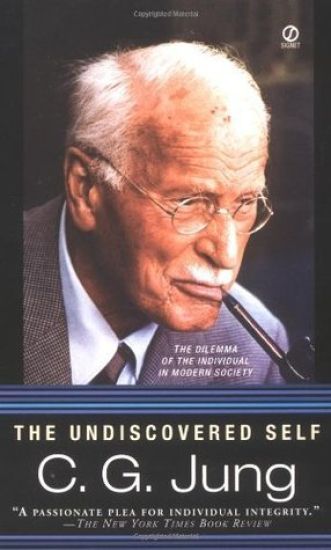
The Undiscovered Self: The Dilemma of the Individual in Modern Society
C. G. Jung
BERKLEY BOOKS
2006
nidottu
Halvin toimitettuna 19,40 €
This classic work, written by one of the world's greatest psychiatrists, emphasizes the necessity of self-knowledge to counteract the unconscious forces responsible for contemporary social and political crises. Reprint.
The Undiscovered Self: The Dilemma of the Individual in Modern Society
C. G. Jung
BERKLEY BOOKS
2006
pokkari
Halvin toimitettuna 16,10 €
In this challenging and provocative work, Dr. Carl Jung-one of history's greatest minds-argues that civilization's future depends on our ability as individuals to resist the collective forces of society. Only by gaining an awareness and understanding of one's unconscious mind and true, inner nature-"the undiscovered self"-can we as individuals acquire the self-knowledge that is antithetical to ideological fanaticism. But this requires that we face our fear of the duality of the human psyche-the existence of good and the capacity for evil in every individual. In this seminal book, Jung compellingly argues that only then can we begin to cope with the dangers posed by mass society - the sum total of individuals - and resist the potential threats posed by those in power.
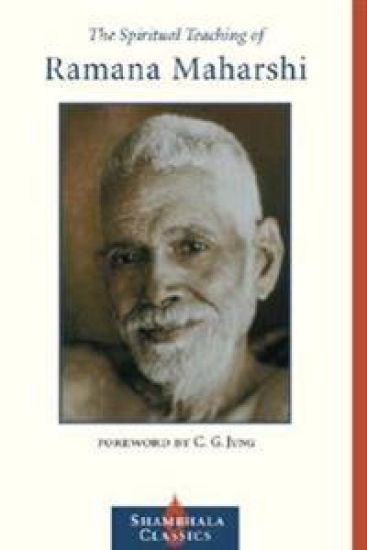
The Spiritual Teaching of Ramana Maharshi
Ramana Maharshi; C. G. Jung
Shambhala Publications Inc
2004
pokkari
The renowned Indian sage Ramana Maharshi is beloved by Buddhists, Hindus, Christians, and Taoists alike for the inspirational power of his teachings, which transcend all religious differences. Here is a collection of Sri Ramana's instructions and discourses culled from three works: Who Am I?, Spiritual Instructions, and Maharshi's Gospel. These teachings are arranged by topics such as work and renunciation, silence and solitude, peace and happiness, and the discipline of self-inquiry. Reading this book, presented in question-and-answer format, evokes the feeling of being with this outstanding teacher at one of his intimate teaching sessions.
The concept of masculinity was crucial not only to Jung's revolutionary theories of the human psyche, but also to his own personal development. If, as Jung believed, "modern man is already so darkened that nothing beyond the light of his own intellect illuminates his world," then it is essential to show every man the limits of his understanding and how to overcome them. In Aspects of the Masculine Jung does this by revealing his most significant insights concerning the nature and motivations of masculinity, both conscious and unconscious, and explaining how this affects the development of the personality. Offering a unique perspective on the masculine, based upon both his personal and clinical experiences, Jung asks questions that remain as insistent as ever. He offers answers that--whether they surprise, shock or edify--challenge us to re-examine our contemporary understanding of masculinity.
'Love is a force of destiny whose power reaches from heaven to hell.' So Jung advises while reflecting on 'The Love Problem of a Student', an essay contained in this volume. But it is not just love that Jung speaks of in this book. Taking as its theme Jung's interpretation of the feminine principle in his hugely influential theories about the inner world of the individual, it guides the reader from the mythological archetype of the mother-figure to the experience of women in twentieth-century Europe, explaining along the way concepts crucial to Jung's understanding of the personality, such as animus and anima. Many of his contentions have become the assumptions of the generations growing up in the twenty-first century. Aspects of the Feminine is a provocative, controversial book which offers readers the opportunity to discover at first hand just how radical Jung's arguments were.
The Spirit in Man, Art and Literature offers unique and penetrating insights into the lives and opinions of some of the most significant players in the cultural life of the twentieth century. Carl Gustav Jung was at the heart of that cultural life, pioneering, along with Freud, a new interpretation of what it meant to be human in the modern age. This volume reveals the full range of Jung's involvement in this process, from his famous analysis of 'Psychology and Literature' to his landmark texts on Joyce's Ulysses and Picasso's paintings. Jung writes of Freud from the perspective of one who was "permitted a deep glimpse into the mind of this remarkable man," and through the memories and opinions recorded in The Spirit in Man, Art and Literature, the reader is offered a similar privilege.
The concept of the archetype is crucial to Jung's radical interpretation of the human mind. Jung believed that every person partakes of a universal or collective unconscious that persists through generations. The origins of the concept can be traced to his very first publication in 1902 and it remained central to his thought throughout his life. As well as explaining the theoretical background behind the idea, in Four Archetypes Jung describes the four archetypes that he considers fundamental to the psychological make-up of every individual: mother, rebirth, spirit and trickster. Exploring their role in myth, fairytale and scripture, Jung engages the reader in discoveries that challenge and enlighten the ways we perceive ourselves and others.
Psychology of the Unconscious
C. G. Jung; Beatrice M. (INT) Hinkle
Dover Publications Inc.
2003
pokkari
Halvin toimitettuna 21,20 €

Was the leading psychologist of his time a Nazi sympathiser? This was the question asked by many after the Second World War, as they sought to explain Jung's actions and publications during Nazi rule. So great was the controversy that his reputation risked being permanently damaged. Essays on Contemporary Events was the first broadside in his vigorous defence of his beleaguered reputation. This remarkable work is essential reading for anyone seeking to understand Jung. It will enable the reader to decide: was Jung wholly innocent of the accusations or had he, like so many others, fallen under the Nazi spell and was now trying to make amends.
Was the leading psychologist of his time a Nazi sympathiser? This was the question asked by many after the Second World War, as they sought to explain Jung's actions and publications during Nazi rule. So great was the controversy that his reputation risked being permanently damaged. Essays on Contemporary Events was the first broadside in his vigorous defence of his beleaguered reputation. This remarkable work is essential reading for anyone seeking to understand Jung. It will enable the reader to decide: was Jung wholly innocent of the accusations or had he, like so many others, fallen under the Nazi spell and was now trying to make amends.

Of all the books of the Bible few have had more resonance for modern readers than the Book of Job. For a world that has witnessed great horrors, Job's cries of despair and incomprehension are all too recognizable. The visionary psychotherapist Carl Gustav Jung understood this and responded with this remarkable book, in which he set himself face-to-face with 'the unvarnished spectacle of divine savagery and ruthlessness'. Jung perceived in the hidden recesses of the human psyche the cause of a crisis that plagues modern humanity and leaves the individual, like Job, isolated and bewildered in the face of impenetrable fortune. By correlating the transcendental with the unconscious, Jung, writing not as a biblical scholar but 'as a layman and physician who has been privileged to see deeply into the psychic life of many people', offers a way for every reader to come to terms with the divine darkness which confronts each individual.

Of all the books of the Bible few have had more resonance for modern readers than the Book of Job. For a world that has witnessed great horrors, Job's cries of despair and incomprehension are all too recognizable. The visionary psychotherapist Carl Gustav Jung understood this and responded with this remarkable book, in which he set himself face-to-face with 'the unvarnished spectacle of divine savagery and ruthlessness'. Jung perceived in the hidden recesses of the human psyche the cause of a crisis that plagues modern humanity and leaves the individual, like Job, isolated and bewildered in the face of impenetrable fortune. By correlating the transcendental with the unconscious, Jung, writing not as a biblical scholar but 'as a layman and physician who has been privileged to see deeply into the psychic life of many people', offers a way for every reader to come to terms with the divine darkness which confronts each individual.

Written in the late 1950s at the height of popular fascination with UFO's, Flying Saucers is the great psychologist's brilliantly prescient meditation on the phenomenon that gripped the world. A self-confessed sceptic in such matters, Jung was nevertheless intrigued, not so much by their reality or unreality, but by their psychic aspect. He saw flying saucers as a modern myth in the making, to be passed down the generations just as we have received such myths from our ancestors. In this wonderful and enlightening book Jung sees UFO's as 'visionary rumours', the centre of a quasi-religious cult and carriers of our technological and salvationist fantasies. 40 years later, with entire religions based on the writings of science fiction authors, it is remarkable to see just how right he has proved to be.

Written in the late 1950s at the height of popular fascination with UFO's, Flying Saucers is the great psychologist's brilliantly prescient meditation on the phenomenon that gripped the world. A self-confessed sceptic in such matters, Jung was nevertheless intrigued, not so much by their reality or unreality, but by their psychic aspect. He saw flying saucers as a modern myth in the making, to be passed down the generations just as we have received such myths from our ancestors. In this wonderful and enlightening book Jung sees UFO's as 'visionary rumours', the centre of a quasi-religious cult and carriers of our technological and salvationist fantasies. 40 years later, with entire religions based on the writings of science fiction authors, it is remarkable to see just how right he has proved to be.
In The Undiscovered Self Jung explains the essence of his teaching for a readership unfamiliar with his ideas. He highlights the importance of individual responsibility and freedom in the context of today's mass society, and argues that individuals must organize themselves as effectively as the organized mass if they are to resist joining it. To help them achieve this he sets out his influential programme for achieving self-understanding and self-realization. The Undiscovered Self is a book that will awaken many individuals to the new life of the self that Jung visualized.
In The Undiscovered Self Jung explains the essence of his teaching for a readership unfamiliar with his ideas. He highlights the importance of individual responsibility and freedom in the context of today's mass society, and argues that individuals must organize themselves as effectively as the organized mass if they are to resist joining it. To help them achieve this he sets out his influential programme for achieving self-understanding and self-realization. The Undiscovered Self is a book that will awaken many individuals to the new life of the self that Jung visualized.
Psychology of the Unconscious: A Study of the Transformations and Symbolisms of the Libido
C. G. Jung
PRINCETON UNIVERSITY PRESS
2001
nidottu
A landmark work that marks the beginning of Jung's divergence from the psychoanalytical school of Freud Psychology of the Unconscious is a key text for understanding the formation of Jung's ideas and his personal and psychological development at a crucial time in his life. In this influential book, Jung explores the fantasy system of Frank Miller, the young American woman whose account of her poetic and vivid mental images helped lead him to his redefinition of libido while encouraging his explorations in mythology. Miller's fantasies, with their mythological implications, supported Jung's notion that libido is not primarily sexual energy, as Freud had described it, but rather psychic energy in general, which springs from the unconscious and appears in consciousness as symbols. Jung shows how libido organizes itself as a metaphorical "hero," who first battles for deliverance from the "mother," the symbol of the unconscious, in order to become conscious, then returns to the unconscious for renewal. Jung's analytical commentary on these fantasies is a complex study of symbolic parallels derived from mythology, religion, ethnology, art, literature, and psychiatry, and foreshadows his fundamental concept of the collective unconscious and its contents, the archetypes.
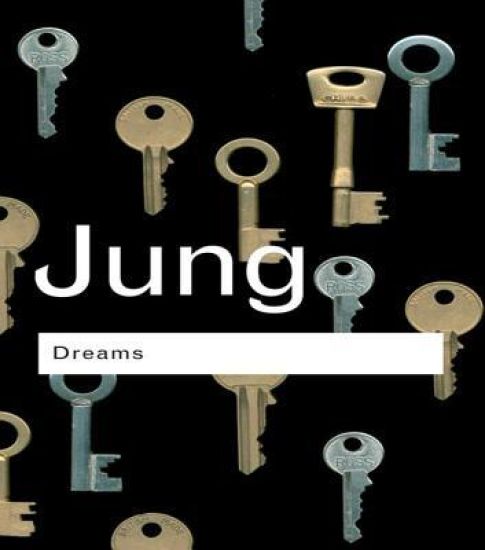
Author, psychiatrist and scholar, painter, world traveler, and above all visionary dreamer, Carl Jung was one of the great figures of the twentieth century. A comprehensive compilation of his work on dreams, this popular book is without parallel. Skilfully weaving a narrative that encompasses all of his major themes - mysticism, religion, culture and symbolism - Jung brings a wealth of allusion to the collection. He identifies such issues as the filmic quality of some dreams, and the differences between 'personal dreams' - dreams that exist on the individual level - and 'big dreams' - dreams that we all experience, that come from the collective unconscious. Dreams provides the perfect introduction to his concepts to those unfamiliar with Jung's work. Perfectly illuminating his user-friendly approach to life, Dreams is the ideal addition to any Jung collection.

When Carl Jung and Carl Kerenyi got together to collaborate on this book, their aim was to elevate the study of mythology to a science. Kerenyi wrote on two of the most ubiquitous myths, the Divine Child and The Maiden, supporting the core 'stories' with both an introduction and a conclusion. Jung then provided a psychological analysis of both myths. He defined myth as a story about heroes interacting with the gods. Having long studied dreams and the subconscious, Jung identified certain dream patterns common to everyone. These 'archetypes' have developed through the centuries, and enable modern people to react to situations in much the same way as our ancestors. From nuclear annihilation to AIDS and Ebola, we continue to engage the gods in battle. Science of Mythology provides an account of the meaning and the purpose of mythic themes that is linked to modern life: the heroic battles between good and evil of yore are still played out, reflected in contemporary fears.