Kirjojen hintavertailu – 12 859 819 kirjaa ja 27 kauppaa
Kirjailija
C. G. Jung
Kirjat ja teokset yhdessä paikassa: 359 kirjaa, julkaisuja vuosilta 1954–2026, suosituimpiin kuuluu Kalojen aika. Vertaile teosten hintoja ja tarkista saatavuus suomalaisista kirjakaupoista.
Nimi esiintyy myös muodoissa: C.G. Jung, C G Jung, C.G Jung, C. G Jung
Author, psychiatrist and scholar, painter, world traveler, and above all visionary dreamer, Carl Jung was one of the great figures of the twentieth century. A comprehensive compilation of his work on dreams, this popular book is without parallel. Skilfully weaving a narrative that encompasses all of his major themes - mysticism, religion, culture and symbolism - Jung brings a wealth of allusion to the collection. He identifies such issues as the filmic quality of some dreams, and the differences between 'personal dreams' - dreams that exist on the individual level - and 'big dreams' - dreams that we all experience, that come from the collective unconscious. Dreams provides the perfect introduction to his concepts to those unfamiliar with Jung's work. Perfectly illuminating his user-friendly approach to life, Dreams is the ideal addition to any Jung collection.
When Carl Jung and Carl Kerenyi got together to collaborate on this book, their aim was to elevate the study of mythology to a science. Kerenyi wrote on two of the most ubiquitous myths, the Divine Child and The Maiden, supporting the core 'stories' with both an introduction and a conclusion. Jung then provided a psychological analysis of both myths. He defined myth as a story about heroes interacting with the gods. Having long studied dreams and the subconscious, Jung identified certain dream patterns common to everyone. These 'archetypes' have developed through the centuries, and enable modern people to react to situations in much the same way as our ancestors. From nuclear annihilation to AIDS and Ebola, we continue to engage the gods in battle. Science of Mythology provides an account of the meaning and the purpose of mythic themes that is linked to modern life: the heroic battles between good and evil of yore are still played out, reflected in contemporary fears.
Modern Man in Search of a Soul is the perfect introduction to the theories and concepts of one of the most original and influential religious thinkers of the twentieth century. Lively and insightful, it covers all of his most significant themes, including man's need for a God and the mechanics of dream analysis. One of his most famous books, it perfectly captures the feelings of confusion that many sense today. Generation X might be a recent concept, but Jung spotted its forerunner over half a century ago. For anyone seeking meaning in today's world, Modern Man in Search of a Soul is a must.
Modern Man in Search of a Soul is the perfect introduction to the theories and concepts of one of the most original and influential religious thinkers of the twentieth century. Lively and insightful, it covers all of his most significant themes, including man's need for a God and the mechanics of dream analysis. One of his most famous books, it perfectly captures the feelings of confusion that many sense today. Generation X might be a recent concept, but Jung spotted its forerunner over half a century ago. For anyone seeking meaning in today's world, Modern Man in Search of a Soul is a must.
Jung's discovery of the 'collective unconscious', a psychic inheritance common to all humankind, transformed the understanding of the self and the way we interpret the world. In On the Nature of the Psyche Jung describes this remarkable theory in his own words, and presents a masterly overview of his theories of the unconscious, and its relation to the conscious mind. Also contained in this collection is On Psychic Energy, where Jung defends his interpretation of the libido, a key factor in the breakdown of his relations with Freud. For anyone seeking to understand Jung's insights into the human mind, this volume is essential reading.
Jung's discovery of the 'collective unconscious', a psychic inheritance common to all humankind, transformed the understanding of the self and the way we interpret the world. In On the Nature of the Psyche Jung describes this remarkable theory in his own words, and presents a masterly overview of his theories of the unconscious, and its relation to the conscious mind. Also contained in this collection is On Psychic Energy, where Jung defends his interpretation of the libido, a key factor in the breakdown of his relations with Freud. For anyone seeking to understand Jung's insights into the human mind, this volume is essential reading.
"As a doctor, I make every effort to strengthen the belief in immortality, especially with older patients when such questions come threateningly close. For, seen in correct psychological perspective, death is not an end but a goal, and life's inclination towards death begins as soon as the meridian is past."--C. G. Jung, commentary on The Secret of the Golden Flower ? Here collected for the first time are Jung's views on death and immortality, his writings often coinciding with the death of the most significant people in his life. The book shows many of the major themes running throughout the writings, including the relativity of space and time surrounding death, the link between transference and death, and the archetypes shared among the world's religions at the depths of the Self. The book includes selections from "On Resurrection," "The Soul and Death," "Concerning Rebirth," "Psychological Commentary on The Tibetan Book of the Dead" from the Collected Works, "Letter to Pastor Pfafflin" from Letters, and "On Life after Death."
C. G. Jung, son of a Swiss Reformed pastor, used his Christian background throughout his career to illuminate the psychological roots of all religions. Jung believed religion was a profound, psychological response to the unknown--both the inner self and the outer worlds--and he understood Christianity to be a profound meditation on the meaning of the life of Jesus of Nazareth within the context of Hebrew spirituality and the Biblical worldview. Murray Stein's introduction relates Jung's personal relationship with Christianity to his psychological views on religion in general, his hermeneutic of religious thought, and his therapeutic attitude toward Christianity. This volume includes extensive selections from Psychological Approach to the Dogma of the Trinity," "Christ as a Symbol of the Self," from Aion, "Answer to Job," letters to Father Vincent White from Letters, and many more.
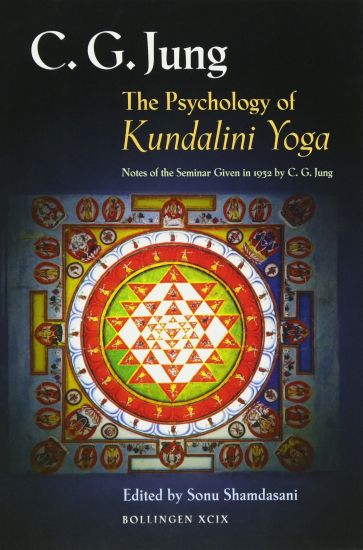
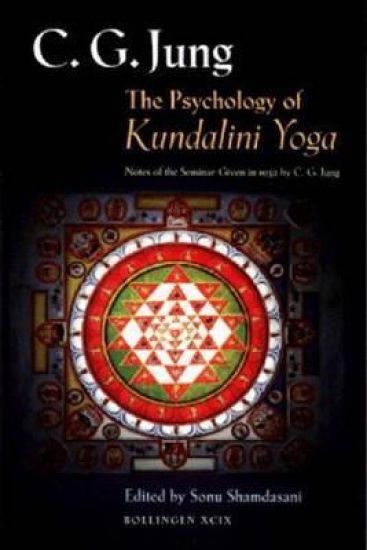
"Kundalini yoga presented Jung with a model of something that was almost completely lacking in Western psychology--an account of the development phases of higher consciousness.... Jung's insistence on the psychogenic and symbolic significance of such states is even more timely now than then. As R. D. Laing stated... 'It was Jung who broke the ground here, but few followed him.'"--From the introduction by Sonu Shamdasani Jung's seminar on Kundalini yoga, presented to the Psychological Club in Zurich in 1932, has been widely regarded as a milestone in the psychological understanding of Eastern thought and of the symbolic transformations of inner experience. Kundalini yoga presented Jung with a model for the developmental phases of higher consciousness, and he interpreted its symbols in terms of the process of individuation. With sensitivity toward a new generation's interest in alternative religions and psychological exploration, Sonu Shamdasani has brought together the lectures and discussions from this seminar. In this volume, he re-creates for today's reader the fascination with which many intellectuals of prewar Europe regarded Eastern spirituality as they discovered more and more of its resources, from yoga to tantric texts. Reconstructing this seminar through new documentation, Shamdasani explains, in his introduction, why Jung thought that the comprehension of Eastern thought was essential if Western psychology was to develop. He goes on to orient today's audience toward an appreciation of some of the questions that stirred the minds of Jung and his seminar group: What is the relation between Eastern schools of liberation and Western psychotherapy? What connection is there between esoteric religious traditions and spontaneous individual experience? What light do the symbols of Kundalini yoga shed on conditions diagnosed as psychotic? Not only were these questions important to analysts in the 1930s but, as Shamdasani stresses, they continue to have psychological relevance for readers on the threshold of the twenty-first century. This volume also offers newly translated material from Jung's German language seminars, a seminar by the indologist Wilhelm Hauer presented in conjunction with that of Jung, illustrations of the cakras, and Sir John Woodroffe's classic translation of the tantric text, the Sat-cakra Nirupana. ?
C. G. Jung had a lifelong interest in the paranormal that culminated in his influential theory of synchronicity. Combining extracts taken from the Collected Works; letters; the autobiographical Memories, Dreams, Reflections; and transcripts of seminars, Jung on Synchronicity and the Paranormal sets out clearly his seminal contribution to our understanding of this controversial area. In his introduction, Roderick Main discusses Jung's encounters with and observations of the paranormal, the influences that contributed to his theory of synchronicity, and the central ideas of the theory itself. The selections include Jung's writings on mediumistic trance phenomena, spirits and hauntings, anomalous events in the development and practice of analytical psychology, and the divinatory techniques of astrology and the I Ching. The book also features Jung's most lucid account of his theory in the form of his short essay "On Synchronicity," and a number of Jung's less-known writings on parapsychology, his astrological experiment, and the relationship between mind and body. Jung on Synchronicity and the Paranormal addresses subjects that were fundamental to Jung's personal and professional development. Probing deeply into the theory of synchronicity, Roderick Main clarifies issues that have long been a source of confusion to Jung's readers.
At least three major questions can be asked of myth: what is its subject matter? What is its origin? What is its function? Theories of myth may differ in the answers they give to any of these questions, but more basically they may also differ on which of the questions they ask. C. G. Jung's theory is one of the few that purports to answer fully all three questions. This volume collects and organizes the key passages on myth by Jung himself and by some of the most prominent Jungian writers after him: Erich Neumann, Marie-Louise von Franz and James Hillman. The book synthesizes the discovery of myth as a way of thinking, where it becomes a therapeutic tool providing an entrance to the unconscious.
At least three major questions can be asked of myth: what is its subject matter? what is its origin? and what is its function? Theories of myth may differ on the answers they give to any of these questions, but more basically they may also differ on which of the questions they ask. C. G. Jung's theory is one of the few that purports to answer fully all three questions. This volume collects and organizes the key passages on myth by Jung himself and by some of the most prominent Jungian writers after him: Erich Neumann, Marie-Louise von Franz, and James Hillman. The book synthesizes the discovery of myth as a way of thinking, where it becomes a therapeutic tool providing an entrance to the unconscious. In the first selections, Jung begins to differentiate his theory from Freud's by asserting that there are fantasies and dreams of an "impersonal" nature that cannot be reduced to experiences in a person's past. Jung then asserts that the similarities among myths are the result of the projection of the collective rather than the personal unconscious onto the external world. Finally, he comes to the conclusion that myth originates and functions to satisfy the psychological need for contact with the unconscious--not merely to announce the existence of the unconscious, but to let us experience it.
For Jung, the beautiful and brilliantly creative 28-year old Christiana Morgan was an inspired force whose path in self-analysis paralleled his own quest for personal knowledge. By teaching Morgan the trance-like technique of active imagination, Jung helped her embark on a series of archetypal adventures which she depicted in paintings of great virtuosity and he candidly recounted at a seminar given to some of his closest followers. Through his eloquent description of the fiery, mythic visions of a woman discovering her repressed sexuality and feminine power, Jung reveals how deeply this encounter challenged his understanding of feminine psychology. These two volumes bring together for the first time colour reproductions of Morgan's paintings with a complete transcript of the seminar.
Nietzsche's infamous work Thus Spake Zarathustra is filled with a strange sense of religiosity that seems to run counter to the philosopher's usual polemics against religious faith. For some scholars, this book marks little but a mental decline in the great philosopher; for C. G. Jung, Zarathustra was an invaluable demonstration of the unconscious at work, one that illuminated both Nietzsche's psychology and spirituality and that of the modern world in general. The original two-volume edition of Jung's lively seminar on Nietzsche's Zarathustra has been an important source for specialists in depth psychology. This new abridged paperback edition allows interested readers to participate with Jung as he probes the underlying meaning of Nietzsche's great work.
Jung's lifelong interest in the paranormal contributed significantly to the development of his influential but controversial theory of synchronicity. In this volume Roderick Main brings together a selection of Jung's writings on topics from well-known and less accessible sources to explore the close relationship between them. In a searching introduction he addresses all the main aspects of synchronicity and clarifies the confusions and difficulties commonly experienced by readers interested in achieving a real understanding of what Jung had to say. This book provides an excellent companion to Jung's Synchronicity: An Acausal Connecting Principle (Routledge) and reveals the full extent and range of Jung's researches into a range of psychic phenomena which are still not yet adequately explained.
Jung's lifelong interest in the paranormal contributed significantly to the development of his influential but controversial theory of synchronicity. In this volume Roderick Main brings together a selection of Jung's writings on topics from well-known and less accessible sources to explore the close relationship between them. In a searching introduction he addresses all the main aspects of synchronicity and clarifies the confusions and difficulties commonly experienced by readers interested in achieving a real understanding of what Jung had to say. This book provides an excellent companion to Jung's Synchronicity: An Acausal Connecting Principle (Routledge) and reveals the full extent and range of Jung's researches into a range of psychic phenomena which are still not yet adequately explained.
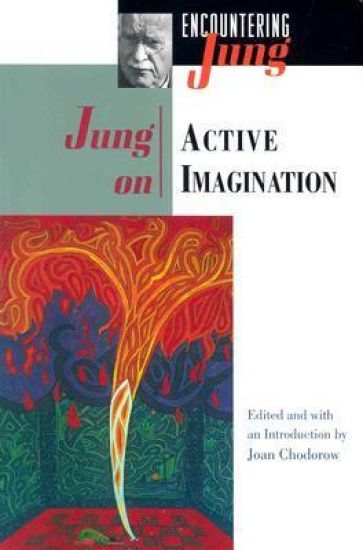
All the creative art psychotherapies (art, dance, music, drama, poetry) can trace their roots to C. G. Jung's early work on active imagination. Joan Chodorow here offers a collection of Jung's writings on active imagination, gathered together for the first time. Jung developed this concept between the years 1913 and 1916, following his break with Freud. During this time, he was disoriented and experienced intense inner turmoil --he suffered from lethargy and fears, and his moods threatened to overwhelm him. Jung searched for a method to heal himself from within, and finally decided to engage with the impulses and images of his unconscious. It was through the rediscovery of the symbolic play of his childhood that Jung was able to reconnect with his creative spirit. In a 1925 seminar and again in his memoirs, he tells the remarkable story of his experiments during this time that led to his self-healing. Jung learned to develop an ongoing relationship with his lively creative spirit through the power of imagination and fantasies. He termed this therapeutic method "active imagination." This method is based on the natural healing function of the imagination, and its many expressions. Chodorow clearly presents the texts, and sets them in the proper context. She also interweaves her discussion of Jung's writings and ideas with contributions from Jungian authors and artists.
Jung's discovery of active imagination is one of the most important milestones in his personal and professional life. Prompted by the trauma of his break up with Freud, he developed a method of self healing which later formed the basis of his analytic practice and is now regarded as the origin of non-directive psychotherapy and creative arts therapies. Jungian analyst, Joan Chodorow brings together a key selection of Jung's writings. In her introduction to this selection of his writings Joan Chodorow explains clearly Jung's method of focusing the conscious mind on unconscious processes as a means of achieving self-knowledge and individuation.
Jung's Seminar of Kundalini Yoga, presented to the Psychology Club in Zurich in 1932, has been widely regarded as a milestone in the psychological understanding of Eastern thought and the symbolic transformations of inner experience. With sensitivity towards a new generation's interest in alternative religion and psychological exploration, Sonu Shamdasani has brought together the lectures and discussions from this seminar. In this volume, he re-creates for today's reader the fascination with which many intellectuals of pre-war Europe regarded Eastern spirituality as they discovered more and more of its resources, from yoga to tantric texts.
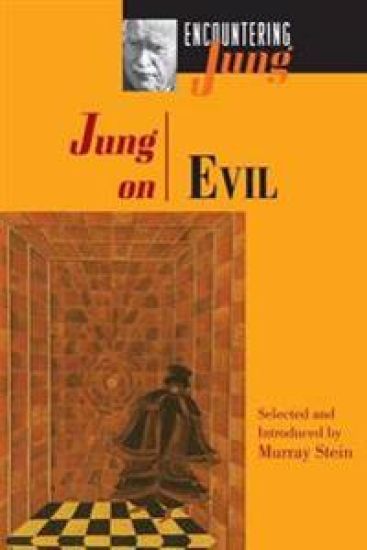
Well-known for his articulation of the "shadow side" of human individuality and culture, C. G. Jung wrote a great deal about the question of evil throughout his life and in scattered places in his work. In this book his position is pieced together from many sources. In his early work on the unconscious, for instance, he considered the role of evil in the mental processes of the severely disturbed. Later, he viewed the question of moral choice within the framework of his ideas about archetypes and discussions about moral choices, conscience, and the continual ethical reflection that is necessary for all of us. The material here includes letters to Freud and Father Victor White and selections from his writings ranging from his Answer to Job to his travel piece on North Africa.