Kirjojen hintavertailu – 12 859 818 kirjaa ja 27 kauppaa
Kirjailija
C Matthew McMahon
Kirjat ja teokset yhdessä paikassa: 139 kirjaa, julkaisuja vuosilta 2007–2026, suosituimpiin kuuluu The Works of Henry Greenwood. Vertaile teosten hintoja ja tarkista saatavuus suomalaisista kirjakaupoista.
Matthew Mead's The Christian's Duty to Walk Wisely is a practical exploration of the believer's spiritual journey, addressing the holy command for Christians to navigate life with wisdom and grace. Anchored in Ephesians 5:15-16 and Psalm 131, this work challenges and encourages readers to live with godly discernment and contentment in the midst of temptations. The first sermon, Walk Wisely, explores the Christian's responsibility to live circumspectly in a fallen world fraught with temptation and evil. Mead exhorts believers to navigate life with spiritual wisdom-avoiding folly, redeeming the time, and relying wholly on the grace of Christ. Through rich biblical exposition and practical application, he addresses the nature of temptation, the dangers of self-confidence, and the necessity of prayer, faith, and reliance on Scripture. With clarity and pastoral insight, Mead equips Christians to triumph over sin and stand firm against Satan's schemes. The second sermon, The Power of Grace, takes its cue from David's confession in Psalm 131: "Surely I have behaved and quieted myself, as a child that is weaned of his mother." Mead explores the heart-transforming work of grace that weans the believer from worldly affections and fosters a spirit of humility, contentment, and childlike dependence on God. He examines the believer's resemblance to a weaned child-helpless yet trusting, detached from earthly vanities yet nourished by the rich promises of God. This sermon offers invaluable guidance on finding satisfaction in Christ and cultivating a life rooted in heavenly affections rather than temporal comforts. Together, these sermons serve as a guide for professing Christians, offering biblical counsel on: - Walking wisely in a fallen, temptation-filled world.- Trusting in God's providence amidst trials and uncertainties.- Cultivating humility, contentment, and a teachable spirit.- Detaching from the fleeting allure of the world and setting affections on eternal joys in Christ. This second edition of The Christian's Duty to Walk Wisely brings renewed attention to Matthew Mead's sermons, carefully updated and clarified for the modern reader while preserving their rich theological depth. This edition seeks to make Mead's biblical teachings on spiritual wisdom and grace accessible to a new generation of believers striving to walk faithfully in a fallen world. Matthew Mead (Meade) (1630-1699) was an independent puritan divine, and popular reformed preacher and morning lecturer at Stepney Church (London). C. Matthew McMahon, Ph. D., Th. D., is a Reformed theologian, and pastor of Grace Chapel in Crossville, TN; part of the Biblical Reformed Synod of Christ the King. He is the founder and chairman of A Puritan's Mind, the largest Reformed website on the internet for students of the Bible concerning Reformed Theology, the Puritans and Covenant Theology. He is the founder of Puritan Publications which publishes rare Reformed and Puritan works from the 17th century, specializing in the Westminster Assembly. He is also the owner of Reformed.org, and the Center for Reformed Theology and Apologetics.
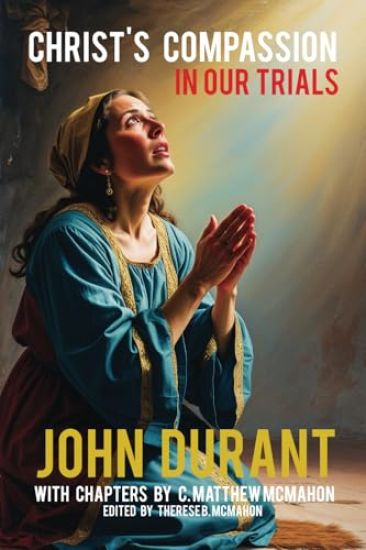
"Christ's Compassion in Our Trials" is a weighty exploration of the struggles and discouragements that Christians may face when approaching Christ for help, as illustrated through the historical narrative of the Canaanite woman. Authored by Puritan John Durant (1620-1686), this work offers a deeply rooted theological perspective grounded in Scripture, particularly focusing on the interaction between Christ and the Canaanite woman found in Matthew 15:21-28. In this historical narrative, Durant emphasizes that, much like the Canaanite woman, Christians often encounter feelings of inadequacy and discouragement as they seek help from Christ. The woman approaches Jesus, fully aware of her unworthiness as a Gentile, yet her desperation for her daughter's healing drives her to persist in faith. Durant illustrates that despite her initial rejection and the seemingly harsh words of Christ-who initially does not respond to her pleas-her unwavering faith ultimately prevails. He captures the essence of her faith as she boldly claims her need for mercy, which serves as a model for believers facing their own challenges and obstacles. Durant further expounds on several key themes drawn from the Scriptures, including the idea that the prayers and faith of believing parents hold significant weight in seeking mercy for their children. He highlights the truth found in 1 Timothy 4:8, where godliness is said to have promise for the present life and that which is to come, encouraging readers to persist in their petitions to God. By relating the woman's experience to their own lives, Durant reassures believers that their struggles and feelings of discouragement are not uncommon, and he encourages them to press on in faith. Throughout the text, Durant provides practical guidance on how to navigate these discouragements. He urges believers to examine the lawfulness of their requests, the condition of their hearts, and their motives when approaching Christ. He posits that faith is not merely about the outcome but about the relationship established through prayer and supplication. Durant's insights invite readers to understand that even when circumstances appear dire or when prayers seem unanswered, God's compassion and mercy remain ever-present. In sum, "Christ's Compassion in Our Trials" serves as both a theological treatise and a source of encouragement for believers. By studying the interaction between Christ and the Canaanite woman, Durant masterfully illustrates the perseverance of faith amid discouragement. He provides a compelling reminder that, regardless of the challenges faced, coming to Christ with sincerity and faith can lead to spiritual and physical blessings. The narrative not only comforts those who are struggling but also reaffirms the enduring promise that Christ is accessible to all who earnestly seek Him, a message that resonates powerfully through the ages.
"Puritan Meditations" by Francis Rous offers a weighty collection of 96 carefully crafted spiritual reflections aimed at deepening the believer's relationship with God through Jesus Christ. Rous, a respected Puritan theologian and Westminster Divine, gathers "diverse sparks of holy fire" to inspire readers to engage in the sacred practice of biblical meditation, thought by thought. These 96 meditations focus on filling the mind and heart with the truths of Scripture, leading to spiritual growth and sanctification on a variety of biblical topics. Within this book, Rous explores the transformative power of God's Word, guiding believers through times of spiritual coldness and encouraging them to reignite their zeal. Drawing from the rich Puritan tradition, "Puritan Meditations" offers insights into everything from the work of the Savior, to the action of holiness in the Christian walk. He reflects on God's works, promises, and character leading to holiness and joy in the Christian walk. With each meditation, Rous invites readers into a shared journey of faith, urging them to press onward toward their eternal inheritance. These 96 reflections are not only a means of personal growth but a call to collective encouragement, unity, and strength in the body of Christ. Whether you are seeking deeper communion with God or spiritual nourishment for life's challenges, "Puritan Meditations" provides a timeless roadmap toward the joy and peace found only in God's word and in Jesus Christ.
Samuel Willard's "Spiritual Desertions Discovered and Remedied" delves into the weighty and practical spiritual challenges faced by devout Christians, exploring the nature of divine desertions and the trials that accompany them. Willard asserts that God's temporary withdrawal, though distressing, is a common experience among believers, designed to test and strengthen their faith. He differentiates between various causes of these spiritual desertions, including personal sin, neglect of spiritual duties, and God's sovereign will to further refine His followers. Willard emphasizes the importance of humility and self-examination during these times, urging believers to avoid rash judgments about their spiritual state. He encourages them to seek out and rely on God's attributes-His mercy, power, and unchanging nature-as sources of comfort and hope. The work also highlights the necessity of perseverance in spiritual practices despite the absence of divine consolation, advocating for continued prayer, scripture reading, and worship. Moreover, Willard advises Christians to draw on their past experiences of God's grace, recalling times of spiritual communion to bolster their faith during periods of darkness. He underscores the significance of recognizing any stirrings of faith and repentance as indicators of God's ongoing work within them, even when His presence feels distant. Ultimately, Willard's work is a call to trust in God's perfect wisdom and timing, reassuring believers that spiritual trials and desertions are part of the divine plan for their growth and ultimate salvation. He encourages a resolute faith that waits patiently for God's return, confident in His unwavering love and commitment to His children.
In "Sarah and Hagar," Westminster Divine Josiah Shute presents an insightful exploration of faith, redemption, and divine promises through the biblical narrative found in Genesis 16. The work focuses on the complex relationship between Sarah and Hagar, two pivotal women in the life of Abraham whose lives demonstrate God's grace and the unfolding of His redemptive plan. Shute skillfully navigates the text, highlighting themes of obedience, hope, and divine intervention that resonate deeply with the Christian faith. Shute explores the concept of redemption, drawing parallels between Hagar's journey of submission and faith, and the Christian experience of salvation through Jesus Christ. The encounter of Hagar with the Angel of the Lord in the wilderness is depicted as a turning point, symbolizing the reformation power of God's grace that extends hope and redemption to the marginalized and oppressed. It explores typology and foreshadowing, connecting the Old and New Testaments in a manner that reveals Jesus Christ as the ultimate fulfillment of God's promises. Shute invites readers to reflect on the character of God, as revealed through His interactions with Sarah, Hagar, and Abraham. This theological contemplation sheds light on God's boundless faithfulness, grace, and willingness to intervene in the lives of sinful individuals, offering a message of hope and redemption." Sarah and Hagar" also holds contemporary relevance, encouraging readers to find echoes of faith, grace, and redemption in their own lives. Shute challenges us to contemplate our personal spiritual journeys against the backdrop of these ancient narratives, recognizing the timeless scriptural foundations that continue to guide and inspire us as God's word. Ultimately, the book calls readers to embrace hope, grace, and redemption through the intertwined events of Sarah and Hagar, enriched with divine promises and deep theological insights. It reminds us of God's unwavering fidelity to His redemptive promises and culminates in the ultimate promise of salvation through Jesus Christ.
"Practical Observations on the Lord's Supper" offers an in-depth exploration into the significant spiritual act of participating in the Lord's Supper, going beyond mere ritual to reveal a deep, spiritual communion with Christ. This book does not engage in theological debates or critique differing perspectives; instead, it focuses on the experiential aspects of the Supper, emphasizing the personal and communal relationship with Christ that is nurtured through this sacred practice. McMahon explores the essence of the Lord's Supper, presenting it as more than just a ceremonial partaking of bread and wine; more than a memorial. It is depicted as an intimate dialogue with Christ, a moment of joyful and comforting communion that has the potential to elevate the believer's spiritual life. McMahon explains the Apostle Paul's concept of "worthy participation," drawing from 1 Corinthians 11, to highlight how such engagement with the Supper can lead to a spiritual exchange of divine grace and blessings. Through participation in the Lord's Supper, believers are invited to a deeper understanding and connection with Christ. It is an occasion for Christ to impart His spiritual grace, fostering the believer's sanctification and growth in faith. The Supper is portrayed as a pivotal expression of fellowship with Christ, allowing believers to partake in His benefits and merits and by faith, grow in their walk before him. This work encourages readers to reflect on their personal approach to the Lord's Supper, urging them to seek a more meaningful and enriching experience that strengthens their bond with Christ. It is a call to recognize the Supper as a vital expression of spiritual fellowship, a sacred sign of unity with Christ that demands reverence and thoughtful engagement. "Practical Observations on the Lord's Supper" is an essential read for anyone seeking to deepen their understanding of this central Christian sacrament and to enhance their spiritual journey through a more purposeful and fulfilling participation in the Lord's Supper.
Thomas Hooker's "Putting on Christ " is a wonderful treatise on not only being ingrafted into Christ Jesus, but also how one kills sin, and lives for righteousness. He uses two main texts, the first being, "Behold, I will send my messenger, and he shall prepare the way before me: and the Lord, whom ye seek, shall suddenly come to his temple, even the messenger of the covenant, whom ye delight in: behold, he shall come, saith the LORD of hosts." (Mal. 3:1). Here he shows how people are ingrafted into Jesus' mystical body, attaining the Christian's intimate bond with Christ, emphasizing the necessity of embracing Him for both justification and sanctification. The second text is Romans 13:14, "But put ye on the Lord Jesus Christ, and make not provision for the flesh, to fulfil the lusts thereof." Hooker argues that believers, regardless of their spiritual maturity, must continuously seek Christ's grace and power to fulfill divine commands and conquer personal failings. He employs the metaphor of clothing to illustrate the process of sanctification, suggesting that just as one dresses in garments, so must Christians clothe themselves in Christ to be prepared for godly duties and the day's warfare against all the powers of darkness; day by day, step by step. The work explores the hazards of yielding to fleshly desires, presenting a clear directive for believers to abstain from creating opportunities for sin to thrive, and instead, taking off the old man and putting on Christ in the new man. Hooker passionately directs the believer to cultivate a life marked by humility, complete submission to God's will, and an unyielding dependency on Holy Spirit assistance. Deeply anchored in biblical teachings, he offers Christians a pathway to living out their salvation with diligence and grace. Annexed to this work is Hooker's sermon at the funeral of Mr. Wilmott, in which he offers a heartfelt tribute to godly ministers as spiritual guardians and champions of faith. He underscores their critical role in guiding the congregation towards prayer, repentance, and adherence to God's Word. Through this work, Hooker presents a compelling call to Christians to cultivate a life deeply rooted in Christ, continually drawing on God's strength to navigate the spiritual walk and uphold the mission of the church militant while they live in this world. It serves as a reminder of the continuous need for sanctification and the pivotal role of faith, obedience, and daily communion with Christ in the believer's life.
This volume is a compilation of six of Preston's smaller treatises and sermons. His first treatise concerns the doctrine of irresistible grace as a cornerstone to Christian assurance. All the letters of TULIP stand or fall together, regardless of how inconsistent some might be in understanding those five points of the doctrine of grace. In this treatise, John Preston takes to task the false teachings of the heretic James Arminius, and demonstrates the error that people can hold themselves in God's grace, or they can work to an end of salvation in their own strength. Biblical grace is irresistible. In his sermon on The Pillar and Ground of the Truth, from 1 Timothy 3:15, he shows the role of the church as the truth, and its stance as a pillar by the grace of God. The Church is described as God's flock and the pillar of truth, requiring diligent care by ministers and adherence to God's laws and His prescriptions by members. In his sermon on Isaiah 64:4, A Sensible Demonstration of the Deity, he tackles the wonderful doctrine of God's existence, coupled with eyeing creation and providence correctly. Preston emphasizes the importance of relying on the Creator, and having foresight and discernment in recognizing and addressing impending dangers surrounding life's circumstances, knowing full well that God governs all things. In his sermon on Ephesians 5:15, Exact Walking, "Take heed that you walk therefore circumspectly (or exactly) not as fools, but as wise," Preston emphasizes the importance of walking with God with exactness as a manifestation of true biblical wisdom. In Preston's sermon on 1 Sam. 12:20-22, Samuel's Support for Sorrowful Sinners, he emphasizes the importance of immediate repentance and returning to God after committing sin. He argues that delaying repentance allows sin to harden the heart further and exposes individuals to more sins. In his sermon on The New Life, Preston explains 1 John 5:12, where the essence of life in Jesus Christ is explored in contrast to spiritual death. He emphasizes that the quality of one's life is determined by their desires and actions in Christ, drawing parallels between a life of sin and one of grace; those in Christ, and those outside of Christ.
Christ is such an inexhaustible fountain that sinners cannot ever out desire His mercies. He is an overflowing fountain of infinite mercy and comfort. All other temporal mercies find their eternal significance in him. Nothing will delight the sincere believer, or be enjoyed, if such believers do not in some way partake of His comfort, and His tenderness. They must tap into Christ's virtue. How will they do this? Durant's discourse explores the sweetness of Christ's relationship with weak believers, addressing various aspects of this theme. He shows the fallacy of Satan to keep souls from Christ; and the sweetness of Christ to those in His service. His work is taken from Isaiah 40:11, "He shall feed his flock like a shepherd: he shall gather the lambs with his arm, and carry them in his bosom, and shall gently lead those that are with young." The structure of the discourse includes the dependence of the words, their division, and the doctrines derived from them. His main doctrine, is that central teaching presented, emphasizes Christ's sweetness in His dealings with weak members. Most Christians will not admit they are weak. And the idea of the word "weak" seems to be negative. But Durant's work reaches to all Christians. He shows that Christ's carriage, and the sweetness of that carriage, is demonstrated in not casting off weak believers, but that He preserves their weak graces, strengthens them, bears with their infirmities, not burdening them with tasks they can't handle, and accepts their efforts despite failings. These reasons are drawn from God the Father's commission to Christ, the truth of the inherent weakness in believers, and Christ's intention to build them up as his lambs. The discourse concludes with applications for information, lamentation, reproof, comfort, encouragement, imitation, and exhortation.
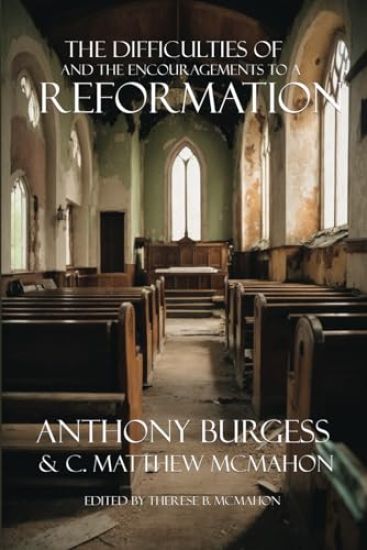
How hard is it to reform the Christian church? It is very hard, and there are great difficulties to overcoming in seeing God bless such a work. This is obviously the work of God's Spirit. But how hard is it to take the people of God towards a progression of biblical Reformation? The answer is that there are many difficulties to hurdle, but there are encouragements to doing this for the glory of Jesus Christ. This is the substance of this very important work of reforming the church. McMahon first sets up this work by explaining the ideas of Theological Traditionalism, subscriptionism, confessionalism, reformation and the counter "me and my bible" movement. He shows how the illumination of the Spirit works, dealing with 1 John 2:26-27, and in conjunction with Theological Traditionalism. He shows how these are wed to confessionalism towards reformation, and how it completely overthrows contrary claims, including demonstrating how one ought to properly subscribe to the truth. Then, he links these together to form a progression towards godly reformation and holiness. After this, Anthony Burgess, a master exegete, teaches from Mark 1:2-3, "As it is written in the Prophets, Behold I send my messenger before thy face, which shall prepare thy way before thee. The voice of one crying in the wilderness, Prepare ye the way of the Lord, make thy paths straight." He answers questions like, are we reformed enough? Is God content for us to be sanctified just enough? What can church members and pastors do to promote true biblical reform in their congregations? What difficulties will we see, and what encouragements can we find along the way if we are holding to the truth?
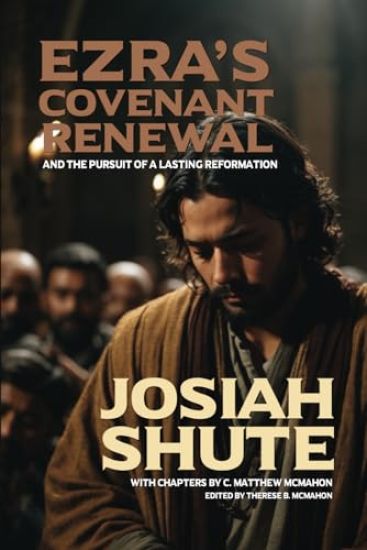
The nature of covenant renewal permeates all of the bible. It is the centerpiece of Jesus Christ and the substance of his covenant with the Father. In Shute's work, this central theme of renewal and reformation revolves around the power of God's Word, as exemplified in the book of Ezra, specifically chapters 9-10. The narrative commences with Ezra 9:4, where individuals gathered to deeply respect the words of the God of Israel, resulting in a significant spiritual awakening and a commitment to a lasting reformation. Shute underscores the significance of approaching God's Word with reverence and humility. The assembly during Ezra's time serves as evidence of the spiritual power that emerges from respect for the divine Word, leading to collective acknowledgment of sins and a pathway to redemption. He confronts atheistic skepticism regarding Scripture's directives, showing that it embodies the divine will and possesses the authority to penetrate even the most obstinate hearts if the Spirit is working. Shute explores two facets of reverence for God's Word: initial contrition and action imbued with the Spirit towards reform. Christians are encouraged and directed to ground themselves in the teachings of Scripture to remain steadfast in the face of moral decay and sin, akin to Ezra's assembly, who revered God's Word after being show their impiety against God's directives. In a fallen world marked by moral depravity, Shute's message serves as a symbol of Christian hope in Jesus Christ. Embracing and deeply respecting Christ's Word will create personal and public change, advancing reformation in individuals, families, churches, communities and in the broader world. In this He calls upon readers to set an example for others, highlighting the lasting impact of faithfulness and its role in bringing about true and lasting reformation to the glory of God.