Kirjojen hintavertailu – 12 859 819 kirjaa ja 27 kauppaa

Kirjailija

C Matthew McMahon

Kirjat ja teokset yhdessä paikassa: 139 kirjaa, julkaisuja vuosilta 2007–2026, suosituimpiin kuuluu The Works of Henry Greenwood. Vertaile teosten hintoja ja tarkista saatavuus suomalaisista kirjakaupoista.

Nimi esiintyy myös muodoissa: C. Matthew McMahon

139 kirjaa

Kirjojen julkaisuvuodet: 2007–2026.

The Blessed God

The Blessed God

C. Matthew McMahon; Daniel Burgess

Puritan Publications
2021
nidottu
To intimately know God is the substance of this work by Burgess. It is not only to know God as God has revealed his essence, but Burgess, as all good, practical preachers do, presses the reader to then take what they learn about God, and see how it necessarily links to practical truths, such as those necessary for salvation; to know God and to be saved by Jesus Christ. Burgess covers three important questions. Question 1: What conceptions should we have of the blessed God? Question 2: What are those truths of the knowledge of God which appear indispensably necessary and spiritually desirable to our salvation? Question 3: What is that change brought about in a man by God's holy Word and Spirit, before he can safely conclude himself to be passed from death to life? These are, most assuredly, three of the most important questions that can be drawn from Scripture and applied to the life of any fallen son of Adam. In showing these as utterly important as they refer to eternal realities, Burgess not only explains who God is, but also the work that God has done in Jesus Christ who is the perfect God and perfect man in one person to overcome the horrible effects of a fallen world. To know salvation, is to know, first, the blessed God, and then what this God does in and through his Christ to redeem sinners. He will explain Jesus as the great Prophet, Priest and King in both his states of humiliation and exaltation; that in Christ's humiliation he was made under the law, obeying the precepts, and suffering its curse. And in his exaltation, in rising from the dead as he did, ascending into heaven, and having all power in heaven and earth given him, he is made higher than any mere creature could possibly be exalted to. In this Christ is able to save to the uttermost and willing to save even the chief of sinners, and he welcomes all that penitently come to him for salvation. To hold steadfastly to the knowledge of God and of his salvation, is indispensably necessary to our eternal salvation, the glorification of the Christ, and honor we owe to the blessed God. This blessed God, then, will make us happy by these truths, and eternally blessed by them in the power of his Holy Spirit; for these show God's loveliness and blessedness to all that hear his voice.
John 3: 16

John 3: 16

C. Matthew McMahon

Puritan Publications
2021
nidottu
C. Matthew McMahon, Ph. D., Th. D., is an American Calvinist Reformed theologian and adjunct professor at Whitefield Theological Seminary. He is the founder and chairman of A Puritan's Mind, the largest Reformed website on the internet for students of the Bible concerning Reformed Theology, the Puritans and Covenant Theology. He is also the founder of Puritan Publications which publishes rare Reformed and Puritan works from the 17th century. Is there a more beloved Scriptural passage than John 3:16? Throughout church history, there has not been a more quoted or preached upon verse than this one. It is that special text concerning God's love for the world and the eternal life that is found in the person of Jesus Christ. The richness of this special life-changing verse is seen in Jesus' dialogue and instruction to the Pharisee Nicodemus. Christ's teaching in this passage demonstrates that Nicodemus was living a life devoid of the power of the Holy Spirit, and attempted, in outward religious acts, to please God by his perceived good works. Jesus' instruction cures Nicodemus from his man-centered religious views, and brings the Pharisee back to the meaning of the Old Testament, and God's plan of redemption in the Son of Man who came down from heaven to teach men about what it means to have true communion with the Father. Being faithful to the text, and ultimately focusing in on the meaning of John 3:16, McMahon accurately employs proper hermeneutics and exegesis to consider this most important verse in its complete context. He also engaged in a large amount of extra-biblical reading in hundreds of historical and theological volumes to find the consensus view on the meaning of this passage in church history. McMahon covers John 2:23-3:21 divided into various chapters that demonstrate the meaning behind the plan of the Father and Son to save sinners, and the outworking of that plan in the initial power of the Holy Spirit's spiritual operation on the hearts of sinners.
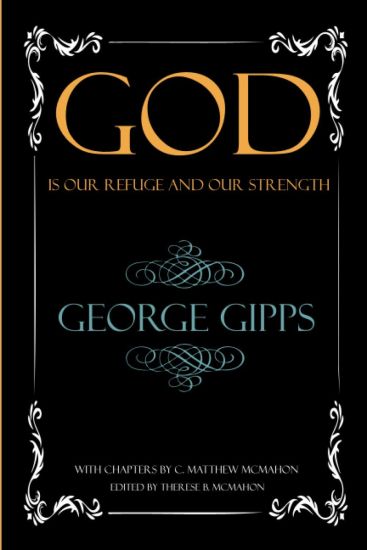
God is Our Refuge and Our Strength

God is Our Refuge and Our Strength

C. Matthew McMahon; George Gipps

Puritan Publications
2021
nidottu
George Gipps (n.d.) was a member of the Westminster Assembly, is noted as a strong Christian of personal piety, and was a faithful minister of the Gospel in Aylstone, Leicester-shire England. In this work, Gipps deals particularly with the first verse of Psalm 46, which is his main text. "God is our refuge and strength, a very present help in trouble." Christians often tend to rely on God more in times of trouble than they do in times of ease. But there are many poignant Scriptures which bear out the "neediness" of the Christian to Jesus Christ in all things and at all times regardless of God's providence. As they make their "calling and election sure" in their sanctification by walking in the Spirit under God's gracious providence, they are to turn to God to trust him in all things, but this is most especially seen in times of affliction and distress. Gipps presses the reader to ruminate in the non-negotiable requirement of being submissive to God in his providence ... no matter what that providence brings. He shows, first, that it is the portion of God's church and children to find in this life very great and abundant troubles. What do they do when they find such trouble? Second, it is then the wisdom of God's church and children to make God their hope, refuge, and shelter in all their troubles. And what will the outcome of this "making God their help and refuge"? Third, it will be the comfort of God's church and children who trust in him that they shall find God a very present, strong, and abundant help in all their troubles no matter what they are. This work is a blessed help in considering glorifying Christ in times of difficulty, and directing one's steps in the righteous and godly regardless of the providence that God ordains. This work is not a scan or facsimile, has been carefully transcribed by hand being made easy to read in modern English, and has an active table of contents for electronic versions.
5 Marks of Christian Resolve

5 Marks of Christian Resolve

C. Matthew McMahon

Puritan Publications
2020
nidottu
There is no real commendability in a mere resolve. If Christians resolve to do something, and never actually get around to doing it, what good is that? A weak and wobbling resolution in this way, holds in it nothing of real value. But if Christians desire to glorify the living Christ in their kingdom service, then such service does, truly, come in light of biblical resolution. For a true and Spirit-guided resolution to take place, the Christian mind considers many things. All Spirit-filled Christians turn all resolving powers into execution. Having a resolve to do something is a wonderful beginning. It ties two parts of a duty together for the Christian; to resolve and to do. Being resolved as a Christian, sets forth a deliberation of the mind about the thing to be resolved on. No wise Christian will ever resolve to do anything until he has considered the action, and weighed it in the balance of Scripture with himself, and fully debated its necessity and expedience. How might a Christian be resolved in the work of doing good always before God? And in what main categories might resolution take place? In considering a holy resolve, a fixed determination of serving King Jesus, this book will cover five marks: Mark 1: resolved to do great works for the glory of God in everything. Mark 2: resolved to contend for the faith once delivered to the saints. Mark 3: resolved to reject all earthlimindedness. Mark 4: resolved to righteously use the means of grace for further sanctification as Christ prescribes. Mark 5: resolved to continue to do good without growing weary. C. Matthew McMahon, Ph. D., Th. D., is a Reformed theologian, and pastor of Grace Chapel in Crossville, TN. He is the founder and chairman of A Puritan's Mind, the largest Reformed website on the internet for students of the Bible concerning Reformed Theology, the Puritans and Covenant Theology. He is the founder of Puritan Publications which publishes rare Reformed and Puritan works from the 17th century, specializing in the Westminster Assembly. He is also a managing partner at Reformed.org, and the Center for Reformed Theology and Apologetics.
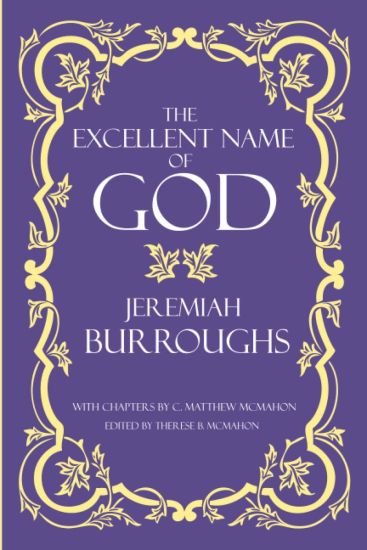
The Excellent Name of God

The Excellent Name of God

Jeremiah Burroughs; C Matthew McMahon

Puritan Publications
2020
pokkari
Burroughs' text in this work is Psalm 148:13, focusing on the phrase, "For his name alone is excellent." His main argument is to demonstrate God's glorious character, that the psalmist does not rest in simply praising God for his glory that appears in the creatures, but he rises higher to praise and bless God for what there is in himself above that which appears in any creature. Burroughs sets his point of view directly in line with the glorious nature of God himself, and the excellent name of God above all things. It is true that God manifests himself in heaven and earth as glorious, but, there is a further glory of God that is within himself, beyond all that is, or can be manifested in or to any creature. This is the substance of this ensuing work. Burroughs covers two main doctrines: that a gracious heart is not satisfied with praising God only for his works but rises higher to praise him for himself. And, God is a most excellent being above all things. In these two doctrines he lays out the biblical arguments that press Christians to give glory to God's inherent excellency. Certainly, God is to be praised for all his works, (for creation, providence and redemption in Jesus Christ), but God is to be praised especially for who he is in and of himself in his glorious nature.
Resisting the Devil with a Steadfast Faith

Resisting the Devil with a Steadfast Faith

C. Matthew McMahon; George Gifford

Puritan Publications
2020
nidottu
When anyone acts in accordance with the devil, they become of a "devilish quality," (John 6:70). When Christians are enticed by the devil, they are pulled away from God by honors, profits, pleasures, or whatever other things the devil uses to hinder their profiting by the Word, (Luke 8:12). These wicked spirits have such a heinous effect on the world, that the same condemnation that will befall them, will befall those who follow them. The proud fall into the condemnation of the devil, that is, by means of pride and high mindedness they too will be cast into hell fire, in the same manner as the devil will be. In consideration of such vile and wicked practices following the devil and his practices, Gifford directs the reader to resist such assaults and submit before God with the weapon of steadfast faith. His text is a famous one, "Be sober and watch: for your adversary the devil, as a roaring lion walketh about, seeking whom he may devour: whom resist steadfast in the faith," (1 Peter 5:8-9). Gifford expounds on how the Apostle Peter, 1) begins with an admonition or exhortation by which he stirs up all the faithful to sobriety and watchfulness with these words, "Be sober and watch," 2) why it is important to move all men into this position of sobriety and watchfulness, seeing they have such a terrible and cruel adversary who continually seeks their eternal misery and destruction, "For your adversary the devil, as a roaring lion walketh about, seeking whom he may devour." And, 3) teaching how Christians shall withstand him, overcome him, and put him to flight, that so they may escape from his cruel tyranny, "Whom resist steadfast in the faith." This is an exceedingly helpful work, that will arm the Christian in due manner to fight steadfastly in the power of Jesus Christ through his Spirit against the works and wiles of the devil. And Gifford will not only show how to do this, but how to do it effectively, with victory, through true Christian faith empowered by God's Christ.
A Treatise of the Loves of Christ to His Spouse

A Treatise of the Loves of Christ to His Spouse

C. Matthew McMahon; Samuel Bolton

Puritan Publications
2020
nidottu
Samuel Bolton, D. D. (1606-1654) was a Westminster divine and Puritan scholar, and has been praised by many of his contemporaries as a great reformed preacher as well as a humble Christian. This work by Bolton is a divine encouragement to the needy Christian soul, and a means of drawing in the unbelieving soul to the love of Jesus Christ. His text is Song of Songs 4:9, "Thou hast ravished my heart, my sister, my spouse: thou hast ravished my heart with one of thine eyes; with one chain about thy neck." This text is something, as he says, which after we have been some while in heaven, we shall be able to understand. Certainly, no one can speak fully understand this text, except those who have the full enjoyments of Christ's love. Bolton looks to help cast us into its depth, and let it comprehend us. He is very successful in this endeavor. His doctrine is that the heart of Jesus Christ is exceedingly taken with his church and people. In fact, as the text shows, Christ is ravished by his bride. This comes to be a refreshing encouragement as well as a sober and solemn call to consider this Christ who loves his people so much. The person with the least grace in his church greatly takes his heart and moves him towards an inexpressible love for them, that, as Bolton explains, would sink us down forever in our contemplation of it, being without words, and most astonishing. Is this the way that you think about Jesus Christ and his eye towards you? Is he captivated by you, ravished by you, and in turn, are you then ravished back? This work will raise your soul to gain you a further love of the Savior who loves his people so much that he came and died for them, gave them all things, and has them forever on his mind and heart, for he is ravished with them in expressible love. This work is not a scan or facsimile, has been carefully transcribed by hand being made easy to read in modern English, and has an active table of contents for electronic versions.
The Doctrine of Man's Future Eternity

The Doctrine of Man's Future Eternity

C. Matthew McMahon; Jackson John

Puritan Publications
2020
nidottu
In this work, Jackson lays down biblically the doctrine of eternity, and the importance of man's never dying soul that hangs in its balance. This being a fundamental point of Christian divinity, it should be "plainly proved, clearly explained, and powerfully applied to us." He explains what eternity is in the final four basic tenants of Christian doctrine, death, judgment, heaven and hell. He then proves by Scripture the many infallible proofs that all mankind, at the end of this world, shall go in their bodies and souls into an everlasting condition, either of happiness or misery. Then he describes the misery of that everlasting condition of woe and punishment that the wicked shall go into at the end of the world. Afterward, he explains the happiness of the eternal state of glory and rest that the righteous shall go into at the last day; a most excellent and comforting exhortation. Following this, he takes a chapter to explain the principal reasons why all mankind after the day of judgment shall go in their bodies and souls into an everlasting condition, either of happiness or misery. Not only that it "will" happen, but the all important "why" it will happen. In the last chapter he directs the reader how to apply the great doctrine of man's future eternity, in order to escape everlasting punishment, and obtain eternal life only in Jesus Christ, after this life is ended. This is a blessed treatise, deep in its power and application; a God-glorifying and Christ exalting work by this eminent divine. This work is not a scan or facsimile, has been carefully transcribed by hand being made easy to read in modern English, and has an active table of contents for electronic versions.
Remembering Your Creator

Remembering Your Creator

Matthew Mead; C Matthew McMahon

Puritan Publications
2020
pokkari
In this work, Mead sets down the sincere choosing of God which should result in closing with Christ and being genuinely converted. His text is Ecclesiastes 12:1, "Remember your Creator now in the days of your youth." He directed the sermons to the youth of the church, but they are by no means linked only to them, and will make older sinners blush as well as younger ones. He explains that the two great duties of the Christian life are to cease to do evil, and to learn to do well. No man can be good that does not cease to be evil. In the words of the preacher from Ecclesiastes, he shows that this exhortation is to take up a very concerning duty, backed with a threefold argument. In the duty, first, the act, which is to "remember." Secondly, the object to be remembered, "your Creator." And, thirdly, the time when he must be remembered, "now." Sincere converts to the Christian faith should wisely improve this present life, and carefully provide for a better one to come. The one that is truly faithful in one will in some measure be conscious in both, and both are pointed at in Mead's text. The one that in the days of his youth remembers his Creator as he ought, rightly improves the present life and wisely provides for that which is to come. In doing so, he unites in his practice those duties that God has joined together in the precept, "remember your Creator now in the days of your youth." This work is not a scan or facsimile, has been carefully transcribed by hand being made easy to read in modern English, and has an active table of contents for electronic versions.
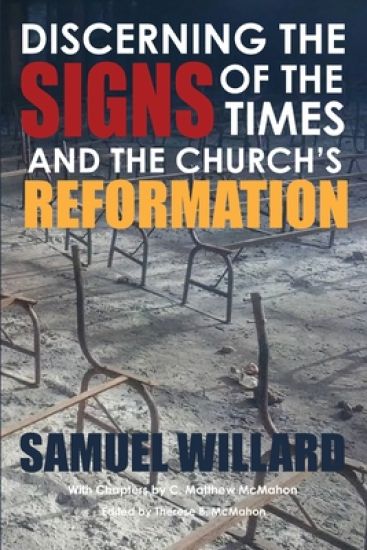
Discerning the Signs of the Times and the Church's Reformation

Discerning the Signs of the Times and the Church's Reformation

C. Matthew McMahon; Samuel Willard

Puritan Publications
2020
nidottu
This work is set on the premise that the great design of all God's judgments on a professing people is to reform them. It is the plight of the church that they live in the consequence of the fall of Adam. They strive for holiness, but they must be very discerning about the times in which they live, so that they may set themselves steadfastly in the work of personal reform, church reform, and reforming the world to the glory of God. Willard explains Matthew 16:3, "Ye hypocrites, Ye can discern the face of the sky, but can ye not discern the signs of the times?" in order to press the Christian to be discerning in the day in which he lives. What is God doing? Where is God working? What are the signs of the times saying to the church? And then he explains Leviticus 26:23, "If ye will not be reformed by me by these things, but will walk contrary unto me, then will I also walk contrary unto you, and will punish you yet seven times for your sins." The Christian is to first discern the times, and then the Christian is to be reforming in those times. All of God's providences stretch forth from his covenant blessing in Christ to bring his wayward people back to a right relationship with him. He reforms them so that they become real revolutionaries for his cause; and his cause is holiness of life in service to the King of Kings. A modern church that remains unreformed with a professing people who walk contrary to God's word, there Christ will proceed in his judgments against them and strike them with blows to bring them back to him and true faith. What calamities have been brought on the church today in this? It seems Willard is striking at the heart of the church as it endures the current pandemic, calamities, famines, riots, and a number of other difficulties that our country, and many countries around the world, are now experiencing. These events have been brought in by the church and its rebellion against God's prescription for reformation. And the content of this work is so applicable today, one would have thought Willard preached these discourses just last Lord's Day. This work is not a scan or facsimile, has been carefully transcribed by hand being made easy to read in modern English, and has an active table of contents for electronic versions.
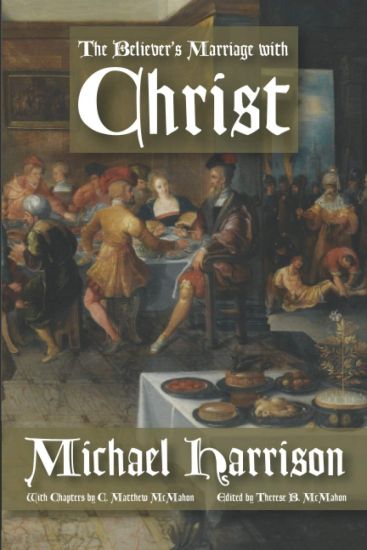
The Believer's Marriage with Christ

The Believer's Marriage with Christ

C. Matthew McMahon; Michael Harrison

Puritan Publications
2020
nidottu
Michael Harrison (1640-1729) was a faithful puritan minister of the Gospel and a powerful Reformed Presbyterian preacher. What does it mean to offer the Gospel freely to sinners? In this work Harrison brings the blessed Gospel offer in all its power in the outward indiscriminate preaching of the word of God. Yes, God offers Christ to poor sinners that they may find rest, and that without money and without price. In this expanded work from a sermon that Harrison delivered faithfully to his church, he expounds Matthew 22:2-14, "The kingdom of heaven is like unto a certain king, which made a marriage for his son..." He divides the teaching, as all good puritan preachers were accustomed to do, into three sections. He first opens the text, then provides the doctrine of the text, and then applies the text. His main doctrine, faithfully developed, is that God in and by the Gospel freely offers Jesus Christ, with all the benefits of his death, to all that are willing to come to him and receive him on Gospel-terms. As much as this work is a plea to sinners on behalf of Jesus Christ, ministers of the Gospel today, even those of the reformed flavor, would do well to listen to Harrison, and learn of him in his presentation. If more preachers would follow his doctrine, style and fervor, the Spirit would look kindly on such endeavors, and there would be more Christians today made by God's grace, and for Christ's glory. This work is not a scan or facsimile, has been carefully transcribed by hand being made easy to read in modern English, and has an active table of contents for electronic versions.
Zeal for God's House Quickened

Zeal for God's House Quickened

Oliver Bowles; C Matthew McMahon

Puritan Publications
2020
pokkari
Mr. Bowles, in this excellent and stirring treatise, is addressing the Westminster Divines in their vigilant care for the common good of the church. As Bowles explains from John 2:17, "And his disciples remembered that it was written, "The zeal of thy house hath eaten me up,"" zeal is the manner that they must do all things for the glory of God. It is a hearty soul-work, for without true biblical zeal, there is no pleasing service rendered to the Christ. What will a cold, lazy, indifferent reformer accomplish? What would a group of cold, lazy, indifferent reformers ever accomplish? Annexed to this inspiring word on enacting zealous reformation, and setting down the character and work of zealous reformers, Bowles shows how church-reformation is a work of the largest extent, as that which concerns all professing churches, whose eternal happiness or misery will be the outcome of either exercising biblical zeal for the glory of God, or not. For biblical zeal, as it mimics the Lord Jesus Christ, is a holy ardor kindled by the Holy Spirit of God in the affections, improving a man to the utmost for God's glory, and the church's good; and it is without a doubt that church reformation calls for utmost zeal. Though Bowles spoke to the Assembly in this work, he took time, afterwards, to, as he said, "make bold a supply of that which at the time of the delivery he could not do." So, this work is the expanded piece turned from a sermon into a treatise, which he enlarged. This work is not solely for the historical assembly, but all that would take up the mantle of reformation for the glory of Christ's church. He covers what zeal is in church reform, over and against false zeal; how zeal is manifested in true reformers, what practical aspects zeal plays for the work of reformation, and then gives some uses to the doctrine. His word to preachers as reformers, the concluding section of the work, is something every preacher should hear. That preachers who desire to see Christ's church flourish under the work of the Spirit ought to take up preaching that is zealous, compassionate, convincing (with conviction), sensible to the needs of the people, as frequent as possible, and with all gravity, to the glory of God and the good of the saints.
Taking Hold of Eternal Life in Christ

Taking Hold of Eternal Life in Christ

C. Matthew McMahon; George Gifford

Puritan Publications
2020
nidottu
George Gifford (1547-1620) was a most excellent puritan divine described as a fiery Gospel preacher, learned and able, being a great enemy to popery. How is a person sure to be saved? How can they build up assurance of salvation and reject a profane life? What can they do to overcome sin and please King Jesus? These sermons all have a common thread running through them: to show you how to lay hold of salvation in Jesus Christ. Gifford is very precise in laying out what each text means, as well as giving a careful and thorough explanation taking ample time to bring to light practical perspectives on his texts. In this, he will bring these topics home to your soul, and you will be a better Christian for reading him. In his first sermon on taking hold of eternal life, Gifford explains, "Charge them that are rich in this world ... that they may lay hold on eternal life," (1 Tim. 6:17-19). He will show you how to lay up the good foundation you need in order to stand secure in Christ at the judgement to come. In his second sermon on the three that bear record in heaven, he explains, quite thoroughly, 1 John 5:7-13. There are three that bear record in heaven, and three that bear witness in earth. And between these "six" there is Scriptural and covenantal agreement concerning the manner of salvation, the assurance that one can have of it. Disciples of Christ, "know that ye have eternal life, and that ye may believe on the name of the Son of God." In his third sermon on rejecting the blessing of God, he explains Hebrews 12:16-17, "Let there be any fornicator, or profane person as Esau..." He is thorough on the Genesis narrative to show why Esau was profane, and how people today may also be profane following Esau's example. His insightful comments in this sermon are exceedingly valuable and ought to be read with great soul-care. His last sermon is on continuing in sin once a disciple is converted. Romans 6:1-14, "What shall we say then? Shall we continue in sin, that grace may abound? God forbid " Can disciples sin? Can they sin "big" and still be saved? He takes great pains, and shows a careful step by step explanation on what Paul is teaching throughout the sixth chapter of Romans; a chapter, today, often misunderstood, and overlooked. Gifford is very easy to read, yet, exegetically sound and practically deep. May the Lord bless you as you take time to study along with Gifford on how to lay hold of Jesus Christ for eternal life. This work is not a scan or facsimile, has been carefully transcribed by hand being made easy to read in modern English, and has an active table of contents for electronic versions.
The Christian's Deliverance by Christ and the Nature of Practical Religion

The Christian's Deliverance by Christ and the Nature of Practical Religion

C. Matthew McMahon; John Kettlewell

Puritan Publications
2020
nidottu
John Kettlewell (1653-1695) was an English Divine and powerful preacher of Christ's Gospel. It was said of him that he was as "saint-like a man" as one ever knew. His voluminous works show him to be a very devout as well as learned preacher, which will outlast any monument his friends could have bestowed on him. This work on Practical Religion, which centers on the Gospel of Jesus Christ, was Kettlewell's first work ever published, and was eminently popular. Its purpose was to take basic Christian doctrine and make it exceptionally practical in the life of a believer. In this work he expanded his sermons into 5 discourses or chapters. The first discourse states the notion of the Christian's salvation, and shows it chiefly to consist in a deliverance from our sins, centered on Matthew 1:21, "Thou shalt call his name Jesus: for he shall save his people from their sins." The second discourse shows that this deliverance, and entire obedience, is neither impossible, nor extremely difficult, if sincere Christians set about it as they should, centered on Phil. 4:13, "I can do all things through Christ which strengthens me." The third discourse shows how to form such a purpose of sincere repentance, and entire obedience which will be effectual for this purpose, centered on Acts 11:23, "And exhorted them all, that with purpose of heart, they would cleave unto the Lord." The fourth discourse shows how to take the truest wisdom of worldly men in their managements, and apply it with admirable use and advantage in the improvement and perfection of holy obedience, centered on Luke 16:8, "For the children of this world are wiser in their generation, than the children of light." The fifth discourse shows how Christians ought to think about the return of their prayers, or when they may, and when they may not, promise themselves the particular things they ask for, centered on Matthew 7:7-8, "Ask and it shall be given you; for every one that asketh, receiveth." This work is not a scan or facsimile, has been carefully transcribed by hand being made easy to read in modern English, and has an active table of contents for electronic versions.
Joseph's Resolve and the Unreasonableness of Sinning Against God
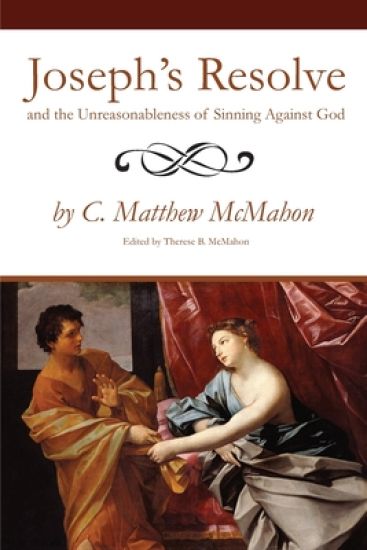
One of the greatest depictions of God's providence in Scripture is the historical narrative of Joseph, who was sold into slavery, and worked under Potiphar, the chief steward of Pharaoh. Within the course of this narrative, while Joseph is in his house, Potiphar's wife comes to him many times to lure him off to sin in one of the most bold and forthright temptations to be recorded anywhere in the Bible. She had longing, wandering eyes and comes to tempt him, assaulting him, "day by day," constantly, and audaciously. Joseph's reaction to this wicked assault is an instant refusal to the temptation. "How then can I do this great wickedness, and sin against God?" (Gen. 39:9). What biblical directives can be found in this amazing statement of holiness and godliness? From this one text McMahon meticulously explains how Joseph's victory over temptation against Potiphar's wife can be used by the believer today for their own victory to the glory of Jesus Christ. Christians need to be prepared to deal with temptation in a manner in which they will be victorious in the power of Christ's Spirit. But they can only do this if they understand what Joseph understood in regards to God, temptation and the heinous nature of sin. He covers such topics as: the great evil of sin, the relationship between sin and God's holiness, how to live faithfully before God's omniscience and omnipresence, the nature and character of temptation, what it means to resist temptations, how holy fear aids the Christian in light of temptation, what the Spirit works in a Christian motioning them to holiness, how one can cultivate a sensitivity to the Spirit's work, the inconsistency in sinning against God, how usefulness in God's kingdom is linked to holiness, the power of Christ's Gospel as the full remedy to temptation and sin, as well as a number of other important considerations. (He also includes a study on the "hedge of protection" that is mentioned in Job 1:10 as an appendix to the work.)This book faithfully explains and applies Genesis 39:9 demonstrating Joseph's godly resolve and the unreasonableness of sinning against God. Here you will find what steps you can take, following devout Joseph, to keep yourself from falling into sin through the craftiness of temptation, that you may bring the most glory to Jesus Christ in your walk before God.
The Sovereign Efficacy of Divine Providence

The Sovereign Efficacy of Divine Providence

C. Matthew McMahon; Urian Oakes

Puritan Publications
2020
nidottu
Urian Oakes (1631-1681) was a New England divine, and president of Harvard College. Edmund Calamy states that Oakes was noted for the uncommon sweetness of his temper as a minister of the Gospel, greatly beloved by his congregation and popular with all who came in contact with him. The design of this work is to vindicate the glory of the blessed God in his all-ruling, wonder-working providence as sovereignly disposing the issues and events of all human counsels, and affairs. Christ, who is the Highest King and Lord of all, rules and reigns in his declarative glory "all things." Nothing is left to itself, but God has a purpose in it. While we are too intent in gazing on the living creatures, and the dreadful wheels of Ezekiel, we soon lose the sight of him who sits above on the throne, overruling, and working all things according to the counsel of his own will. Oakes will point out this Sovereign in all his amiable glory. Beginning with a careful consideration of Ecclesiastes 9:11, Oakes explains how the successes and events of undertakings and affairs are not determined infallibly by the greatest sufficiency in men, or even in second causes; but by the counsel and providence of God ordering and governing time and chance according to his own good pleasure. God's counsel and sovereign will appoints what they shall be, and his providence (which is not determined by any second cause, but is the determiner of them all) executes all things accordingly. And it must necessarily be so, if you consider that God is the absolute first cause, and supreme Lord of all. This work is not a scan or facsimile, has been carefully transcribed by hand being made easy to read in modern English, and has an active table of contents for electronic versions.