Kirjojen hintavertailu – 12 859 819 kirjaa ja 27 kauppaa

Kirjailija

C Matthew McMahon

Kirjat ja teokset yhdessä paikassa: 139 kirjaa, julkaisuja vuosilta 2007–2026, suosituimpiin kuuluu The Works of Henry Greenwood. Vertaile teosten hintoja ja tarkista saatavuus suomalaisista kirjakaupoista.

Nimi esiintyy myös muodoissa: C. Matthew McMahon

139 kirjaa

Kirjojen julkaisuvuodet: 2007–2026.

The Delay of Reformation Provokes God's Indignation

The Delay of Reformation Provokes God's Indignation

C Matthew McMahon; James Nalton

Puritan Publications
2023
pokkari
Nalton takes his text from Jer. 13:27, "I have seen your adulteries and your neighings, the lewdness of your whoredom, and your abominations on the hills in the fields: Woe unto you, O Jerusalem, will you not be made clean? When shall it once be?" This exhortation was written and preached to urge and promote the work of reformation for those who profess to be covenanters and need God's help in making the work of Christ in biblical reform a reality. He covers three important doctrines: Doctrine 1: God pays precise and special attention to all the sins and abominations of a people in covenant with Him. Doctrine 2: These sins and abominations provoke Him to express His anger in terrifying threats. Doctrine 3: Those terrifying threats pronounced against a people call for immediate repentance and reformation. After covering these main parts to the treatise, he asks, but how, or by what means may the work of reformation be carried on, both in public and private, in Church and State, in our hearts and houses? He answers this with various motives and helps in the means which God has blessed his people. To be humbled for previous failures, to reflect on our vows to God, to be more involved in reformation in our church and family, to focus on unity for the cause of God and the Gospel, and to cultivate a heart ignited with a burning love for Christ and a passionate zeal for His honor and the advancement of the work of Reformation.

The Bible is the Word of God Alone

The Bible is the Word of God Alone

C Matthew McMahon; Adoniram Byfield

Puritan Publications
2023
pokkari
Why do Christians read, study and hear the Scriptures preached? It is because the bible is the word of God alone. How do we know this? Adoniram Byfield explains from Acts 24:14-16 that people ought to ground their faith only on the Word of God which is written. He explains that if people are to ground their sincere faith only on the written Word, then all who are wise unto salvation, must diligently read it, or, if they cannot read, diligently hear the Scriptures read in public congregations and elsewhere. This is because the Scriptures are the very Word of God. McMahon then takes up the consequence that the Bible is the word of God alone, in that, Christians ought to diligently esteem the ministry of the word. The word of God reveals God's will in propositions. Christians must also profit from diligently cherishing God's word. The knowledge of God, Christ and salvation is specially found in the Bible, and nowhere else. And when Christians diligently and highly esteem the word of God, they highly esteem the Lord Jesus Christ, the Eternal Word - the Logos of God. Added is an appendix to the work by Richard Greenham who set down principles that make bible reading and hearing profitable.
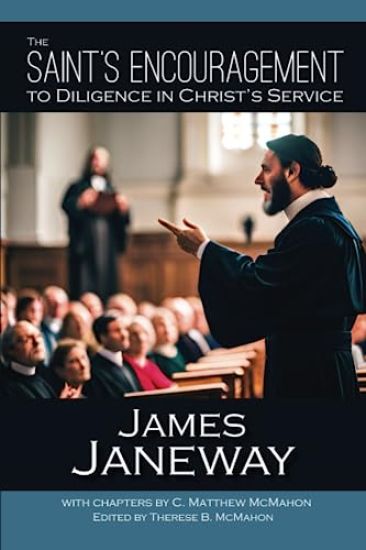
The Saint's Encouragement to Diligence in Christ's Service

The Saint's Encouragement to Diligence in Christ's Service

C Matthew McMahon; James Janeway

Puritan Publications
2023
pokkari
This treatise on 2 Peter 1:11 is a puritan gem. Drawing from the rich well of Scripture, Janeway emphasizes the vital role of God's Word in providing comfort, conviction, and guidance for those engaged in the earnest service of Christ. He directs readers to deepen their relationship with the Lord, relying on His promises and grace as a source of encouragement. Janeway rightly explains the nature of Christian service as a joyful privilege and presents practical ways to find encouragement amidst the challenges and trials that believers face. Recognizing the inevitable trials and obstacles encountered in Christian service, Janeway teaches readers to embrace a biblical perspective on suffering, seek solace through prayer and dependence on God, and find comfort in the fellowship and support of fellow believers. In all this Janeway points believers to the enduring hope found in Christ. He reminds us that our service is not in vain and that our present struggles are temporary compared to the eternal rewards and glory that await us. By anchoring our hearts in this eternal hope, we as believers can persevere and thrive in our commitment to Christ's service. Discover the power of encouragement and embark on a transformative journey in the service of Christ through this work.
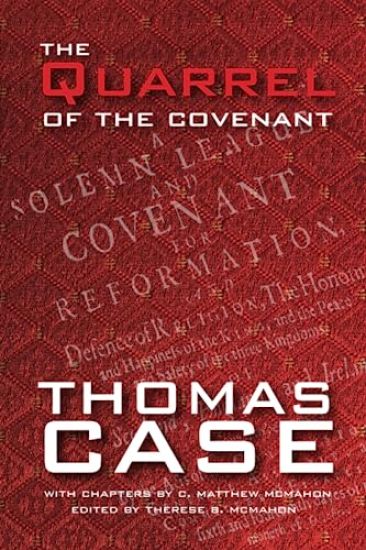
The Quarrel of the Covenant

The Quarrel of the Covenant

C Matthew McMahon; Thomas Case

Puritan Publications
2023
pokkari
Thomas Case sets forth Leviticus 26:25, "And I will bring a sword upon you, that shall avenge the quarrel of my covenant." He explains how it comes to pass that covenant violation is a matter of high quarrel between God and his people. He shows "covenant" in its nature, matter, form, parties and end. He clearly explains that such a violation (to break covenant with God or to lie in taking an oath or vow) is seen in three ways: contemptuous refusing, graceless profaning, and treacherous deceiving. The reasons he gives of such a quarrel is the contempt of God's holy ordinances and of holiness itself; gross ignorance under the glorious light of the Gospel; unfruitfulness under the means of grace; ingratitude for mercies; incorrigibleness under judgments; profaning the Lord's Day; all sorts of uncleanness, luxury, and excess in eating or drinking; vanity, pride, envy, contention, divisions, oppression, fraud, and violence. Not even one professing Christian person can say that he is wholly free from such. In this he remarks that the wishy washy nature of people in the church bring God's judgments against them whether they see it or not. Swear and un-swear, do and undo. Protest for Christ today and accommodate Antichrist tomorrow. As if breach of our covenant dissolved our engagements. And because we have broken once with God, we were never bound afterward to keep our word, and our oaths. He shows that we may not tempt God in this. He that swears he knows not what will observe he cares not how. Ignorant making of an oath will end in unconscionable breaking of the same.
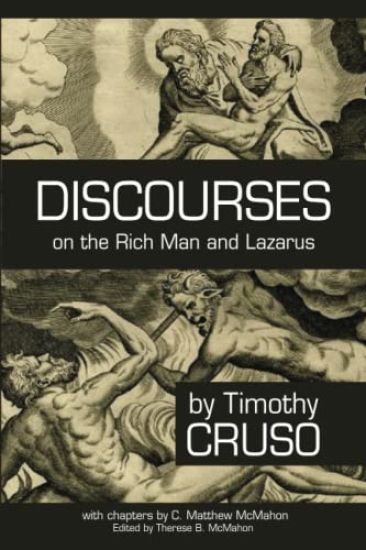
Discourses on the Rich Man and Lazarus

Discourses on the Rich Man and Lazarus

C Matthew McMahon; Timothy Cruso

Puritan Publications
2023
pokkari
In this work on Luke 16, Christ's narrative concerning the Rich Man and Lazarus, Cruso is taken up with explaining and exhorting the reader of the nature of hell-torments and heaven's felicity. Besides their usefulness in awakening those that remain lost, these doctrines are eminently profitable to the most sound and established believers. Such exhortations serve to foster a more abundant cause of thankfulness to God for the unspeakable gift of Jesus Christ, and of rejoicing and triumph in him as their Deliverer from such a horrid state. Both heaven and hell are set before the reader, showing the portion of the happy beggar and the portion of the miserable rich man. He presses the reader to consider, which of the two will you choose to follow? By an unfeigned faith in Christ and by the genuine fruits of that faith in a holy life, everyone that has heard and learned of the Father comes to Christ and is governed by him (John 6:45). It was Cruso's desire in having this work published that it might be presented to all, that everyone might uprightly say, "I am not only almost, but altogether, persuaded to be in reality, as well as in name, a Christian, and as such, henceforth, to live and die unto the Lord "
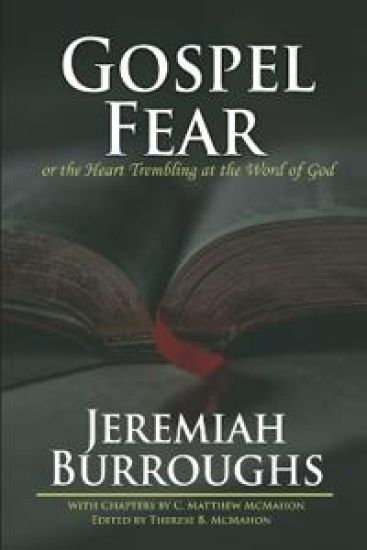
Gospel-Fear or the Heart Trembling at the Word of God

Gospel-Fear or the Heart Trembling at the Word of God

C Matthew McMahon; Jeremiah Burroughs

Puritan Publications
2023
pokkari
The fear of God is a primary spiritual grace deposited in the redeemed and pardoned soul. Scripture is filled with directives in obedience before God based on godly fear because it is a principal grace; it is part of the beginning of grace. Why are not more Christian books taken up with the fear of the Lord? It is because at the outset, such seems to be very offensive to modern Christian sensibilities. And yet, "The fear of the LORD is the beginning of wisdom, and the knowledge of the Holy One is understanding," (Prov. 9:10). Many Christians look to Christ like they look to a boyfriend or girlfriend, rather than as the holy God who deals with sin through infinite wrath on the cross. Christ directed his disciples to a holy fear of God (Matt. 10:28). Jesus is the loving Savior, but this is bound up in the astonishment and amazement and respect of God's being and character in relation to sin and salvation. He is to be feared. What is godly fear? Jeremiah Burroughs will answer this more than adequately. He uses his primary text in Isaiah 66:2, "But to this man will I look, even to him that is poor and of a contrite spirit, and trembleth at my word." Knowledge of the word of God produces and cultivates the fear of God in Spirit-endowed believers. It produces a trembling and contrite Christian. As a result, he will show that Scripture informs the pardoned soul to understand God in the light of holy fear and trembling, in turn that becoming a tender heart to follow the word and will of God, as he demonstrates further from 2 Kings 22:14, "Because thine heart was tender...." Holy dread and tenderness of heart are inseparably linked together as Gospel-Fear.
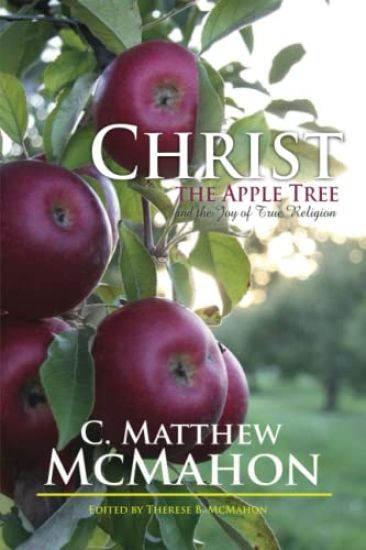
Christ the Apple Tree and the Joy of True Religion

Christ the Apple Tree and the Joy of True Religion

C Matthew McMahon

Puritan Publications
2023
pokkari
God delights in the infinite purity of his holiness. Consequently, he desires his people to delight in those things which he delights in. A holy disposition relishes and delights in holiness. God, being infinite in his delight, has an infinite desire and will to experience infinite happiness and joy and he does so by delighting in his own holiness. His people, in this, are to love what he loves. God supplies his people with word-pictures that are often used in similitude or type. Jesus Christ is typified by things like the ark, the temple, the mercy seat, etc. One of the most disregarded types found in Scripture is set in the greatest song of all time, inspired by the Spirit, which speaks directly to the sweetness, delight and sustenance of that which Christ ministers in his covenant to the believing soul - the picture of an Apple Tree among the trees of the forest (Song 2:3). God desires them to find special delight and singular pleasure in this tree of trees; to have a love and liking to it in such a way that it is not only pleasant to their sight, but pleasing to their taste. In this tree they are to find comfort, sustenance and refreshment. Song 2:3 supplies God's people with a grand picture of Jesus Christ to be seen as an Apple Tree among the trees of the woods. What? Is this word-picture not so grand in your eyes? Have you not thought about the nature of the Apple Tree for your comfort, sustenance and refreshment in furthering your walk in holiness? Have you not considered him as an Apple Tree, sweet to the taste, comforting from the scorching sun of wickedness, an ever present help to the starving soul for that which is pleasant? Well, then, this study is for you.
The Danger of Not Reforming Known Evils, and Other Works

The Danger of Not Reforming Known Evils, and Other Works

C Matthew McMahon; William Williams

Puritan Publications
2022
pokkari
Williams' first piece on The Danger of Not Reforming Known Evils, is a master-exhortation in calling the wayward church, those professing they have been effectually called, to reform those things in their midst that need correcting. People who have been changed by the Spirit desire holiness. If the people of Christ's church are inwardly changed, why would they not want to change and reform those things that are amiss among them? In such people there would be a great inexcusableness to them for being a knowing people and yet refusing to be reformed. And if they do not see that they have need of reforming those things that are amiss, what does that say about them? Or, even worse, what if they do not want to change those things that are known evils? This argues their desperate state, even though they may outwardly be professing believers. His second piece is on the great salvation that is offered in the Gospel. He sets this down in five main propositions to show the Gospel's greatness, as well as the means and manner in which sinners may come to attain the salvation offered in the Gospel by Jesus Christ. This particularly applies to the idea of the outward call which is indiscriminate, and the inward call of the Spirit in the heart which is particular. His main text is, "How shall we escape, if we neglect so great salvation," (Hebrews. 2:3). He teaches the main doctrine that salvation revealed and offered in the Gospel is great and glorious, and the neglect of it will bring upon men great and unavoidable misery. His third piece is to prompt a serious consideration that God through Christ will visit and judge all men for their sin, taken from Job 31:14, "What then shall I do when God rises up? and when he visits, what shall I answer him?" Here he outlines the reality that though the Gospel is preached among the nations, and men hear it, what good will it do them if they do not receive it and heed its call? What will they do when God rises up against them at judgment? And if they neglect the Gospel, God's only means of escaping the wrath to come, they will find themselves at their mortal end standing before a holy Judge who will sentence them accordingly by his law, for their sins.
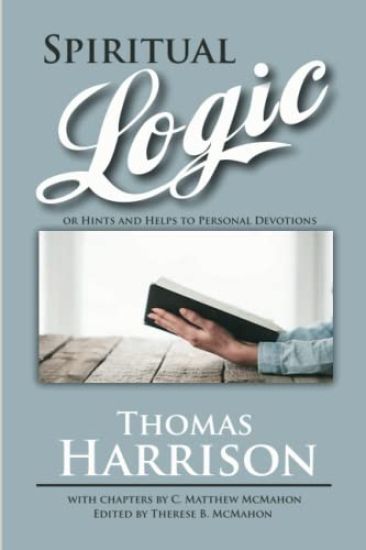
Spiritual Logic or Hints and Helps to Personal Devotions

Spiritual Logic or Hints and Helps to Personal Devotions

Thomas Harrison; C Matthew McMahon

Puritan Publications
2022
pokkari
In this wonderful treatment of order and structure in communion with God, "Spiritual Logic" aids the reader in understanding that there is a logical order to the way one prays and thinks about their time of devotions. God is a God of logic, and so, why would someone not use logic in order to "order their prayers?" Harrison is going to take you down a logical road of gaining some hints and helps to your personal devotional life. He will aid you in overcoming an inept prayer life to make your conversations with God run deeper. He deals with a number of preliminary aspects that serve as hindrances to good devotions, such as unacquaintedness with the Lord, a sense of more than ordinary unworthiness ever to be acquainted savingly with God, what it means to be jealous for Christ, and to love Christ, and the Father. He covers the fear of unbelief, the fear of hypocrisy, the fear of being acted only by a slavish spirit of fear, a sense of fearful backslidings, and a sense of one's strong corruptions that hinder devotions. He speaks extensively of many negative thoughts that crowd the Christian when they try to have faithful devotions, such as desertion felt or feared by God (will God even hear me?), sudden uneasiness that one experiences from cloudy providences, how to deal with the dread of spiritual judgements, hardness of heart, and unprofitableness under the means of grace. Especially considered is the fear that one's prayer is not heard. His work is unique in that he not only gives various remedies for hindrances, but also helps to devotion in the actual way the Christian ought to logically speak to God by using his word (spiritual logic) in setting their prayers on God's prescriptions. This is an excellent work in showing, step by step, how the Christian can pray effectively using this spiritual logic, which is indeed, hints and helps to raise their personal devotions for the glory of the Redeemer. This work is not a scan or facsimile, has been carefully transcribed by hand being made easy to read in modern English, and has an active table of contents for electronic versions.
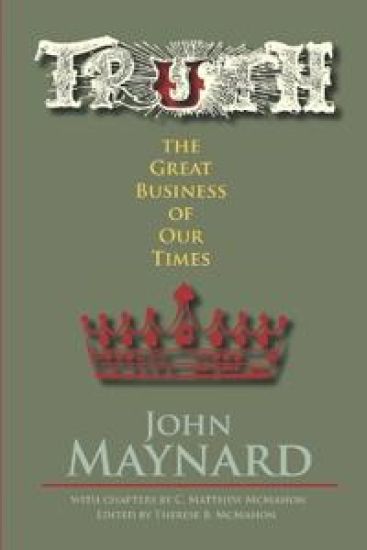
Truth, the Great Business of Our Times

Truth, the Great Business of Our Times

C Matthew McMahon; John Maynard

Puritan Publications
2022
pokkari
The truth of God is the foundation of all true religion. This is why the first commandment in Exodus 20, in order to love God with all your heart, soul and mind, is to have no other gods before him, and to take God as your God, in the way God has revealed himself. God has deposited his truth, his will, his word, into the hands of the church (into the very heart of the church). It has been delivered to them. "...that ye should earnestly contend for the faith which was once delivered unto the saints," (Jude 1:3). Maynard's exposition of the "truth" comes from Proverbs 23:23, "Buy the truth and sell it not." He gives two propositions that serve as his doctrines: 1.) An affirmative, or precept, Buy Truth, and, 2.) A negative, or prohibition, Sell it not. In this, Maynard shows 1. What is this Truth which we are required to buy? 2. What does it mean to buy Truth? 3. From whom must it be bought? 4. Why is this purchase necessary? In his second address, he covers Philippians 3:21, "According to the working whereby he is able even to subdue all things unto himself." He will argue for Christ's kingship, that the work and merit of the Savior is both a current reality in subduing his enemies, and a future reality in its completion. In light of this, he argues that if the Lord has honored you by adopting you into his family, it behooves you to render your absolute service to the King of heaven. Not only that you would see the delights surrounding the cross of Christ, but also the wonders surrounding the crown of the King. Not only that you would love the sweet Savior, but also that you would heed his commands and his truth as the commanding King.
The Wonderful Workings of God for His Church and People

The Wonderful Workings of God for His Church and People

C Matthew McMahon; Samuel Bolton

Puritan Publications
2022
pokkari
Exodus 15:11 says, "Who is like unto thee, O LORD, among the gods? who is like thee, glorious in holiness, fearful in praises, doing wonders?" Here Bolton draws the truth that our wonderful God does wonderful things for his church and people. God does not only do wonders, but great wonders (Ps. 136:4). No, mighty wonders (Dan. 4:3). He does amazing, astonishing wonders for his church and his people. What are these? How does he do them? When does he do them? Will he do them for us? It is the church's duty to understand God's glory and his wonders; and make known his glory and his wonders to all people. But to declare it we must understand it, and in understanding it, such compels us to declare it, for we cannot hold our tongues back to testify to the glorious wonders of God's work. Those who truly are partakers of his glorious grace, found in no one else than Jesus Christ, must testify by their life and witness, and their praise, of God's glorious and wondrous works. What an encouragement to the hungry and thirsty soul seeking the beauty of God and his works This is the substance of what Bolton will explain in detail, and will demonstrate, as he considers the wonderful workings of God to his church and people.
The Great Mystery of God's Providence and Other Works

The Great Mystery of God's Providence and Other Works

C Matthew McMahon; George Gifford

Puritan Publications
2021
pokkari
This particular work by contains six pieces now updated into current modern print. The first work is worth the cost of the volume itself. It is his treatise on The Great Mystery of God's Providence, on Genesis 45:8, concerning the historical narrative of Joseph coming to power in Egypt by God's providence. He particularly deals with the question, "To what degree does the holy and righteous God make use of the evil actions of wicked men and devils, without any impeachment of his righteousness and holiness?" This is a wonderful and masterful treatise that will expand your view of the great mystery of God's providence in the world, not only in Joseph's time, but throughout all of redemptive history, including our own time. In his second piece, he covers James 2:26, "...so faith without works is dead," while comparing both Paul's use of justification by faith, and James' use of justification by works. In his third sermon on James 3, he covers the manner in which the Christian's speech ought to glorify God, and how, very often, that it does not. This is especially proven out by dealing with Christians in the church, where out of the same mouth comes blessing and cursing. In his fourth piece, he demonstrates the need and virtue of true fortitude to the glory of God. In this, he considers the strength and vigor of the Christian in all they do in zeal for the glory of Christ. In his fifth piece on Psalm 133:1 he covers the need and commendation of unity in the church, the unity of the Spirit, in the bond of peace, as set down by David in the Psalm, and echoed in Ephesians by Paul. His final piece is an explanation of the parable of the sower from Matt. 13:1-9, teaching that in the innumerable multitude that came to hear Christ's heavenly doctrine, the Savior shows that out of this great number of people that were so zealous and traveled so far, there were three groups out of four that did not profit by his teaching and were therefore still creatures under damnation. Only one group of the four were true hearers.
The Sweetness of Divine Meditation

The Sweetness of Divine Meditation

C Matthew McMahon; William Bridge

Puritan Publications
2021
pokkari
Divine meditation on the word of God is a lost art and science in the spiritual disciplines. Christians are often content to read a little and pray a little. They often have little to no strategy for godly meditation. This is where William Bridge will come in. He will not only show the work and way of divine meditation, but he will initially set forth its sweetness. He teaches that this spiritual discipline is the Christian's daily way of exercising himself in godliness and walking with God, and that such a walk is sweet. This walking is a picture of persistent communion with Jesus Christ, and is eminently sweet in its applications to the soul. Bridge's main text is, "My meditation of him shall be sweet," (Psalm 104:34), setting forth the doctrine that it is a sweet thing for a gracious soul to meditate on God. He shows the true nature and notion of meditation, how and in what respects a man may meditate on God, and how it is that meditation is a sweet thing, and profitable for the Christian. In his second part, in the work and manner which godly meditation ought to be accomplished, he answers some objections. He demonstrates that it is the Christian's duty to meditate on God and the things of God, that it is a duty for every day, how to rightly meditate to make it profitable (with some rules to that end) and then concludes with arguments and motives to press all Christians to the regular and consistent practice of godly meditation. This work is not a scan or facsimile, and has been updated in modern English for easy reading. It also has an active table of contents for electronic versions.
Repentance and Prayer

Repentance and Prayer

C. Matthew McMahon; Ralph Brownrig

Puritan Publications
2021
nidottu
The work is divided into four sermons, as it was originally published. They contain two foundational practical pillars of the Christian faith, and precisely show the work of saving repentance and the godly exercise of prayer explained in light of God's presence, God's blessing, and God's provision. Brownrig's first sermon is on Joel 2:14, "Who knows if he will return and repent and leave a blessing behind him, even a meat-offering and a drink-offering unto the Lord our God?" He explains how the presence of God is found among a repentant people, or lost to a hypocritical people. His second sermon is on Psalm 78:34-37, a psalm of remembrance on "God our Rock", where he shows how true repentance works, and differs from the deficiency of illegitimate repentance. His third sermon comprises the blessing and exercise of godly prayer, on Luke 11:13, "If ye then, being evil, know how to give good gifts unto your children: how much more shall your heavenly Father give the Holy Spirit to them that ask him?" God is the Christian's Father, and in prayer Christ not only accepts, fulfils, and grants our requests, but when we ask amiss, he chooses to reward us with his best intentions for our good. The fourth sermon is from Luke 22:31-32, "And the Lord said, 'Simon, Simon, behold, Satan has desired to have you, that he may sift you as wheat..." Here he explains the seasonable and gracious prediction by Christ of a great, coming temptation by Satan, and how Satan is thwarted by the sovereignty and providence of God. He shows how God uses temptations for the improvement of the saint's welfare, and demonstrates how Christ keeps and preserves his church from finally falling away, or being overcome totally by the devil. This work is not a scan or facsimile, and has been updated in modern English for easy reading. It also has an active table of contents for electronic versions.
The Five Principles of the Gospel

The Five Principles of the Gospel

C. Matthew McMahon

Puritan Publications
2021
nidottu
What are the basic principles of the Gospel that cannot be taken from Christ's Gospel and make the Gospel not the Gospel? That is a very important question to answer, for, on a very basic level, what people believe in will determine where they will spend eternity. The Gospel of Jesus Christ is bound up in eternal realities that cannot be undone after death if people "get the Gospel wrong." Do you believe the Gospel? This work sets down and summarizes the sum and substance of the Gospel of Jesus Christ. What is the sum and substance of the Gospel? How would you summarize it? Is it simply John 3:16? Is it what the penitent thief said to Jesus on the cross? What is the Scriptural data that shows forth enough of the "Gospel of Jesus Christ" to make it truly Christ's Gospel? McMahon answers this question by drawing mainly from the book of Isaiah. The Gospel in its sum and substance, or the way God was in Christ reconciling the world to himself, actually contains a great amount of information (the Bible is a very big book). However, in distilling the Gospel down to its essentials, he covers the five principles of the Gospel: Principle 1: God exists. Principle 2: that God is man's Maker and has made humankind in his image. Principle 3: the bad news that all men have sinned in Adam and are under the curse of God. Principle 4: God has not left all sinners to perish under Adam's curse, but has given sinners the righteousness of Jesus Christ as a garment to cover them. Principle 5: God calls and draws thirsty sinners to himself through Jesus Christ freely. His five main texts from Isaiah are 40:9, 54:5, 24:5-6, 61:10 and 55:1-3.
Discovering the Glorious Love of Christ

Discovering the Glorious Love of Christ

C. Matthew McMahon; John Durant

Puritan Publications
2021
nidottu
John Durant (1620-1686) was a popular independent puritan minister, and was described by Edmund Calamy as an excellent practical preacher of the word of God. C. Matthew McMahon, Ph. D., Th. D., is a Reformed theologian, and pastor of Grace Chapel in Crossville, TN. He is the founder and chairman of A Puritan's Mind, the largest Reformed website on the internet for students of the Bible concerning Reformed Theology, the Puritans and Covenant Theology. He is the founder of Puritan Publications which publishes rare Reformed and Puritan works from the 17th century, specializing in the Westminster Assembly. He is also a managing partner at Reformed.org, and the Center for Reformed Theology and Apologetics. Durant, in this wonderful work on making a discovery of Christ's love to his people, plumbs the depths of Christ's transcendent love from Ephesians 3:19, "And to know the love of Christ, which passeth knowledge, that ye might be filled with all the fulness of God." He will explain what it means that this love is transcendent. It is a preeminent and supreme love, lying beyond the ordinary range of perception. Can such a study be accomplished adequately in light of Christ's infinite benevolence to his people? Durant will take a course to outline and explain four main parts to his overall subject demonstrating how the love of Christ passes knowledge as it, 1. includes the truth and reality of Christ's love to the saints. 2. As it concludes the height and royalty, or transcendency of that love. 3. As it holds out the apostle's desire that the Ephesians might know both. And, 4. As it contains the grounds of keeping up the Ephesian's hearts from fainting at Paul's tribulations, which is the drift and scope that Paul strives for in them. In exploring this transcendent love of Christ to the soul, he affirms that it is so high there is no reaching of it, so deep that there is no sounding of it, so long that it exceeds measuring, and so broad that there is no comprehending it. Yet, believers are beckoned to strive to understand, to apprehend it, in its communication to their heart, soul and mind. In fact, when they have finished reading this work by Durant, if they have soaked in even a measure of what he explains, they will come away with being lovesick for the Savior.